Holocaust Memorial (Memorial to the Murdered Jews of Europe)
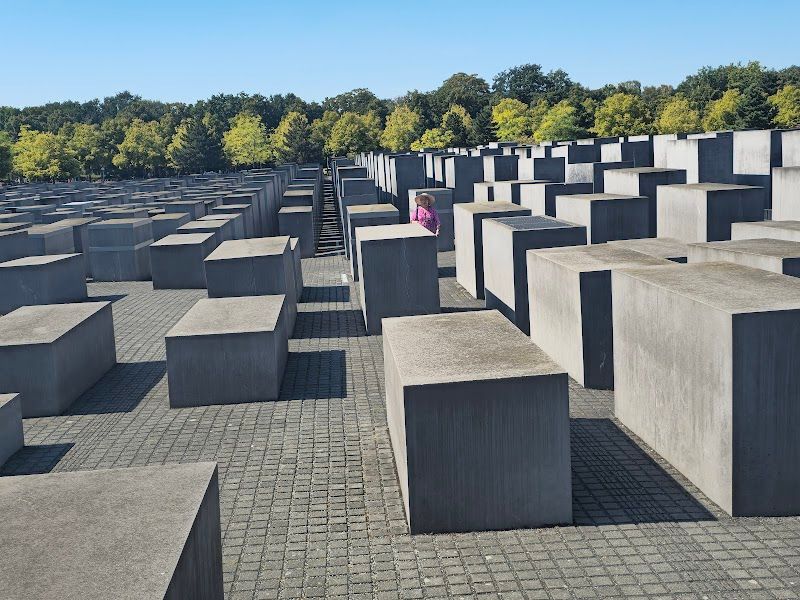
Peter Eisenman's memorial is 2,711 concrete slabs (stelae) arranged on a sloping field near the Brandenburg Gate.
About Holocaust Memorial (Memorial to the Murdered Jews of Europe)
Peter Eisenman's memorial is 2,711 concrete slabs (stelae) arranged on a sloping field near the Brandenburg Gate. There are no names on the slabs, no inscriptions, no flowers. The grid is disorienting by design: as you walk into the center, the slabs rise above your head, the ground dips unevenly, and you lose sight of the surrounding streets. The effect is claustrophobic, isolating, and deliberately uncomfortable. You are meant to feel lost.
The underground Information Centre is free and documents the Holocaust through individual stories rather than statistics. One room reads the names of all known victims aloud in a cycle that takes over six years to complete. Another room displays final postcards and letters. The effect of moving from the abstract field above to the specific human details below is devastating and intentional.
The memorial sits on prime real estate between the Brandenburg Gate and Potsdamer Platz, a deliberate choice. Germany placed its largest Holocaust memorial in the center of its capital, visible from the Reichstag, unavoidable on any walking tour of the government district. This was not accidental. The 19,000 square meters of undulating concrete are a permanent interruption in the urban landscape, designed to make forgetting impossible.
Visit alone if you can. Walk into the center of the field where the slabs tower above you and the sounds of the city fade. Give the Information Centre at least 45 minutes. Do not climb on the slabs, do not pose for cheerful photos, and do not treat it as a playground. This is not entertainment. It is witness.
Skip the Queue
Live availability and skip-the-line options from our booking partners.
Booking powered by our partners. DAIZ may earn a commission.