Figuring out where to stay in Granada for first timers comes down to one question: how much do you want to be in the middle of things versus how much do you want a view? The city splits neatly into four neighborhoods worth considering, and each one makes sense for a different kind of trip. This guide gives you the honest case for each, the trade-offs that most travel articles skip, and a clear recommendation if you just want someone to tell you where to book.
For context: Granada is compact but hilly. The Alhambra sits on a ridge, the Albaicin sits on the hill opposite, Sacromonte curves behind the Albaicin, and the Centro spreads across the flat ground between them. Getting between neighborhoods takes 20-40 minutes on foot over steep cobblestones. That geography shapes everything about where you stay.
The Four Granada Neighborhoods at a Glance
Before the detail, here's a quick comparison:
| Neighborhood | Best For | Walk to Alhambra | Price Range (double) | Noise Level |
|---|---|---|---|---|
| Alhambra Hill | Early entry, views, quiet | 5-10 min | EUR 120-500 | Low |
| Albaicin | Atmosphere, rooftop views | 40-50 min | EUR 85-250 | Medium |
| Centro & Realejo | First-timers, food, convenience | 30-40 min | EUR 45-150 | Medium-High |
| Sacromonte | Character, flamenco, cave stays | 45-55 min | EUR 60-200 | Low-Medium |
Alhambra Hill: For the Alhambra-Focused Traveler
What You Actually Get
Staying on Alhambra Hill means waking up inside the Alhambra complex, or just below the Puerta de la Justicia gate. The Parador de Granada sits inside the grounds and charges accordingly: expect EUR 200-500 per night for a double. The Hotel Alhambra Palace, just below the walls, is more accessible at EUR 150-300, and its terrace bar gives you an Alhambra view without the Parador price.
The practical case for this neighborhood is straightforward. Your Alhambra ticket is booked for a specific time slot (EUR 19.09, and you must book 2-3 months ahead without exception - the tickets genuinely sell out). Staying on the hill means a 5-10 minute walk to the gate instead of a 30-40 minute climb from town. In July and August, that difference matters at 8am.
The Carmen de los Mártires gardens are free and five minutes from most hotels here. The Alhambra forest trails are quiet in the morning before tour groups arrive.
The Honest Trade-Off
You are staying in a tourist enclave. There are no neighborhood bars, no free tapas culture up here, and the nearest real restaurants are a 20-minute walk downhill. After dark, the hill empties out. If your trip is three days and the Alhambra is the centerpiece, this is defensible. If you want to understand Granada as a city, staying here cuts you off from it.
Verdict: Justified for a one or two-night stay centered entirely on the Alhambra. Not the right call for a longer first visit.
Albaicin: The Most Atmospheric Option
What Makes It Compelling
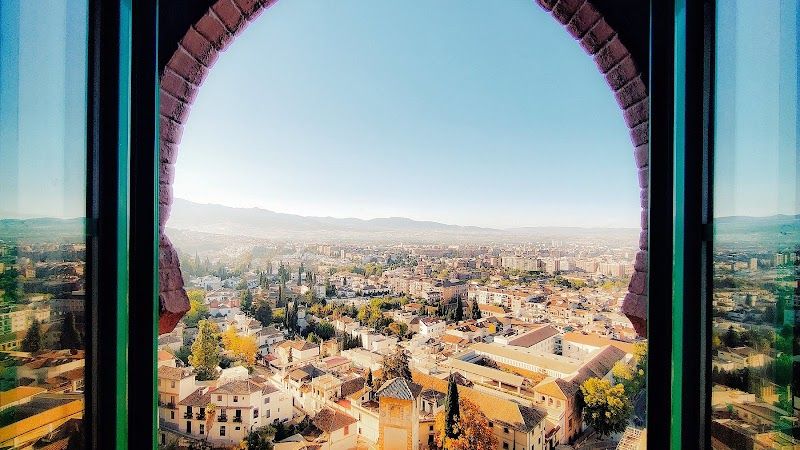
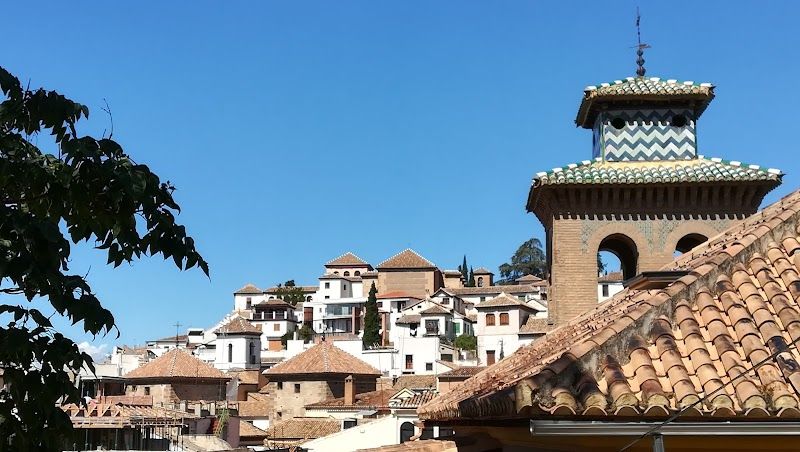
The Albaicin is the old Moorish quarter, a UNESCO World Heritage Site, and the neighborhood that most photographs of Granada are actually taken from. The Mirador de San Nicolas viewpoint is free and delivers the famous frame: Alhambra in the foreground, Sierra Nevada behind it, warm light at dusk. You can walk there from your hotel in minutes rather than 30.
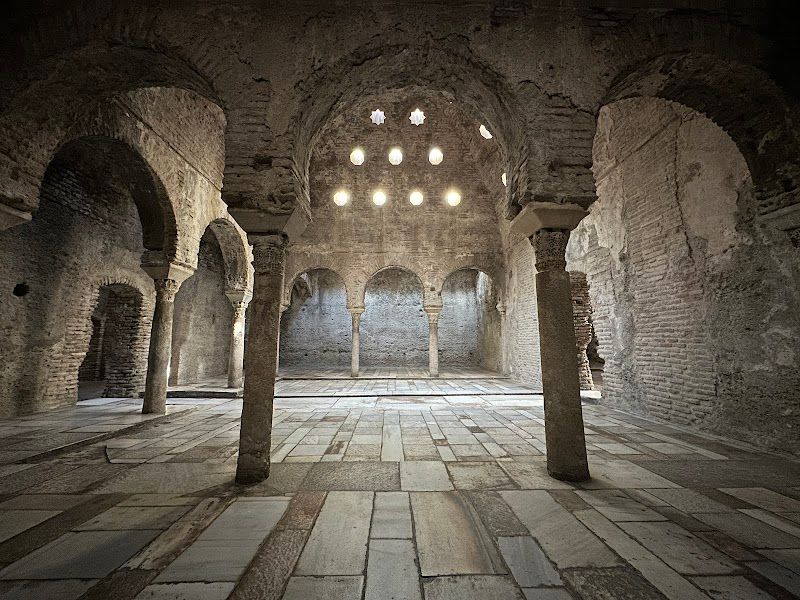
The streets here are genuinely medieval - narrow, cobbled, white-walled, with carmenes (private walled gardens) tucked behind wooden doors. The Bañuelo Arab Baths, built in the 11th century, are a short walk away (EUR 5 entry). The Albaicin neighbourhood walk essentially starts at your door.
Hotels in the Albaicin tend to be boutique properties in converted Moorish houses: EUR 85-250 per night for a double, depending on whether you have a terrace view. Restaurante Jardines de Zoraya is the neighborhood's most reliable dinner option. Bar Los Diamantes on Calle Navas is a 20-minute walk but worth making.
The Honest Trade-Off
Those streets that make the Albaicin beautiful also make it genuinely hard to navigate with luggage. Taxis can't always reach your hotel door - some alleys are too narrow. If you're arriving with rolling suitcases, call ahead and ask exactly where the nearest drop-off point is.
The walk to the Centro takes 20-30 minutes over steep ground. For free tapas bar-hopping along Calle Navas or Calle Elvira, you're looking at a significant walk each direction. If you plan to eat out most evenings and come home late, those cobblestones feel different at midnight after wine.
Verdict: The best neighborhood for travelers who want atmosphere first and are willing to accept logistical inconvenience. If the view from Mirador de San Nicolas at sunset is the image you came for, this is your neighborhood.
Centro & Realejo: The Right Answer for Most First-Timers
Why Centro Works
For the majority of people asking where to stay in Granada for first timers, Centro is the practical answer. You are 10 minutes from the Granada Cathedral and Royal Chapel (EUR 7 combined ticket), 5 minutes from the Alcaicería silk market, and within easy walking distance of Granada's best free tapas bars.
The tapas culture in Granada is real and it operates in the Centro. Order a beer (EUR 2-3.5) or a glass of wine (EUR 2.5-4) and a free tapa arrives automatically. Bodegas Castañeda on Calle Almireceros has been doing this since the 1930s. Bar Los Manueles on Calle Reyes Católicos is the kind of place that gets genuinely busy at 9pm. Bar Casa Julio in Realejo has a loyal local following. Our full tapas bar-hopping guide covers the circuit in detail.
For dinner with more intention, La Tana on Placeta del Agua does excellent local wine with small plates. Restaurante Carmela on Calle Colcha is reliable mid-range: expect EUR 25-40 per person for two or three courses with a drink.
Accommodation here covers the full range: EUR 45-80 for a budget hotel or guesthouse, EUR 85-150 for a solid three or four-star, and hostels from EUR 18-35 per dorm bed. The flat terrain means no hills between you and anywhere you want to eat or drink.
Granada Neighborhoods Map: How Centro Connects
Centro's position makes it the easiest base for connecting to other parts of the city. The bus to Sacromonte (Line 34) runs from Plaza Nueva, three minutes from most Centro hotels. The Albaicin minibus (Line C31) also leaves from Plaza Nueva. A single bus ticket is EUR 1.40, or EUR 9.30 for a 10-trip card.
For the Alhambra, the walk from the lower town takes 30-40 minutes uphill, or you can take the Alhambra bus (Line C3) from Paseo del Salon. The tourist train (EUR 8) also departs from the lower town and covers the main sights if you want a slow orientation on day one.
The Honest Trade-Off
Centro is the most touristy part of Granada. The streets around the Cathedral and Alcaicería fill up between 11am and 7pm, and some restaurants near the cathedral cater primarily to tour groups with inflated prices and mediocre food. Avoid anything with a menu board translated into four languages on a laminated card. The good places in Realejo, a 10-minute walk south of the Cathedral, see far fewer tourists and better food quality.
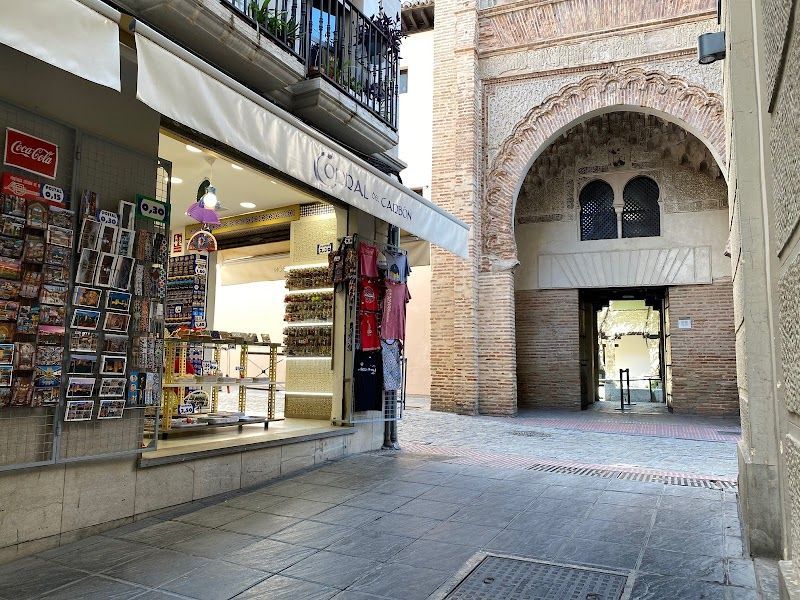
The Corral del Carbón, a 14th-century caravanserai on Calle Mariana Pineda, is free to visit and often empty - a useful reminder that even in the most visited part of the city there are things most people walk past.
Verdict: The best neighborhood for first-timers who want convenience, food options, and a real sense of the city without sacrificing access to any sight.
Sacromonte: The Alternative for the Right Traveler
What Sacromonte Actually Is
Sacromonte is the Roma neighborhood built into the hillside above the Albaicin in a series of whitewashed cave houses. It is genuinely unlike anywhere else in Granada, and unlike anywhere else in Spain. The Museo Cuevas del Sacromonte explains the history of cave living without turning it into kitsch.
The Sacromonte cave flamenco shows are the main reason tourists come in the evening: EUR 25-45 per person, includes a drink, and the setting inside a lit cave is genuinely different from a theater performance. Quality varies between venues - ask your hotel to recommend a specific cave, not just book through any online platform.
A few guesthouses and cave rentals operate here: expect to pay approximately EUR 60-120 per night for a cave room. The atmosphere is unlike anything in the Centro, but the logistics are similar to the Albaicin: no taxis to the door, cobbled paths, and a real walk to the nearest decent restaurant.
The Honest Trade-Off
Sacromonte works well as a one or two-night addition to a longer trip, or for a return visitor who has already done the standard Granada experience. For a first visit, the isolation and limited food options make it harder to justify as a base. You're paying for character, and that's fine if character is what you came for. The Camino del Sacromonte path along the ravine is beautiful in the morning, and the views back across the Albaicin are worth the climb.
Verdict: An excellent choice for a second visit or for travelers who specifically want an alternative to a standard hotel. Too inconvenient as a base for most first-timers covering all of Granada's main sights.
Practical Booking Notes for 2026
A few things that will save you time and money regardless of which neighborhood you choose:
Book the Alhambra before you book your hotel. This is not an exaggeration. The EUR 19.09 general ticket (Nasrid Palaces, Generalife, and Alcazaba) sells out 2-3 months in advance during spring and summer. Check availability on the official Alhambra website first, note which time slots are available, and then book your hotel around those dates.
Car rental is not necessary and actively inconvenient. Granada's old town is largely pedestrianized. Parking in the Centro costs EUR 1.50-2.20 per hour in the blue zone, and most hotel parking is off-site. If you're arriving from another city, train or bus is significantly easier.
Airport transfers: The SN1 bus from Granada-Jaén Airport to the city center costs EUR 3 and takes around 45 minutes. A taxi is EUR 25-35 depending on traffic and your exact destination. If you're staying in Sacromonte or upper Albaicin, factor in that taxis can't reach the door and you'll be walking the last stretch regardless.
For the full first-visit picture, the Granada first-time guide covers entry logistics, timing, and what to do beyond the Alhambra. If you're working out a day-by-day plan, the 2-3 day itinerary gives a structured sequence. And if you want to eat well without overspending, the food and tapas guide covers the free tapas circuit and where the locals actually eat in each neighborhood.
The Bottom Line on Granada Neighborhoods
For most people asking where to stay in Granada near the Alhambra while also wanting to eat and drink well: Centro or Realejo is the right base. You have flat terrain, the full tapas circuit within walking distance, easy bus access to the Alhambra, and accommodation across every price range.
If atmosphere matters more than convenience and you're comfortable navigating a hilly medieval neighborhood with occasional logistical headaches: Albaicin. The setting is unmatched and the sunset from Mirador de San Nicolas justifies the cobblestones.
If your entire trip is organized around the Alhambra and you want to walk in first thing in the morning: Alhambra Hill, budget permitting.
Sacromonte is for people who already know that's where they want to be. If you're reading a first-timers guide, it's probably not yet.