Marseille is not trying to impress you. That is the first thing to understand about this city, and once you accept it, everything else falls into place. Founded by Greek sailors in 600 BC, France's second city is older than Paris by several centuries and has spent most of that time doing exactly what it wants: trading, fishing, arguing, and cooking bouillabaisse. This marseille travel guide 2026 is built for people who want the honest version, not the postcard one.
The city gets an unfair reputation from people who spent two hours at the train station and left. Stay longer, walk further, and you will find one of the most genuinely interesting cities in Western Europe. Here is how to do it properly.
Getting to Marseille and Getting Around
Arriving at Marseille Provence Airport
Marseille Provence Airport (MRS) sits about 25 kilometres northwest of the city centre. Your options from the airport are straightforward.
The airport navette bus to Gare Saint-Charles costs EUR 10 and takes around 25 minutes when traffic cooperates, which is not guaranteed. It runs frequently and is by far the most sensible option for most travelers. A taxi runs EUR 45-65 depending on your exact destination, and ride-share services like Uber come in at EUR 35-55, with prices spiking during busy periods.
From Gare Saint-Charles, the city's RTM metro, bus, and tram network covers most places you will actually want to go.
Getting Around by Public Transport
Marseille's RTM network is functional rather than elegant, but it covers the main neighborhoods. A single ticket costs EUR 1.70 and gives you one hour of travel with transfers across metro, bus, and tram. If you are staying more than a couple of days, the 10-trip carnet at EUR 14.20 makes more sense than buying singles. For a full week, the weekly pass is EUR 20.50 for unlimited travel.
For a single day of sightseeing, the day pass at EUR 5.20 covers unlimited travel for 24 hours and pays for itself after three or four journeys.
One detail worth knowing: the Navettes du Vieux-Port ferry crosses the Old Port for just EUR 0.50 and saves you a 15-minute walk around the water. It is also genuinely enjoyable.
Should You Get the City Pass?
The 24-hour City Pass costs EUR 27 and the 48-hour version EUR 35. Both include public transport and entry to major attractions. Run the numbers before you buy: MuCEM alone is EUR 11, the Musée d'Histoire is EUR 6, and the Château d'If boat trip and entrance is EUR 16. If you plan to hit two or three paid attractions in a day plus use transport, the pass earns its keep. If your itinerary is heavy on free sights (and there are many), skip it.
The Neighborhoods Worth Your Time
Vieux-Port: Where Everything Starts
The Vieux-Port is a rectangle of water about 900 metres long, lined with fishing boats, restaurants, and the kind of purposeful activity that suggests this place has been busy for a very long time, which it has. The morning fish market along the northern quay runs from around 8am. Fishermen sell directly off their boats, and the selection reflects whatever was caught that morning. This is not performance; it is commerce.
The Vieux-Port morning fish market is free to wander and worth arriving early for. From here, the fish goes to restaurants like Chez Fonfon in the Vallon des Auffes and Chez Michel near the Abbaye Saint-Victor, both of which serve traditional bouillabaisse at EUR 45-65 per person (minimum two people, book 24 hours ahead without exception).
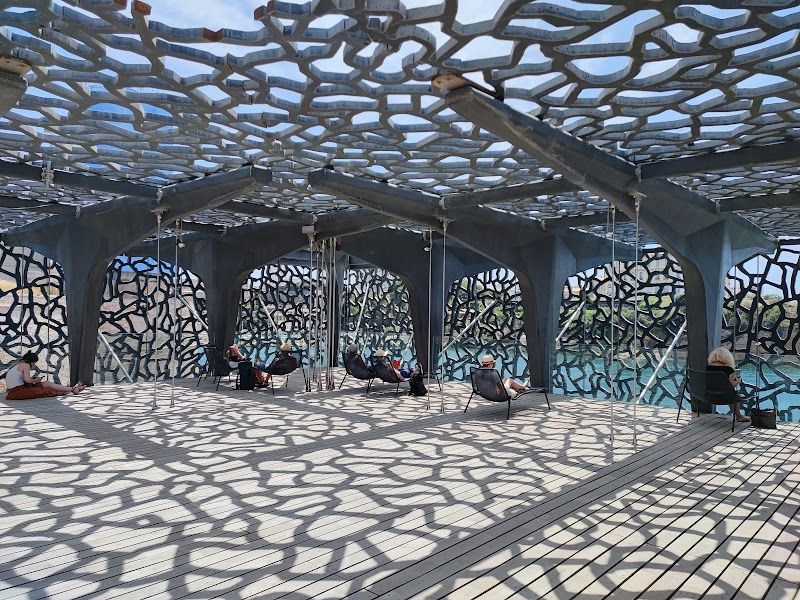
Also on the port: Fort Saint-Jean, a 15th-century fortress with free access to its gardens and walkways, and MuCEM, the Museum of European and Mediterranean Civilisations. MuCEM (EUR 11, free for EU residents under 26) is one of the better museums in France. The building is striking, the permanent collection is serious, and the rooftop terrace has a view of the port and the sea that no restaurant can replicate.
For a drink at the end of the day, La Caravelle on Quai du Port has a terrace above the port with views worth the slightly inflated prices. A local beer runs EUR 3.50-6, wine by the glass EUR 4-8.
Le Panier: The Old Town Without the Gloss
Le Panier is built on the hill where Marseille began. The streets are steep, narrow, and occasionally chaotic, which is exactly what makes them worth exploring. This is not a sanitised tourist quarter; people actually live here, and the neighbourhood has the low-level noise of real urban life.
The Le Panier Quarter Walk can be done independently, but the context from a guided tour adds real value. Urban Aventure's Marseille walking tours are the most frequently recommended option and worth the cost if you want to understand what you are looking at.
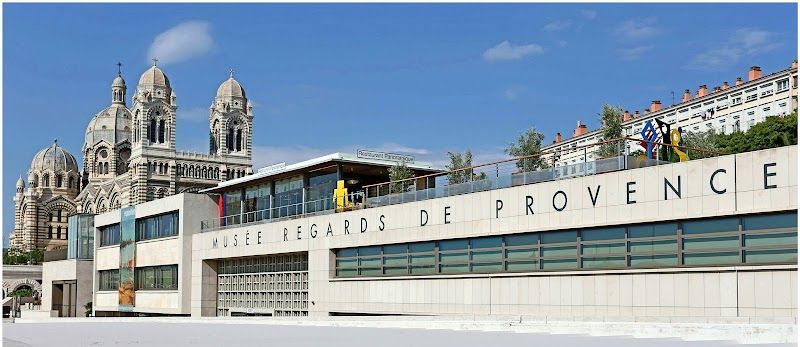
Key stops in Le Panier: Place de Lenche for the best free view of the port from the north side, and Cathédrale La Major, the enormous 19th-century Byzantine-Romanesque cathedral that sits at the edge of the district like something dropped from another city entirely. Entry is free. The Musée Regards de Provence (EUR 6) in the old sanitary inspection station is worth an hour for its focus on Mediterranean light and landscape.
Notre-Dame de la Garde and the South
The basilica of Notre-Dame de la Garde sits at 154 metres above sea level and is visible from almost everywhere in Marseille. Entry is free. The view from the terrace takes in the Calanques to the east, the Frioul Islands to the west, and the whole sweep of the city below. Go early or late in the day to avoid the tour group rush.
Below the basilica, the Corniche Kennedy runs along the coast for about 5 kilometres from the Vieux-Port south toward the beaches. It is a free walk, takes around 90 minutes at a relaxed pace, and passes the Vallon des Auffes, a tiny fishing inlet that looks improbable in the middle of a city. The waterside restaurants here are genuine institutions, not tourist traps.
Further south, Parc Borély is a large formal park near the beach district. Free to enter, good for an afternoon off from sightseeing.
For the Calanques, the most practical entry point for first-timers is a boat trip from the Vieux-Port. Tours run EUR 25-45 depending on length and operator. If you want to get into the water rather than just look at it, Raskas Kayak runs guided kayak trips into the calanques that cover areas the larger boats cannot reach.
Cours Julien and La Plaine: Where Locals Actually Go
Cours Julien is the neighborhood that functions as the city's counter-cultural anchor: street art on every surface, independent record shops, cafe terraces that fill up on weekday afternoons with people who have nowhere more important to be. A coffee here costs EUR 1.50-3 depending on whether you sit or stand.
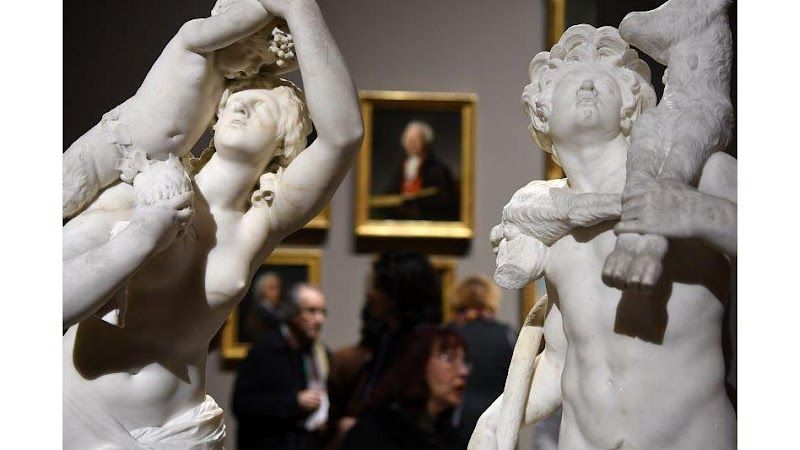
The Palais Longchamp is a 19th-century water palace at the top of the neighborhood, built to celebrate the completion of Marseille's first water supply canal. The combined ticket for the Musée des Beaux-Arts and the Natural History Museum inside the palace costs EUR 6. The Musée des Beaux-Arts has a solid collection of French and Italian painting that gets far fewer visitors than it deserves.
La Joliette: The Renovated Docks
La Joliette is what Marseille built for its 2013 year as European Capital of Culture. Les Docks, a vast 19th-century warehouse complex, is now a mix of offices, restaurants, and boutique retail. It is worth seeing for the architecture, though the commercial offering is fairly generic. The neighbourhood sits north of Le Panier and is easy to combine with a morning in the old town.
What to Eat (and What to Spend)
Bouillabaisse is the obvious starting point, and you should eat it once at a serious restaurant. The full breakdown of where to find the real thing is in our Marseille food guide. The short version: EUR 45-65 per person, minimum two people, 24 hours notice, and the broth always comes first.
Beyond bouillabaisse, the daily budget for food looks roughly like this:
| Meal | What You Get | Cost |
|---|---|---|
| Breakfast | Croissant and coffee at a boulangerie | EUR 3-5 |
| Street food lunch | Panisse or socca from a market stall | EUR 3-6 |
| Sit-down lunch | Plat du jour at a neighbourhood bistro | EUR 12-18 |
| Mid-range dinner | 3 courses with wine | EUR 25-40 |
| Upscale dinner | Fine dining with wine pairing | EUR 60-120 |
Panisse (fried chickpea cakes) and socca (chickpea flatbread, more common in Nice but present in Marseille) are the city's best cheap eat and available at most markets. The Cours Julien area has the best concentration of affordable independent restaurants for dinner.
Practical Budget Breakdown
Accommodation
Prices in Marseille are lower than Paris and lower than Nice for comparable quality.
- Hostel dormitory: EUR 25-45 per night
- Budget hotel double room: EUR 55-85
- Mid-range hotel double room: EUR 85-150
- Boutique hotel: EUR 120-220
- Luxury hotel: EUR 200-450
The Vieux-Port area is convenient but slightly more expensive. Cours Julien gives you a quieter, more local-feeling base at lower prices with good transport links.
Day-by-Day Cost Estimate for a First-Timer
A realistic two-person daily budget in Marseille (mid-range, not scrimping, not splashing):
- Transport (day pass x2): EUR 10.40
- Breakfast: EUR 8-10
- Lunch: EUR 25-36
- One paid attraction (e.g. MuCEM): EUR 22
- Dinner with wine: EUR 50-80
- Drinks: EUR 15-25
Total per couple per day: EUR 130-180, excluding accommodation. On a budget, you can get that closer to EUR 80-100 by leaning on the city's many free sights and eating lunch at market stalls.
The Free Marseille Itinerary
Marseille is unusually generous with free access. A full day costs nothing if you plan it right:
- Morning: Walk the Vieux-Port from the fish market to Fort Saint-Jean. Free.
- Mid-morning: Climb through Le Panier to Place de Lenche for the view. Free.
- Afternoon: Walk the Corniche Kennedy to Vallon des Auffes. Free.
- Late afternoon: Bus up to Notre-Dame de la Garde. Free entry to the basilica.
- Evening: Drinks on La Caravelle's terrace, then dinner in Cours Julien.
Transport for the day: the EUR 5.20 day pass. Total outlay excluding food and drink: EUR 5.20.
For a fuller day-by-day plan, the 2-3 day Marseille itinerary breaks this out across multiple days with specific timing and neighbourhood sequencing.
marseille travel guide 2026: What First-Timers Get Wrong
Underestimating the size. Marseille covers more than 240 square kilometres. The Calanques, Notre-Dame de la Garde, and Cours Julien are not walking distance from each other. Use transport.
Skipping the Musée d'Histoire de Marseille. At EUR 6, this museum underneath the Centre Bourse shopping centre contains actual Greek remains from the original harbour and is one of the most undervisited serious museums in France. It anchors everything you see above ground.
Booking bouillabaisse the same day. Every serious restaurant requires 24 hours notice. Walk in and you will get a fish soup that is not the same thing and will disappoint you.
Avoiding the north of the city entirely. The northern neighbourhoods have a difficult reputation that partly reflects real issues and partly reflects lazy journalism. The tourist areas are safe. The practical advice in the first time in Marseille guide covers what you actually need to know about navigating the city sensibly.
Leaving after two days. Three days is the minimum to get past the surface. Five days, with a day trip to the Calanques and possibly Cassis, gives you something close to the real experience.
When to Visit Marseille in 2026
July and August are the busiest months and the hottest, with temperatures regularly above 30°C. The Calanques get crowded and access is sometimes restricted due to fire risk. Bouillabaisse restaurants at Vallon des Auffes are packed and require booking further ahead than usual.
May, June, and September are the best months for a first visit: warm enough for the coast, manageable crowds, and the city at its most functional. The light in May and June is particularly good if that matters to you.
October and November are underrated. Prices drop, crowds thin, and Marseille's indoor culture, its museums, its restaurants, its bars, comes into sharper focus.
Winter is mild by northern European standards (average January highs around 12°C) but the Mistral wind can make it feel colder and rougher than the numbers suggest. The city is still very much open and considerably cheaper.
The Honest Verdict
Marseille is a city that asks something of you. It does not arrange itself for your convenience, it does not soften its edges, and it will not apologise for the parking. What it offers in return is a Mediterranean port city that has been continuously inhabited for 2,600 years and still operates like it has somewhere to be.
Explore the full Marseille destination guide to start planning your trip with maps, neighbourhood breakdowns, and curated activity lists.
Show up curious, eat the bouillabaisse, walk the Corniche, and give it at least three days. That is all it takes.