The Europa-Park summer season 2026 is the park's main event, the stretch from April to early November when all 100-plus rides are operational, Rulantica runs in tandem, and the park extends its hours deep into the evening. If you're planning a visit and wondering what actually changes between a mid-July Saturday and a Tuesday in late September, the answer is: quite a lot. Crowd levels, opening times, ride availability, and the overall vibe shift week by week through the summer. This guide breaks it down so you can plan around your real priorities, not just a generic calendar.
When Does Europa-Park Summer Season 2026 Run?
The main summer season runs from April 1 through November 2, 2026, with the park closed on certain Tuesdays in spring and autumn. After that, the park pivots to its separate winter season (late November through early January), which is a different product, with fewer rides, a Christmas overlay, and no Rulantica combination deals.
If you've seen questions online about whether Europa-Park is open in winter, the short answer is: yes, partially, but that's a different trip. The winter season is worth its own planning logic and is not part of what we're covering here.
Summer Operating Hours
Hours vary by date, not just by month, so always check the official calendar before booking. As a reliable baseline:
| Period | Typical Opening | Typical Closing |
|---|---|---|
| April (weekdays) | 09:00 | 18:00 |
| May-June (weekdays) | 09:00 | 18:00-19:00 |
| July-August (all days) | 09:00 | 20:00-21:00 |
| September (weekdays) | 09:00 | 18:00 |
| October | 09:00 | 17:30-18:00 |
The park gates open at 09:00 throughout the summer season. If you're staying at one of the six park hotels, you get access 30 minutes early from 08:30, which is a meaningful advantage in July and August when the first wave of day visitors hits the gate hard.
Evening hours in July and August push to 20:00 or 21:00 on peak days. This isn't just extra time, it changes what the park feels like. The heat drops after 18:00, crowds thin, and rides in the thrill ride zones run with shorter queues than at midday.
What Specifically Changes in High Season
Crowd Levels by Month
This is the core question, and the answer is more granular than most people expect.
April and early May are the smartest weeks for adults and families with school-age kids who have flexible schedules. German schools are still in session for most of this period, French and Swiss visitors are also largely at school, and queues on weekdays rarely exceed 30-40 minutes on major coasters. The weather is unpredictable but manageable.
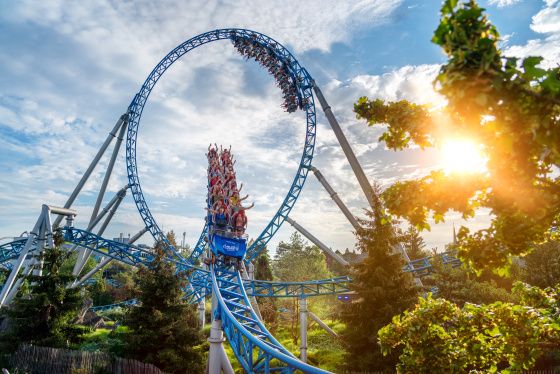
Mid-June through August is high season in the most literal sense. German, French, and Swiss summer holidays overlap from roughly mid-July through late August, and this is when Europa-Park operates at maximum capacity. Queue times for Blue Fire Megacoaster and Silver Star regularly hit 60-90 minutes between 11:00 and 16:00. If you have children and no flexibility on dates, plan your coaster runs before 10:30 or after 17:30.
Late August through September is arguably the best overall value window. Most German and French schools are back in session by early September, but the weather is still warm, ride availability is at its peak, and the park still runs extended hours on weekends. A Tuesday or Wednesday in mid-September can feel almost like an off-season visit at peak-season pricing.
October brings the Halloween overlay - themed decorations, evening events, and some additional scare content on weekends. It's popular with local visitors but not the chaotic high season of August. Daytime queues are manageable.
Ticket Prices in Summer 2026
Europa-Park does not have surge pricing in the traditional sense - the ticket price doesn't jump from one week to the next based on demand. What changes is availability for specific time slots, since online booking assigns timed entry and sells out for the most popular dates.
Current 2026 prices (verified April 2026):
| Ticket | Price |
|---|---|
| 1-day adult (12+) | EUR 62.50 |
| 1-day child (4-11) | EUR 54 |
| Under 4 | Free |
| 2-day adult | EUR 106 |
| 2-day child (4-11) | EUR 92 |
| Rulantica adult (day) | EUR 45-50 |
| Rulantica child (4-11, day) | EUR 38-42 |
| Parking (general lot) | EUR 9 per day |
The 2-day ticket saves roughly 15 percent versus two single-day tickets and can be used on consecutive days or within a seven-day window. For most families visiting in July or August, two days is the right call, it takes the pressure off trying to cram everything into a single day.
For a family of two adults and two children (ages 5 and 9), a two-day visit including parking works out to approximately EUR 324 in tickets alone (2x EUR 106 adult + 2x EUR 92 child + 2x EUR 9 parking). That's before food, accommodation, or Rulantica. If that number surprises you, you're not budgeting for this trip yet.
Which Rides Run in Summer (and Which Don't)
The summer season is when you get the fullest ride lineup. A few specifics worth knowing:
Water rides ramp up in summer. Poseidon and Piraten in Batavia are both operational throughout the main season, but in high summer they also see the highest demand since visitors use them to cool down. Batavia is the better ride of the two, with more sustained theming, but Poseidon has a bigger drop and more soaking capacity.
Wodan Timburcoaster runs all summer and is the most underrated coaster in the park. It's a wooden coaster in the Icelandic area, and it delivers a rougher, more physical ride than the steel coasters. Queue times are typically shorter than Blue Fire because it's positioned less centrally. Hit it in the morning.
Euro-Mir, the indoor dark ride roller coaster in the Russia area, has some of the longest queues in summer because it's air-conditioned. That's not a joke, on a 33-degree August day, people queue for a mediocre ride because it's cold inside. Go early or skip it if you're hot-weather-averse.
Arthur in the Minimoys Kingdom is also indoor and climate-controlled, which makes it queue-magnet territory in summer. It's a genuinely good family ride, detailed, smooth, and accessible to younger kids, but plan for a 40-60 minute wait on busy days if you don't hit it within the first hour of opening.
Rulantica in Summer: Worth Adding?
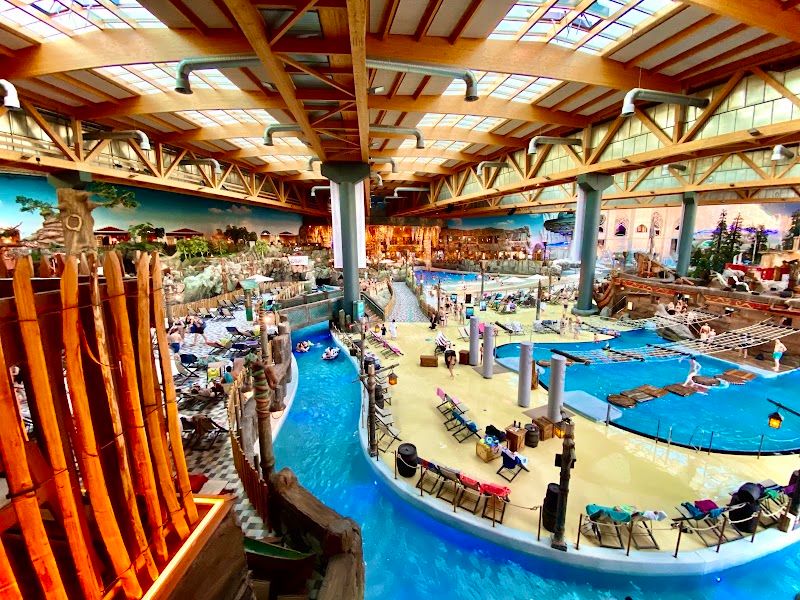
Rulantica is Europa-Park's separate water park, across the main parking lot from the park entrance. It operates year-round, but summer is when it makes the most sense as an add-on, especially for families with kids who need a break from the ride queues by day two.
A full Rulantica day costs EUR 45-50 for adults and EUR 38-42 for children aged 4-11. The evening ticket (entry after 16:00) drops to EUR 28-32, which is a good option if you've spent the main park day at Europa-Park and want a couple of hours in the water park before dinner.
The honest verdict on Rulantica in summer: it's a high-quality water park with strong slide variety and a well-designed tropical indoor hall, but it adds meaningfully to the trip cost. For a family of four, a full Rulantica day adds around EUR 170 on top of your Europa-Park tickets. That's a real number. If your children are under 6 or over 14, the value calculation shifts - younger kids may find the wave pool and gentler slides more engaging than the main park's height-restricted rides, while teenagers who are done with the coasters will appreciate having somewhere new to spend the afternoon.
For more on navigating the main park with younger children, the Europa-Park with toddlers guide covers what the family areas actually deliver for the under-6 crowd.
Where to Eat During the Summer Season
Food quality and availability don't change dramatically between seasons, but summer brings longer hours and more outdoor seating. A few reliable picks:
Ristorante Bella Italia in the Italy area is one of the better sit-down options with mains running EUR 18-28. It books up quickly on summer weekends, so either arrive early (before 12:00) or after 14:00 when the lunch rush clears.
Landgasthof Adler in the Germany area is a more casual, traditional setup. Beer-and-Wurst territory, and genuinely good quality for park food.
Quick-service plates across the themed areas (Currywurst, pizza, burger) run EUR 10-16 with kids' menu options at EUR 6-10. You're not eating cheaply at Europa-Park, but the food-to-park-standard ratio is higher here than at most European theme parks.
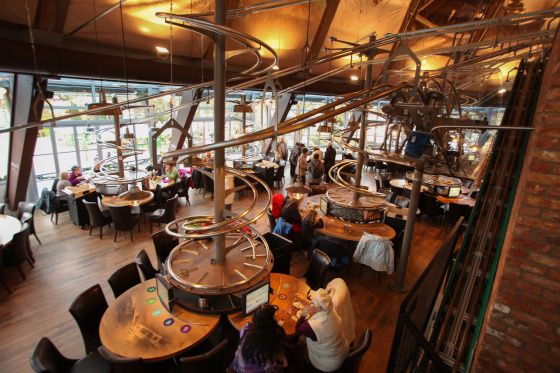
For an evening option, the Foodloop Restaurant near the entrance area delivers food by overhead rail system, which is a spectacle in itself. Mains are in the EUR 18-28 range. It's not the most authentic meal in the park, but it's one of the most fun.
Hotel or Guesthouse: What Summer Changes
In summer, the six Europa-Park hotels run at or near capacity on weekends, and peak summer family rooms cost EUR 200-400 per night. That's a significant outlay but includes breakfast, early park access at 08:30 (30 minutes before general opening), and a free shuttle. The early access is genuinely valuable in high summer, letting you clear Blue Fire and Silver Star before the main crowd arrives.
If you're cost-conscious, Rust village guesthouses run EUR 60-110 for a family room and are a 10-15 minute walk to the gate. You lose the perks but save EUR 100-300 per night. In September, when early access matters less because queues are shorter, this trade-off makes more sense. In peak July and August, the early entry advantage is harder to give up.
The Rust village and park hotels neighborhood guide has more on which hotel fits which type of trip.
Getting There in Summer
Europa-Park sits in Rust, roughly 35 minutes north of Freiburg and 90 minutes from both Strasbourg and Basel. Parking costs EUR 9 per day in the general lot, or EUR 20 for VIP spots closer to the gate. In summer, the general lot fills by 09:30 on weekends - arrive by 08:45 if you're driving.
From Basel, the Europa-Park transfer from Basel is the cleanest option if you're not hiring a car. The direct shuttle service runs from Basel city center and cuts out the parking logistics entirely.
The Honest Answer on Timing
If you have any flexibility at all, the best weeks to visit Europa-Park in summer 2026 are the first two weeks of June and the first three weeks of September. The park is fully operational, weather is reliable, and the crowds are a fraction of what you'll encounter in late July and August.
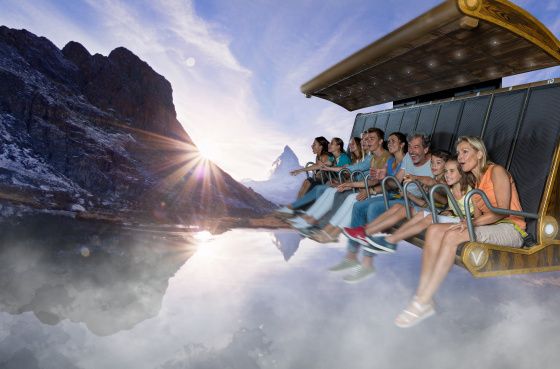
If your dates are fixed in high summer, the difference between a good and a bad day comes down to when you arrive and when you ride. Be at the gate by 08:45, clear the major coasters and indoor rides by 11:30, use the midday heat for food and the slower-paced Voletarium or Märchenwald Fairytale Forest, and return to the thrill rides after 17:00. Where to eat during that midday window is worth deciding in advance, and the restaurant guide by theme area covers which quarters are worth the walk.
For a full two-day plan that accounts for the summer crowd pattern, the Europa-Park 2-day family strategy guide is the most detailed resource we have. Teenagers who want to optimize around the coaster lineup specifically will find the thrill rides ranked guide more useful.
The Europa-Park 1-day ticket is bookable online with timed entry, which guarantees gate access and skips the ticket-desk queue. In summer, buy online. There is no reason to show up without a pre-booked slot.
The Europa-Park hub has the hotels, rides, and transfer options if you are still assembling the trip around your dates.