Spain

Andalusia

Flamenco, the Alhambra, the Mezquita, free tapas with every beer, and the cities where Moorish Spain left its most extraordinary buildings
Andalusia, Spain
Type
Cultural
Duration
5-7 days
Transport
train
Best Time
March-May and September-November (avoid July-August heat)
Cities
3
The place

About Andalusia

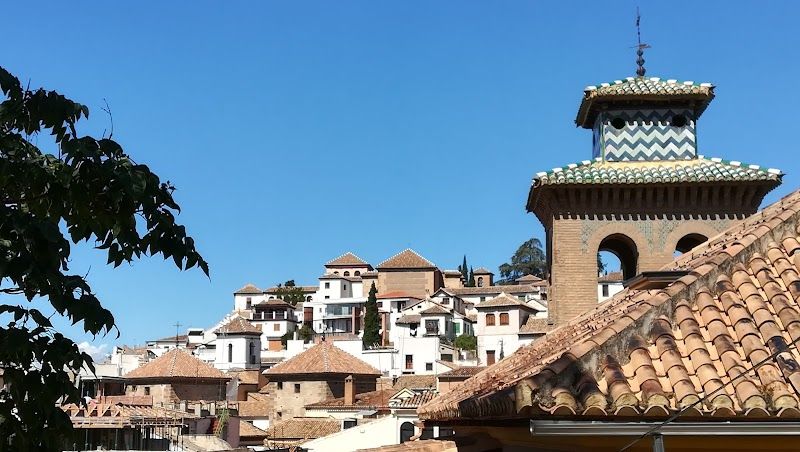
Andalusia is the Spain that most people picture when they close their eyes: whitewashed villages on hilltops, flamenco in a smoky bar, orange trees lining the streets, and a history where Christian, Muslim, and Jewish civilisations built on top of each other for 800 years and left behind buildings that no single culture could have imagined alone.

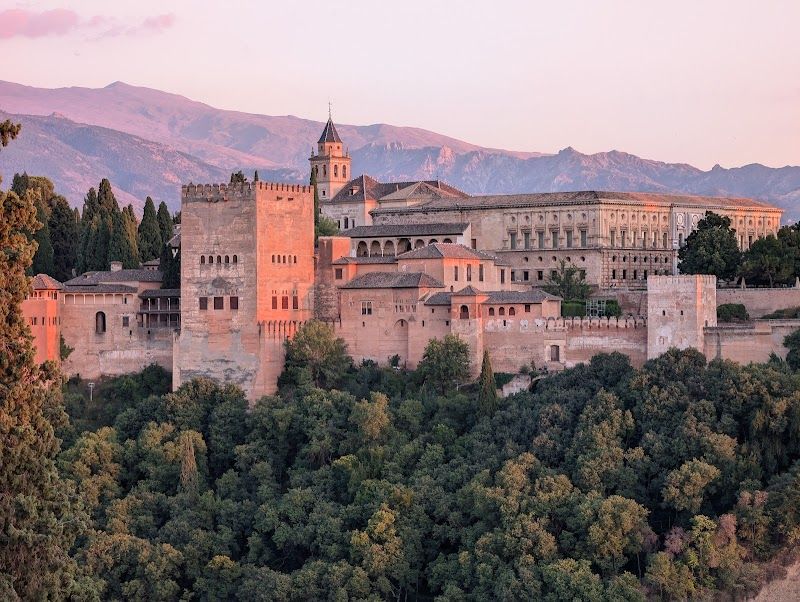
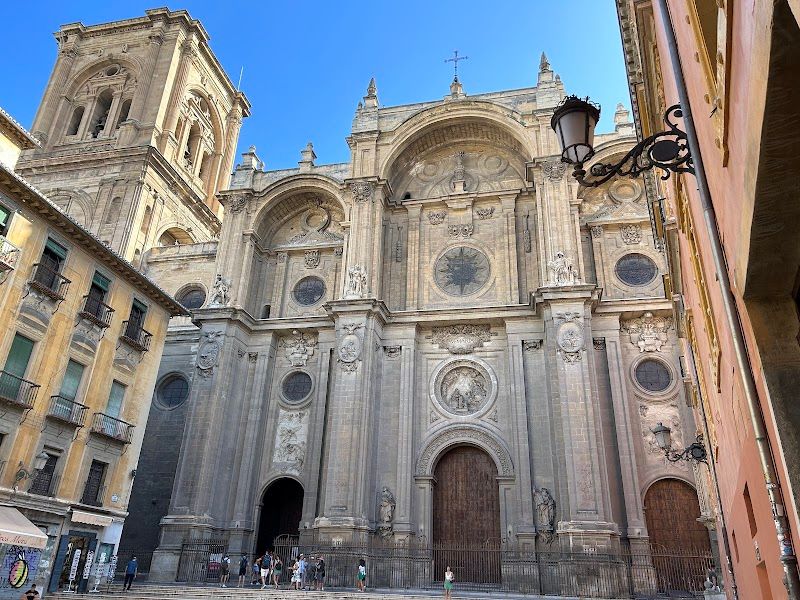
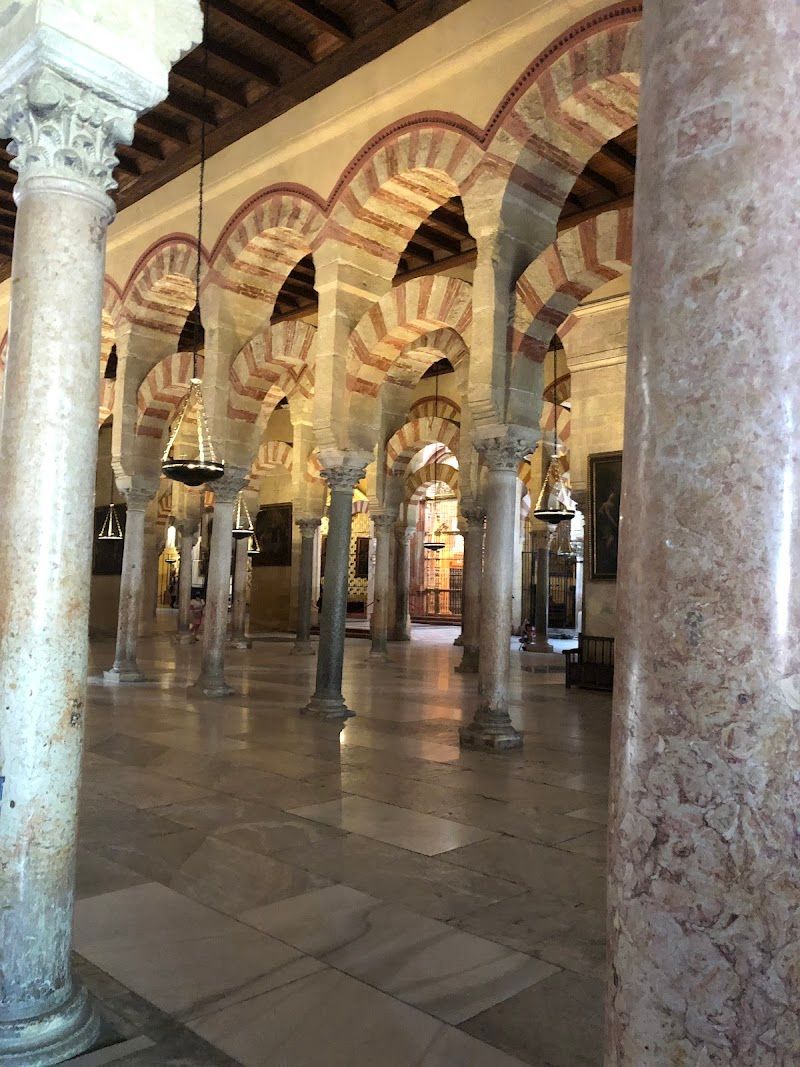
The three cities form a triangle connected by fast trains, and each one has a single building that justifies the entire trip. Seville has the largest Gothic cathedral in the world and the Alcazar, a Mudejar palace where the tilework is so intricate it looks digital. Cordoba has the Mezquita, a mosque with 856 columns and a cathedral dropped into the middle of it, which sounds like architectural violence and looks like genius. Granada has the Alhambra, the last Moorish palace in Spain, where the Nasrid Palaces have the most complex Islamic decoration in Europe and the Sierra Nevada provides the backdrop.

But Andalusia is also the region where you eat dinner at 10 PM, where a beer comes with a free tapa in Granada and a cheap tapa in Seville, where flamenco is not a tourist performance but a living art form performed in bars where the tables shake, and where the concept of "on time" is treated as a loose suggestion. The heat from June to September is brutal (40-45C), which is why the Andalusians invented the siesta, the patio, and the cold soup. Come in spring or autumn, when the temperatures are warm, the orange trees are fragrant, and the cities are full but not overwhelmed.

The places

Cities in this region

3 destinations, each with its own character. Pick one as a base or string them into a route.
The path

Suggested route

1
Seville2-3 nights
45 min AVE train from Seville (EUR 15-30)
2
Cordoba1-2 nights
1 hr 40 min AVE train from Cordoba (EUR 25-40)
3
Granada2-3 nights
What to do

Things to do across Andalusia

24 top experiences across every destination in the region.
Hand-picked

Experiences worth booking ahead

Vetted tours and tickets across every destination in the region. The ones worth reserving before you arrive.
Plaza de Santa Marina
Bestseller

Plaza de Santa Marina

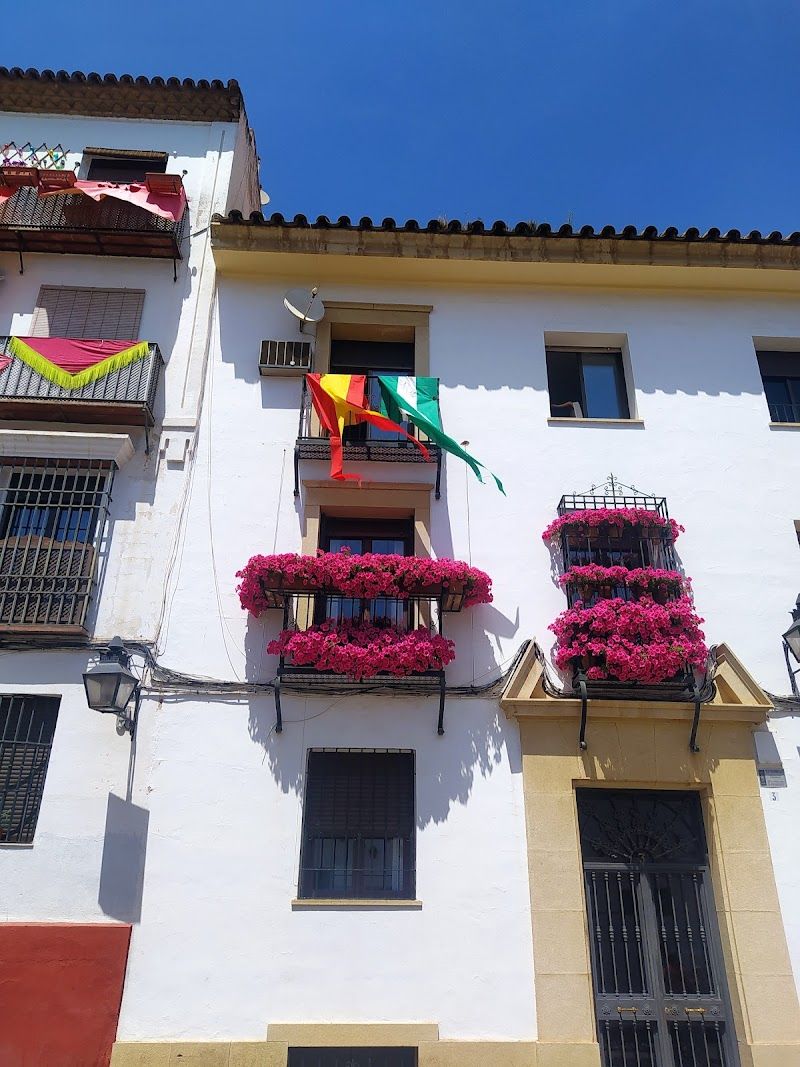
Plaza de Santa Marina sits in one of Córdoba's most authentic residential neighborhoods, centered around a bronze monument to legendary bullfighter Manolete who was born nearby. The square is framed by traditional whitewashed houses with wrought-iron balconies and anchored by the 13th-century Church of Santa Marina de Aguas Santas, one of Córdoba's fernandine churches. You'll find a handful of local bars where neighbors gather for coffee and conversation, plus small shops that serve the community rather than tourists. The plaza has a lived-in quality that feels worlds away from the polished tourist zones. Children play football while their grandparents chat on benches, and locals emerge from the church after evening mass. The Manolete statue draws a steady trickle of bullfighting fans, but most activity revolves around daily neighborhood rhythms. Tables spill out from Bar Santos and other local establishments, where you can nurse a beer for €2 while watching Cordoban life unfold at its natural pace. This isn't a destination you'll spend hours exploring, but it's perfect for a 30-minute break from monument hopping. Most guidebooks barely mention it, which keeps it refreshingly uncommercialized. The church is often closed except for services, so don't plan your visit around going inside. Come for the atmosphere and stay for a drink at one of the family-run bars where English menus don't exist and that's exactly the point.

CordobaBook
Plaza de Espana
Top rated

Plaza de Espana

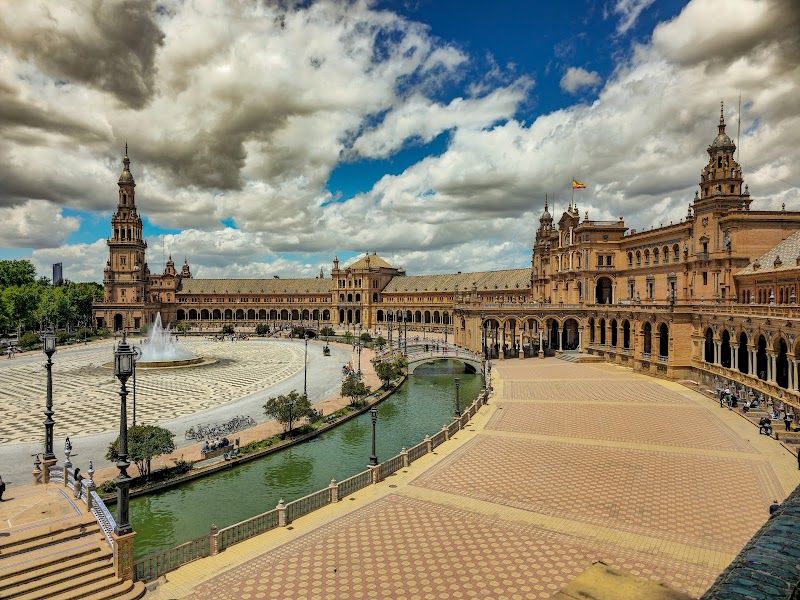
Plaza de España is a massive semicircular plaza built in 1928 for the Ibero-American Exposition, featuring 170 meters of continuous tiled facades, a central fountain, and a canal where you can rent rowboats for €6. The real draw is the 48 ceramic alcoves representing each Spanish province, with hand-painted tiles showing historical scenes and regional maps. The four baroque towers at the canal bridges make this one of Europe's most photogenic squares, which explains why it's appeared in Star Wars Episode II and Lawrence of Arabia. Walking the semicircle takes about 45 minutes if you stop to read the provincial tiles, and the scale hits you immediately when you emerge from María Luisa Park. Tourists cluster around the central fountain and Andalusia alcove, but the far ends of the semicircle stay quieter. The rowboats are surprisingly fun and give you the best perspective of the facade's reflection in the water. The tiles are genuinely beautiful up close, especially the detailed maps and battle scenes. Most guides oversell this as a quick photo stop, but you need 90 minutes to appreciate the craftsmanship properly. Skip the busy midday hours when tour groups dominate, the harsh light washes out the tile colors. The rowboats are worth €6 if you're into photography, but skip them if you just want to walk around. Finding your home province's alcove is touristy but oddly satisfying, the historical details are surprisingly accurate and detailed.

SevilleBook
Alhambra Palace and Generalife Gardens
Top rated

Alhambra Palace and Generalife Gardens

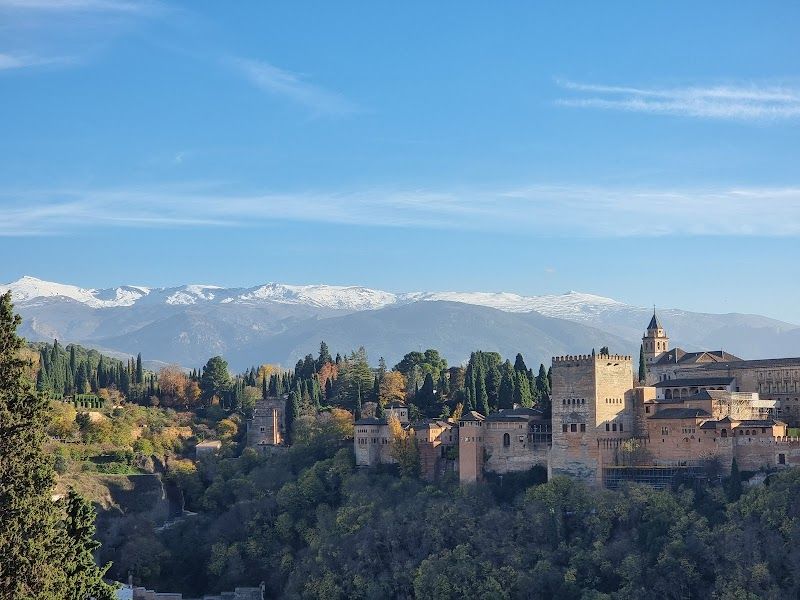
The Alhambra isn't just Spain's most visited monument, it's the most complete Islamic palace complex left on earth. You'll walk through three distinct areas: the military Alcazaba fortress with panoramic views over Granada, the breathtaking Nasrid Palaces with their geometric tile work and stalactite ceilings, and the summer palace gardens of Generalife where water flows through every courtyard. The Court of Lions alone, with its 124 marble columns and central fountain, represents the pinnacle of Islamic decorative art in Europe. The experience flows chronologically through 700 years of Moorish rule, ending at the Catholic Monarchs' Renaissance palace. Morning light streams through the Nasrid Palace courtyards, illuminating intricate Arabic calligraphy carved into every surface. Water is everywhere: trickling down marble channels, pooling in reflecting basins, fountains creating a constant soundtrack. The Generalife gardens feel like stepping into a medieval paradise, with cypress trees framing views back to the palace complex. Most visitors rush through in two hours and miss the subtleties. The EUR 19 general ticket is worth every cent, but your timed Nasrid Palaces entry is non negotiable (guards check strictly). Book 2-3 months ahead or you won't get in. Skip the overpriced palace cafe and bring water. The Charles V Palace museums are free with your ticket and often empty, perfect if you arrive early.

GranadaBook
Metropol Parasol (Las Setas)
Top rated

Metropol Parasol (Las Setas)

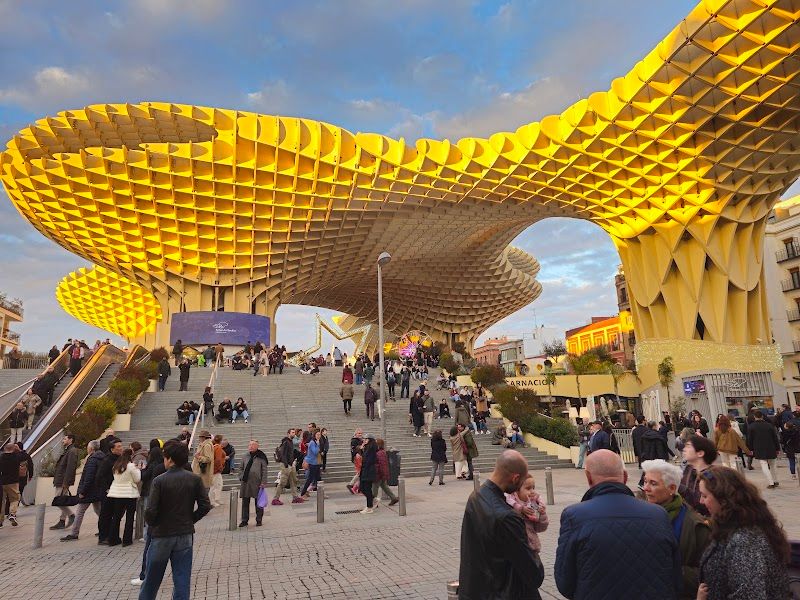
The Metropol Parasol looks like six giant wooden mushrooms that crash-landed in central Seville. This massive lattice structure rises 28 meters above Plaza de la Encarnación, built from bonded timber in an alien-looking waffle pattern that somehow works. You're here for the rooftop walkway (€5), which snakes through the canopy and delivers spectacular views over the old city, plus there's a basement level showcasing Roman ruins discovered during construction. Climbing to the walkway feels like entering a futuristic treehouse. The serpentine path winds through the timber structure, casting intricate shadows that shift throughout the day. You'll peer down at the plaza below while gazing out over terracotta rooftops toward the Cathedral and Giralda tower. The wooden lattice creates natural frames for photos, and the perspective keeps changing as you follow the curved walkway through the parasols. Most guides don't mention that your €5 ticket includes a drink voucher worth €3-5, making the net cost almost nothing. The Roman ruins downstairs require a separate ticket and aren't particularly impressive compared to what you'll see elsewhere in Seville. Skip the morning visit when the light is harsh and shadows are minimal. The structure divides locals (many think it's an eyesore) but visitors consistently love it, especially at golden hour when those geometric shadows create Instagram gold.

SevilleBook
Real Alcázar de Sevilla
Top rated

Real Alcázar de Sevilla

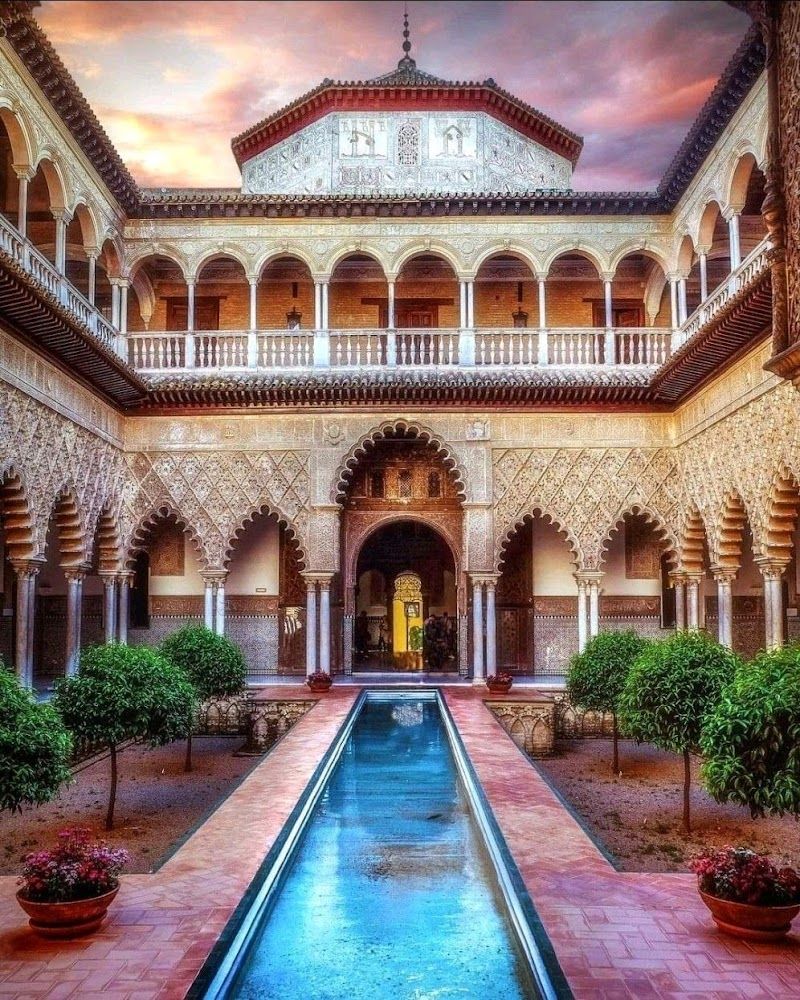
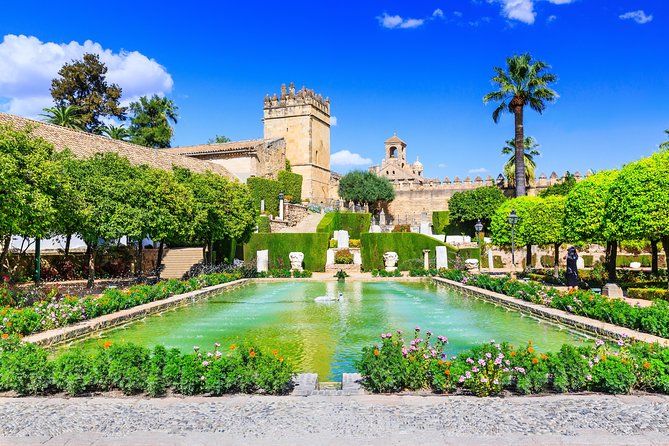
The Real Alcázar isn't just another palace: it's a 14th-century Christian king's love letter to Islamic architecture, built by Pedro I using Granadan craftsmen who created something even more ornate than the Alhambra. You'll walk through rooms where Columbus planned his voyages, marvel at tilework that took decades to complete, and explore gardens where peacocks strut past 500-year-old orange trees. The palace complex spans nearly 1,000 years, from Almohad walls to Renaissance additions, all still functioning as Spain's oldest royal residence. Your visit flows from the austere medieval entrance into increasingly elaborate courtyards, each more breathtaking than the last. The Patio de las Doncellas stops everyone cold: its reflecting pool mirrors intricate muqarnas while afternoon light transforms the space into something almost mystical. You'll climb narrow staircases worn smooth by centuries of footsteps, peek into Pedro's private apartments, then emerge into gardens where the scent of jasmine mingles with fountain spray. Most guides push the full complex, but honestly skip the upper floors (€4.50 extra) unless you're obsessed with 19th-century royal apartments. The real magic happens in the main palace and gardens. Entry costs €13.50, but book online weeks ahead or you'll waste time in crushing lines. Start with the Patio del Yeso, which most people rush past, then work toward the famous courtyards when your eyes are still fresh.

SevilleBook
Seville Cathedral and Giralda Tower
Top rated

Seville Cathedral and Giralda Tower

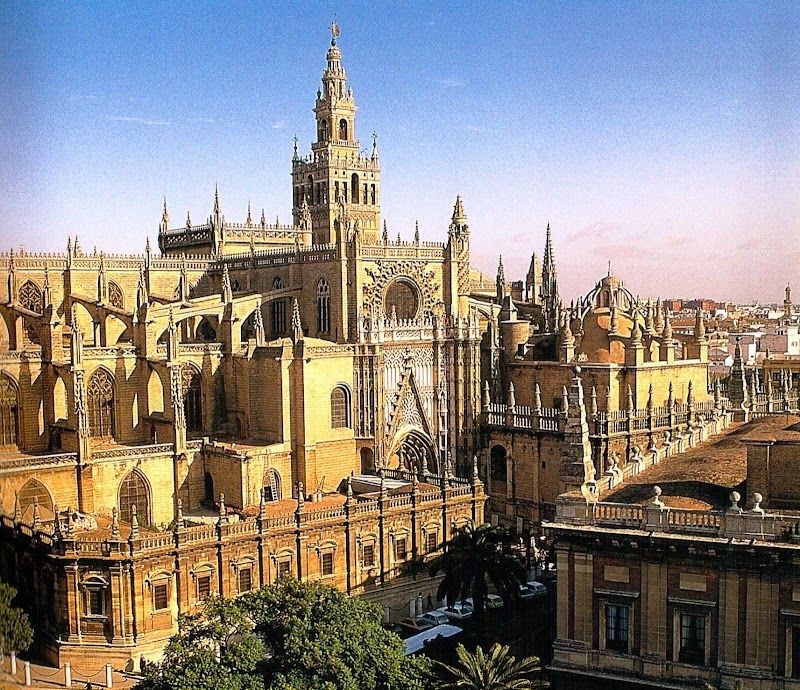
This is the world's largest Gothic cathedral by volume, built on the site of Seville's great mosque between 1401 and 1506. The scale hits you immediately: the nave soars 42 meters high, and the Capilla Mayor houses the world's largest altarpiece, an 80-year golden masterpiece that dominates the space. Columbus rests here in a tomb held by four bronze kings, and the attached Giralda Tower (the original minaret) offers panoramic views from 70 meters up. The visit flows from overwhelming grandeur to intimate discovery. You'll crane your neck at vaulted ceilings, then find yourself studying intricate chapels tucked into corners. The Giralda climb uses ramps instead of stairs, making the ascent surprisingly comfortable. At the top, 360-degree views stretch across Seville's rooftops, the Guadalquivir River, and the sprawling Andalusian landscape beyond. Most guides don't mention that the main entrance queue can stretch for blocks, especially after 10 AM. Entry costs EUR 12 for both cathedral and tower, but buy online and use the Puerta de San Cristóbal entrance on the south side to skip the chaos. The cathedral closes Mondays, and Sunday mornings are for worship only. Plan 90 minutes minimum, but you could easily spend half a day here.

SevilleBook
Roman Bridge (Puente Romano)
Top rated

Roman Bridge (Puente Romano)

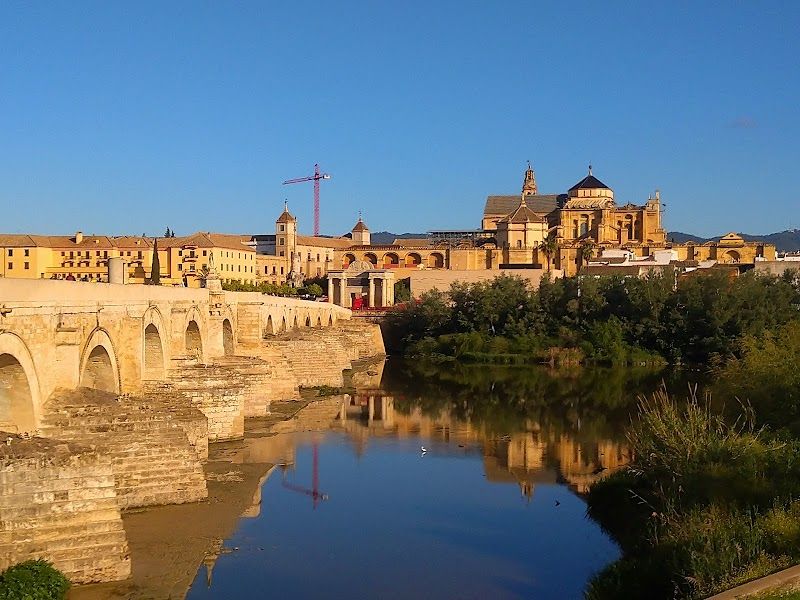
The Puente Romano stretches 331 meters across the Guadalquivir with 16 stone arches that frame Córdoba's defining skyline view. You'll see the Mezquita's bell tower, the Episcopal Palace, and honey-colored medieval walls rising directly from the riverbank. The structure itself mixes Roman foundations with medieval reconstruction, creating a pedestrian-only walkway that doubles as the city's best photography platform. Game of Thrones fans will recognize it as the Long Bridge of Volantis from season five. Walking across feels like stepping into a postcard, especially when the evening light hits the west-facing old town walls. The middle section gives you the classic Mezquita angle, while the Calahorra Tower at the southern end provides context about the bridge's 2,000-year evolution. Water levels in the Guadalquivir vary seasonally, but when it's calm, the reflections double the visual impact. You'll share the space with street musicians, local joggers, and photographers waiting for golden hour. Most guides oversell the Roman authenticity since what you're walking on is largely medieval stonework. The real payoff is the view, not the bridge itself. Skip the Calahorra Tower (EUR 4.50) unless you want rooftop photos looking back toward the Mezquita. The best light happens 30 minutes before sunset when the limestone walls glow amber and reflect in the river below.

CordobaBook
Where to book

Stay in Andalusia

Real-time pricing across hotels, apartments, and ryokans. Book direct from the map.

Day by day

5 Days in Andalusia: Seville, Cordoba & Granada

Five days covering the three great Moorish cities of southern Spain. Fast trains connect them in under two hours, each has a building that justifies the trip, and the tapas get cheaper as you move east.

Day 1Seville

Seville: Cathedral, Alcazar & Triana

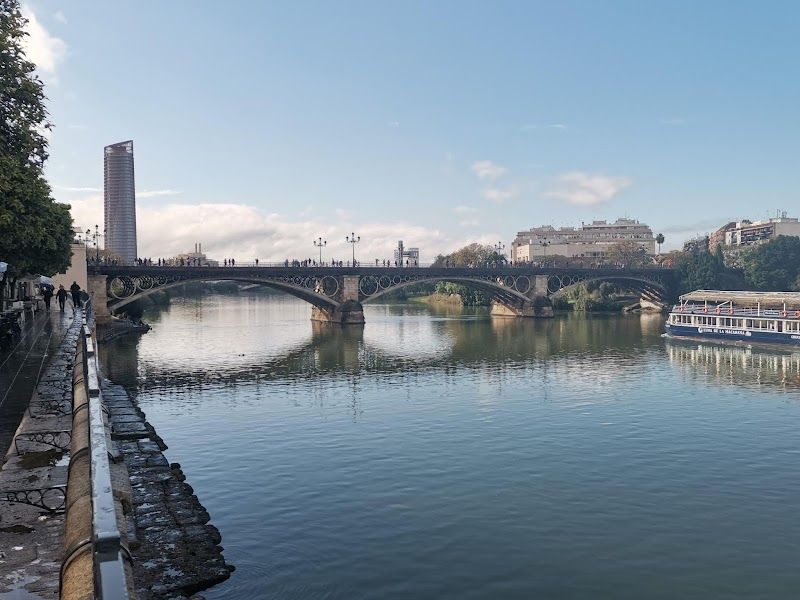
Cathedral and Giralda tower at 9 AM (EUR 12, the largest Gothic church in the world, climb the tower for the rooftop view). Alcazar after (EUR 13.50, the Mudejar palace and Game of Thrones gardens, book ahead). Lunch in Santa Cruz. Afternoon cross to Triana: the ceramics shops, the Mercado de Triana, the flamenco district. Evening tapas on Calle Betis with the cathedral lit up across the river.

Day 2Seville

Seville: Metropol Parasol, Flamenco & Late Night

Morning Plaza de Espana (free, the tiled alcoves representing every Spanish province). Metropol Parasol rooftop (EUR 5, the sunset view). Museum of Fine Arts if art matters to you (EUR 1.50, the best Baroque collection outside Madrid). Evening: flamenco show at Casa de la Memoria (EUR 22, book ahead) or La Carboneria (free, more casual). Tapas in Alameda afterwards. Remember: dinner starts at 10 PM.

Day 3Cordoba

Cordoba: The Mezquita & the Patios

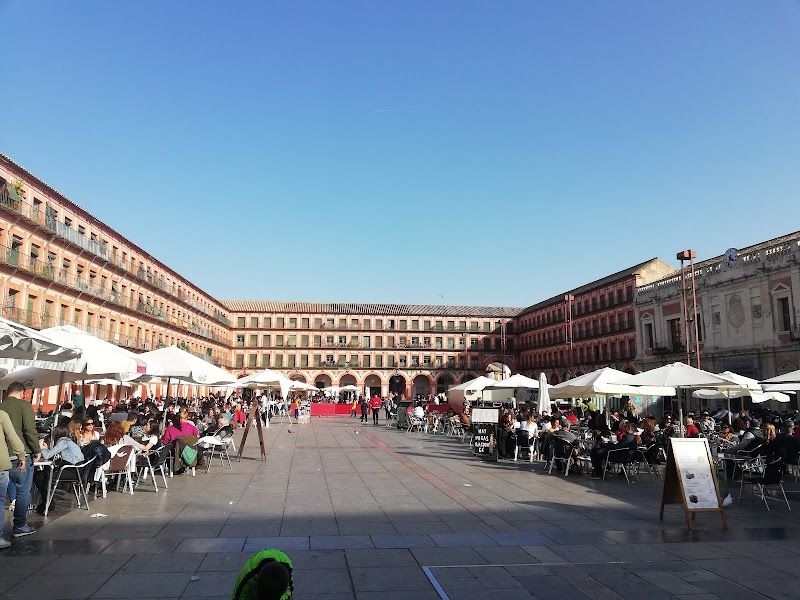
Morning AVE train Seville to Cordoba (45 min, EUR 15-30). Drop bags at hotel, walk to Mezquita for the 10 AM visit (EUR 13, the column forest, the mihrab, the cathedral collision). Lunch in the Juderia (salmorejo is the order, not gazpacho). Afternoon Palacio de Viana (EUR 8, 12 courtyards), Calleja de las Flores, the Synagogue. Sunset from the Roman Bridge. Dinner at a Plaza de la Corredera terrace.

Day 4Granada

Granada: The Alhambra

Morning AVE train Cordoba to Granada (1 hr 40 min, EUR 25-40). Drop bags, head to the Alhambra (EUR 19, your Nasrid Palaces time slot is fixed and non-negotiable, the Generalife gardens, the Alcazaba fortress). This takes 3-4 hours minimum. Late lunch in the centre, free tapas on Calle Navas or Calle Elvira (order a beer, a tapa arrives). Evening Mirador de San Nicolas for sunset (the Alhambra against the Sierra Nevada, the most photographed view in Spain). Dinner: more free tapas.

Day 5Granada

Granada: Albaicin, Sacromonte & Farewell

Morning Albaicin walk (the Moorish quarter, Carrera del Darro along the river with the Alhambra above, the Arab baths, the tea houses on Calle Caldereria Nueva). Lunch in Realejo. Afternoon Sacromonte (the cave neighbourhood, the cave museum EUR 5, optional flamenco in the caves EUR 20-25). Cathedral and Royal Chapel if time allows (EUR 6, Ferdinand and Isabella tombs). Farewell tapas crawl.

Good to know

Practical bits, answered

The AVE high-speed train connects all three cities: Seville to Cordoba 45 minutes (EUR 15-30), Cordoba to Granada 1 hour 40 minutes (EUR 25-40), Seville to Granada 2 hours 30 minutes (EUR 30-50). Book on renfe.com, prices vary by time and demand. A car is not needed for the cities themselves but is useful for the pueblos blancos (white villages) between them. The triangle route works in either direction, but Seville to Cordoba to Granada flows best geographically.

AVE high-speed trains connect all three cities. Seville to Cordoba 45 min. Cordoba to Granada 1 hr 40 min. Book on renfe.com. The triangle works in either direction but Seville to Cordoba to Granada flows best. No car needed for the cities.

Andalusia is the most affordable region in Western Europe for this quality of food and architecture. Free tapas in Granada, EUR 3-5 tapas in Seville and Cordoba. Hotels EUR 60-120/night. The big-ticket items are the Alhambra (EUR 19), Seville Cathedral (EUR 12), Alcazar (EUR 13.50), and Mezquita (EUR 13). Total monument spend for the full triangle: under EUR 70.

Ready for Andalusia?

Let DAIZ plan your Andalusia days

Tell us how long you've got and what you're into. We'll build a day-by-day plan, with the bookable bits ready to lock in.

Plan my Andalusia tripFree · no signup to start
Plan your Andalusia trip