Seville · Maria Luisa & Plaza de Espana

Pabellón de Brasil

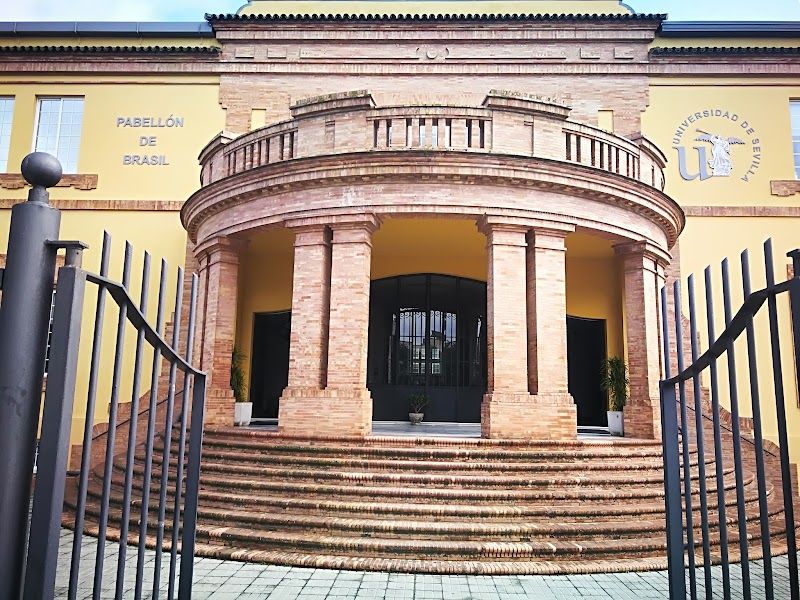
This angular concrete pavilion was Brazil's contribution to Seville's 1929 Ibero-American Exposition, and it's aged into something genuinely striking.
Pabellón de Brasil, Seville · Maria Luisa & Plaza de Espana
Category
Cultural Site
Duration
45 minutes
Best Time
Morning
Entry
The place

About Pabellón de Brasil

This angular concrete pavilion was Brazil's contribution to Seville's 1929 Ibero-American Exposition, and it's aged into something genuinely striking. The stepped modernist design looks like someone stacked concrete blocks with mathematical precision, creating dramatic shadows and geometric lines that photograph beautifully. Inside, rotating contemporary art exhibitions fill the cool, minimalist spaces, while the surrounding gardens offer genuine respite from Seville's heat with mature palms and shaded benches.

Walking around the pavilion feels like discovering a piece of 1920s futurism that actually got built. The interior spaces flow naturally from room to room, with high ceilings and clean lines that let whatever exhibition is running breathe properly. Outside, the gardens wrap around the building in terraced levels, creating intimate pockets where locals come to read or chat quietly. The contrast between the hard concrete geometry and soft plantings works better than it should on paper.

Most guides inflate this as essential viewing, but it's really worth your time only if contemporary art interests you or you need a quiet break from tourist crowds. Exhibitions change regularly and entry is typically free, though some special shows charge 3-5 EUR. Skip it if you're rushing between major sights, but it's perfect for a contemplative 45 minutes when the Alcázar queues look brutal or you need air conditioning.

Book ahead

Book Tickets

Live availability and skip-the-line options from our booking partners.

Search on Viator →Search on GetYourGuide →

Booking powered by our partners. DAIZ may earn a commission.
The place

Getting there

Address
Pabellón de Brasil, 41013 Sevilla, Spain
Neighborhood
Maria Luisa & Plaza de Espana
View on Google Maps →
Good to know

Tips, answered

Enter through the garden side rather than the street entrance for the best first impression of the stepped architecture against the palm trees

Most visitors walk straight to the building and miss the upper terrace gardens completely, which have the best views back toward the pavilion's geometric facade

Come between 4-6pm when the low sun creates dramatic shadows on the concrete steps and the gardens are pleasantly cool

Plan for about 45 minutes. Morning visits are typically less crowded.

Pabellón de Brasil is in the Maria Luisa & Plaza de Espana neighborhood of Seville. The address is Pabellón de Brasil, 41013 Sevilla, Spain. The area is well-served by metro.

Morning visits, especially early, mean fewer crowds and better light for photos. Weekdays are significantly quieter than weekends.

Comfortable shoes are recommended. Parts are outdoors, so bring a light layer.

Around the corner

Nearby in Maria Luisa & Plaza de Espana

Explore all →
Plaza de Espana
Landmark

Plaza de Espana

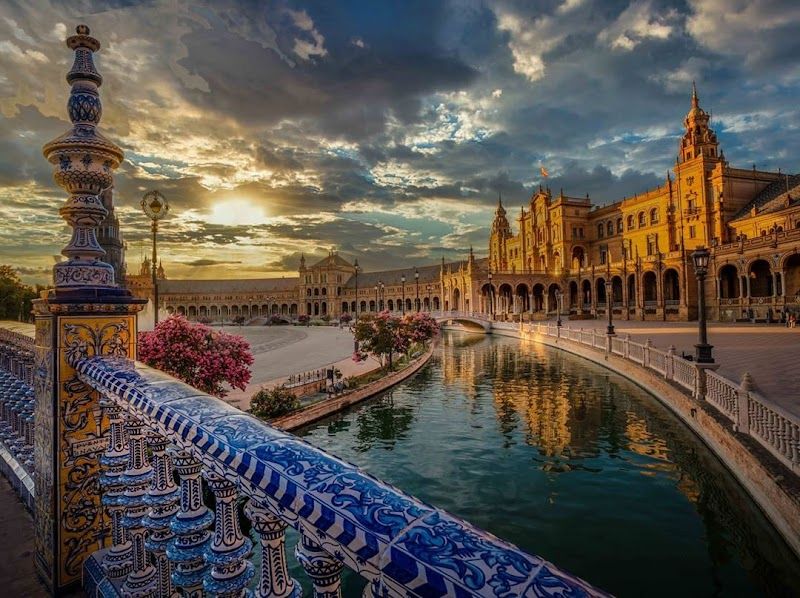
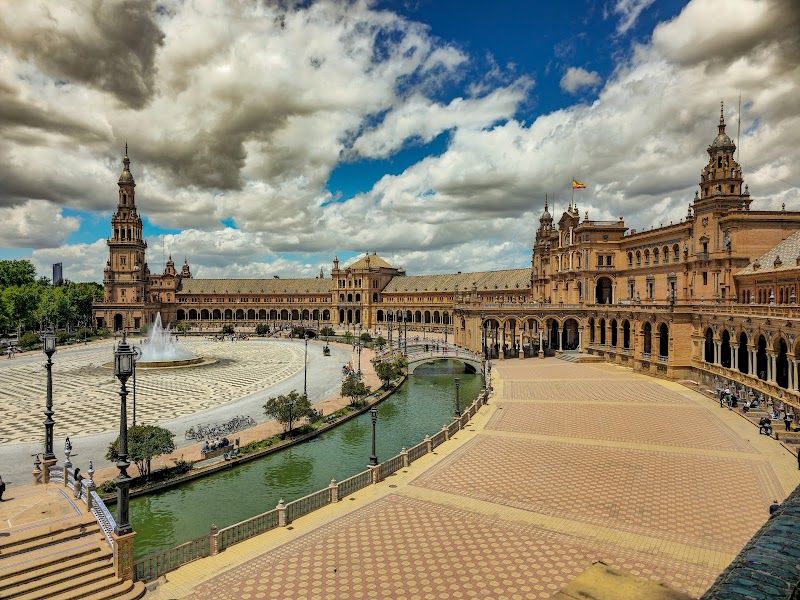
Plaza de España is a massive semicircular plaza built in 1928 for the Ibero-American Exposition, featuring 170 meters of continuous tiled facades, a central fountain, and a canal where you can rent rowboats for €6. The real draw is the 48 ceramic alcoves representing each Spanish province, with hand-painted tiles showing historical scenes and regional maps. The four baroque towers at the canal bridges make this one of Europe's most photogenic squares, which explains why it's appeared in Star Wars Episode II and Lawrence of Arabia. Walking the semicircle takes about 45 minutes if you stop to read the provincial tiles, and the scale hits you immediately when you emerge from María Luisa Park. Tourists cluster around the central fountain and Andalusia alcove, but the far ends of the semicircle stay quieter. The rowboats are surprisingly fun and give you the best perspective of the facade's reflection in the water. The tiles are genuinely beautiful up close, especially the detailed maps and battle scenes. Most guides oversell this as a quick photo stop, but you need 90 minutes to appreciate the craftsmanship properly. Skip the busy midday hours when tour groups dominate, the harsh light washes out the tile colors. The rowboats are worth €6 if you're into photography, but skip them if you just want to walk around. Finding your home province's alcove is touristy but oddly satisfying, the historical details are surprisingly accurate and detailed.

45 min - 1.5 hoursExplore
Parque de María Luisa
Park & Garden

Parque de María Luisa

Parque de María Luisa is Seville's sprawling green escape, a 34-hectare maze of shaded paths, ornamental ponds, and tile-covered benches that once served as the private gardens of San Telmo Palace. The park feels like an outdoor museum with its scattered pavilions from the 1929 Exposition, including the Archaeological Museum and the trio of buildings around Plaza de América. You'll walk past duck-filled ponds under canopies of orange trees, stumble upon ceramic-tiled alcoves, and discover fountains tucked between palm groves. The experience flows naturally from one discovery to the next as you follow winding paths that seem designed to get you pleasantly lost. Families spread picnics on the grass while joggers weave around baby strollers and elderly couples on benches. The atmosphere shifts from formal near the museum buildings to wild and overgrown in the park's southern reaches. Every turn reveals another tiled fountain or shaded grove, and the sound of water trickling creates a constant backdrop. Most visitors rush through here as a quick stop between Plaza de España and the city center, which is a mistake. The real magic happens when you slow down and let yourself wander aimlessly for at least 90 minutes. Skip the crowded central paths during weekend afternoons when local families pack the place. The Archaeological Museum costs €1.50 but honestly, the outdoor architecture is more interesting than what's inside.

1-2 hoursExplore
Museo de Artes y Costumbres Populares
Museum

Museo de Artes y Costumbres Populares

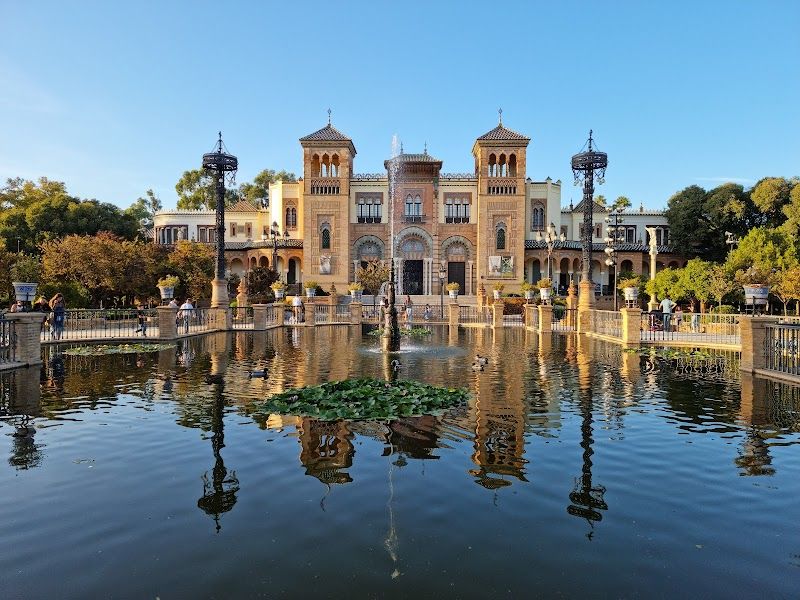
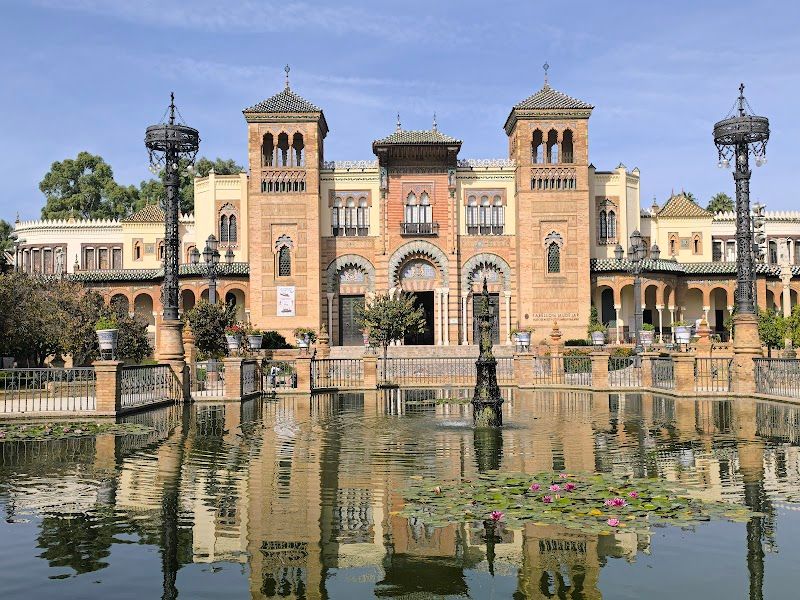
The Museo de Artes y Costumbres Populares occupies one of Seville's most stunning buildings, the ornate Mudéjar Pavilion built for the 1929 Ibero-American Exposition. Inside you'll find an extensive collection of traditional Andalusian life: elaborate flamenco dresses, intricate religious brotherhood regalia, traditional ceramics from Triana, and recreated workshops showing how blacksmiths, weavers, and embroiderers once worked. The building itself steals the show with its magnificent tilework, carved plaster ceilings, and peaceful courtyards. Walking through feels like exploring a wealthy Sevillian mansion frozen in time. The ground floor showcases religious artifacts and festival costumes, while upstairs you'll discover domestic life exhibits including traditional kitchens, bedrooms, and workshops. The tile work is phenomenal throughout, particularly in the central courtyard where geometric patterns climb the walls. Natural light filters through the galleries beautifully, making the glazed ceramics and silk embroidery shimmer. Entry costs just 1.50 EUR, making this one of Seville's best cultural bargains. Most visitors rush through in 30 minutes, but you'll need at least an hour to appreciate the craftsmanship properly. The museum suffers from outdated lighting in some rooms, making detailed viewing difficult. Skip the basement level entirely as it's poorly lit and houses mainly storage displays.

1-1.5 hoursExplore
Museo Arqueológico de Sevilla
Museum

Museo Arqueológico de Sevilla

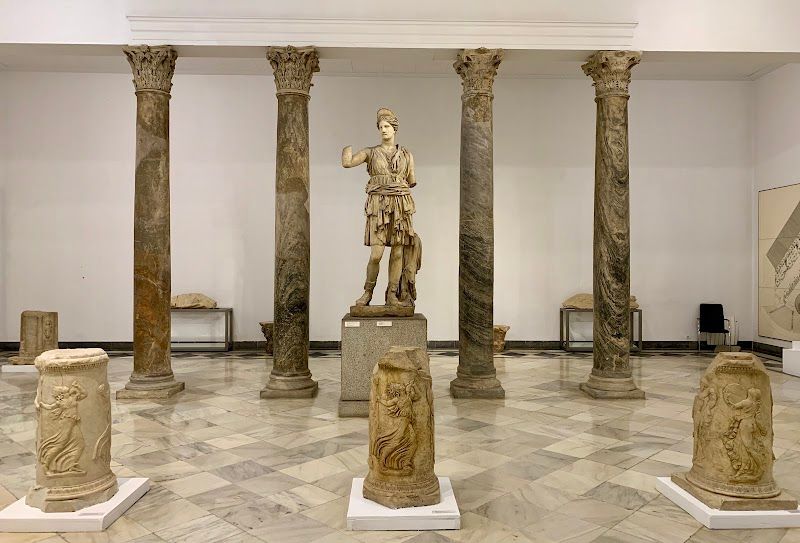
Sevilla's archaeological museum houses Spain's most important collection of Roman artifacts, anchored by treasures from nearby Italica where emperors Trajan and Hadrian were born. You'll see intricate mosaics, marble sculptures, and the show-stopping Carambolo Treasure: 21 pieces of Tartessian gold jewelry that predate the Romans by centuries. The collection spans 3,000 years, from Iberian stone carvings through Islamic ceramics, all displayed in a beautiful 1929 pavilion. The experience flows chronologically across two floors, starting with prehistoric flint tools and ending with Moorish pottery. The Roman galleries steal the show: life-sized marble statues, detailed floor mosaics from villa dining rooms, and bronze household objects that feel surprisingly modern. The building itself adds atmosphere with its Neo-Renaissance architecture and natural lighting that makes the marble sculptures glow. The basement treasure room feels like a bank vault, which fits the priceless gold work inside. At €1.50 for EU citizens (€3 for others), it's Sevilla's best museum value, but most guidebooks barely mention it. Skip the prehistoric section unless you're genuinely interested in stone axes. The Islamic collection feels thin compared to the Alcázar's displays. Focus your 90 minutes on the Roman galleries and that basement treasure room, which too many visitors miss entirely because the signage is poor.

1.5 hoursExplore
Glorieta de Bécquer
Landmark

Glorieta de Bécquer

The Glorieta de Bécquer honors Seville's most beloved Romantic poet with an intimate marble monument that locals actually use. You'll find Gustavo Adolfo Bécquer's seated figure surrounded by three women representing different stages of love: illusion, realization, and memory. The sculpture sits in a small circular garden where century-old trees create natural shade over traditional Sevillian tile benches. It's genuinely peaceful here, unlike the tourist chaos elsewhere in Parque de María Luisa. The monument feels more like a neighborhood reading room than a typical tourist stop. Elderly Sevillanos bring books and newspapers, students sketch the sculptures, and couples sit quietly on the ceramic benches decorated with excerpts from Bécquer's poems. The filtered light through olive and orange trees changes throughout the day, creating different moods around the white marble figures. You'll hear birds more than traffic, and the atmosphere invites you to slow down rather than snap photos and leave. Most guidebooks oversell this as a major attraction when it's really a lovely five-minute pause during your Parque de María Luisa walk. Don't make a special trip just for this, but absolutely stop when you're heading to Plaza de España. The best approach is from the main park path near the Teatro Lope de Vega. Entry is free, and you won't need more than 15 minutes unless you're genuinely moved to sit and read poetry.

15-30 minutesExplore
More on Seville

From the blog

View all →
Ready for Seville?

Let DAIZ plan your Seville days

Tell us how long you've got and what you're into. We'll build a day-by-day plan, with the bookable bits ready to lock in.

Plan my Seville tripFree · no signup to start
Plan your Seville trip