Spain

Seville

The largest Gothic cathedral, flamenco close enough to feel it, free tapas with your beer, and a city that does not eat dinner until 10 PM
Seville, Spain
Best Time
March-May and October-November
Ideal Trip
2-3 days
Language
Spanish
Currency
EUR
Budget
EUR 31-67/day
The place

About Seville

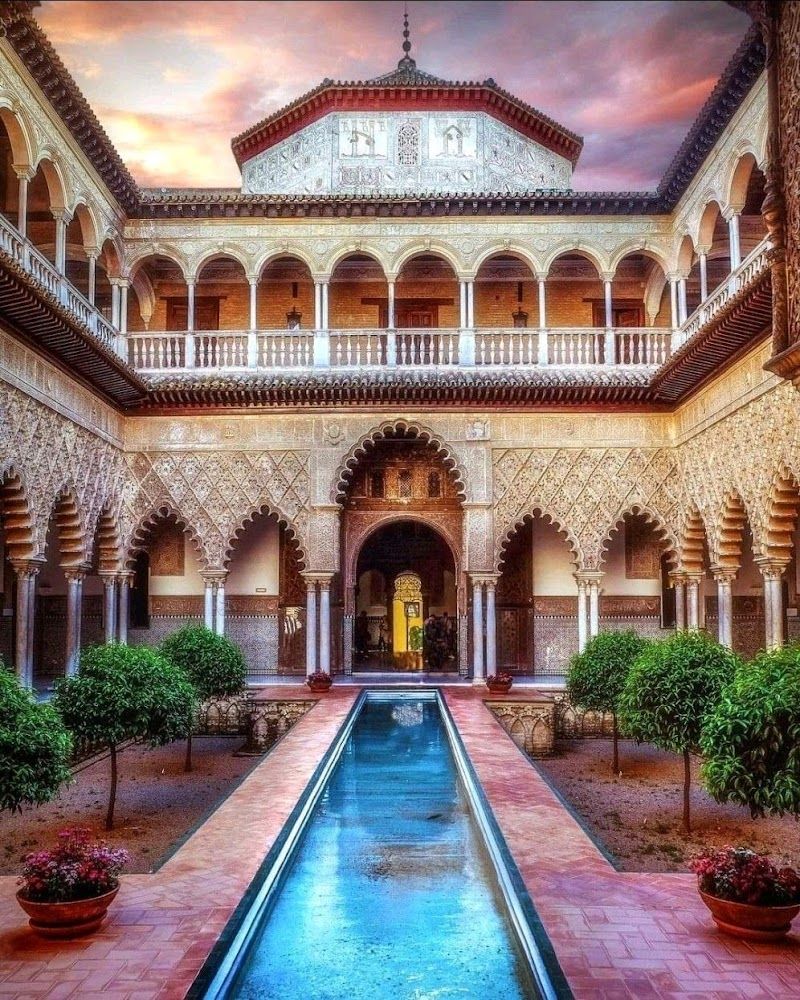
Seville is the city that takes everything seriously except punctuality. Flamenco was born here and is still performed in small tablaos where the dancer is close enough to sweat on you, which is the point. The Cathedral is the largest Gothic church in the world and it contains Columbus's tomb, which four kings carry on their shoulders in perpetuity because Seville does not do understatement. The Alcazar next door is a Mudejar palace that looks like the Alhambra's more extravagant cousin, with gardens that HBO used for Game of Thrones, and it costs EUR 13.50 to enter a building that makes most European palaces look restrained.

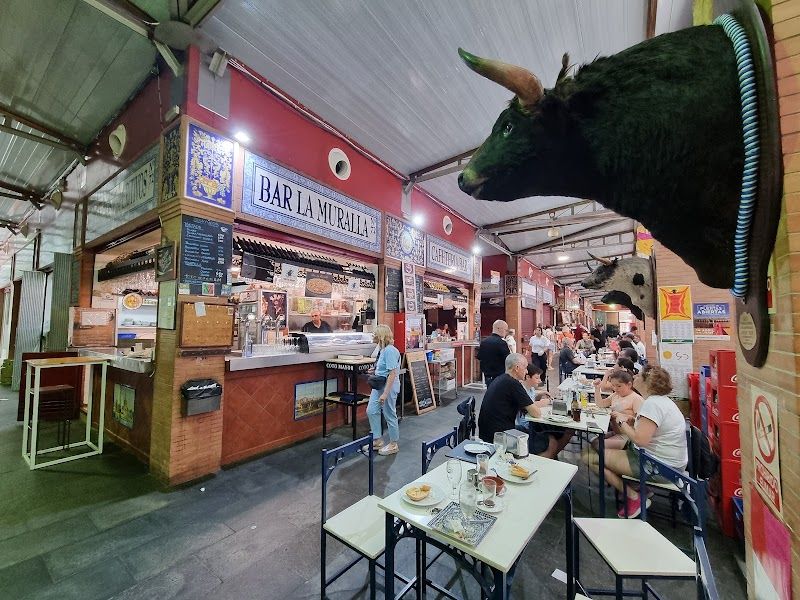
The heat defines everything. From June to September, Seville regularly hits 40 degrees Celsius and the city empties between 2 PM and 6 PM. This is not laziness, it is survival. The locals eat lunch at 2 PM, sleep until 5, and then the city comes back to life for the evening paseo along the Guadalquivir. Tapas start at 9 PM. Dinner starts at 10 PM. If you arrive at a restaurant at 7 PM asking for dinner, the waiter will assume you are a tourist and he will be correct. A tapa in a neighbourhood bar costs EUR 3-4 and comes free with your beer in some places, which is the Andalusian tradition that the rest of Spain abandoned.

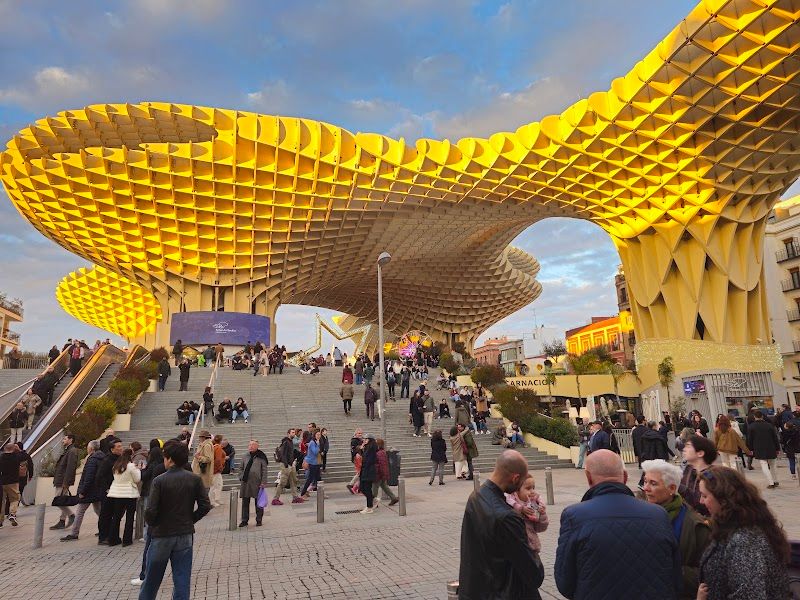
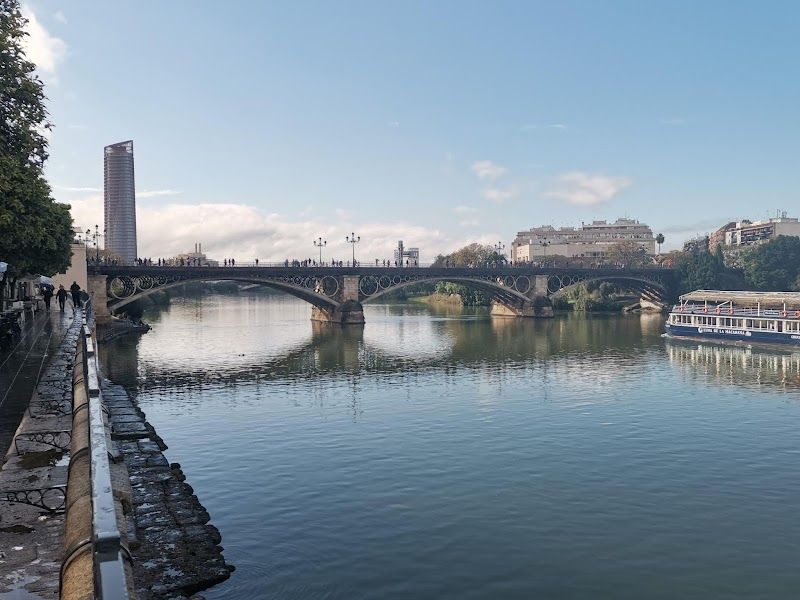
The neighbourhoods are where Seville rewards walkers. Santa Cruz is the old Jewish quarter below the Alcazar, a labyrinth of narrow lanes, flower-draped patios, and tile-fronted buildings. Triana is across the river, the flamenco and ceramics district where the bars are cheaper and the locals are louder. The Metropol Parasol is a wooden waffle-grid structure in the middle of the old town that looks like it landed from another planet, and the rooftop walkway (EUR 5) gives you a sunset view that earns the entry fee in 30 seconds.

Where to stay

Pick your base

Explore all neighborhoods
Where to book

Stay in Seville

Real-time pricing across hotels, apartments, and ryokans. Book direct from the map.

What to do

Things to do in Seville

View all activities
Plaza de Espana
Landmark

Plaza de Espana

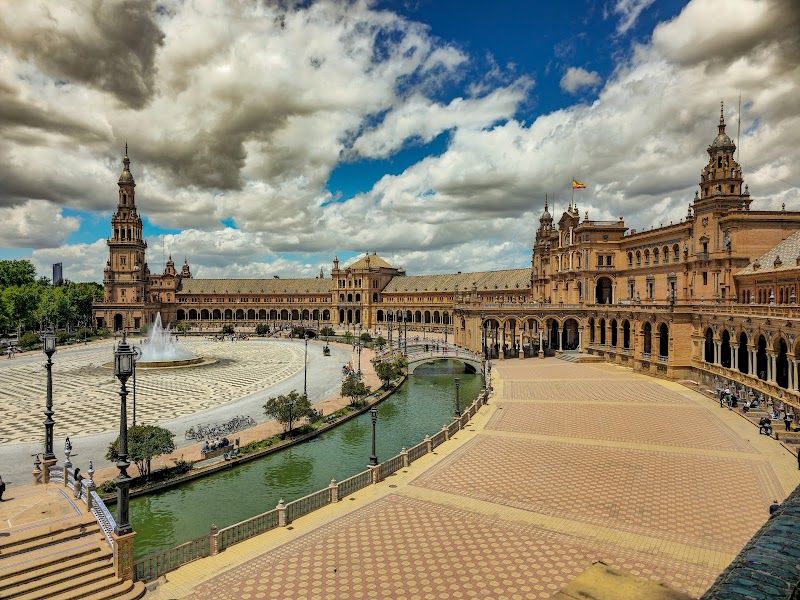
Plaza de España is a massive semicircular plaza built in 1928 for the Ibero-American Exposition, featuring 170 meters of continuous tiled facades, a central fountain, and a canal where you can rent rowboats for €6. The real draw is the 48 ceramic alcoves representing each Spanish province, with hand-painted tiles showing historical scenes and regional maps. The four baroque towers at the canal bridges make this one of Europe's most photogenic squares, which explains why it's appeared in Star Wars Episode II and Lawrence of Arabia. Walking the semicircle takes about 45 minutes if you stop to read the provincial tiles, and the scale hits you immediately when you emerge from María Luisa Park. Tourists cluster around the central fountain and Andalusia alcove, but the far ends of the semicircle stay quieter. The rowboats are surprisingly fun and give you the best perspective of the facade's reflection in the water. The tiles are genuinely beautiful up close, especially the detailed maps and battle scenes. Most guides oversell this as a quick photo stop, but you need 90 minutes to appreciate the craftsmanship properly. Skip the busy midday hours when tour groups dominate, the harsh light washes out the tile colors. The rowboats are worth €6 if you're into photography, but skip them if you just want to walk around. Finding your home province's alcove is touristy but oddly satisfying, the historical details are surprisingly accurate and detailed.

45 min - 1.5 hoursExplore
Metropol Parasol (Las Setas)
Landmark

Metropol Parasol (Las Setas)

The Metropol Parasol looks like six giant wooden mushrooms that crash-landed in central Seville. This massive lattice structure rises 28 meters above Plaza de la Encarnación, built from bonded timber in an alien-looking waffle pattern that somehow works. You're here for the rooftop walkway (€5), which snakes through the canopy and delivers spectacular views over the old city, plus there's a basement level showcasing Roman ruins discovered during construction. Climbing to the walkway feels like entering a futuristic treehouse. The serpentine path winds through the timber structure, casting intricate shadows that shift throughout the day. You'll peer down at the plaza below while gazing out over terracotta rooftops toward the Cathedral and Giralda tower. The wooden lattice creates natural frames for photos, and the perspective keeps changing as you follow the curved walkway through the parasols. Most guides don't mention that your €5 ticket includes a drink voucher worth €3-5, making the net cost almost nothing. The Roman ruins downstairs require a separate ticket and aren't particularly impressive compared to what you'll see elsewhere in Seville. Skip the morning visit when the light is harsh and shadows are minimal. The structure divides locals (many think it's an eyesore) but visitors consistently love it, especially at golden hour when those geometric shadows create Instagram gold.

45 min - 1 hourExplore
Real Alcázar de Sevilla
Tour

Real Alcázar de Sevilla

The Real Alcázar isn't just another palace: it's a 14th-century Christian king's love letter to Islamic architecture, built by Pedro I using Granadan craftsmen who created something even more ornate than the Alhambra. You'll walk through rooms where Columbus planned his voyages, marvel at tilework that took decades to complete, and explore gardens where peacocks strut past 500-year-old orange trees. The palace complex spans nearly 1,000 years, from Almohad walls to Renaissance additions, all still functioning as Spain's oldest royal residence. Your visit flows from the austere medieval entrance into increasingly elaborate courtyards, each more breathtaking than the last. The Patio de las Doncellas stops everyone cold: its reflecting pool mirrors intricate muqarnas while afternoon light transforms the space into something almost mystical. You'll climb narrow staircases worn smooth by centuries of footsteps, peek into Pedro's private apartments, then emerge into gardens where the scent of jasmine mingles with fountain spray. Most guides push the full complex, but honestly skip the upper floors (€4.50 extra) unless you're obsessed with 19th-century royal apartments. The real magic happens in the main palace and gardens. Entry costs €13.50, but book online weeks ahead or you'll waste time in crushing lines. Start with the Patio del Yeso, which most people rush past, then work toward the famous courtyards when your eyes are still fresh.

2 hoursExplore
Seville Cathedral and Giralda Tower
Landmark

Seville Cathedral and Giralda Tower

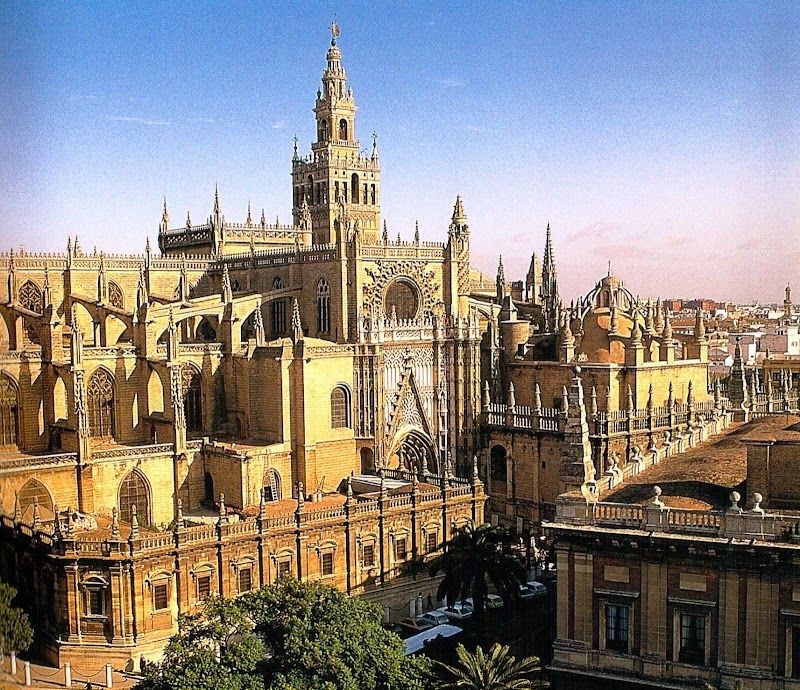
This is the world's largest Gothic cathedral by volume, built on the site of Seville's great mosque between 1401 and 1506. The scale hits you immediately: the nave soars 42 meters high, and the Capilla Mayor houses the world's largest altarpiece, an 80-year golden masterpiece that dominates the space. Columbus rests here in a tomb held by four bronze kings, and the attached Giralda Tower (the original minaret) offers panoramic views from 70 meters up. The visit flows from overwhelming grandeur to intimate discovery. You'll crane your neck at vaulted ceilings, then find yourself studying intricate chapels tucked into corners. The Giralda climb uses ramps instead of stairs, making the ascent surprisingly comfortable. At the top, 360-degree views stretch across Seville's rooftops, the Guadalquivir River, and the sprawling Andalusian landscape beyond. Most guides don't mention that the main entrance queue can stretch for blocks, especially after 10 AM. Entry costs EUR 12 for both cathedral and tower, but buy online and use the Puerta de San Cristóbal entrance on the south side to skip the chaos. The cathedral closes Mondays, and Sunday mornings are for worship only. Plan 90 minutes minimum, but you could easily spend half a day here.

1.5-2 hoursExplore
Parque de María Luisa
Park & Garden

Parque de María Luisa

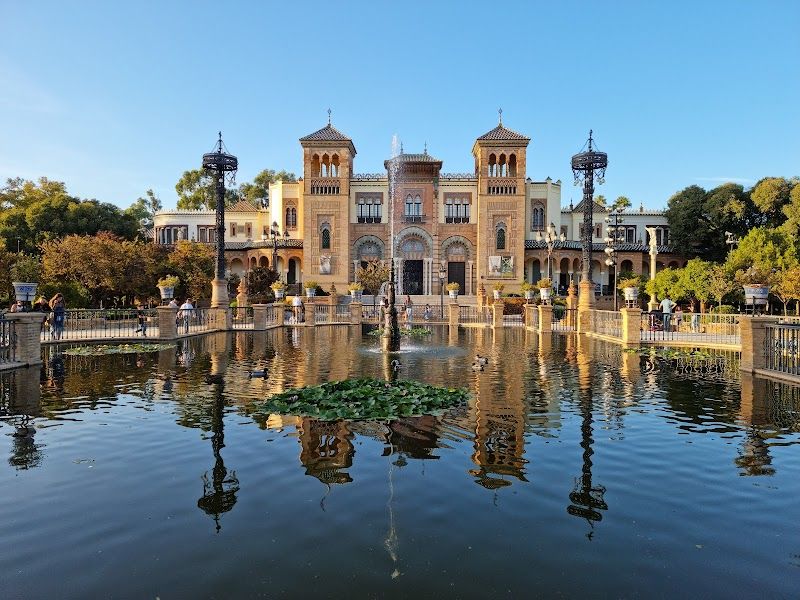
Parque de María Luisa is Seville's sprawling green escape, a 34-hectare maze of shaded paths, ornamental ponds, and tile-covered benches that once served as the private gardens of San Telmo Palace. The park feels like an outdoor museum with its scattered pavilions from the 1929 Exposition, including the Archaeological Museum and the trio of buildings around Plaza de América. You'll walk past duck-filled ponds under canopies of orange trees, stumble upon ceramic-tiled alcoves, and discover fountains tucked between palm groves. The experience flows naturally from one discovery to the next as you follow winding paths that seem designed to get you pleasantly lost. Families spread picnics on the grass while joggers weave around baby strollers and elderly couples on benches. The atmosphere shifts from formal near the museum buildings to wild and overgrown in the park's southern reaches. Every turn reveals another tiled fountain or shaded grove, and the sound of water trickling creates a constant backdrop. Most visitors rush through here as a quick stop between Plaza de España and the city center, which is a mistake. The real magic happens when you slow down and let yourself wander aimlessly for at least 90 minutes. Skip the crowded central paths during weekend afternoons when local families pack the place. The Archaeological Museum costs €1.50 but honestly, the outdoor architecture is more interesting than what's inside.

1-2 hoursExplore
Alameda de Hércules
Park & Garden

Alameda de Hércules

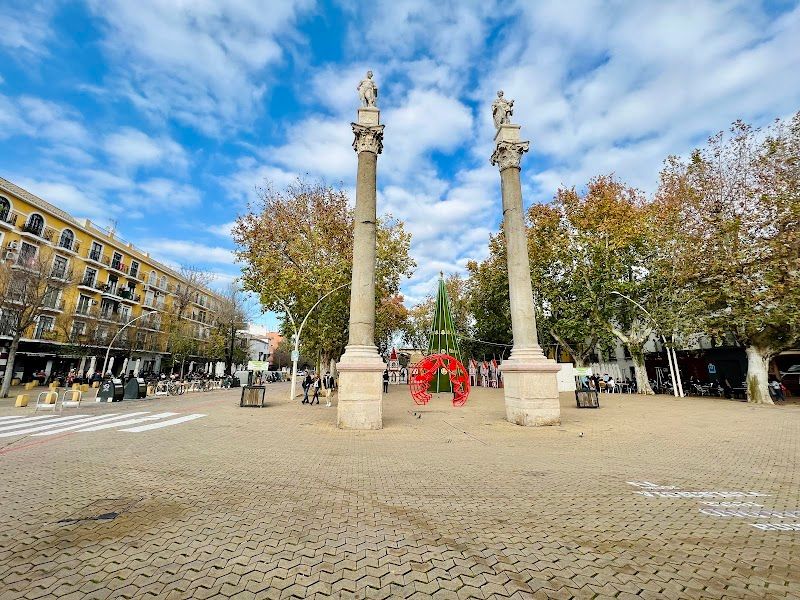
Alameda de Hércules stretches for six blocks through Seville's most bohemian neighborhood, anchored by two genuine Roman columns topped with statues of Hercules and Julius Caesar at the southern end. This rectangular promenade, created in the 16th century from a drained swampland, has become the city's unofficial outdoor living room where locals gather day and night. You'll find outdoor terraces lining both sides, palm trees providing shade, and a distinctly local crowd that feels refreshingly removed from Seville's tourist trail. The atmosphere shifts dramatically throughout the day. Mornings bring dog walkers and joggers, while afternoons see families claiming benches under the trees. By evening, the outdoor bars fill with university students and young professionals nursing beers and sharing tapas plates. The Sunday flea market transforms the space completely, with vendors spreading vintage clothes, old records, and random antiques across the pavement while neighbors browse and chat. Most guidebooks oversell this as a major attraction, but it's really about soaking up authentic Seville neighborhood life. The bars charge standard prices (€2.50 for beer, €4-6 for tapas), and the flea market runs more toward junk than treasures. Skip the touristy restaurants at the Hercules end and head toward the northern section where locals actually hang out.

30 minutes to 1 hourExplore
Casa de Pilatos
Landmark

Casa de Pilatos

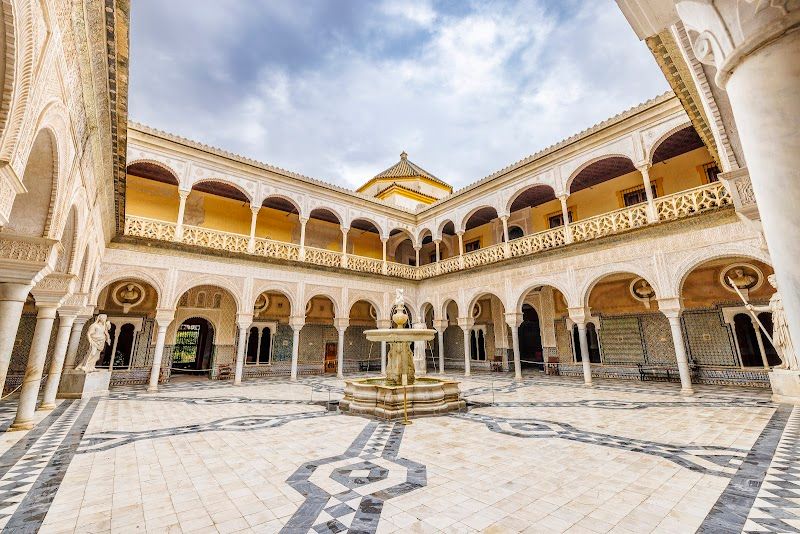
Casa de Pilatos showcases the most sophisticated blend of Mudéjar and Renaissance architecture in Seville, built by the first Marquis of Tarifa after his pilgrimage to Jerusalem in 1519. You'll find elaborate geometric azulejo tilework covering entire walls, intricate coffered ceilings, and a central patio surrounded by marble columns and classical busts. The palace name comes from local belief that it replicated Pontius Pilate's house, though it's actually inspired by Italian Renaissance palaces the Marquis admired during his travels. Walking through feels like discovering a private museum where you can actually get close to the artwork. The ground floor's patio draws gasps with its perfect symmetry and detailed tile patterns, while upstairs rooms contain original 16th century frescoes depicting mythological scenes. Unlike the Alcázar, you'll often have entire rooms to yourself, letting you photograph details and study the craftsmanship without crowds pressing behind you. Most visitors make the mistake of buying the 10 EUR ground floor ticket, missing the palace's best features upstairs. The full 12 EUR ticket includes private apartments with stunning frescoes and the family chapel with an impressive altar. Skip the audio guide at 3 EUR, the English descriptions on wall plaques are sufficient. The morning light illuminates the central patio beautifully, making tile colors pop for photos.

1-1.5 hoursExplore
Tablao Flamenco Show
Experience

Tablao Flamenco Show

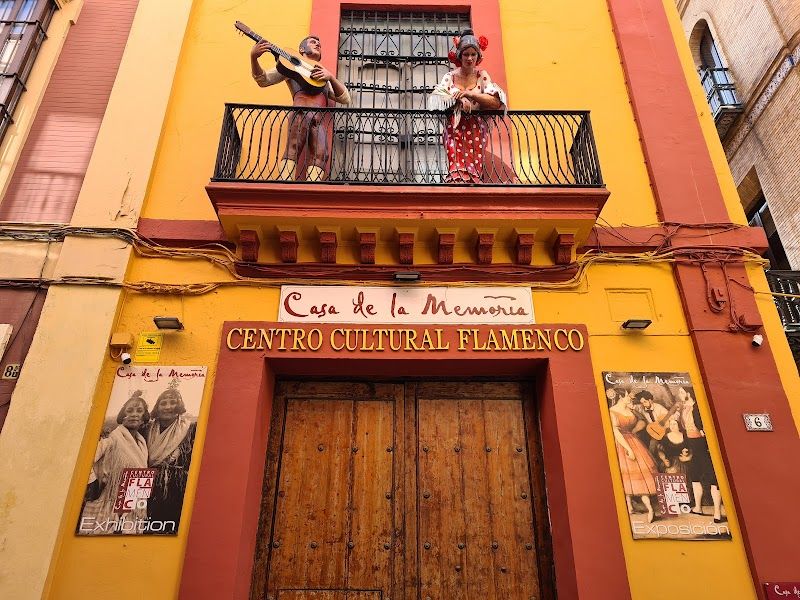
Flamenco was born in Seville, and the tablaos here deliver the authentic experience you can't get anywhere else. These intimate performance spaces put you close enough to hear the dancers' feet striking wooden floors and see the intensity in their eyes. The three best venues are Casa de la Memoria (EUR 22, most intimate at 100 seats), Casa del Flamenco (EUR 22, set in a stunning 16th-century palace courtyard), and Tablao El Arenal (EUR 26-44 with dinner options). All run multiple nightly shows with consistently excellent rotating performers. You'll sit in candlelit spaces where every stomp reverberates through your chest and every guitar note feels personal. The passion is unmistakable: singers pour their hearts into ancient songs while dancers channel centuries of Andalusian soul through precise, powerful movements. The atmosphere builds throughout each 45-75 minute performance, with audiences growing more captivated as the intensity escalates. These aren't polished theater productions but raw, emotional experiences where each night feels slightly different. Most tourists book the early 7 PM shows, but the 9 PM performances have more experienced audiences and the dancers seem more engaged. All three venues sell out during Feria de Abril (May) and August, so book a week ahead then. Skip the dinner packages unless you specifically want the combination: the food is decent but overpriced. Casa de la Memoria offers the most intimate setting if you want to feel completely immersed.

45-75 minutesExplore
Iglesia del Salvador
Cultural Site

Iglesia del Salvador

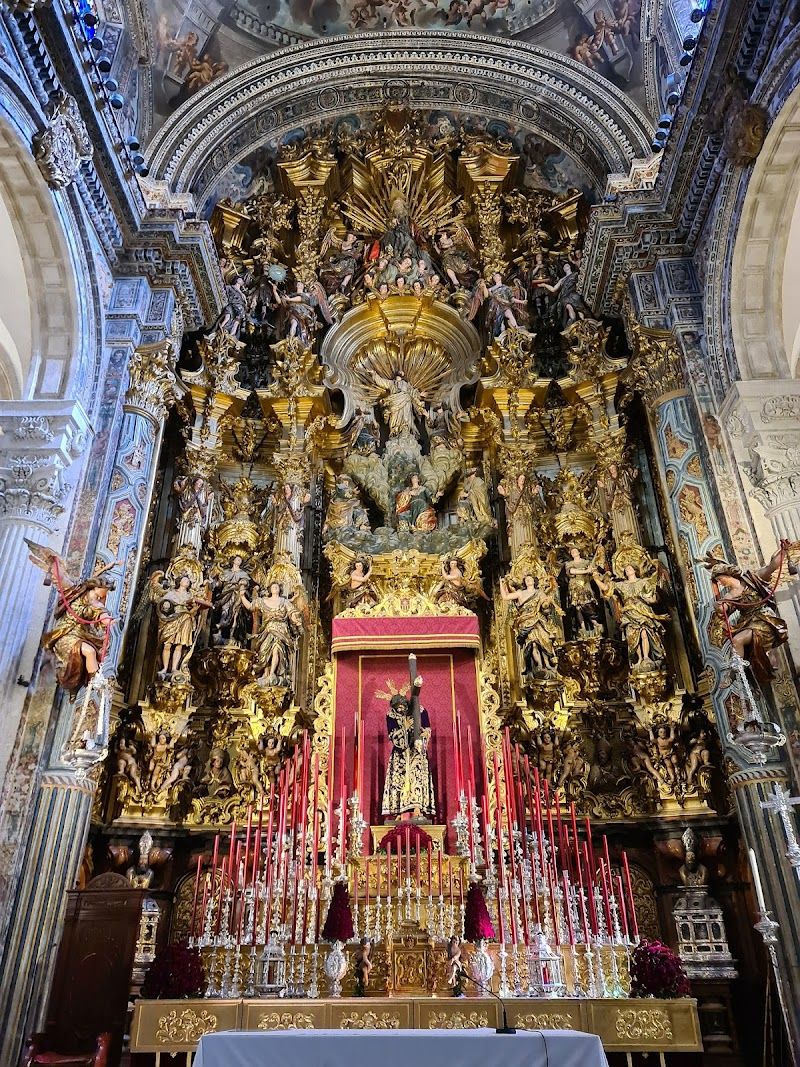
The Salvador Church stands on the foundations of Seville's original Friday mosque, creating a spectacular collision between Islamic architecture and Baroque excess. You'll find the second largest church in the city after the Cathedral, where every surface screams for attention with gilded altarpieces, spiral columns, and dramatic religious sculptures. The original mosque courtyard survives as the Patio de los Naranjos, offering a peaceful contrast to the interior's visual chaos. Walking inside feels like entering a golden jewelry box that's been turned inside out. The main altar rises like a theatrical stage set, while side chapels compete for your attention with increasingly elaborate decorations. The contrast hits you immediately: step from the serene orange tree courtyard into an interior that represents Baroque architecture at its most unapologetic. Most visitors spend their time craning their necks upward, trying to process the sheer amount of detail crammed into every corner. Most guidebooks treat this as a Cathedral afterthought, but it's actually more impressive in some ways because you can get closer to the artwork. The 4 EUR entry fee feels steep for 45 minutes, but your Cathedral ticket gets you in free within 48 hours. Skip the audio guide and focus on the main altarpiece and the Capilla de la Virgen de las Aguas. Come early morning when light streams through the windows and tourist groups haven't arrived yet.

30-45 minutesExplore
Hand-picked

Experiences worth booking ahead

Vetted tours and tickets we'd send a friend to. The ones worth reserving before you arrive.
All experiences
Plaza de Espana
Bestseller

Plaza de Espana

Plaza de España is a massive semicircular plaza built in 1928 for the Ibero-American Exposition, featuring 170 meters of continuous tiled facades, a central fountain, and a canal where you can rent rowboats for €6. The real draw is the 48 ceramic alcoves representing each Spanish province, with hand-painted tiles showing historical scenes and regional maps. The four baroque towers at the canal bridges make this one of Europe's most photogenic squares, which explains why it's appeared in Star Wars Episode II and Lawrence of Arabia. Walking the semicircle takes about 45 minutes if you stop to read the provincial tiles, and the scale hits you immediately when you emerge from María Luisa Park. Tourists cluster around the central fountain and Andalusia alcove, but the far ends of the semicircle stay quieter. The rowboats are surprisingly fun and give you the best perspective of the facade's reflection in the water. The tiles are genuinely beautiful up close, especially the detailed maps and battle scenes. Most guides oversell this as a quick photo stop, but you need 90 minutes to appreciate the craftsmanship properly. Skip the busy midday hours when tour groups dominate, the harsh light washes out the tile colors. The rowboats are worth €6 if you're into photography, but skip them if you just want to walk around. Finding your home province's alcove is touristy but oddly satisfying, the historical details are surprisingly accurate and detailed.

Book
Metropol Parasol (Las Setas)
Top rated

Metropol Parasol (Las Setas)

The Metropol Parasol looks like six giant wooden mushrooms that crash-landed in central Seville. This massive lattice structure rises 28 meters above Plaza de la Encarnación, built from bonded timber in an alien-looking waffle pattern that somehow works. You're here for the rooftop walkway (€5), which snakes through the canopy and delivers spectacular views over the old city, plus there's a basement level showcasing Roman ruins discovered during construction. Climbing to the walkway feels like entering a futuristic treehouse. The serpentine path winds through the timber structure, casting intricate shadows that shift throughout the day. You'll peer down at the plaza below while gazing out over terracotta rooftops toward the Cathedral and Giralda tower. The wooden lattice creates natural frames for photos, and the perspective keeps changing as you follow the curved walkway through the parasols. Most guides don't mention that your €5 ticket includes a drink voucher worth €3-5, making the net cost almost nothing. The Roman ruins downstairs require a separate ticket and aren't particularly impressive compared to what you'll see elsewhere in Seville. Skip the morning visit when the light is harsh and shadows are minimal. The structure divides locals (many think it's an eyesore) but visitors consistently love it, especially at golden hour when those geometric shadows create Instagram gold.

Book
Real Alcázar de Sevilla
Top rated

Real Alcázar de Sevilla

The Real Alcázar isn't just another palace: it's a 14th-century Christian king's love letter to Islamic architecture, built by Pedro I using Granadan craftsmen who created something even more ornate than the Alhambra. You'll walk through rooms where Columbus planned his voyages, marvel at tilework that took decades to complete, and explore gardens where peacocks strut past 500-year-old orange trees. The palace complex spans nearly 1,000 years, from Almohad walls to Renaissance additions, all still functioning as Spain's oldest royal residence. Your visit flows from the austere medieval entrance into increasingly elaborate courtyards, each more breathtaking than the last. The Patio de las Doncellas stops everyone cold: its reflecting pool mirrors intricate muqarnas while afternoon light transforms the space into something almost mystical. You'll climb narrow staircases worn smooth by centuries of footsteps, peek into Pedro's private apartments, then emerge into gardens where the scent of jasmine mingles with fountain spray. Most guides push the full complex, but honestly skip the upper floors (€4.50 extra) unless you're obsessed with 19th-century royal apartments. The real magic happens in the main palace and gardens. Entry costs €13.50, but book online weeks ahead or you'll waste time in crushing lines. Start with the Patio del Yeso, which most people rush past, then work toward the famous courtyards when your eyes are still fresh.

Book
Seville Cathedral and Giralda Tower
Top rated

Seville Cathedral and Giralda Tower

This is the world's largest Gothic cathedral by volume, built on the site of Seville's great mosque between 1401 and 1506. The scale hits you immediately: the nave soars 42 meters high, and the Capilla Mayor houses the world's largest altarpiece, an 80-year golden masterpiece that dominates the space. Columbus rests here in a tomb held by four bronze kings, and the attached Giralda Tower (the original minaret) offers panoramic views from 70 meters up. The visit flows from overwhelming grandeur to intimate discovery. You'll crane your neck at vaulted ceilings, then find yourself studying intricate chapels tucked into corners. The Giralda climb uses ramps instead of stairs, making the ascent surprisingly comfortable. At the top, 360-degree views stretch across Seville's rooftops, the Guadalquivir River, and the sprawling Andalusian landscape beyond. Most guides don't mention that the main entrance queue can stretch for blocks, especially after 10 AM. Entry costs EUR 12 for both cathedral and tower, but buy online and use the Puerta de San Cristóbal entrance on the south side to skip the chaos. The cathedral closes Mondays, and Sunday mornings are for worship only. Plan 90 minutes minimum, but you could easily spend half a day here.

Book
Casa de Pilatos
Top rated

Casa de Pilatos

Casa de Pilatos showcases the most sophisticated blend of Mudéjar and Renaissance architecture in Seville, built by the first Marquis of Tarifa after his pilgrimage to Jerusalem in 1519. You'll find elaborate geometric azulejo tilework covering entire walls, intricate coffered ceilings, and a central patio surrounded by marble columns and classical busts. The palace name comes from local belief that it replicated Pontius Pilate's house, though it's actually inspired by Italian Renaissance palaces the Marquis admired during his travels. Walking through feels like discovering a private museum where you can actually get close to the artwork. The ground floor's patio draws gasps with its perfect symmetry and detailed tile patterns, while upstairs rooms contain original 16th century frescoes depicting mythological scenes. Unlike the Alcázar, you'll often have entire rooms to yourself, letting you photograph details and study the craftsmanship without crowds pressing behind you. Most visitors make the mistake of buying the 10 EUR ground floor ticket, missing the palace's best features upstairs. The full 12 EUR ticket includes private apartments with stunning frescoes and the family chapel with an impressive altar. Skip the audio guide at 3 EUR, the English descriptions on wall plaques are sufficient. The morning light illuminates the central patio beautifully, making tile colors pop for photos.

Book
Palacio de las Dueñas
Top rated

Palacio de las Dueñas

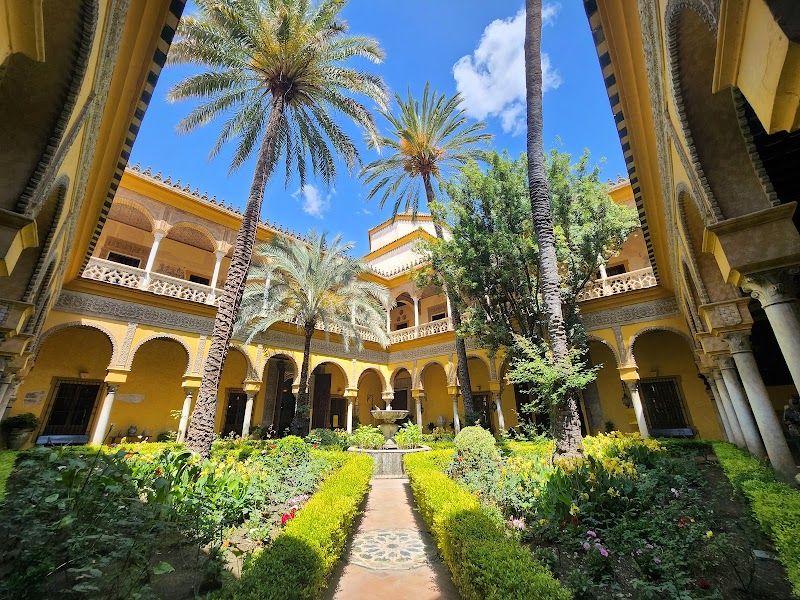
The Palacio de las Dueñas offers an authentic glimpse into aristocratic Seville life, with five centuries of treasures displayed exactly as the Alba family still uses them. You'll wander through intimate salons filled with Goya paintings, ancient tapestries, and personal photographs of Spanish royalty visiting for dinner parties. The courtyards steal the show: orange trees frame original 16th century azulejo tiles, while fountains trickle in spaces where poet Antonio Machado took his first steps. The self guided visit flows through surprisingly lived in rooms where you can picture the Duchess of Alba hosting gatherings last week. Unlike sterile palace museums, this feels like exploring a wealthy friend's home while they're away. The library holds 40,000 books, the chapel displays religious art spanning four centuries, and every room reveals layers of Spanish history through family portraits and furniture. The intimate scale means you're never fighting crowds in narrow hallways. Most guides oversell this as a major attraction, but it works best as a peaceful complement to the overwhelming Cathedral and Alcázar. Entry costs 12 EUR and the audio guide adds nothing valuable, skip it and read the English room descriptions instead. Focus your time in the main courtyard and the Machado room, but honestly the whole circuit takes just an hour if you don't linger over every decorative detail.

Book
Conjunto Arqueológico de Itálica

Conjunto Arqueológico de Itálica

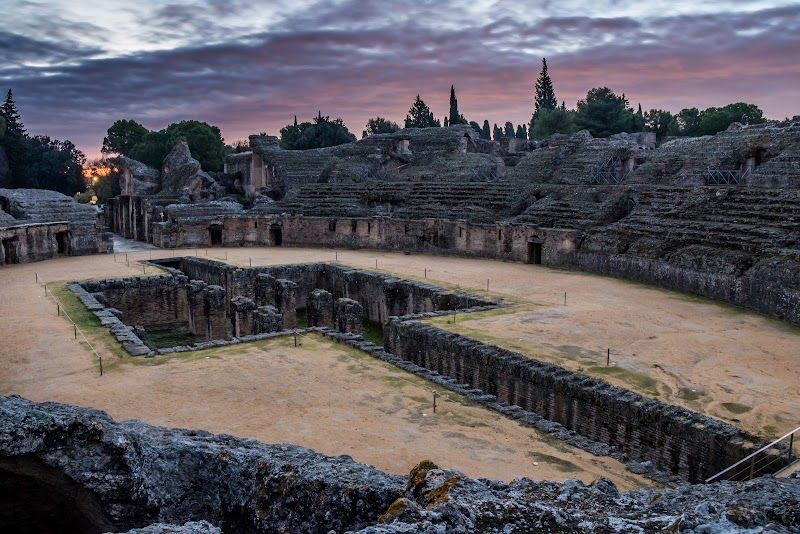
Italica sits 30 minutes northwest of Seville and delivers Rome-quality ruins without the crowds. You'll walk through the birthplace of emperors Trajan and Hadrian, where massive mosaics still cover villa floors in intricate detail. The Neptune mosaic alone spans 50 square meters, while geometric patterns in the House of Birds look like they were installed yesterday. The amphitheater, third largest in the Roman Empire, hosted 25,000 spectators and still echoes when you shout from the arena floor. The site sprawls across olive groves with numbered ruins connected by gravel paths. Start at the visitor center for context, then follow the circuit through residential districts where wealthy Romans lived. Room after room reveals pristine mosaics: dolphins, peacocks, mythological scenes rendered in tiny colored stones. The amphitheater sits at the circuit's end, its underground chambers and tiered seating intact enough that Game of Thrones filmed here. You'll have most spaces to yourself, especially weekday mornings. Entry costs 1.50 EUR, making this exceptional value compared to similar sites elsewhere. Most visitors rush through in an hour, but you need three to appreciate the craftsmanship properly. Skip the audioguide and download the free app instead. The site closes at 3 PM from April through September, catching many off guard. Bring serious sun protection since there's zero shade among the ruins.

Book
Archivo General de Indias

Archivo General de Indias

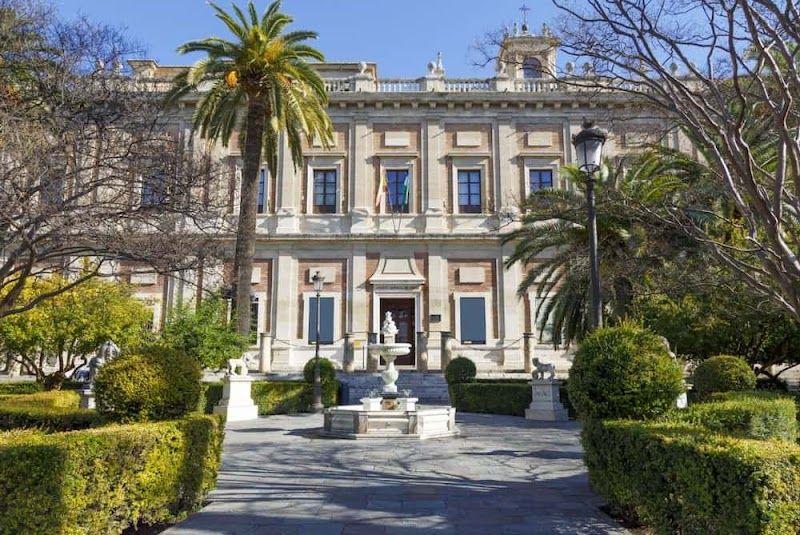
The Archivo General de Indias holds the world's most complete record of Spanish colonial empire, housed in Juan de Herrera's stunning 16th-century Mannerist building. You'll see original Columbus logbooks, hand-drawn maps of unexplored territories, royal decrees, and personal letters from conquistadors. The collection spans 80 million pages documenting three centuries of exploration, trade, and conquest across the Americas, Philippines, and Caribbean. Entry is completely free. The experience centers on the main exhibition hall with its soaring stone vaults and perfect acoustics. Rotating displays showcase different themes: sometimes it's navigation instruments and sea charts, other times personal correspondence between Spanish royalty and colonial governors. The documents are beautifully lit in climate-controlled cases, with Spanish and English explanations. The building itself competes for attention, its geometric courtyard and marble staircases rivaling the archives. Most visitors rush through in 20 minutes, but you'll want 45 minutes to properly read the translations and absorb the historical weight. The permanent collection rotates every few months, so what you see depends entirely on timing. Skip this if you're not genuinely interested in colonial history or Spanish exploration, the displays require focus and reading. The building's architecture alone justifies a brief visit, even if documents aren't your thing.

Book
Museo del Baile Flamenco

Museo del Baile Flamenco

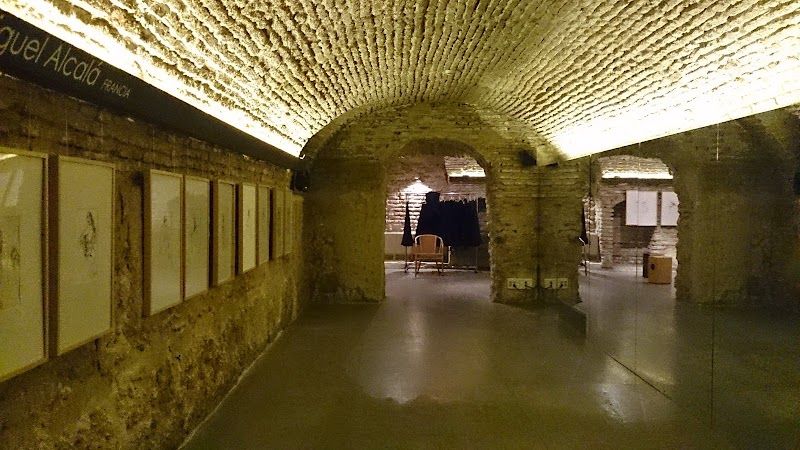
Cristina Hoyos created this focused museum in 2006 to showcase flamenco's evolution from its 18th century origins to modern masters. You'll find carefully curated exhibits on the three pillars of flamenco: cante (song), baile (dance), and toque (guitar), with interactive displays letting you explore different palos (flamenco styles). The real treasures are the video archives featuring legends like Carmen Amaya and Antonio Gades performing in grainy black and white footage you won't see anywhere else. The museum occupies three floors of an 18th century palace, with the ground floor covering flamenco's roots in Andalusian, Gypsy, and Arabic cultures. Upstairs, the video installations play on loop in darkened rooms where you can sit and watch masters demonstrate techniques that modern flamenco builds upon. The building feels intimate rather than grand, with creaky wooden floors and small rooms that force you to slow down and pay attention to details. Skip the costume displays on the first floor, they're generic and poorly lit. The €10 entry fee is reasonable if you spend at least 30 minutes with the video archives, but many visitors rush through in 15 minutes and feel ripped off. Come before 2pm when the rooms are quieter and you can properly absorb the performances without crowds shuffling behind you.

Book
Read first

Travel guides

All guides
More on Seville

From the blog

View all
Good to know

Practical bits, answered

Two full days covers the essentials: one for the Cathedral, Alcazar, and Santa Cruz (book both ahead, arrive at opening), one for Triana and the Metropol Parasol. A third day adds the Museo de Bellas Artes, the Maria Luisa park and Plaza de Espana, and a flamenco show in the evening. In summer, add extra time for the siesta shutdown (2 PM-6 PM when most things close).

July and August are brutal: 40 degrees Celsius regularly, the city empties of locals, and the tourist infrastructure is the only thing running. The Alcazar gardens are beautiful but standing in direct sun at noon is unpleasant. If you go in summer, plan all outdoor sightseeing before 11 AM and after 7 PM. Spring (March-May) is ideal: pleasant temperatures, the orange trees are in bloom in April (the smell is extraordinary), and the Feria de Abril happens in late April.

The Feria de Abril is Seville's spring fair, held about two weeks after Easter. The fairground fills with 1,000+ casetas (private marquees belonging to families, businesses, and groups), all decorated with coloured lanterns, and Sevillanos dress in traditional flamenco and Andalusian costume and dance sevillanas until dawn. Most casetas are private (you need to know someone), but some are public. The main spectacle is watching the horse carriages parade down the main avenue and seeing the costumes. Book accommodation 4-6 months ahead.

In some bars in Triana and the Alameda de Hercules area, yes: you order a beer or glass of wine and a tapa arrives without being ordered. This is the Andalusian tradition that disappeared in Madrid and Barcelona but survives in Seville and Granada. It is not universal in the tourist areas of Santa Cruz, where tapas are EUR 3-4 each. Look for neighbourhood bars away from the main tourist circuit.

Buy both online as early as possible: the Alcazar at entradas.alcazarsevilla.es and the Cathedral at catedraldesevilla.es. Both have timed entry and sell out in peak season. The Alcazar sells out by mid-morning on the day of visit from March to October. The Cathedral is less restrictive but buying online avoids the queue at the Puerta de San Cristobal. Both are EUR 12-13.50 each.

Ready for Seville?

Let DAIZ plan your Seville days

Tell us how long you've got and what you're into. We'll build a day-by-day plan, with the bookable bits ready to lock in.

Plan my Seville tripFree · no signup to start
Plan your Seville trip