Berlin · Mitte

Humboldt Forum

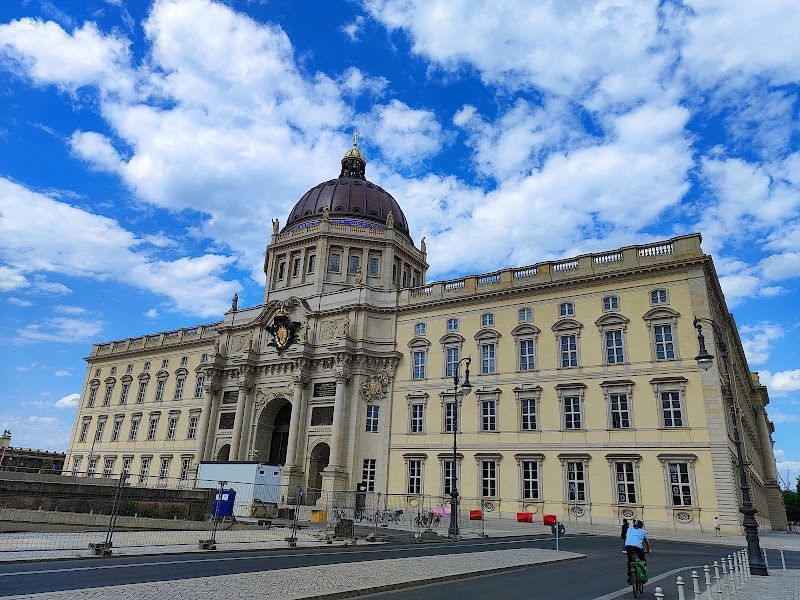
The reconstructed Berlin Palace houses museums showcasing non-European art and Humboldt University collections in a controversial baroque-facade building completed in 2020.
Humboldt Forum, Berlin · Mitte
Category
Museum
Duration
2h 30m
Best Time
Any time
Entry
€€
Rating
4.4 (9,087)
The place

About Humboldt Forum

The reconstructed Berlin Palace houses museums showcasing non-European art and Humboldt University collections in a controversial baroque-facade building completed in 2020. The ethnological collections moved from Dahlem include artifacts from Africa, Asia, and Oceania. The rooftop terrace offers sweeping views across Museum Island.

Get Ticketsvia GetYourGuide · prices may vary
Book ahead

Skip the Queue

Live availability and skip-the-line options from our booking partners.

Search on Viator →Search on GetYourGuide →

Booking powered by our partners. DAIZ may earn a commission.

The details

Practical bits

WalkingMinimal walking
The place

Getting there

Address
Schloßpl., 10178 Berlin, Germany
Neighborhood
Mitte
Nearest Metro
U6 to FriedrichstrasseS-Bahn to Hackescher MarktU2 to Alexanderplatz
View on Google Maps →
Good to know

Tips, answered

The rooftop terrace access is free and provides one of Berlin's best panoramic viewpoints -enter through the south portal and take the elevator up.

Plan for about 2h 30m.

Humboldt Forum is in the Mitte neighborhood of Berlin. The address is Schloßpl., 10178 Berlin, Germany. The area is well-served by metro.

This works well at any time of day, though mornings tend to be quieter. Weekdays are less crowded than weekends.

Closed on Tuesday. Check the official website for holiday closures and special hours.

Around the corner

Nearby in Mitte

Explore all →
Brandenburg Gate
Landmark

Brandenburg Gate

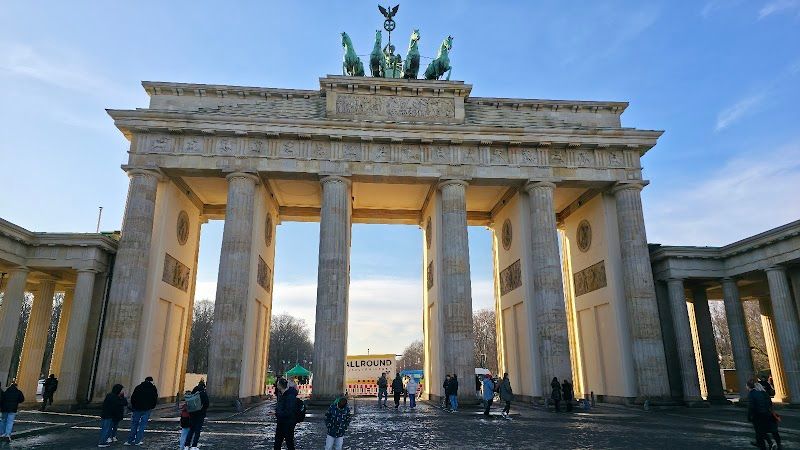
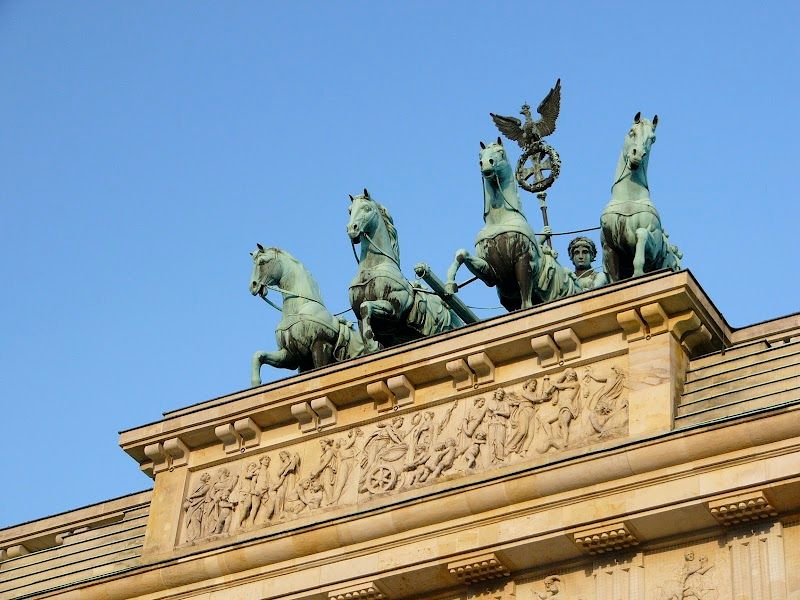
The symbol of Berlin, and the symbol that changes meaning with every era. Built in 1791 as a neoclassical triumphal arch marking the entrance to Unter den Linden, it became the backdrop for Napoleon's march into the city, Nazi torchlight parades, Kennedy's "Ich bin ein Berliner" speech, and then the most visible landmark of a divided city when the Wall ran directly in front of it for 28 years. On November 9, 1989, it became the place where East and West Berliners finally met. Today the Brandenburg Gate stands in an open plaza (Pariser Platz), floodlit at night, with the Reichstag visible to the north and the tree-lined boulevard of Unter den Linden stretching east toward Alexanderplatz. The scale is impressive up close: six Doric columns, 26 meters tall, topped by the Quadriga, a chariot driven by the goddess of victory. Napoleon stole the Quadriga and took it to Paris in 1806; the Prussians brought it back after defeating him in 1814. The gate is free, always open, and works best at the edges of the day. Dawn gives you the plaza to yourself with soft eastern light hitting the columns. Dusk brings a golden glow and the first of the floodlights. Midday means tour buses, selfie sticks, and people dressed as Cold War soldiers charging EUR3-5 for photos. Walk through the gate rather than just standing in front of it: the Tiergarten opens up on one side and the formal geometry of Pariser Platz frames you on the other.

30-60 minutesExplore
Fernsehturm (TV Tower)
Landmark

Fernsehturm (TV Tower)

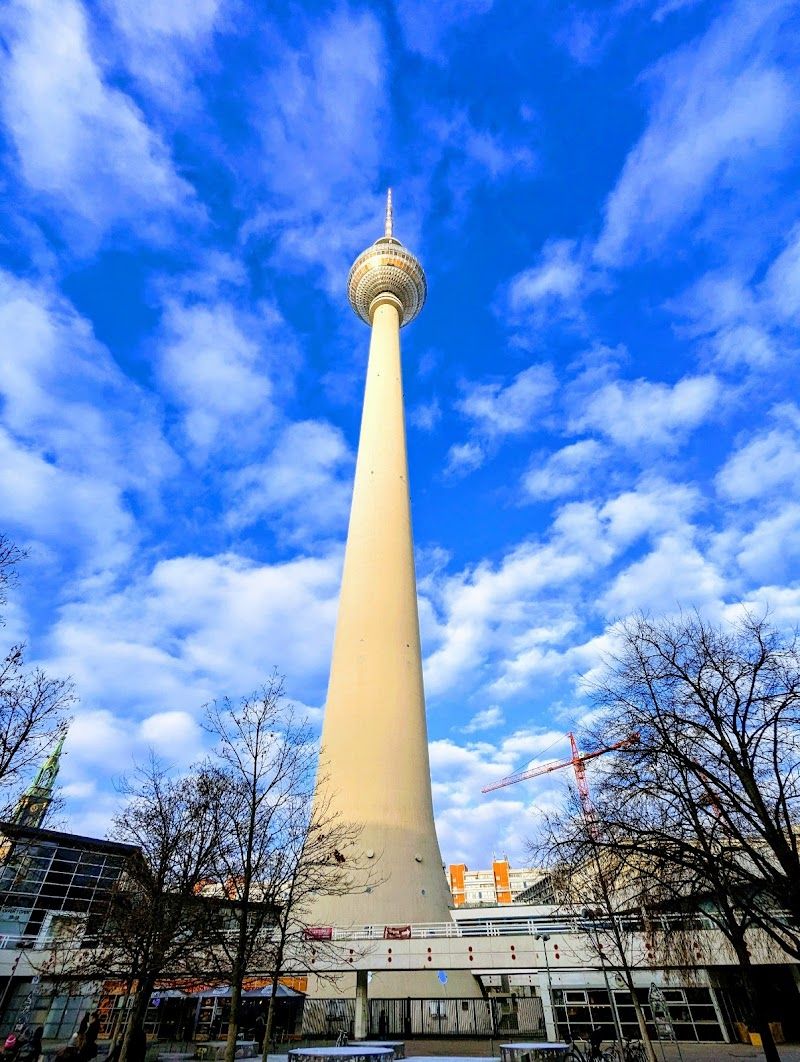
Berlin's tallest structure at 368 meters, built by the GDR in the 1960s as a showcase of socialist engineering prowess. The observation deck at 203 meters gives a 360-degree panorama that on a clear day extends 40 km in every direction: you can trace the S-Bahn ring, pick out the Reichstag dome, follow the Spree through the city, and understand Berlin's sprawling geography in a way that no street-level walk can provide. The tower was meant to demonstrate East German technological superiority, but it famously produced an unintended PR problem: when the sun hits the tiled sphere at a certain angle, it creates a cross-shaped reflection that Berliners dubbed "the Pope's revenge," a religious symbol atop the atheist state's proudest monument. The government was not amused. The revolving restaurant one floor above the observation deck is overpriced by Berlin standards (EUR25 minimum spend), but a window table at sunset is genuinely memorable. The full rotation takes 30 minutes. Below the tower, Alexanderplatz is the former heart of East Berlin, an enormous concrete square anchored by the Weltzeituhr (World Time Clock) and surrounded by socialist-era architecture that is gradually being filled in with modern buildings. Tickets for the observation deck cost EUR24.50 standard or EUR39.50 for fast-track, which skips the queue that can exceed an hour on busy days. Book the earliest morning slot or a sunset slot online. On overcast days the deck can be inside the clouds, so check the weather forecast before committing. The free alternative for panoramic views is the Reichstag dome, which has better-quality architecture but a narrower perspective.

1-1.5 hoursExplore
Holocaust Memorial (Memorial to the Murdered Jews of Europe)
Landmark

Holocaust Memorial (Memorial to the Murdered Jews of Europe)

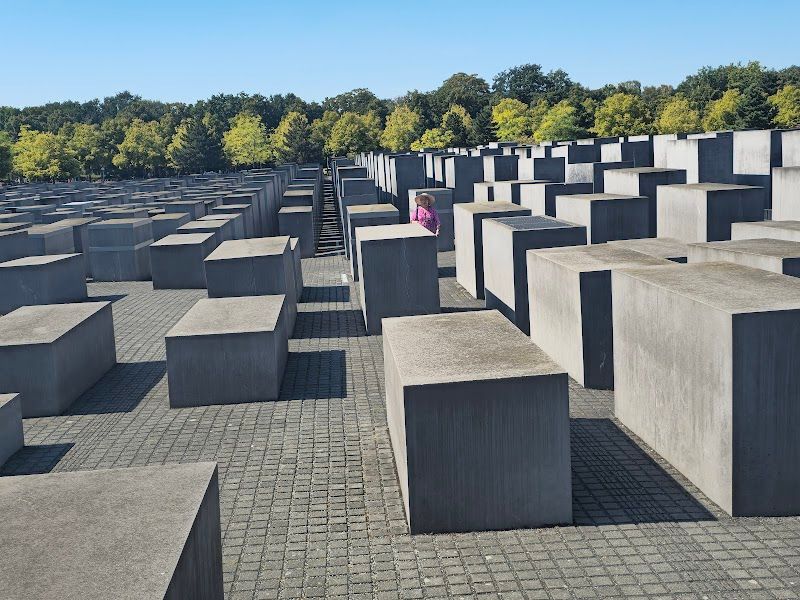
Peter Eisenman's memorial is 2,711 concrete slabs (stelae) arranged on a sloping field near the Brandenburg Gate. There are no names on the slabs, no inscriptions, no flowers. The grid is disorienting by design: as you walk into the center, the slabs rise above your head, the ground dips unevenly, and you lose sight of the surrounding streets. The effect is claustrophobic, isolating, and deliberately uncomfortable. You are meant to feel lost. The underground Information Centre is free and documents the Holocaust through individual stories rather than statistics. One room reads the names of all known victims aloud in a cycle that takes over six years to complete. Another room displays final postcards and letters. The effect of moving from the abstract field above to the specific human details below is devastating and intentional. The memorial sits on prime real estate between the Brandenburg Gate and Potsdamer Platz, a deliberate choice. Germany placed its largest Holocaust memorial in the center of its capital, visible from the Reichstag, unavoidable on any walking tour of the government district. This was not accidental. The 19,000 square meters of undulating concrete are a permanent interruption in the urban landscape, designed to make forgetting impossible. Visit alone if you can. Walk into the center of the field where the slabs tower above you and the sounds of the city fade. Give the Information Centre at least 45 minutes. Do not climb on the slabs, do not pose for cheerful photos, and do not treat it as a playground. This is not entertainment. It is witness.

45-90 minutesExplore
DDR Museum
Museum

DDR Museum

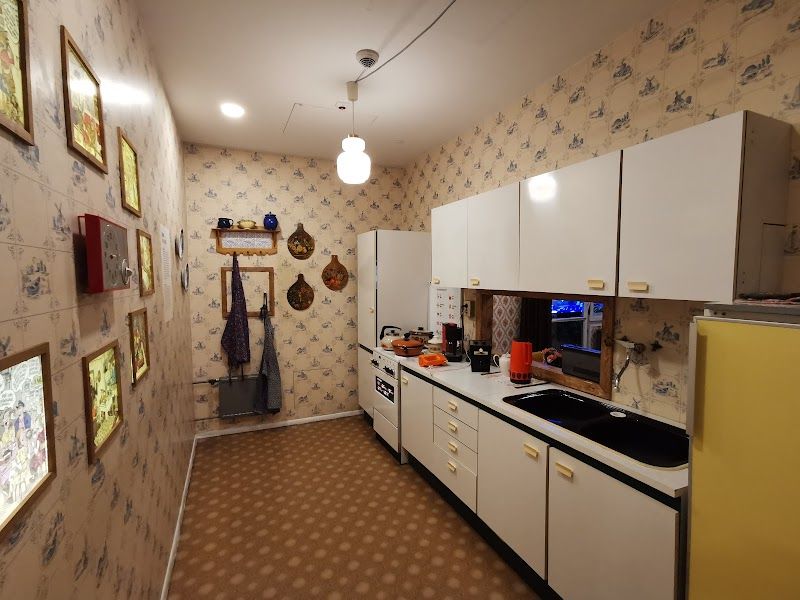
An interactive museum about daily life in East Germany, where you can sit in a Trabant, walk through a reconstructed GDR apartment with period-accurate wallpaper and TV programs, and learn how the Stasi surveillance state monitored its own citizens, all through hands-on exhibits. It is more engaging than it sounds. The museum takes the everyday details of East German life (fashion, food, holidays, education, television, sport) and shows how an entire society was constructed, maintained, and ultimately collapsed. The Trabant driving simulator is the most popular exhibit, with a virtual drive through East Berlin streets. The reconstructed apartment is the most revealing: the standardized furniture, the limited product choices, the state-controlled television, and the files showing how neighbors informed on each other. The exhibit on Stasi surveillance methods, including microphones hidden in watering cans and cameras concealed in ties, is both absurd and chilling. Located directly on the Spree across from the Berlin Cathedral, the DDR Museum pulls strong visitor numbers and can get crowded, especially during school holidays. EUR13.50 entry (book online to skip the ticket queue). The museum is popular with families because children can touch everything, which makes it a practical option for parents managing attention spans. The DDR Museum is not a deep historical study; it is more experiential than analytical. For serious research into the GDR, the Stasi Museum in Lichtenberg and the Hohenschonhausen Memorial (former Stasi prison) go much deeper. But for a tactile, accessible introduction to what life behind the Wall actually felt like, this is the best option in central Berlin.

1.5-2 hoursExplore
Reichstag Building
Landmark

Reichstag Building

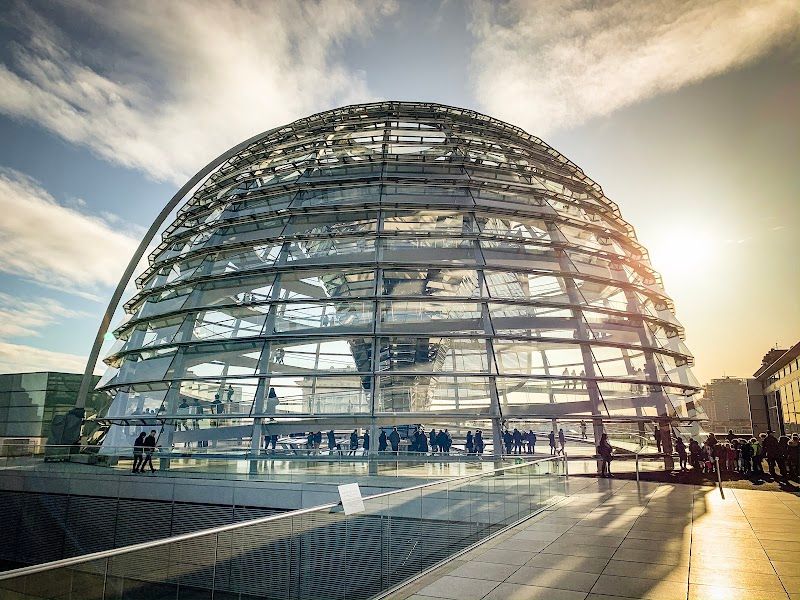
The seat of the German parliament, rebuilt after reunification with a glass dome designed by Norman Foster that lets visitors look down on the plenary chamber in session. The transparency metaphor was deliberate: Foster wanted citizens to literally be able to watch their elected representatives work below them. The dome's spiral ramp leads you upward past mirrors that reflect daylight into the chamber, with an audio guide narrating Berlin's skyline, the building's destruction in 1933 and 1945, and its reconstruction. The Reichstag's history is written in its walls. The building opened in 1894, was gutted by fire in 1933 (an event the Nazis used to consolidate power), was bombarded by Soviet artillery in 1945, and sat unused during the division. After reunification, the German parliament voted to return from Bonn to Berlin, and Foster wrapped the old stonework in glass and steel. During the renovation, workers discovered graffiti carved into the walls by Soviet soldiers in 1945, Russian names and messages preserved behind the new interior (visible on guided tours). The rooftop terrace and dome are free but require advance booking at bundestag.de, with slots opening 2-3 weeks ahead. Sunset visits are the most popular for good reason: the Tiergarten glows green below and the Brandenburg Gate is visible to the east. Bring ID or a passport. The rooftop restaurant Kafer offers dome access through a dinner reservation, bypassing the separate booking system if the dome slots are full.

1-1.5 hoursExplore
More on Berlin

From the blog

View all →
Ready for Berlin?

Let DAIZ plan your Berlin days

Tell us how long you've got and what you're into. We'll build a day-by-day plan, with the bookable bits ready to lock in.

Plan my Berlin tripFree · no signup to start
Plan your Berlin trip