Choosing where to stay in Seville for your first visit comes down to this: do you want to stumble out of your hotel onto cobblestones that lead directly to the Cathedral, or would you rather save EUR 50 per night and walk 10 minutes through streets that locals actually use? Both choices are valid, but they lead to completely different experiences in a city where location matters more than thread count.
Seville's neighborhoods cluster around two poles. The monumental center anchored by the Cathedral and Alcázar draws first-time visitors like a magnet, while the residential areas north of Calle Sierpes and across the river in Triana offer authentic daily life at lower prices. The choice between them shapes everything from your morning coffee ritual to your evening tapas crawl.
The heat changes the equation dramatically. From June through September, when temperatures regularly hit 40 degrees Celsius, staying within easy reach of air-conditioned retreats becomes a survival strategy rather than a luxury preference. Factor this into your accommodation budget if you're visiting during Seville's scorching summer months.
Santa Cruz & Cathedral: Where to Stay for Monument Access
Santa Cruz remains the first choice for visitors who want maximum sightseeing efficiency. This is where you'll find yourself 30 seconds from the Seville Cathedral entrance and two minutes from the Real Alcázar gates. The neighborhood's maze of narrow streets, whitewashed walls, and flower-draped balconies delivers the postcard vision of Andalusia that most first-time visitors seek.
The reality behind the romance: Santa Cruz can feel like a theme park during peak hours. Tour groups congregate around every corner between 10 AM and 6 PM, and restaurant prices reflect the captive tourist audience. But early morning and late evening transform these streets into something approaching their medieval origins, when Jewish merchants and craftsmen filled these same alleys.
Hotel prices in Santa Cruz start at EUR 120-220 for boutique properties that occupy converted noble houses. The Hotel Casa Imperial on Calle Imperial offers rooms from EUR 140 per night with original Mudejar details and a central courtyard that provides blessed relief from summer heat. EME Catedral Hotel charges EUR 180-280 but delivers rooftop Cathedral views that eliminate any need for the Giralda tower climb.
Budget travelers will struggle here. The few hostels charge EUR 25-35 for dorm beds, significantly above the city average. Oasis Backpackers Hostel on Calle Almirante Hoyos represents the best value at EUR 25 per bed with a rooftop terrace, but expect noise from neighboring bars until 2 AM.
Walking distances from Santa Cruz: Plaza de España (15 minutes), Metropol Parasol (12 minutes), Triana Bridge (8 minutes). The Puerta de Jerez metro station sits on the neighborhood's eastern edge, connecting you to the airport in 35 minutes.
Santa Cruz's Hidden Accommodation Gems
The streets between Calle Mateos Gago and the Cathedral hide several mid-range options that offer character without the premium prices of the main tourist corridor. Hostal Sierpes on Calle Corral del Rey charges EUR 65-85 for doubles in a converted 18th-century house, with rooms overlooking a peaceful interior patio that blocks street noise.
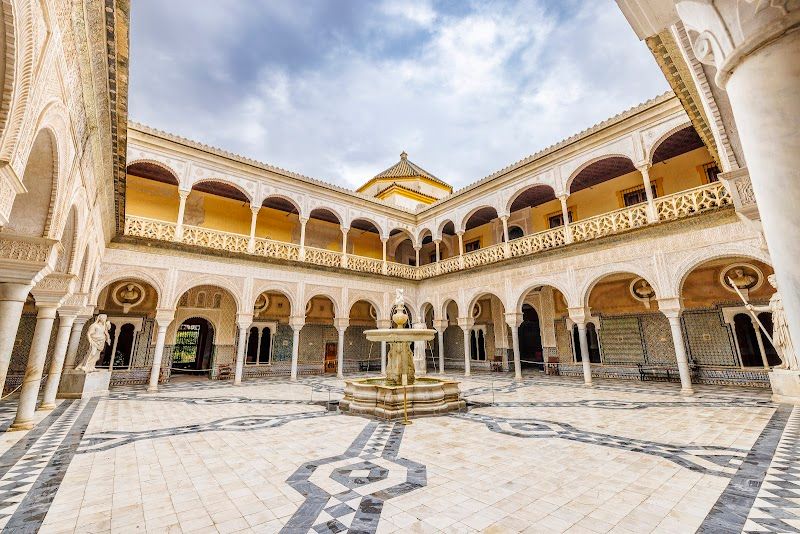
For those seeking luxury without ostentation, Hotel Amadeus occupies a restored 18th-century mansion on Calle Farnesio. Rooms start at EUR 160 and feature original frescoes and a musical theme that reflects Seville's operatic connections. The location puts you equidistant from the Cathedral and Casa de Pilatos, allowing easy exploration of both major and minor monuments.
Centro & Alameda: The Best Area for First-Time Visitors on a Budget
Centro encompasses the commercial heart of Seville, stretching from Calle Sierpes north to the Alameda de Hércules. This area offers the city's best balance of authenticity, value, and walking access to major sights. You'll pay EUR 30-50 less per night than equivalent accommodations in Santa Cruz while gaining access to the tapas bars and morning coffee shops that Sevillanos actually use.
The Alameda de Hércules district, centered around Seville's oldest public garden, has evolved into the city's hipster headquarters. Converted textile warehouses now house design hotels, artisan coffee roasters, and natural wine bars. This transformation makes it particularly appealing for first-time visitors who want to experience Seville's contemporary culture alongside its historical monuments.
Hotel Sacristía de Santa Ana on Alameda de Hércules represents the neighborhood's upscale potential. This boutique property occupies a restored 18th-century mansion with rates from EUR 95-140 per night. The location puts you at the center of Seville's best evening dining scene, with Eslava and other acclaimed tapas bars within a two-block radius.
Budget accommodations cluster around Plaza de la Encarnación, dominated by the wooden Metropol Parasol structure locals call Las Setas. The Nomad Hostel charges EUR 18-28 for dorm beds and EUR 45-65 for private rooms, with a rooftop terrace that offers sunset views toward the Cathedral spires.
Why Centro Works Better Than Santa Cruz for Most Visitors
Centro's strategic position between the monumental zone and residential neighborhoods creates natural walking routes that reveal Seville's layers. Your morning walk to the Cathedral takes you through Plaza del Salvador, where the Iglesia del Salvador provides a preview of the architectural grandeur waiting ahead. Evening returns lead through Calle Sierpes, Seville's main shopping street, where you'll observe the evening paseo ritual that defines Spanish urban culture.
The neighborhood's restaurant density exceeds Santa Cruz's tourist-focused establishments. El Rinconcillo, established in 1670 and claiming to be Spain's oldest tapas bar, sits on Calle Gerona just north of Plaza del Salvador. Here you'll eat standing at marble-topped barrels while servers chalk your tab directly onto the bar, maintaining traditions that predate the tourist industry by centuries.
Practical advantages accumulate quickly. The Puerta de Jerez-Plaza Nueva-Alameda tram line provides direct connections to the Santa Justa train station. Calle Sierpes and adjacent Calle Tetuán house international retail chains alongside traditional shops, useful for forgotten travel essentials or gifts that extend beyond souvenir shop offerings.
Triana: Authentic Seville Across the River
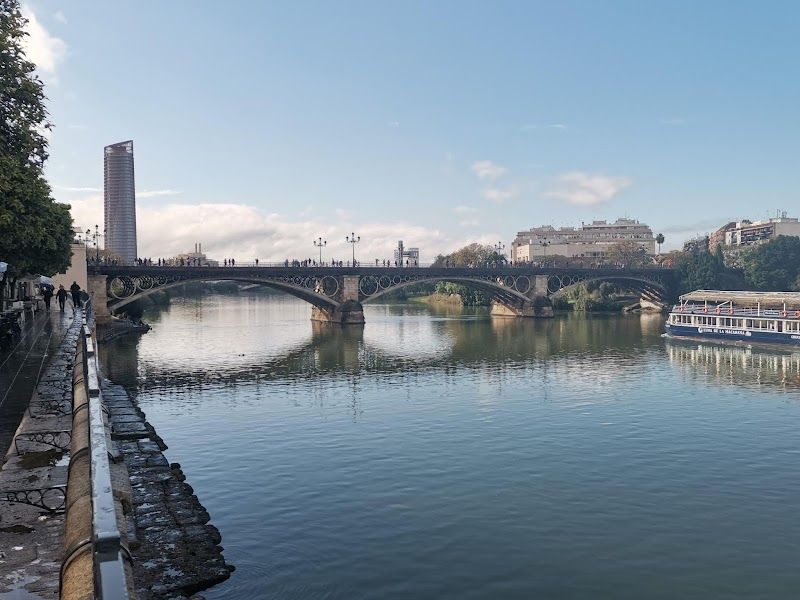
Triana sits across the Guadalquivir River from the city center, connected by the photogenic Puente de Triana bridge that appears in every Seville postcard. This neighborhood maintains working-class roots that resist gentrification, creating an accommodation landscape dominated by small family-run hotels and neighborhood restaurants that haven't discovered tourist pricing.
The Hotel Monte Triana on Calle Clara de Jesús Montero charges EUR 75-110 for doubles in a location that puts the Mercado de Triana at your doorstep and the Cathedral a pleasant 12-minute walk across the river. The hotel's rooftop terrace provides river views that rival expensive Cathedral-district properties at half the price.
Triana's ceramic tradition, dating to Roman times, creates a shopping landscape unique in Seville. The neighborhood's pottery workshops and showrooms along Calle San Jorge offer handmade tiles, dishes, and decorative pieces that represent genuine local craftsmanship rather than mass-produced souvenirs.
Triana's Evening Advantages for First-Time Visitors
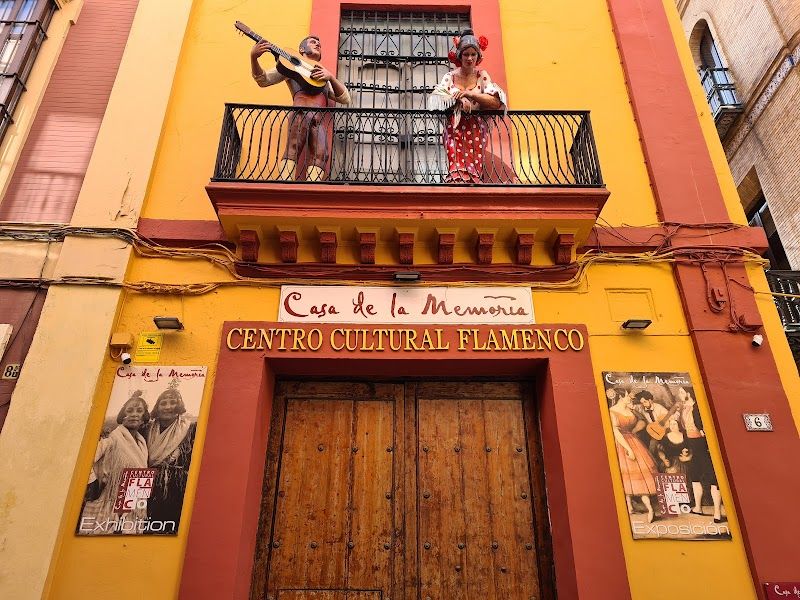
Seville's flamenco tradition runs deepest in Triana, where the art form developed in the gitano (Roma) community that settled here centuries ago. Small tablaos like Casa de la Memoria offer intimate performances where dancers and guitarists work within arm's reach of the audience, creating an intensity impossible in larger venues.
The neighborhood's bar scene operates on local schedules and prices. Evening tapas crawls along Calle Betis, the riverside street facing the city center, cost EUR 15-25 per person for a full meal with drinks. Compare this to EUR 35-45 for equivalent food and atmosphere in Santa Cruz's tourist-focused establishments.
Walking distances from Triana: Cathedral (12 minutes across bridge), Metropol Parasol (15 minutes), Plaza de España (20 minutes). The Plaza de Armas bus station sits on Triana's northern edge, providing connections to Córdoba, Granada, and other Andalusian cities.
El Arenal & Riverside: Compromise Location Near the Cathedral
El Arenal occupies the space between the Cathedral and the river, named for the sandy riverbank that once hosted Seville's port activities. This compact district offers walking access to major monuments while maintaining lower accommodation costs than Santa Cruz proper.
The neighborhood centers around the Plaza de Toros de la Maestranza, Spain's most prestigious bullring, and the Torre del Oro, the 13th-century watchtower that once controlled river access to the city. These landmarks create a more spacious urban environment than Santa Cruz's cramped medieval streets, with wider sidewalks and better air circulation during summer months.
Hotel Don Paco on Plaza Padre Jerónimo de Córdoba represents the area's mid-range options, charging EUR 80-120 per night for rooms that balance character with modern amenities. The location puts you three blocks from the Cathedral entrance and five blocks from the river, creating easy access to both monumental sightseeing and evening riverside walks.
Budget travelers can find decent hostels along Calle Adriano, the main street connecting the bullring to the Cathedral area. Samay Hostel Sevilla charges EUR 20-30 for dorm beds with air conditioning that functions reliably, crucial during summer months when cheaper accommodations cut corners on cooling costs.
El Arenal's Restaurant Scene
The neighborhood's proximity to the former port created a restaurant culture focused on seafood and traditional Andalusian dishes rather than tourist-oriented paella and sangría. Casa Morales on Calle García de Vinuesa has operated since 1850 in premises that retain original wooden barrels and marble counters, serving montaditos (small sandwiches) and traditional tapas to a mixed crowd of locals and informed visitors.
Evening dining in El Arenal costs EUR 20-30 per person for a complete meal with wine, positioned between Santa Cruz's tourist prices and Centro's local rates. The Hospital de la Caridad and Archivo General de Indias provide cultural activities within walking distance, extending your options beyond the Cathedral-Alcázar circuit.
María Luisa & Plaza de España: Modern Comfort Near the Parks
María Luisa encompasses the area around the Plaza de España and Parque de María Luisa, built for the 1929 Ibero-American Exposition. This district offers modern hotels with parking facilities and easy access to the city's largest green spaces, making it particularly suitable for families or visitors arriving by car.
The Hotel Alfonso XIII, a historic luxury property facing the main gate of the Alcázar, charges EUR 300-500 per night but delivers palatial accommodations that justify the expense for special occasions. More accessible options include Hotel Becquer on Calle Reyes Católicos, with rates from EUR 90-140 and modern amenities that business travelers appreciate.
This area works best for first-time visitors who prioritize comfort over atmospheric medieval streets. The wider boulevards and regular grid pattern make navigation easier than the labyrinthine old quarters, while metro connections provide efficient access to the airport and train station.
Practical Advantages of María Luisa District
The Pabellón de Brasil and other exposition buildings now house museums and cultural centers that extend your sightseeing options beyond the headline monuments. The district's parks provide essential relief during summer months, when shade becomes as valuable as air conditioning.
Restaurant prices here fall between tourist and local levels, typically EUR 25-35 per person for dinner with wine. The area lacks the density of tapas bars found in Centro or Triana, but hotel concierges can arrange reliable restaurant reservations that eliminate the uncertainty of hunting for available tables in more crowded districts.
Budget Accommodation Strategy for First-Time Visitors
Hostel dormitories range from EUR 18-35 per bed depending on location and season. The best value concentrates in Centro around Plaza de la Encarnación, where you'll pay EUR 20-25 per night with air conditioning and decent cleanliness standards. Avoid hostels in Santa Cruz unless budget exceeds EUR 30 per bed, as cheaper options cut corners on ventilation and noise control.
Budget hotels (EUR 45-80 per double room) cluster along major streets like Calle Marqués de Paradas and Avenida de la Constitución. Hotel Simón on Calle García de Vinuesa charges EUR 55-75 for doubles with private bathrooms and reliable air conditioning, though rooms facing the street suffer from traffic noise.
For the best balance of price and location, target the streets between Plaza Nueva and Plaza de la Encarnación. This zone puts you within 10 minutes of all major monuments while accessing the neighborhood bars and morning coffee culture that makes Seville livable rather than merely visitable.
Mid-Range Hotel Recommendations by Neighborhood
Santa Cruz: Hotel Casa Imperial (EUR 140-180) for courtyard charm, EME Catedral Hotel (EUR 180-280) for rooftop Cathedral views
Centro: Hotel Sacristía de Santa Ana (EUR 95-140) for design-conscious travelers, Hotel Fernando III (EUR 85-125) for reliable business amenities
Triana: Hotel Monte Triana (EUR 75-110) for riverside location, Abba Triana Hotel (EUR 90-130) for modern comfort
El Arenal: Hotel Don Paco (EUR 80-120) for central location, Hotel Adriano (EUR 70-100) for bullring proximity
María Luisa: Hotel Becquer (EUR 90-140) for park access, Hotel Silken Al-Andalus Palace (EUR 110-160) for business facilities
These properties offer private bathrooms, air conditioning, and English-speaking staff. Rates include taxes but exclude the optional EUR 2-3 city tourist tax charged per person per night.
When Location Trumps Luxury: Summer Survival Tips
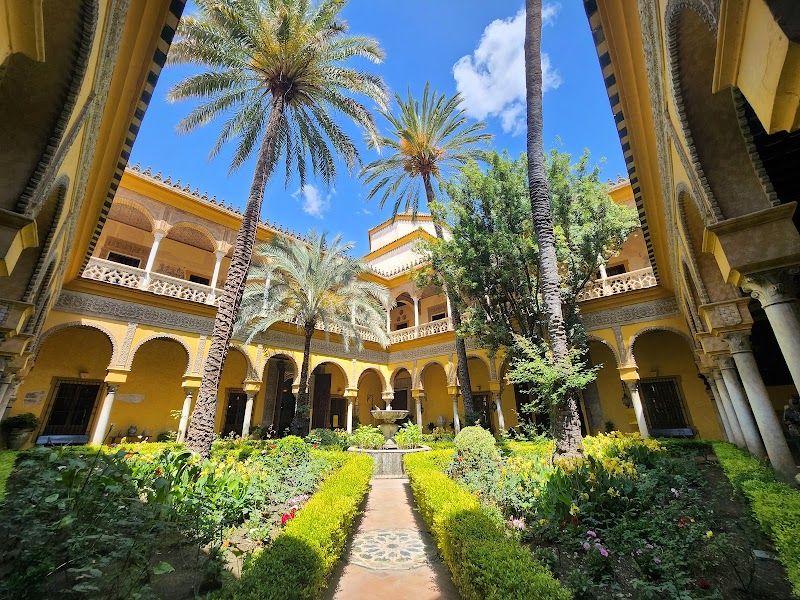
Seville's summer heat transforms accommodation priorities completely. Air conditioning becomes non-negotiable, not a luxury amenity. Properties built in traditional courtyards handle heat better than modern buildings with exterior-facing windows, making older hotels in converted palaces worth the premium.
Morning shade matters as much as evening entertainment access. Hotels facing east-west streets receive direct sunlight that overwhelms air conditioning systems, while north-south orientations and interior courtyards maintain cooler temperatures throughout the day.
Plan your daily schedule around your hotel's location during summer months. Staying in Santa Cruz allows midday retreats to air-conditioned rooms between morning monument visits and evening tapas tours. More distant accommodations require longer commitment to outdoor activities or expensive café stops for cooling breaks.
Transportation Connections for Each Neighborhood
Metro access: Puerta de Jerez station serves Santa Cruz and El Arenal directly. Plaza Nueva station connects to Centro. No metro service reaches Triana or María Luisa, requiring bus connections or 15-20 minute walks.
Airport connections: The EA special airport bus (EUR 4) terminates at Plaza de Armas near Triana, then continues to Puerta de Jerez. Taxis cost EUR 22-30 to any central neighborhood. The metro airport connection requires transfers and takes 45-60 minutes total.
Train station connections: Santa Justa station links to all neighborhoods via the Plaza Nueva metro stop or direct buses. Allow 20-30 minutes travel time from any central accommodation.
For comprehensive planning beyond accommodation choices, consult our First Time in Seville guide and 2-3 day itinerary for activity scheduling that maximizes your chosen neighborhood's advantages.
The decision where to stay in Seville for your first visit ultimately depends on whether you prioritize convenience, authenticity, or value. Santa Cruz delivers maximum sightseeing efficiency at premium prices. Centro offers the best balance for most visitors. Triana provides authentic local experience across the river. Each choice shapes your Seville story differently, but all lead to the same conclusion: this city rewards exploration beyond your hotel's immediate surroundings.