
The question of should I visit Oxford or Bath comes up constantly in travel forums, and the answers are usually frustratingly vague. Both are beautiful. Both are historic. Both are easy from London. That much is true, and none of it is useful.
Here is the honest version: Oxford and Bath are completely different experiences wearing similar marketing. One is an active, working university city where ancient buildings serve living institutions. The other is a Georgian set piece built around Roman ruins, polished to a high shine for tourists. Neither is better in the abstract. One is better for you, depending on what you are actually looking for. This article will tell you which one that is.
What Oxford and Bath Actually Are
Before comparing logistics, it helps to understand what each place is in practice, not just on a postcard.
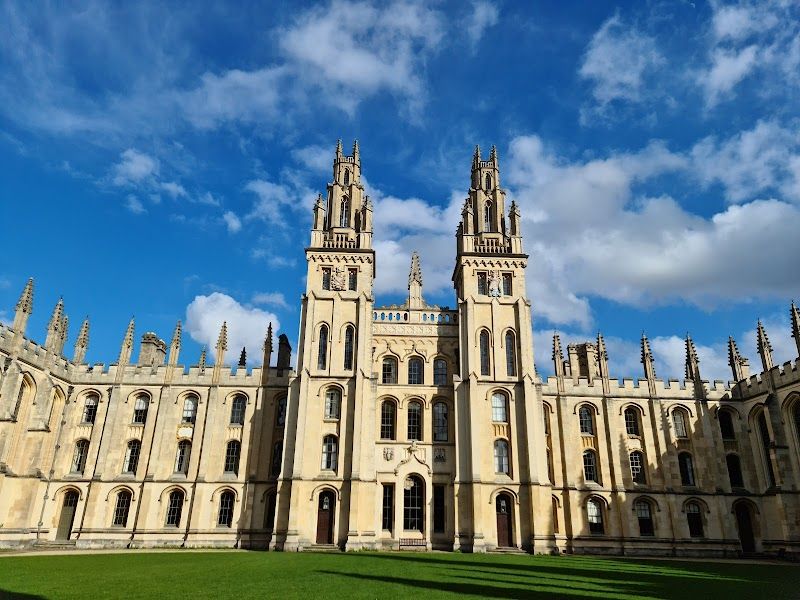
Oxford is a city of 150,000 people that happens to contain 38 university colleges, each with its own quadrangles, chapels, libraries, and dining halls. The university and the city have been growing together since the 12th century, and the result is that you cannot walk more than two minutes in the centre without encountering a building that has been doing something important for 400 years. The Bodleian Library has been lending books since 1602. Christ Church College has a cathedral inside its grounds. Magdalen College has a deer park. The city feels genuinely alive because it is: students cycle past you, academics eat lunch in the pubs, and the buildings are not preserved for your benefit but simply used.
Bath is a city of 95,000 people built almost entirely of honey-coloured limestone during a roughly 100-year period in the 18th century. The Romans were there first, and the Roman Baths complex is impressive, but the city's character is Georgian: symmetrical terraces, crescents, Jane Austen, and afternoon tea. It is very beautiful in a composed, coherent way. It is also very oriented toward the visitor economy in a way Oxford is not, which you will notice in the prices and the pace.
The Oxford vs Bath Comparison: Side by Side
| Factor | Oxford | Bath |
|---|---|---|
| Journey from London Paddington | 55-60 minutes by train | 90 minutes by train |
| Train cost (off-peak) | Approximately GBP 15-30 return | Approximately GBP 25-45 return |
| Dominant architectural era | Medieval to Victorian | Georgian (1700s-1800s) |
| Entry to main attraction | Christ Church: GBP 18 | Roman Baths: approximately GBP 20-22 |
| Free museums | Ashmolean, Pitt Rivers, Natural History | American Museum (limited), Victoria Art Gallery |
| Best free activity | Walking the colleges and meadows | Royal Crescent and Circus walking tour |
| Food scene quality | Strong, varied, affordable options | Good, but more tourist-oriented pricing |
| Crowds in peak season | Busy but manageable | Very busy, queues for everything |
| Evening worth staying for | Yes, genuinely | Depends on your budget |
Bath vs Oxford: Does the Order Change the Answer?
Searching bath vs oxford instead of oxford vs bath does not change the decision, only the starting point. From Bath's side, the case is the Roman Baths, the Royal Crescent, and the Georgian streetscape as one coherent set piece, plus the thermal pools at Thermae Bath Spa if that is your reason for the trip. From Oxford's side, the case is the colleges you can walk into, three free museums that would each justify the trip, and an evening worth staying for. The tiebreaker is usually the train: Oxford is 55-60 minutes from London Paddington against Bath's 90, so a single day gives you more hours on the ground in Oxford. Pick Bath for the architecture and the spa, Oxford for the museums, the pubs, and the extra daylight.
Oxford vs Bath Day Trip: Getting There and Cost
From London Paddington, Oxford takes 55-60 minutes by Great Western Railway, and off-peak return fares typically fall in a reasonable range. Bath Spa takes around 90 minutes on the same line, going in the same direction but further. If you are making a single day trip, Oxford is simply less of your day eaten by travel.
If you are coming directly from Heathrow rather than central London, Oxford is the clear winner on logistics. A National Express coach runs directly from Heathrow to Oxford for GBP 25-35, and the journey takes around 90 minutes. Reaching Bath from Heathrow requires going into London first or taking a slower cross-country route.
Once you arrive, Oxford is extremely walkable. The central university area around the Bodleian, Christ Church and the Meadow, and the Covered Market on High Street are all within 15 minutes of each other on foot. If you want to venture further, an Oxford Bus Company Day Rider costs GBP 5 for unlimited travel, or GBP 2.50 per single journey.
Bath is also walkable in its centre, but the main sights, the Roman Baths, the Royal Crescent, the Circus, and Pulteney Bridge, are spread across more ground, and the hills add effort on a hot day.
What You Actually Get in Oxford
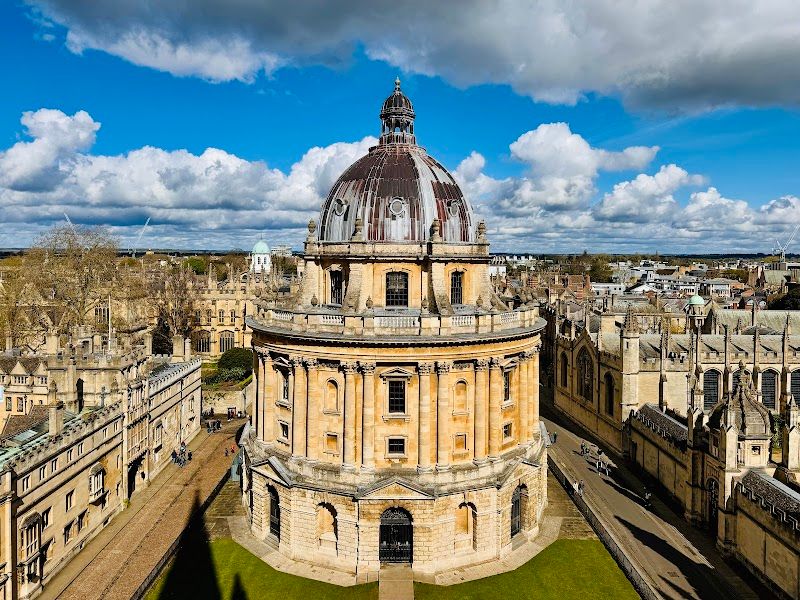
The concentration of things worth seeing in Oxford's centre is remarkable. Start at the Radcliffe Camera, the circular domed library that anchors Radcliffe Square, and look around: the Bodleian to the north, the Sheldonian Theatre to the northwest, the spire of the University Church to the south. You are not looking at a postcard of a historic city. You are standing in one that is still in operation.
The Bodleian Library tour costs GBP 8 for a 30-minute guided visit that takes you into the Divinity School, one of England's finest medieval rooms, with a fan-vaulted ceiling completed in 1490. This is where the Hogwarts infirmary scenes were filmed in the Harry Potter films, which matters to some visitors more than others, but the architecture earns its own attention without the film connection.
Christ Church College costs GBP 18 and that gets you into the dining hall that directly inspired Hogwarts' Great Hall, the college cathedral, and the meadow. This is the most-visited college for good reason: the combination of the hall, the Tom Quad, and the cathedral makes it the single highest-density attraction in Oxford. If you only pay to enter one college, make it this one.
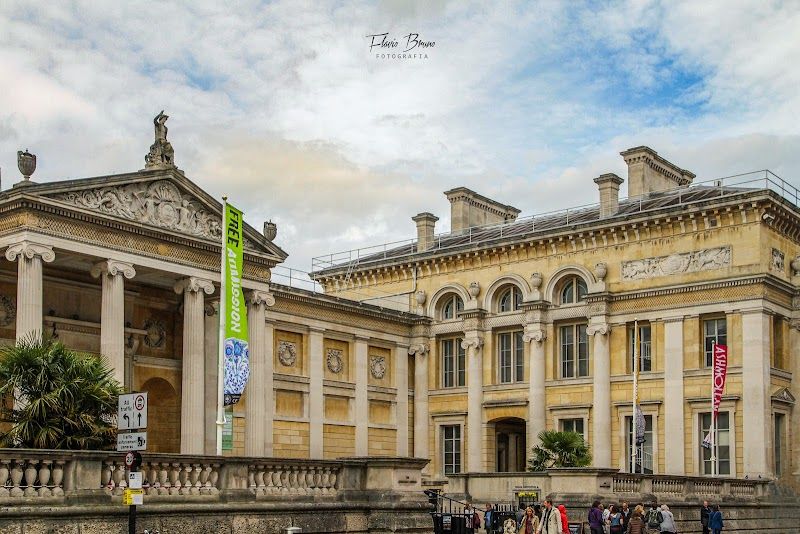
But a lot of Oxford's value is free. The Ashmolean Museum on Beaumont Street is free, houses work ranging from Raphael drawings to Egyptian mummies, and is genuinely one of the best university museums in Europe. The Pitt Rivers Museum is free and contains 500,000 ethnographic objects in a Victorian building that operates on the logic of organised chaos. The Oxford University Museum of Natural History next door is free and worth 45 minutes of any visit. University Parks is free, covers 30 hectares, and runs along the River Cherwell.
For something more active, punting on the Cherwell costs GBP 30 for one hour of boat rental, and in good weather it is one of the more enjoyable things you can do in any English city. If you have never punted before, budget some time for the learning curve.
Food options are genuinely good and span a wide price range. Grab something at the Covered Market, where vendors sell sandwiches and hot food for GBP 5-10, or sit down for a pub lunch in the GBP 8-12 range. A mid-range dinner with a drink runs GBP 25-40 per person. Oxford has enough non-tourist restaurants, particularly in Jericho, that you are not trapped in the visitor bubble the way you can be in Bath.
The Pub Question
Oxford's pubs are a legitimate reason to visit. The Turf Tavern, tucked down a narrow lane between New College Lane and Bath Place, has been operating since at least the 17th century and was the setting for various improbable moments in 20th-century British history. The Eagle and Child on St Giles' Street was where Tolkien and C.S. Lewis met to share drafts of their work. A pint runs GBP 4.50-6.50 depending on the pub and what you are drinking. For the full context, our Oxford literary pubs guide covers the Inklings trail in detail.
What You Actually Get in Bath
Bath's case rests on three things: the Roman Baths, the Georgian architecture as a whole, and the thermal spa experience at Thermae Bath Spa (the modern spa built over the original Roman hot springs). The Roman Baths complex is a serious archaeological site with genuinely impressive infrastructure, including the sacred spring, the main bath, and a museum. The entrance fee is approximately GBP 20-22 for adults in 2026, and it needs 90 minutes to do properly.
The Georgian streetscape, meaning the Royal Crescent, the Circus, Pulteney Bridge, and the connecting streets, is coherent and genuinely beautiful in a way that few English cities match. You can walk it for free, which is how most people should experience it. The problem is that Bath knows exactly how beautiful it is, and the restaurant and accommodation pricing reflects that confidence.
Thermae Bath Spa, where you can bathe in natural thermal water in a rooftop pool overlooking the city, costs approximately GBP 40+ per session. It is popular, it requires booking in advance during peak season, and it represents a specific kind of luxury day trip that has nothing to do with history or architecture. If that sounds appealing, Bath wins on this point with no competition.
Oxford or Bath from London: The Honest Verdict
Choose Oxford if: you want more than one day's worth of things to see, you are interested in university culture or literary history, you want strong free museum options, or you are coming from Heathrow. Oxford rewards slow walking and curiosity. The more you look, the more you find. A first-timer's itinerary across two days will still leave things on the list.
Choose Bath if: you are primarily interested in Georgian architecture as a unified experience, you want to do the Roman Baths properly, or you are considering the thermal spa as your main activity. Bath is also a better choice if you are travelling with someone who values a more curated, self-contained experience, and is less interested in wandering into museum after museum.
Choose both if: you have more than a weekend. Bath and Oxford are on the same train line from London Paddington. You can realistically do Oxford one day and Bath the next without backtracking, staying overnight in each if your budget allows. Oxford's mid-range hotel options run GBP 120-180 for a double room in the centre, or GBP 60-90 at a budget hotel. If you are on a tight budget, the YHA Oxford hostel dorm beds start at GBP 25-35.
For a full breakdown of what to see and when, the Oxford first-timer's guide covers the practical details that trip reports tend to skip.
The One Scenario Where This Comparison Doesn't Apply
If you are travelling with young children or teenagers who are Harry Potter fans, Oxford wins without argument. Christ Church's dining hall (GBP 18), the Bodleian's Divinity School (GBP 8 with tour), and the real-world locations scattered across the city centre create a day trip experience that Bath cannot match in that particular category. Bath has no equivalent hook for that audience.
If you are a Jane Austen reader, Bath has the edge for obvious reasons. The city is essentially a stage set for her novels, and the Jane Austen Centre, while small, provides the framing that makes the Georgian streets feel significant rather than just pretty.
A Realistic Day in Oxford
For anyone leaning toward Oxford, here is what a single day actually looks like in practice. Arrive at Oxford train station by 9:30am and walk 15 minutes into the centre. Spend the morning at the Bodleian and Radcliffe Camera area. Have lunch at the Covered Market for GBP 5-10. Spend the afternoon at Christ Church College (GBP 18) and walk through Christ Church Meadow to the river. If time allows, climb Carfax Tower for GBP 3.50 and a view of the whole skyline. End the day with a pint at the Turf Tavern. You will have spent roughly GBP 35-45 on activities and another GBP 20-30 on food, which makes Oxford a GBP 55-75 day trip at a comfortable pace, not counting transport.
That is competitive with Bath once you factor in the Roman Baths admission and Bath's generally higher restaurant prices. Oxford is not the cheaper option because it has fewer things worth seeing. It is the cheaper option because so much of what is worth seeing is free.