United Kingdom

Oxford

38 colleges, 900 years, the Hogwarts dining hall, punting on the Cherwell, and the pub where Tolkien read to Lewis
Oxford, United Kingdom
Best Time
April-October
Ideal Trip
1-2 days
Language
English
Currency
GBP
Budget
GBP 36-81/day
The place

About Oxford

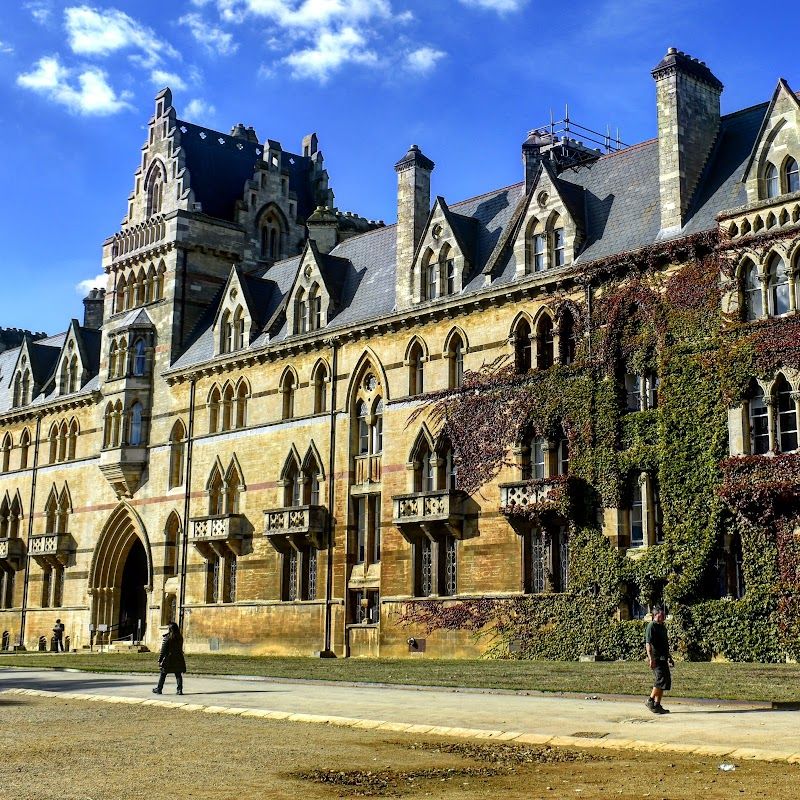
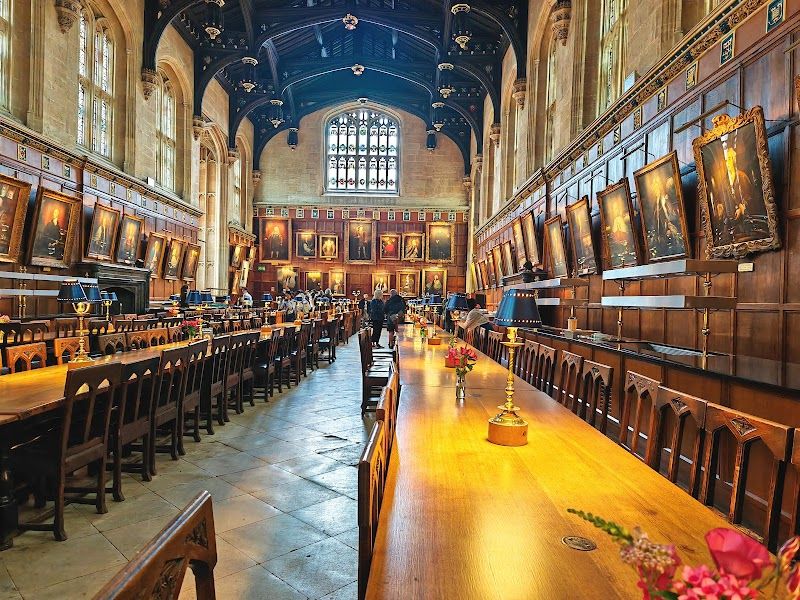
Oxford is the city where 38 colleges have been accumulating buildings, libraries, gardens, and traditions for 900 years, and the result is a concentration of architecture that makes you feel like you wandered into a film set, which you literally did because Harry Potter, Downton Abbey, His Dark Materials, Inspector Morse, and Brideshead Revisited were all filmed here. Christ Church College (GBP 18) has the dining hall that inspired Hogwarts' Great Hall, the cathedral that doubles as the college chapel, and the meadow where Alice in Wonderland's author walked with the real Alice. The Bodleian Library (GBP 10-18 for tours) has been lending books since 1602 and the Divinity School's vaulted ceiling was used as Hogwarts' infirmary.

The city is the university and the university is the city, which means the best things to do are the colleges themselves. Most are open to visitors (GBP 0-18 per college, hours vary by term), and walking through the quads, chapels, dining halls, and gardens that produced 28 British prime ministers, 72 Nobel laureates, and Tolkien, Lewis, Wilde, and Shelley is the point of visiting. The Ashmolean Museum (free, the oldest public museum in the world, opened 1683, the Egyptian rooms and the Alfred Jewel are highlights) and the Pitt Rivers Museum (free, the Victorian ethnographic collection in a building that looks like a natural history cathedral) are world-class and cost nothing.

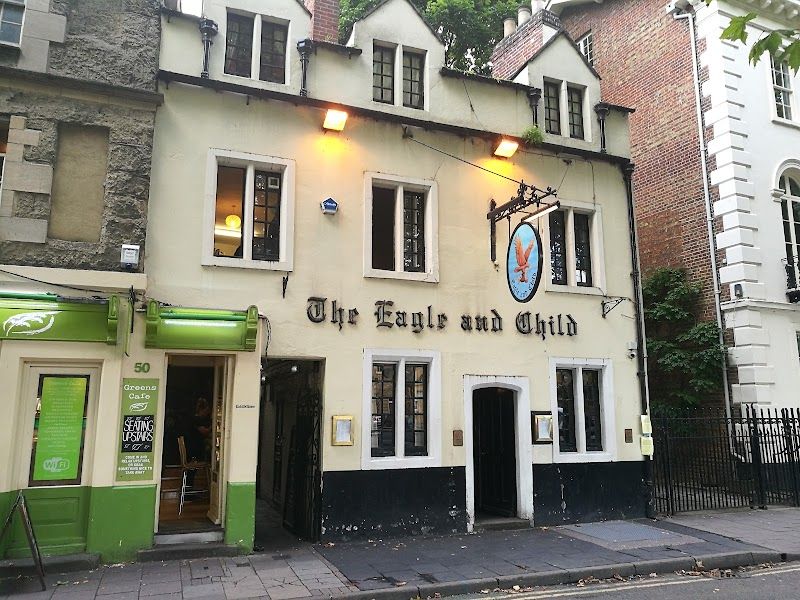
The covered market (open since 1774, the oldest continuously operating market in Oxford) has the best lunch options: Ben's Cookies (the chocolate chip cookie that launched a chain but the original is still the best), the Covered Market pie shop, and the traditional butchers and cheesemongers. Punting on the Cherwell (GBP 24 per hour for the boat, you steer with a pole, you will get wet, it is a rite of passage) is the quintessential Oxford experience between May and September. The Eagle and Child pub on St Giles' is where Tolkien and Lewis met weekly to read each other their work. A pint there costs GBP 5-6 and the literary history is free.

Where to stay

Pick your base

Explore all neighborhoods
Where to book

Stay in Oxford

Real-time pricing across hotels, apartments, and ryokans. Book direct from the map.

What to do

Things to do in Oxford

View all activities
Ashmolean Museum
Museum

Ashmolean Museum

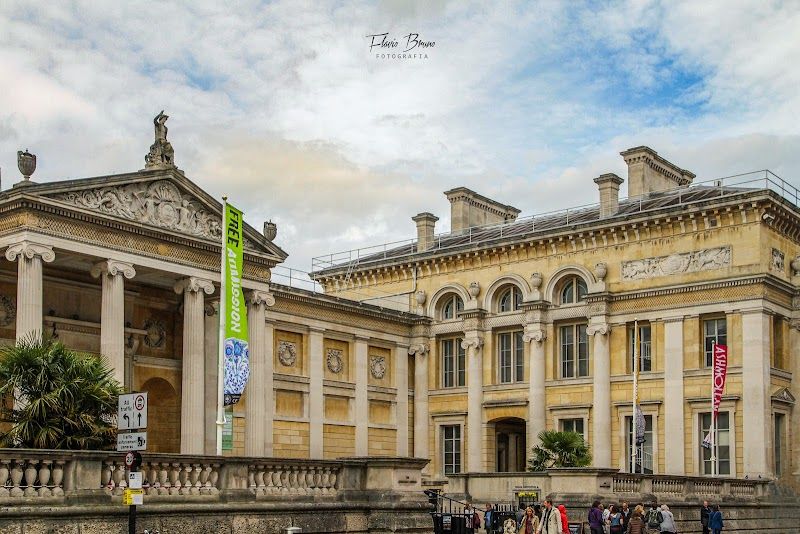
The Ashmolean is the University of Oxford's museum of art and archaeology, founded in 1683, and the oldest public museum in the world still in operation. The original collection was given to the university by Elias Ashmole, who had received it from the naturalists John Tradescant the Elder and his son, who had spent decades collecting objects from around the world. The current building on Beaumont Street was designed by Charles Robert Cockerell and completed in 1845. Admission is free. The Egyptian and Near Eastern galleries on the upper floors hold genuine archaeological significance: the Alfred Jewel (a 9th-century Anglo-Saxon artefact of enamel, crystal, and gold, believed to have been owned by King Alfred the Great, found in Somerset in 1693) is one of the most important early medieval objects in Britain. The Egyptian mummy collection and the Greek and Roman antiquities are well displayed. The painting collection spans European art from the medieval period to the 20th century, with particular strengths in Italian Renaissance (including works by Raphael and Michelangelo), 17th-century Dutch and Flemish painting, and Pre-Raphaelite works (Hunt, Rossetti, Millais). The Cast Gallery in the basement holds plaster casts of classical sculpture made for teaching purposes in the 19th century. Budget 2-3 hours for the full collection.

2-3 hoursExplore
Oxford University Museum of Natural History
Museum

Oxford University Museum of Natural History

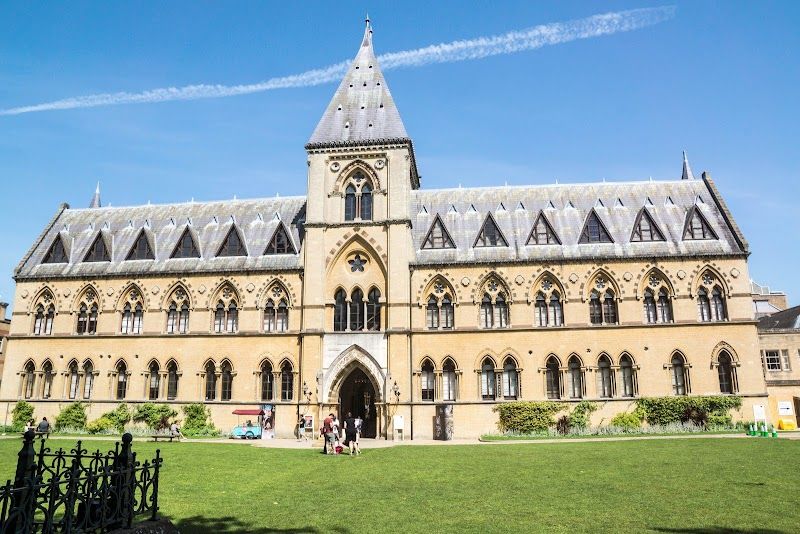
This Victorian Gothic cathedral of science houses one of Britain's most complete dodo specimens, towering dinosaur skeletons, and meteorites older than Earth itself. The building's cast iron and glass roof creates a natural greenhouse effect, while carved stone columns represent every major British rock type from granite to limestone. You'll find genuine scientific specimens that shaped our understanding of evolution, including fossils Darwin himself examined, plus the original hall where Thomas Huxley defended evolution theory in the famous 1860 debate. Walking into the main court feels like entering a medieval monastery dedicated to natural history rather than prayer. The soaring ironwork overhead filters sunlight across geological displays, while school groups cluster around the towering Iguanodon skeleton. The acoustics amplify every whisper and footstep, creating an almost reverent atmosphere. Interactive displays feel genuinely educational rather than dumbed down, and the specimen cases contain handwritten Victorian labels that add authentic period charm. Most visitors rush through in 30 minutes, but you'll need at least 90 minutes to appreciate the details properly. The geology section gets overlooked but contains spectacular mineral formations and the actual rocks from Oxford's spires. Skip the temporary exhibitions upstairs, they're usually underwhelming compared to the permanent collection. Free entry means you can return multiple times, which is genuinely worthwhile since there's far more here than initially meets the eye.

1.5-2 hoursExplore
Pitt Rivers Museum
Museum

Pitt Rivers Museum

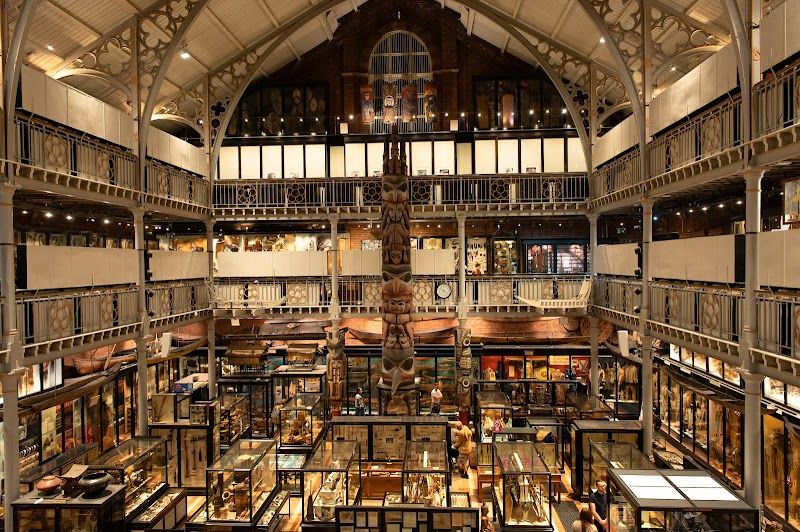
The Pitt Rivers Museum is the University of Oxford's museum of archaeology and world cultures, founded in 1884 when General Augustus Henry Lane Fox Pitt Rivers gave his personal collection of 18,000 objects to the university on the condition that they appoint a lecturer in anthropology. The building is a Victorian cast-iron and glass structure attached to the back of the Oxford University Museum of Natural History, accessed through the natural history collections. Entry is free. The collection now holds over 500,000 objects from all parts of the world and all periods of human history, displayed in a dense, Victorian-style arrangement of cases packed floor to ceiling: weapons, tools, textiles, musical instruments, ceremonial objects, and human remains. The shrunken heads (tsantsa) from Ecuador and Peru are the most photographed objects and are in a case near the centre of the ground floor. The totem poles in the central court are from the Pacific Northwest. The treatment masks from Papua New Guinea are in cases at the back. The museum deliberately retains the Victorian display method of grouping objects by type rather than by culture, which makes it feel like a cabinet of curiosities at museum scale. Budget 90 minutes to 2 hours.

1.5-2 hoursExplore
Christ Church Meadow
Park & Garden

Christ Church Meadow

Christ Church Meadow spreads across 100 acres of protected grassland where the River Cherwell meets the Thames, creating Oxford's most atmospheric riverside walk. You'll follow the same paths where Lewis Carroll strolled with Alice Liddell, dreaming up Wonderland stories. The New Walk cuts straight through the meadow under a canopy of towering elms, while smaller paths wind along both riverbanks past grazing cattle and towards the college boathouses. The meadow feels like stepping back into Victorian Oxford, especially along the tree-lined New Walk where dappled sunlight filters through ancient elms. Cattle wander freely (they're harmless but can be curious), and you'll hear the splash of rowing crews training on both rivers. The atmosphere shifts from formal near Christ Church's imposing Tom Tower to wild and rural at the furthest reaches where kingfishers dart between the reeds. Most visitors stick to the obvious New Walk avenue and miss the best bits entirely. The real magic happens along the quieter Thames path towards Folly Bridge, where you get proper river views without the college tour groups. Skip the crowded entrance near Christ Church cathedral (you'll pay £15 just to walk through) and use the free Memorial Garden gate instead. The meadow closes at dusk year-round, so don't plan evening visits.

1-2 hoursExplore
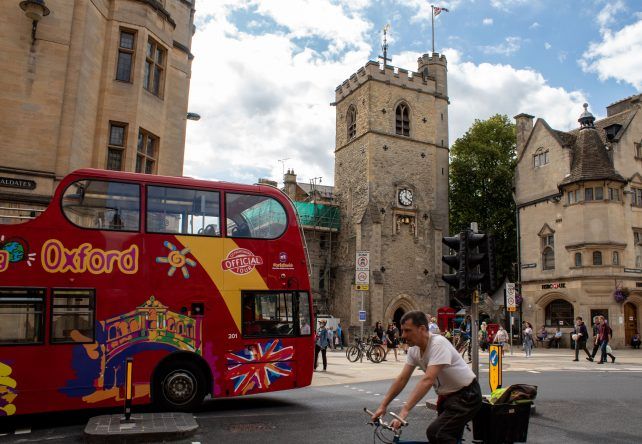
Carfax Tower
Experience

Carfax Tower

Carfax Tower is the 74-foot stone survivor of St Martin's Church, demolished in 1896 but for this stubborn 13th-century bell tower. You'll climb 99 steep, narrow stone steps in a tight spiral staircase to reach Oxford's best 360-degree viewpoint. The reward is spectacular: you can see down the High Street's curve, across the Radcliffe Camera's dome, and over college spires stretching to the countryside. Entry costs £3.50 for adults. The climb feels properly medieval, with worn stone steps and tiny slit windows offering glimpses as you ascend. At the top, the viewing platform is genuinely small, fitting maybe 8 people comfortably. The views hit differently depending on direction: south down the High Street shows Oxford's famous curve and college facades, while north reveals the covered market's rooftops and Broad Street. Wind whips around the platform, and the church bells below chime loudly every 15 minutes. Most guides oversell this as essential Oxford, but it's actually skippable if you're not fussed about heights or views. The climb is genuinely tough if you have mobility issues, and the platform gets uncomfortably crowded during peak times. However, if you want that classic Oxford postcard shot or you're a view completist, it delivers. The £3.50 feels reasonable for what you get, though St Mary the Virgin's tower offers better spire views if you can only pick one.

30-45 minutesExplore
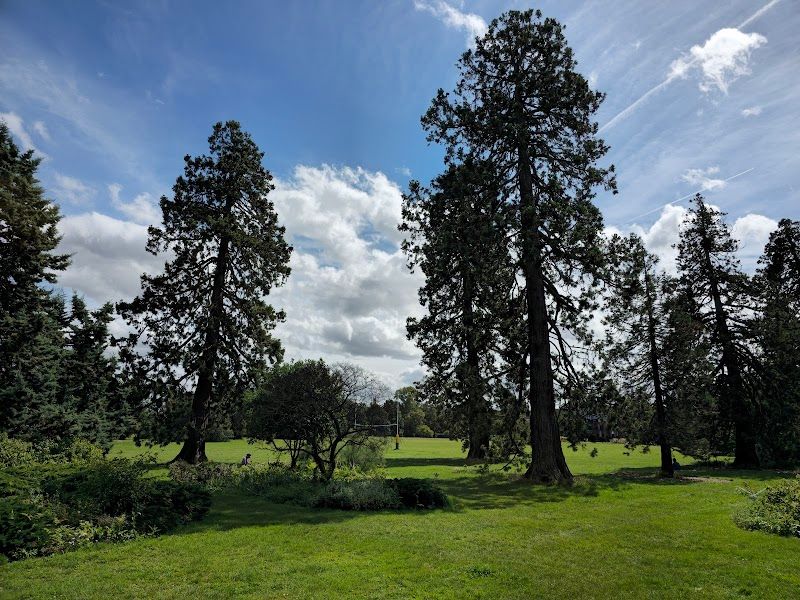
University Parks
Park & Garden

University Parks

University Parks sprawls across 70 acres of proper English parkland where Oxford's cricket team plays home matches and locals escape the city without leaving it. The River Cherwell meanders along the eastern edge, creating genuine countryside feel just minutes from the Radcliffe Camera. You'll find Victorian-era trees, open meadows perfect for picnics, and cricket pitches that host proper county-level matches in summer. The northern duck pond attracts families while the southern areas stay busier with students and tourists. Walking here feels like discovering Oxford's backyard rather than visiting another attraction. Cricket matches draw small crowds of spectators who know the game, creating a distinctly English atmosphere you won't find in college quads. The river path offers genuine tranquility where you can watch punts drift by and spot herons fishing in the shallows. Even on busy days, the sheer size means you can always find quiet corners under ancient oaks or beside the water. Most visitors stick to the main southern entrance and miss the best bits entirely. The northern section near Banbury Road offers the most authentic local experience, complete with dog walkers and families who've been coming for decades. Skip the parks entirely during Oxford vs Cambridge cricket matches when crowds make it impossible to enjoy the peaceful atmosphere that's the real draw here.

1-2 hoursExplore
Christ Church College
Attraction

Christ Church College

Christ Church is the largest and most visited of Oxford's 38 colleges, and the one most people come to Oxford to see. It was founded by Cardinal Wolsey in 1524 and refounded by Henry VIII in 1546, which is why it has the royal connection that shaped its unusual status as both a college and a cathedral church. The Great Hall (GBP 18 entry to Christ Church, includes the hall and the cathedral) is the room that production designer Stuart Craig used as the direct model for the Great Hall in the Harry Potter films: the long tables, the high table at the end, the portraits of past students on the walls, the hammer-beam ceiling. Tom Tower, designed by Christopher Wren in 1681, stands above the main gate on St Aldate's. The cathedral doubles as the college chapel and contains a 12th-century Norman nave and the St Frideswide shrine. Christ Church Meadow runs south of the college buildings: 100 acres of meadow and riverside walk where Lewis Carroll (Charles Dodgson, mathematics lecturer at Christ Church) walked with Alice Liddell, daughter of the college dean, whose conversations with Dodgson became the direct source material for Alice's Adventures in Wonderland. The meadow is free to enter from St Aldate's or through the War Memorial Garden. The college is open to visitors daily (hours vary by term and academic calendar, check the website before visiting). The Picture Gallery (GBP 5 separate ticket, 200 works including Tintoretto, Veronese, and Leonardo drawings) is in the Canterbury Quadrangle.

1.5-2.5 hoursExplore
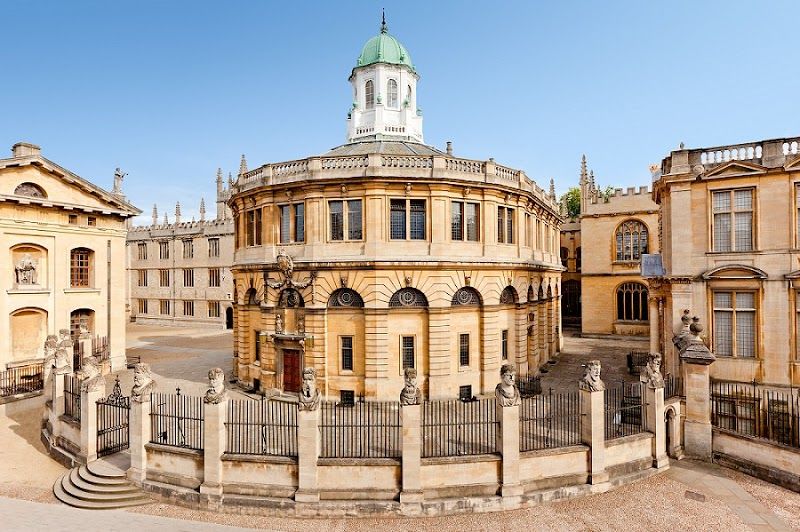
Sheldonian Theatre
Attraction

Sheldonian Theatre

Christopher Wren's architectural debut sits right on Broad Street, a 17th-century masterpiece that still hosts Oxford's graduation ceremonies today. You'll climb 127 steps to the cupola for genuinely spectacular 360-degree views over the Bodleian Library, Radcliffe Camera, and All Souls College spires. The main theatre below features Robert Streater's elaborate ceiling painting showing Truth descending upon the Arts and Sciences, plus those famous carved heads around the building's exterior that watched over centuries of students. Inside feels surprisingly intimate for such a grand building. The semicircular seating rises steeply around you, designed exactly like Roman amphitheatres but covered with England's first geometric ceiling. Most visitors spend 10 minutes downstairs admiring the restoration work, then head straight up the narrow spiral staircase. The cupola viewing platform is small, fitting maybe 15 people comfortably, with wraparound windows offering the city's best aerial perspective. At £4.50 for adults, it's Oxford's best value viewpoint by miles. Skip the audio guide, the building's simple enough to appreciate without commentary. Go between 2-4pm for perfect light on the golden Cotswold stone, avoiding the morning tour groups. The steps are steep and narrow, genuinely challenging if you have mobility issues, but the payoff upstairs makes every tourist photo from ground level look amateur.

45 minutesExplore
Bodleian Library
Cultural Site

Bodleian Library

The Bodleian is essentially Oxford's working brain, housing 13 million books across multiple historic buildings that you can actually tour. You'll walk through Duke Humfrey's medieval library with its original chained books still attached to reading desks, gaze up at painted ceilings from the 1400s, and see the ornate Divinity School where they filmed Harry Potter scenes. The circular Radcliffe Camera next door is the most photographed spot in Oxford, though you can only peek inside on extended tours. Your visit starts in the Divinity School, a soaring Gothic hall with fan vaulting that makes you crane your neck. The standard tour keeps you moving through exhibition spaces and the medieval library upstairs, where scholars still work at wooden desks surrounded by ancient texts. The atmosphere is properly academic, libraries smell of old paper and learning, with whispered conversations and the soft shuffle of pages. You'll feel the weight of 400 years of scholarship around you. Most guides don't mention that the basic tour (£6) skips the best bits. Pay £14 for the extended tour to access Duke Humfrey's Library properly, otherwise you're missing the main event. The tours fill up fast in summer, book online a few days ahead. Skip the Radcliffe Camera tour unless you're obsessed with reading rooms, the exterior view from Radcliffe Square is honestly better than the cramped interior.

1-1.5 hoursExplore
Hand-picked

Experiences worth booking ahead

Vetted tours and tickets we'd send a friend to. The ones worth reserving before you arrive.
All experiences
Ashmolean Museum
Bestseller

Ashmolean Museum

The Ashmolean is the University of Oxford's museum of art and archaeology, founded in 1683, and the oldest public museum in the world still in operation. The original collection was given to the university by Elias Ashmole, who had received it from the naturalists John Tradescant the Elder and his son, who had spent decades collecting objects from around the world. The current building on Beaumont Street was designed by Charles Robert Cockerell and completed in 1845. Admission is free. The Egyptian and Near Eastern galleries on the upper floors hold genuine archaeological significance: the Alfred Jewel (a 9th-century Anglo-Saxon artefact of enamel, crystal, and gold, believed to have been owned by King Alfred the Great, found in Somerset in 1693) is one of the most important early medieval objects in Britain. The Egyptian mummy collection and the Greek and Roman antiquities are well displayed. The painting collection spans European art from the medieval period to the 20th century, with particular strengths in Italian Renaissance (including works by Raphael and Michelangelo), 17th-century Dutch and Flemish painting, and Pre-Raphaelite works (Hunt, Rossetti, Millais). The Cast Gallery in the basement holds plaster casts of classical sculpture made for teaching purposes in the 19th century. Budget 2-3 hours for the full collection.

Book
Oxford University Museum of Natural History
Top rated

Oxford University Museum of Natural History

This Victorian Gothic cathedral of science houses one of Britain's most complete dodo specimens, towering dinosaur skeletons, and meteorites older than Earth itself. The building's cast iron and glass roof creates a natural greenhouse effect, while carved stone columns represent every major British rock type from granite to limestone. You'll find genuine scientific specimens that shaped our understanding of evolution, including fossils Darwin himself examined, plus the original hall where Thomas Huxley defended evolution theory in the famous 1860 debate. Walking into the main court feels like entering a medieval monastery dedicated to natural history rather than prayer. The soaring ironwork overhead filters sunlight across geological displays, while school groups cluster around the towering Iguanodon skeleton. The acoustics amplify every whisper and footstep, creating an almost reverent atmosphere. Interactive displays feel genuinely educational rather than dumbed down, and the specimen cases contain handwritten Victorian labels that add authentic period charm. Most visitors rush through in 30 minutes, but you'll need at least 90 minutes to appreciate the details properly. The geology section gets overlooked but contains spectacular mineral formations and the actual rocks from Oxford's spires. Skip the temporary exhibitions upstairs, they're usually underwhelming compared to the permanent collection. Free entry means you can return multiple times, which is genuinely worthwhile since there's far more here than initially meets the eye.

Book
Pitt Rivers Museum
Top rated

Pitt Rivers Museum

The Pitt Rivers Museum is the University of Oxford's museum of archaeology and world cultures, founded in 1884 when General Augustus Henry Lane Fox Pitt Rivers gave his personal collection of 18,000 objects to the university on the condition that they appoint a lecturer in anthropology. The building is a Victorian cast-iron and glass structure attached to the back of the Oxford University Museum of Natural History, accessed through the natural history collections. Entry is free. The collection now holds over 500,000 objects from all parts of the world and all periods of human history, displayed in a dense, Victorian-style arrangement of cases packed floor to ceiling: weapons, tools, textiles, musical instruments, ceremonial objects, and human remains. The shrunken heads (tsantsa) from Ecuador and Peru are the most photographed objects and are in a case near the centre of the ground floor. The totem poles in the central court are from the Pacific Northwest. The treatment masks from Papua New Guinea are in cases at the back. The museum deliberately retains the Victorian display method of grouping objects by type rather than by culture, which makes it feel like a cabinet of curiosities at museum scale. Budget 90 minutes to 2 hours.

Book
Footprints Tours

Footprints Tours

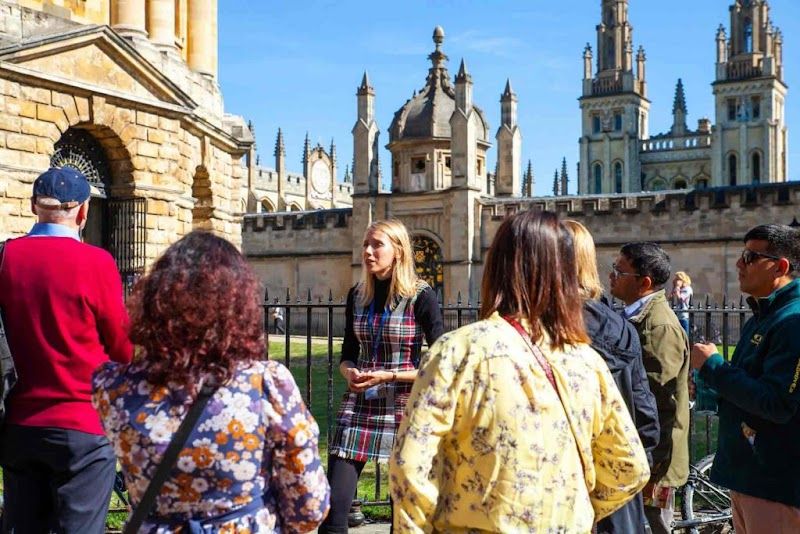
Current Oxford students lead these walking tours, giving you actual insider stories instead of recycled historical facts you can Google. You'll visit the main colleges like Christ Church and the Bodleian Library, plus filming spots from Harry Potter and Inspector Morse, but the real value comes from hearing what it's actually like to study here. Your guides share stories about midnight library sessions, formal hall disasters, and which professors are legends or nightmares. The tour flows naturally through Oxford's medieval streets, stopping at college gates where your guide points out architectural details while explaining the weird traditions inside. You'll hear about student pranks, dating disasters, and exam stress alongside the official history. The atmosphere feels like chatting with a friend rather than following a script, and groups stay small enough for real conversation. Your guide's enthusiasm is infectious, especially when they point out their own college windows or favorite study spots. Most tour companies hire professional guides who've never lived the student experience, but these tours give you genuine authenticity. The pay what you think model works brilliantly, with most people tipping £10 to £15 per person for good reason. Skip this if you want hardcore historical detail, but it's perfect for understanding modern Oxford beyond the postcard image.

Book
Radcliffe Camera
Top rated

Radcliffe Camera

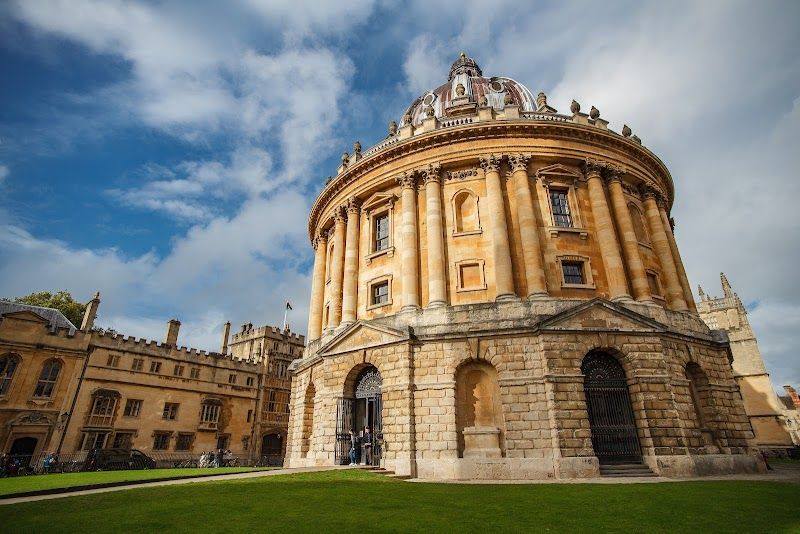
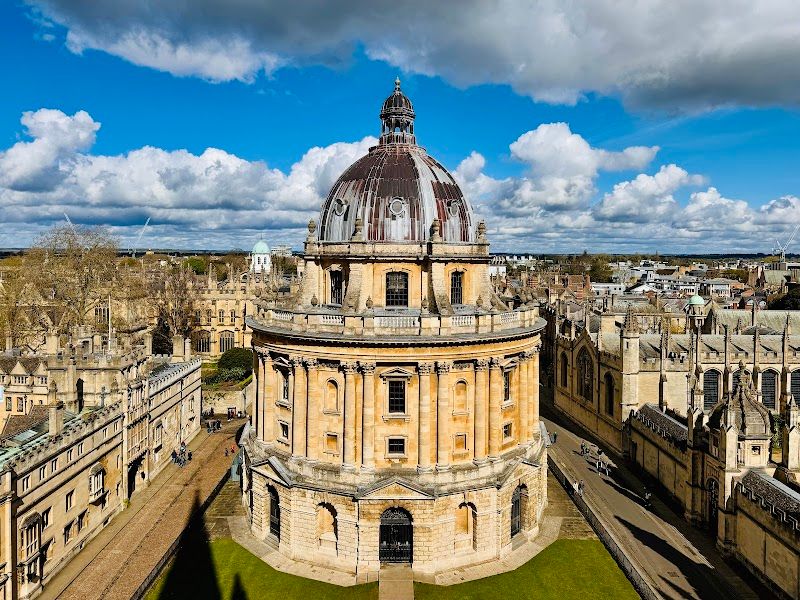
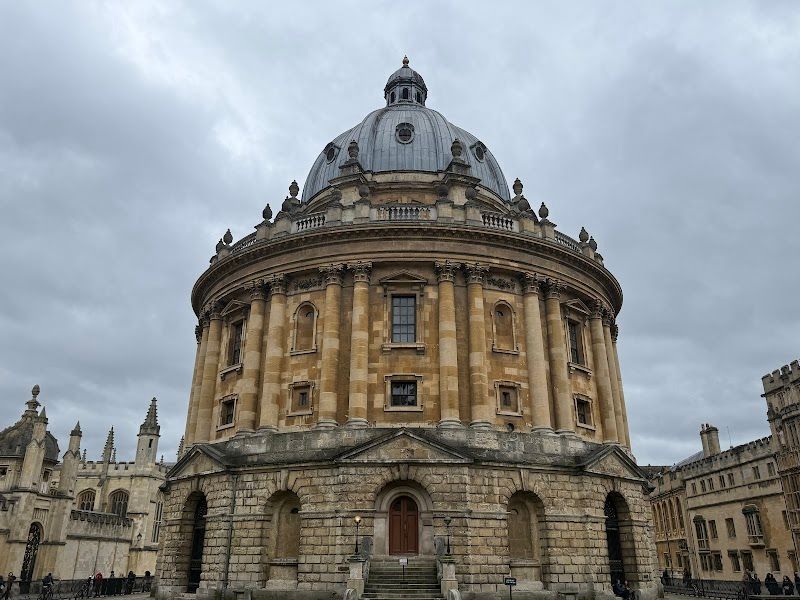
The Radcliffe Camera stands as Oxford's most recognizable building, a perfectly circular library topped with a dome that's been drawing photographers since cameras existed. Built in 1749 by James Gibbs, it was Britain's first circular library and now serves as a reading room for the Bodleian Library. You can't just wander in for a look around, but the exterior alone justifies the walk to Radcliffe Square, especially when afternoon light hits that golden stone. Walking around the Camera feels like circling a piece of architectural theater. The building sits in the center of Radcliffe Square, surrounded by honey-colored Oxford stone on all sides, with All Souls College and the Bodleian creating a courtyard effect. Students cycle past constantly, and you'll see proper academics hurrying between colleges with armfuls of books. The dome dominates every angle, and each side offers a different perspective worth photographing. Most visitors snap photos and leave, which is honestly fine since interior access requires booking those expensive Bodleian tours (£15+ and they sell out weeks ahead). The real trick is coming early morning when tour groups haven't arrived and the light is softer. Don't bother trying to peer through windows, you'll see nothing but frustrated security guards. The building looks stunning from every angle, but the view from the Bodleian's Duke Humfrey's Library windows above gives you the best overhead shot if you do book a tour.

Book
Modern Art Oxford

Modern Art Oxford

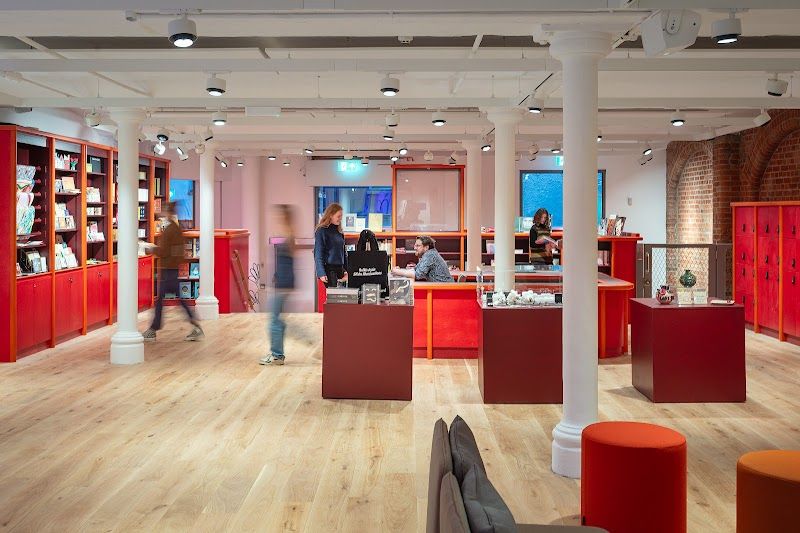
Modern Art Oxford occupies a beautifully converted Victorian brewery warehouse on Pembroke Street, just steps from Oxford's city center. You'll encounter genuinely challenging contemporary art here: video installations that fill entire rooms, large scale sculptures that make you reconsider the space, and conceptual pieces from artists you'll be hearing about in five years. The programming is seriously ambitious, rotating every 8-12 weeks with solo shows from emerging artists alongside established names. The free admission makes it one of Oxford's best cultural bargains. The galleries flow across two levels of the converted warehouse, with high ceilings and polished concrete floors that let the art breathe. You'll usually find 2-3 exhibitions running simultaneously, each occupying distinct spaces that feel intimate despite the industrial bones of the building. The atmosphere strikes a perfect balance between serious art appreciation and accessibility, without the stuffiness of many university galleries. The ground floor bookshop is exceptional, stocked with art theory texts and exhibition catalogues you won't find elsewhere in Oxford. Most visitors rush through in 20 minutes, but give yourself the full hour to properly engage with pieces that reward closer attention. The gallery can feel empty on weekday afternoons, which actually enhances the experience of video installations. Skip the cafe upstairs, it's overpriced and underwhelming. The bookshop often has exhibition catalogues reduced after shows end, perfect for £8-15 rather than £25-30 at full price.

Book
Museum of Oxford

Museum of Oxford

The Museum of Oxford sits above the Town Hall and tells the city's story from a local perspective, not the university's. You'll find genuine Roman finds from beneath Oxford's streets, Civil War armor from when the city served as Charles I's capital, and displays about Morris Motors and marmalade making. The exhibitions focus on ordinary Oxford residents and their complex relationship with the gown crowd, including riots, protests, and economic tensions that shaped the city. The galleries flow chronologically through small, intimate rooms with original artifacts and reconstructed shop fronts. A Victorian parlor recreation feels authentic, while the Civil War section displays actual musket balls found during local excavations. The atmosphere is quiet and contemplative, very different from the tourist crowds at university colleges. You'll often have entire rooms to yourself, especially mid-afternoon. Most visitors rush through in 30 minutes, but that's a mistake. The local industry displays are fascinating and reveal how Oxford survived economically beyond academia. The temporary exhibitions upstairs are often excellent and completely free. Skip the gift shop (overpriced postcards), but don't miss the view from the upper windows overlooking St Aldate's. Entry is genuinely free with no suggested donation pressure.

Book
Oxford Official Walking Tours

Oxford Official Walking Tours

These official walking tours give you access to college courtyards and buildings that are normally locked to the public, led by Oxford-trained historians who know which stories actually matter. You'll walk through 900 years of university history across multiple colleges, seeing medieval dining halls, ancient libraries, and cloisters where famous writers and politicians once studied. The guides aren't just reciting facts: they're connecting Oxford's past to its present reality as a working university. The tour flows naturally from college to college, with your guide unlocking gates and doors that independent visitors can't access. You'll stand in the same dining hall where Lewis Carroll wrote Alice in Wonderland, walk through courtyards where Bill Clinton and Margaret Thatcher studied, and see the medieval Duke Humfrey's Library that inspired Hogwarts. The atmosphere shifts from touristy Broad Street into the surprisingly quiet college quads where current students are actually studying. Most tours cost around £18 for adults, which is fair value given the exclusive access. Skip the general University and City tour unless you're a complete Oxford novice: the themed tours like Inspector Morse or Literary Oxford are much more engaging. The guides vary in quality, but even average ones provide access worth the price. Book directly through the Visitor Information Centre rather than third-party sites that add unnecessary fees.

Book
Bridge of Sighs
Top rated

Bridge of Sighs

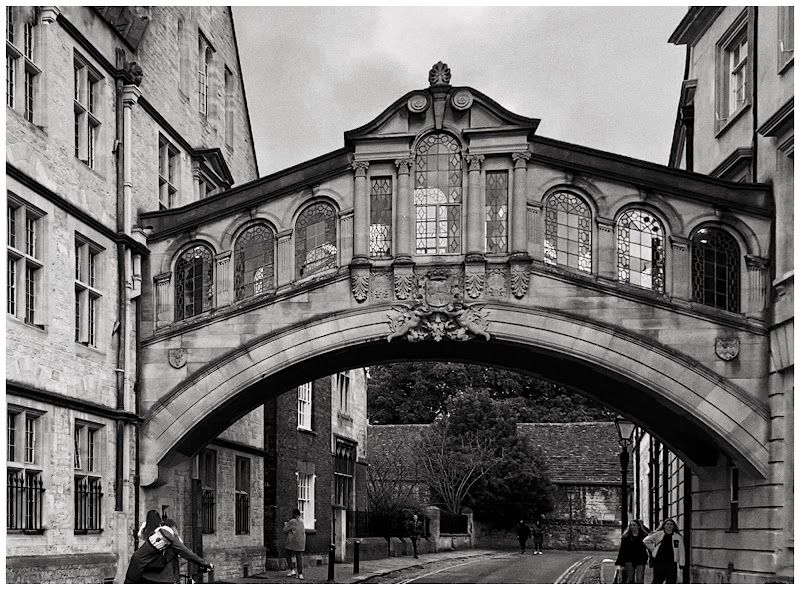
Oxford's most photographed bridge spans New College Lane in a graceful stone arch, connecting two parts of Hertford College since 1914. You'll recognize it instantly from countless postcards, though the nickname "Bridge of Sighs" comes from its supposed resemblance to Venice's famous bridge. Actually, architect Thomas Jackson modeled it after Venice's Rialto Bridge, which explains the sturdy, ornate stonework and those distinctive windows. The bridge is purely functional, allowing students to move between college buildings without stepping into the street below. Walking underneath feels like passing through a medieval gateway, with the bridge's Gothic Revival details casting interesting shadows on the narrow lane. The stonework looks genuinely old despite being barely a century old, testament to Jackson's skill at mimicking Oxford's ancient architecture. Students cross overhead constantly during term time, their footsteps echoing softly above. The lane itself stays cool even on hot days, creating a pleasant microclimate perfect for photos. Honestly, it's more photogenic than spectacular. You'll spend about two minutes looking up, taking photos, and moving on. Most visitors crowd the western approach, but the eastern view from Catte Street shows the bridge's proportions better. Don't bother paying for tours that include this, it's completely free to access and visible 24/7. Skip it if you're pressed for time, the Radcliffe Camera around the corner delivers more architectural wow factor.

Book
Read first

Travel guides

All guides
More on Oxford

From the blog

View all
Good to know

Practical bits, answered

Most colleges charge an entry fee (GBP 5-18) and have restricted hours, particularly during term time when they close for exams in May-June. Christ Church (GBP 18) is the most famous and the busiest: book online in advance and avoid meal times when the Great Hall closes. Magdalen (GBP 7), Merton (GBP 5), and New College (GBP 7 term, free vacation) are the best value after Christ Church. The Bodleian Library is separate from the colleges and requires its own booking. Check each college's website the week before you visit as opening hours change by term.

If you or anyone in your group cares about the films, yes. The tour covers Christ Church (Great Hall, cloisters, staircase), the Bodleian's Divinity School (hospital wing), Duke Humfrey's Library (the library), and New College cloisters (Forbidden Forest). The guide explains specifically which shots were filmed on location versus on the studio set at Leavesden. Budget GBP 15-20 for the tour plus GBP 18 for Christ Church entry if you want to go inside. The morning tour (9:30 AM start) gets into Christ Church before the independent visitor queue grows.

Punting runs May to September, conditions permitting. Self-drive punt hire at Magdalen Bridge Boathouse costs approximately GBP 24-30 per hour for a boat holding 4-6 people. Book online in advance for sunny June-August weekends: punts sell out by mid-morning. The chauffeur option (someone punts for you, GBP 20-25 per person for a 45-minute shared tour) is worth it if you want to look at the scenery rather than concentrate on not falling in. Cherwell Boathouse on Bardwell Road is quieter than Magdalen Bridge and has the same price.

The Oxford Tube coach from Victoria Coach Station or Marble Arch runs 24 hours and takes 90-100 minutes (GBP 15-20 return online). The Chiltern Railways train from London Marylebone to Oxford takes 55-65 minutes (GBP 20-35 return, book in advance for the best price). The coach is slower but runs more frequently and terminates in central Oxford on Gloucester Green. Driving is not recommended: Oxford has a traffic congestion zone in the centre and very limited central parking. Park and Ride services operate from multiple sites around the city (GBP 3-5 return).

Ready for Oxford?

Let DAIZ plan your Oxford days

Tell us how long you've got and what you're into. We'll build a day-by-day plan, with the bookable bits ready to lock in.

Plan my Oxford tripFree · no signup to start
Plan your Oxford trip