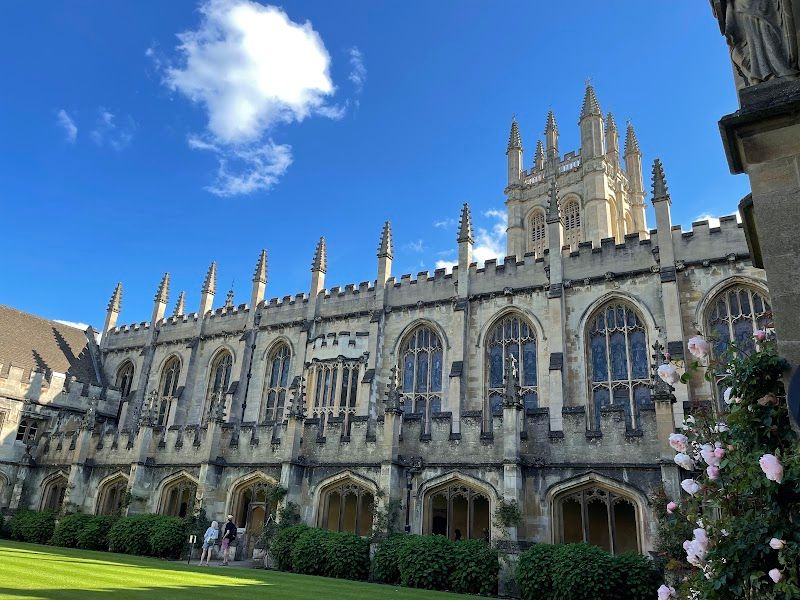
Oxford · Central University & Bodleian

Queen's Lane Coffee House

Opened in 1654, claims to be Europe's oldest continuously operating coffee house.
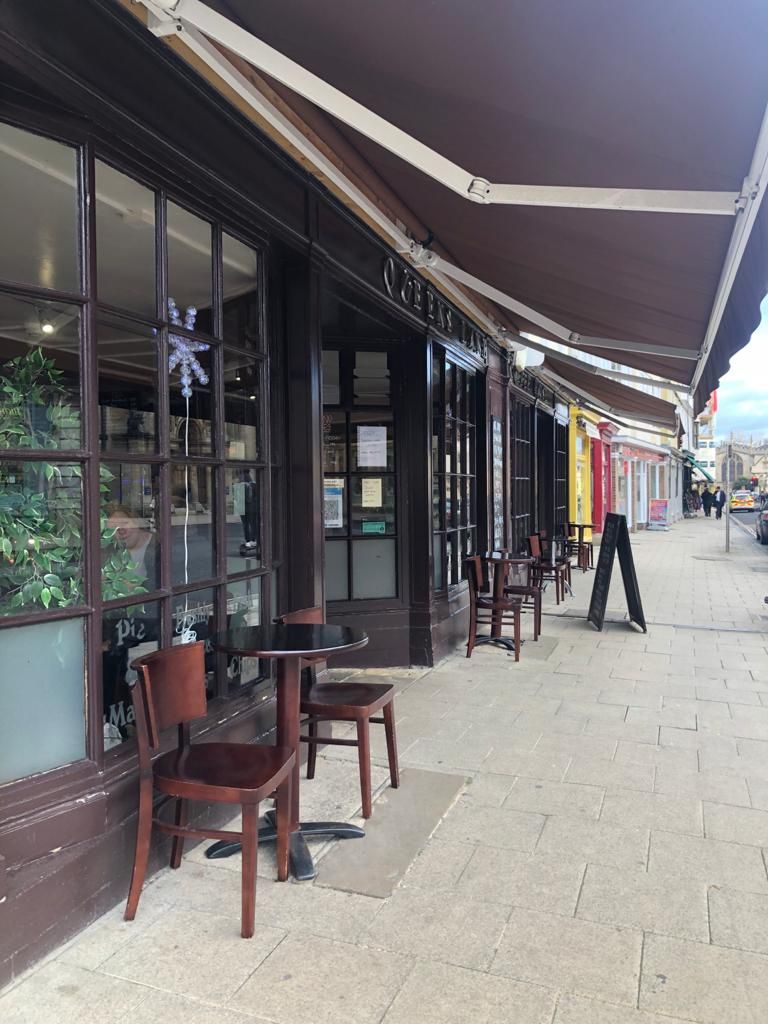
Queen's Lane Coffee House, Oxford · Central University & Bodleian
Category
Cafe
Duration
1 hour
Best Time
Morning
Entry
€€
Rating
4.0 (902)
The place

About Queen's Lane Coffee House

Opened in 1654, claims to be Europe's oldest continuously operating coffee house. Located on the High Street with low ceilings and uneven floors preserving its 17th-century character. Coffee costs GBP 3-4, basic food GBP 8-12.

Book ahead

Book Tickets

Live availability and skip-the-line options from our booking partners.

Search on Viator →Search on GetYourGuide →

Booking powered by our partners. DAIZ may earn a commission.

The place

Getting there

Address
40 High St, Oxford OX1 4AP, UK
Neighborhood
Central University & Bodleian
View on Google Maps →
Good to know

Tips, answered

The upstairs rooms have more character than the ground floor, with better preserved original features.

Plan for about 1 hour. Morning visits are typically less crowded.

Queen's Lane Coffee House is in the Central University & Bodleian neighborhood of Oxford. The address is 40 High St, Oxford OX1 4AP, UK. The area is well-served by metro.

Morning visits, especially early, mean fewer crowds and better light for photos. Weekdays are significantly quieter than weekends.

Comfortable shoes are recommended. Parts are outdoors, so bring a light layer.

Around the corner

Nearby in Central University & Bodleian
Explore all →
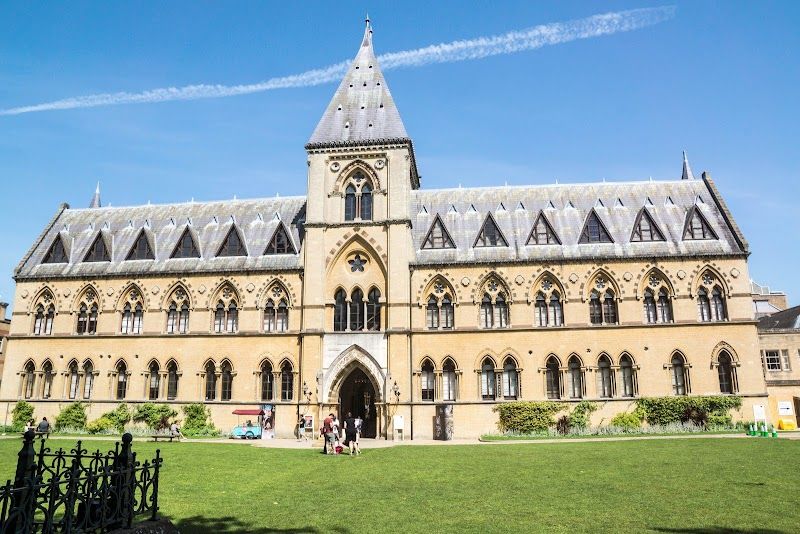
Oxford University Museum of Natural History
Museum

Oxford University Museum of Natural History

This Victorian Gothic cathedral of science houses one of Britain's most complete dodo specimens, towering dinosaur skeletons, and meteorites older than Earth itself. The building's cast iron and glass roof creates a natural greenhouse effect, while carved stone columns represent every major British rock type from granite to limestone. You'll find genuine scientific specimens that shaped our understanding of evolution, including fossils Darwin himself examined, plus the original hall where Thomas Huxley defended evolution theory in the famous 1860 debate. Walking into the main court feels like entering a medieval monastery dedicated to natural history rather than prayer. The soaring ironwork overhead filters sunlight across geological displays, while school groups cluster around the towering Iguanodon skeleton. The acoustics amplify every whisper and footstep, creating an almost reverent atmosphere. Interactive displays feel genuinely educational rather than dumbed down, and the specimen cases contain handwritten Victorian labels that add authentic period charm. Most visitors rush through in 30 minutes, but you'll need at least 90 minutes to appreciate the details properly. The geology section gets overlooked but contains spectacular mineral formations and the actual rocks from Oxford's spires. Skip the temporary exhibitions upstairs, they're usually underwhelming compared to the permanent collection. Free entry means you can return multiple times, which is genuinely worthwhile since there's far more here than initially meets the eye.

1.5-2 hoursExplore
Pitt Rivers Museum
Museum

Pitt Rivers Museum

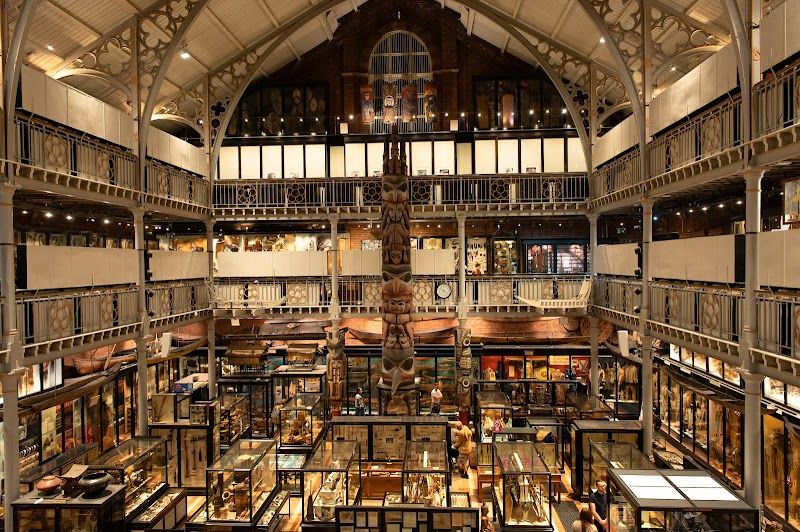
The Pitt Rivers Museum is the University of Oxford's museum of archaeology and world cultures, founded in 1884 when General Augustus Henry Lane Fox Pitt Rivers gave his personal collection of 18,000 objects to the university on the condition that they appoint a lecturer in anthropology. The building is a Victorian cast-iron and glass structure attached to the back of the Oxford University Museum of Natural History, accessed through the natural history collections. Entry is free. The collection now holds over 500,000 objects from all parts of the world and all periods of human history, displayed in a dense, Victorian-style arrangement of cases packed floor to ceiling: weapons, tools, textiles, musical instruments, ceremonial objects, and human remains. The shrunken heads (tsantsa) from Ecuador and Peru are the most photographed objects and are in a case near the centre of the ground floor. The totem poles in the central court are from the Pacific Northwest. The treatment masks from Papua New Guinea are in cases at the back. The museum deliberately retains the Victorian display method of grouping objects by type rather than by culture, which makes it feel like a cabinet of curiosities at museum scale. Budget 90 minutes to 2 hours.

1.5-2 hoursExplore
Sheldonian Theatre
Attraction

Sheldonian Theatre

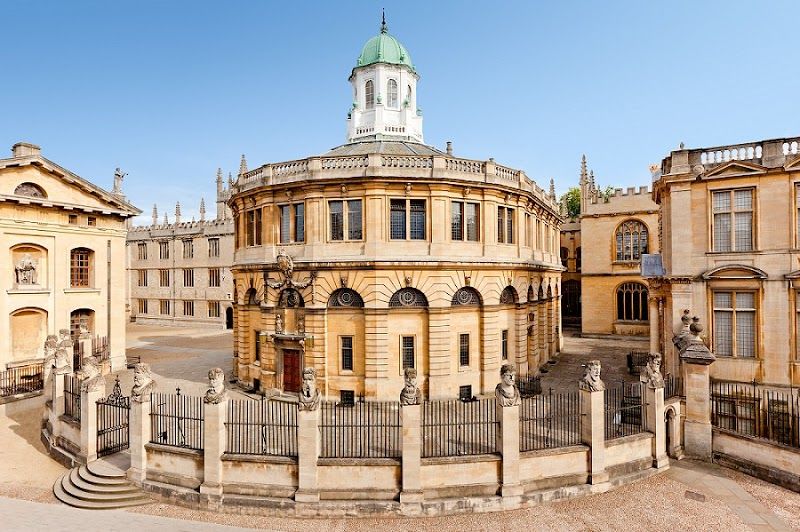
Christopher Wren's architectural debut sits right on Broad Street, a 17th-century masterpiece that still hosts Oxford's graduation ceremonies today. You'll climb 127 steps to the cupola for genuinely spectacular 360-degree views over the Bodleian Library, Radcliffe Camera, and All Souls College spires. The main theatre below features Robert Streater's elaborate ceiling painting showing Truth descending upon the Arts and Sciences, plus those famous carved heads around the building's exterior that watched over centuries of students. Inside feels surprisingly intimate for such a grand building. The semicircular seating rises steeply around you, designed exactly like Roman amphitheatres but covered with England's first geometric ceiling. Most visitors spend 10 minutes downstairs admiring the restoration work, then head straight up the narrow spiral staircase. The cupola viewing platform is small, fitting maybe 15 people comfortably, with wraparound windows offering the city's best aerial perspective. At £4.50 for adults, it's Oxford's best value viewpoint by miles. Skip the audio guide, the building's simple enough to appreciate without commentary. Go between 2-4pm for perfect light on the golden Cotswold stone, avoiding the morning tour groups. The steps are steep and narrow, genuinely challenging if you have mobility issues, but the payoff upstairs makes every tourist photo from ground level look amateur.

45 minutesExplore
Bodleian Library
Cultural Site

Bodleian Library

The Bodleian is essentially Oxford's working brain, housing 13 million books across multiple historic buildings that you can actually tour. You'll walk through Duke Humfrey's medieval library with its original chained books still attached to reading desks, gaze up at painted ceilings from the 1400s, and see the ornate Divinity School where they filmed Harry Potter scenes. The circular Radcliffe Camera next door is the most photographed spot in Oxford, though you can only peek inside on extended tours. Your visit starts in the Divinity School, a soaring Gothic hall with fan vaulting that makes you crane your neck. The standard tour keeps you moving through exhibition spaces and the medieval library upstairs, where scholars still work at wooden desks surrounded by ancient texts. The atmosphere is properly academic, libraries smell of old paper and learning, with whispered conversations and the soft shuffle of pages. You'll feel the weight of 400 years of scholarship around you. Most guides don't mention that the basic tour (£6) skips the best bits. Pay £14 for the extended tour to access Duke Humfrey's Library properly, otherwise you're missing the main event. The tours fill up fast in summer, book online a few days ahead. Skip the Radcliffe Camera tour unless you're obsessed with reading rooms, the exterior view from Radcliffe Square is honestly better than the cramped interior.

1-1.5 hoursExplore
Radcliffe Camera
Landmark

Radcliffe Camera

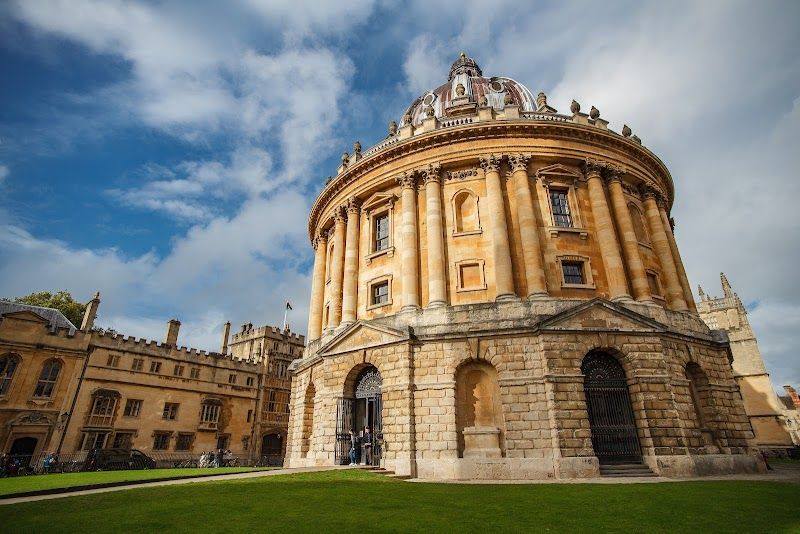
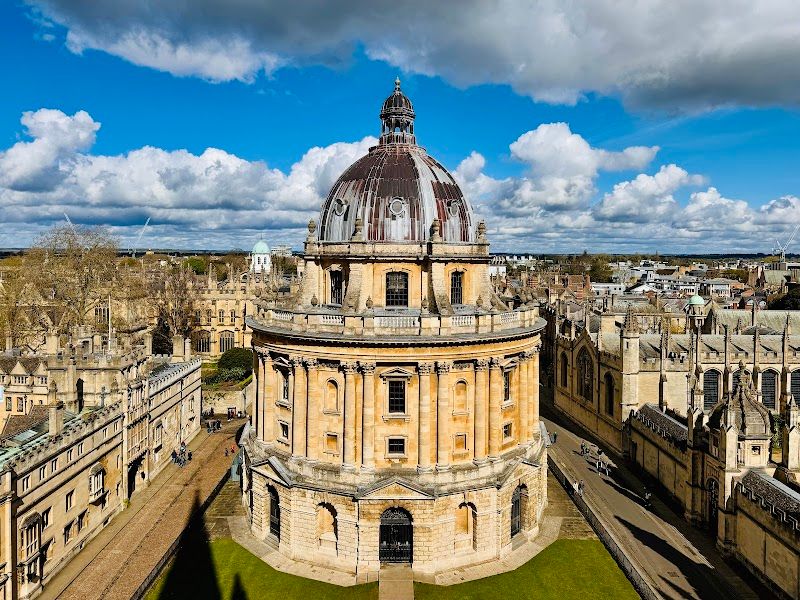
The Radcliffe Camera stands as Oxford's most recognizable building, a perfectly circular library topped with a dome that's been drawing photographers since cameras existed. Built in 1749 by James Gibbs, it was Britain's first circular library and now serves as a reading room for the Bodleian Library. You can't just wander in for a look around, but the exterior alone justifies the walk to Radcliffe Square, especially when afternoon light hits that golden stone. Walking around the Camera feels like circling a piece of architectural theater. The building sits in the center of Radcliffe Square, surrounded by honey-colored Oxford stone on all sides, with All Souls College and the Bodleian creating a courtyard effect. Students cycle past constantly, and you'll see proper academics hurrying between colleges with armfuls of books. The dome dominates every angle, and each side offers a different perspective worth photographing. Most visitors snap photos and leave, which is honestly fine since interior access requires booking those expensive Bodleian tours (£15+ and they sell out weeks ahead). The real trick is coming early morning when tour groups haven't arrived and the light is softer. Don't bother trying to peer through windows, you'll see nothing but frustrated security guards. The building looks stunning from every angle, but the view from the Bodleian's Duke Humfrey's Library windows above gives you the best overhead shot if you do book a tour.

15 minutesExplore
Magdalen College
Attraction

Magdalen College

Magdalen College delivers the most spectacular college gardens in Oxford, sprawling across 100 acres of meadows, woodlands, and formal grounds. You'll walk through the famous deer park where fallow deer graze freely, follow water walks along the River Cherwell, and circle Addison's Walk, a tree-lined path that loops around the meadow where C.S. Lewis took his daily constitutional for nearly 30 years. The 144-foot Great Tower dominates Oxford's skyline, and if you're here on May 1st at 6am, you'll hear the college choir singing from the top in a tradition dating back 500 years. The visit feels like discovering a secret countryside estate in the heart of the city. You enter through the medieval gatehouse into the peaceful St. John's Quadrangle, then emerge into the vast open meadows where the only sounds are birdsong and distant church bells. The contrast hits immediately: one moment you're in narrow college corridors, the next you're wandering among ancient oak trees with deer watching you curiously. The New Building, actually from 1733, offers the best views back toward the college, and you can spot the windows of C.S. Lewis's former rooms. Most visitors rush through in 45 minutes, but you need at least 90 minutes to properly explore the grounds. Entry costs £8 for adults, and it's worth every penny compared to other colleges charging similar fees for far less impressive spaces. Skip the chapel unless you're genuinely interested in medieval architecture, the real magic here is outdoors. Many guides don't mention that the meadows flood regularly in winter, making spring through early autumn the only sensible visiting seasons.

1.5-2 hoursExplore
More on Oxford

From the blog

View all →
Ready for Oxford?

Let DAIZ plan your Oxford days

Tell us how long you've got and what you're into. We'll build a day-by-day plan, with the bookable bits ready to lock in.

Plan my Oxford tripFree · no signup to start
Plan your Oxford trip