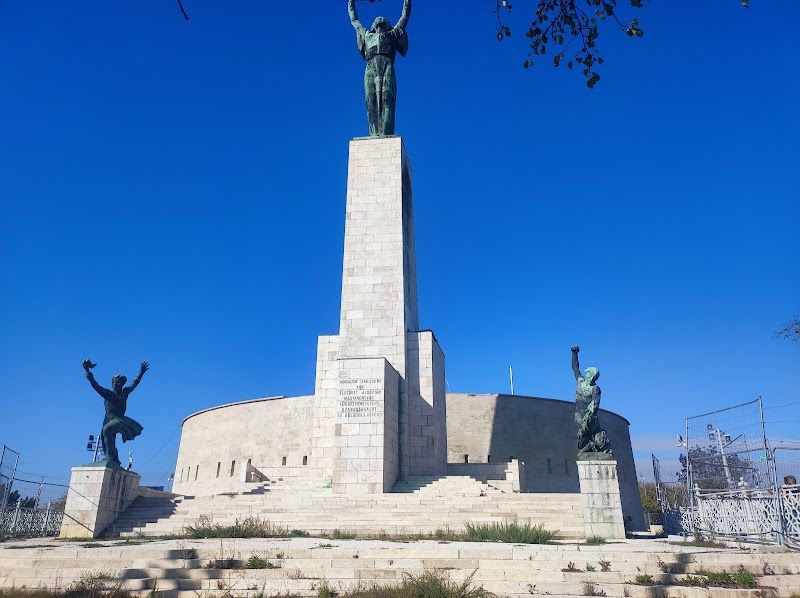
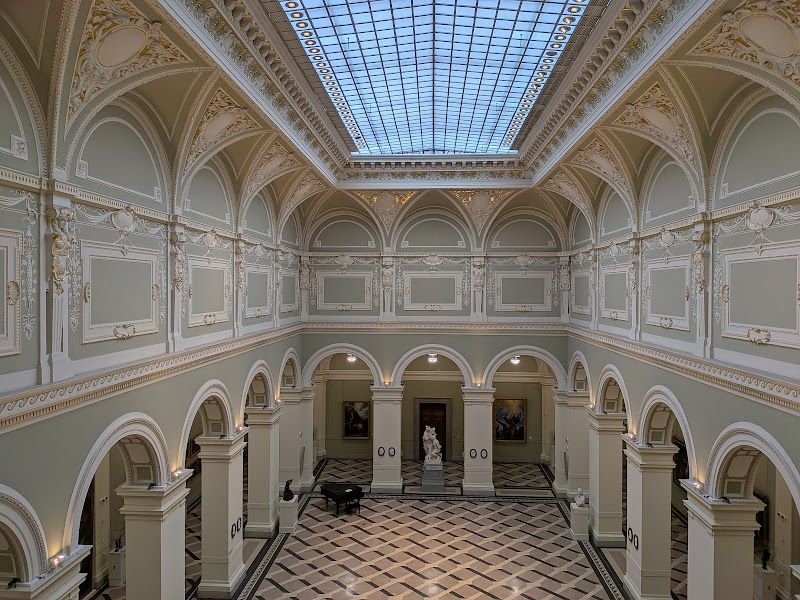
Budapest, Hungary

Hungary

Budapest

Two cities welded together over the Danube - Buda's castle hill and Pest's grand boulevards, with the world's densest collection of thermal baths underneath both
Best Time

April-June, September-October

Ideal Trip

3-4 days

Language

Hungarian

Currency

HUF

Budget

EUR 31-73/day (excl. hotel)

About Budapest

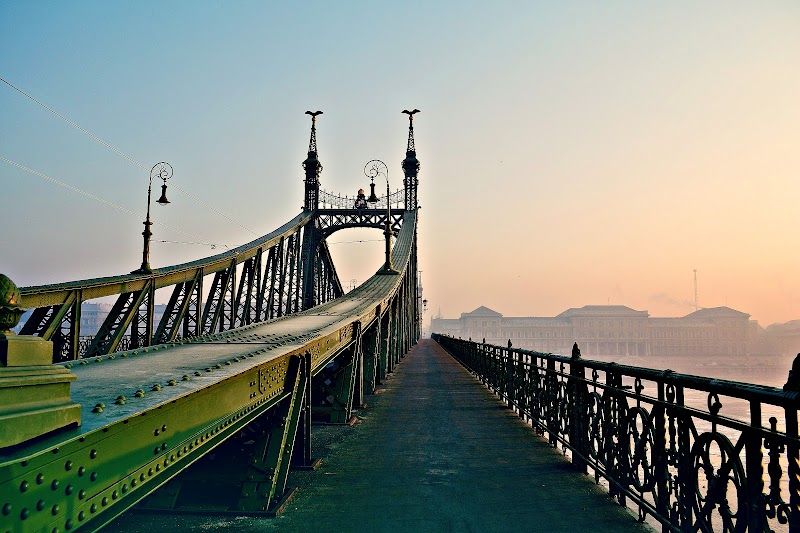
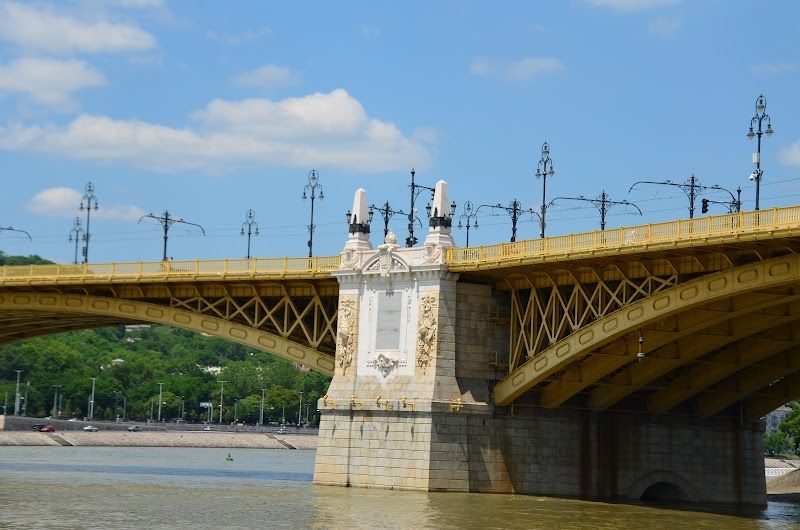
Budapest is two cities, Buda and Pest, that merged in 1873 and still feel like distinct places. Buda is the older, hillier, quieter half on the west bank: the medieval Castle District (a UNESCO site), Gellért Hill with its panoramic views, and residential streets that hold their Habsburg character. Pest is the newer, flatter, busier half on the east bank: the grand 19th-century boulevards (Andrássy, Rákóczi), the Jewish Quarter with its synagogues and ruin bars, the parliament building on the embankment, the Great Market Hall, and the entire city's downtown commercial life. The Danube splits them and is crossed by eight bridges; the Chain Bridge (1849) is the iconic one.

The single thing that makes Budapest different from any other European capital is the thermal baths. The city sits on 100+ natural hot springs and the Romans were soaking in them 2,000 years ago. The Turkish occupation built the first dedicated bathhouses (Rudas, Király - both still operating from the 16th century), and the Austro-Hungarian belle époque produced the grand neo-Baroque palaces that define the modern image: Széchenyi (the largest in Europe, in City Park) and Gellért (the most ornate, attached to the hotel of the same name). A bath day is the defining Budapest experience: 5-7 hours, multiple pools at different temperatures, steam rooms, massage if you book ahead.

The food is Hungarian comfort cooking: gulyás (a paprika-rich beef soup, not the stew Western menus call goulash), pörkölt (the actual stew), chicken paprikás, lángos (a deep-fried flatbread topped with sour cream and cheese, the street-food classic), kürtőskalács (chimney cake - a spiral pastry roasted over coals), and the underrated wines from Tokaj (white) and Eger (red). Coffee houses are the Habsburg-era institution: Gerbeaud (since 1858), New York Café (the most ornate room in any city), and Centrál Kávéház. A coffee + dessert is a 90-minute affair and costs €5-8.

Practically, Budapest runs on 4 metro lines (line 1 is a UNESCO site itself, the second-oldest underground in the world after London), 30+ tram lines, and the HÉV suburban rail. A 24-hour BKK transit pass is HUF 2,500 (~€6.50). Currency is the Hungarian forint (HUF); EUR is widely accepted in tourist zones at unfavorable rates. The city is walkable across both banks; the Castle District funicular saves the climb up Castle Hill.

Neighborhoods

Each district has its own personality

Things to Do

Top experiences in Budapest

Great Market Hall
Market

Great Market Hall

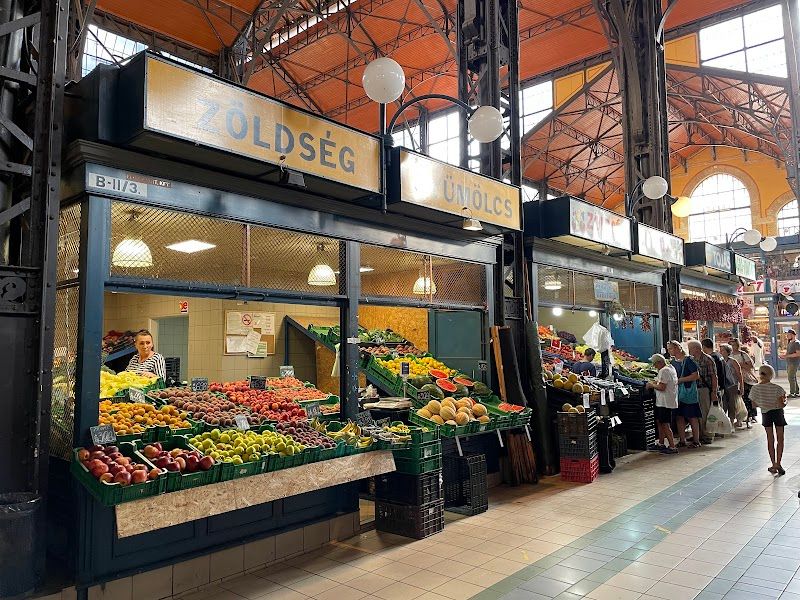
The Great Market Hall is Budapest's largest covered market, a magnificent iron and glass cathedral from 1897 that actually functions as a real market, not a tourist attraction pretending to be one. You'll find three floors of genuine Hungarian specialties: ground floor butchers selling Mangalica pork and kolbász, paprika vendors with authentic Kalocsa varieties, and pickle stalls that locals actually shop at. The upper floor serves proper lángos and houses souvenir stalls that beat the overpriced tourist traps on Váci utca. Walking through feels like entering a Victorian railway station filled with food instead of trains. The vaulted ceiling soars overhead while vendors call out prices in Hungarian, and the aroma shifts from fresh bread to smoked meats to paprika as you move between stalls. Upstairs, steam rises from the lángos griddles while tourists and locals queue together, and you can hear the sizzle of fresh dough hitting hot oil. The atmosphere stays authentically Hungarian despite the tour groups. Most guides don't mention that mornings are infinitely better than afternoons when tour buses arrive. The lángos stall on the right side upstairs (not the flashy ones with English signs) serves the real deal for 1,800 HUF with sour cream and cheese. Skip the lower level unless you need fish, and avoid any paprika vendor whose display screams at you in five languages. Genuine sweet rose paprika costs 1,200 to 2,400 HUF per 100g, and cash moves you faster through the meat lines.

4.3Belváros (District V - Inner City)60-90 min
Fisherman's Bastion
Landmark

Fisherman's Bastion

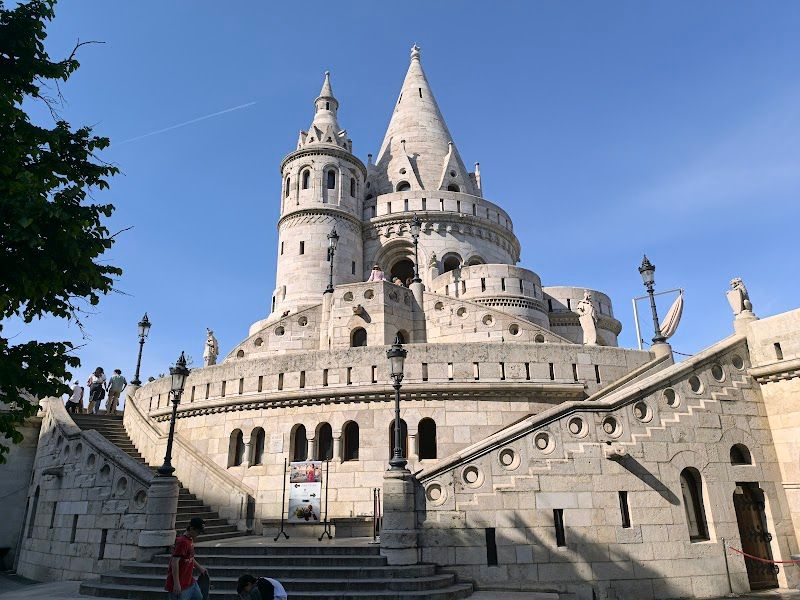
Fisherman's Bastion is a neo-Romanesque viewing terrace that looks like a fairytale castle but was actually built in 1902 as decorative window dressing for Castle Hill. Seven white stone turrets represent the seven Magyar tribes who founded Hungary, and the whole thing frames Matthias Church perfectly. You're here for one reason: the postcard perfect view across the Danube to Parliament, which you can get from both the free lower terraces and the paid upper section. The experience feels surprisingly theatrical, with tourists posing against the ornate stone balustrades while the Danube glitters below. Morning light hits Parliament beautifully from this angle, making the building's Gothic Revival spires glow golden. The upper terraces add maybe 10 meters of height but the view is essentially identical to what you get for free. Tour groups cluster around the central turrets, but the side sections offer the same panorama with breathing room. Here's what most guides won't tell you: the upper terraces cost HUF 1,500 but only from 9 AM to 7 PM in season, so you can access everything for free early morning or evening. The coffee at Walzer cafe costs double what you'd pay downtown, but you're paying for the turret views. Skip the souvenir stalls completely, they're overpriced tourist traps.

4.8Castle District (District I - Várnegyed)30-45 min
Heroes' Square
Landmark

Heroes' Square

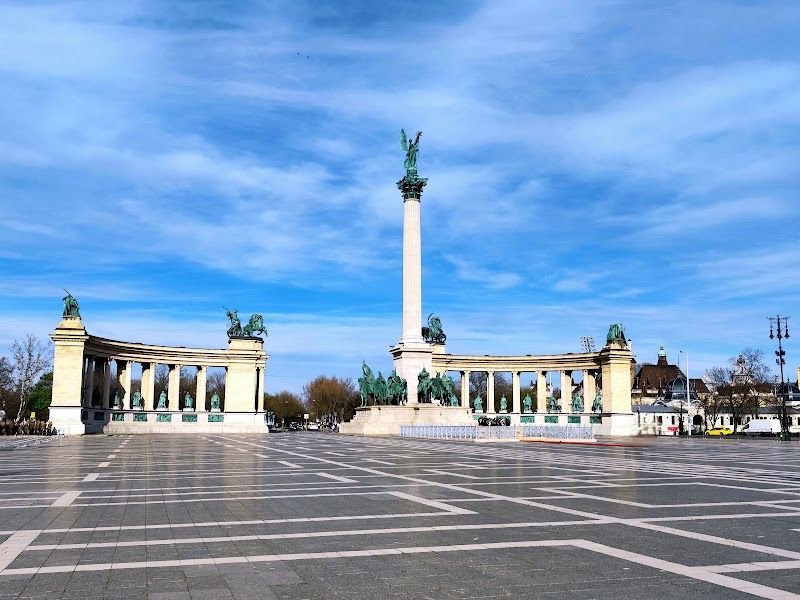
Heroes' Square is Budapest's grand ceremonial plaza, built for Hungary's 1000th anniversary in 1896. You'll see the towering Millennium Monument with Archangel Gabriel at the top and seven bronze Magyar chieftains on horseback at the base, including Árpád who led the conquest of Hungary in 895. The curved colonnades behind hold statues of 14 Hungarian kings and leaders, while the Museum of Fine Arts (3,200 HUF) and contemporary Műcsarnok (1,800 HUF) flank the square. The space feels genuinely monumental when you emerge from the M1 metro directly underneath. Tour groups cluster around the central monument for photos while locals cut straight through toward City Park. The bronze figures are impressively detailed up close, and the colonnades create dramatic shadows in morning light. State ceremonies happen here regularly, so you might catch wreath laying at the Tomb of the Unknown Soldier in front. Most people snap photos and leave, but the Museum of Fine Arts is genuinely world class with exceptional French Impressionists and Spanish masters. Skip the contemporary hall unless there's a blockbuster exhibition. The square itself is free and always open, perfect for early morning visits before the tour buses arrive around 10am. Pair it with Széchenyi Baths or Vajdahunyad Castle since you're already in City Park.

4.7City Park (District XIV - Városliget)20-40 min
St Stephen's Basilica
Cultural Site

St Stephen's Basilica

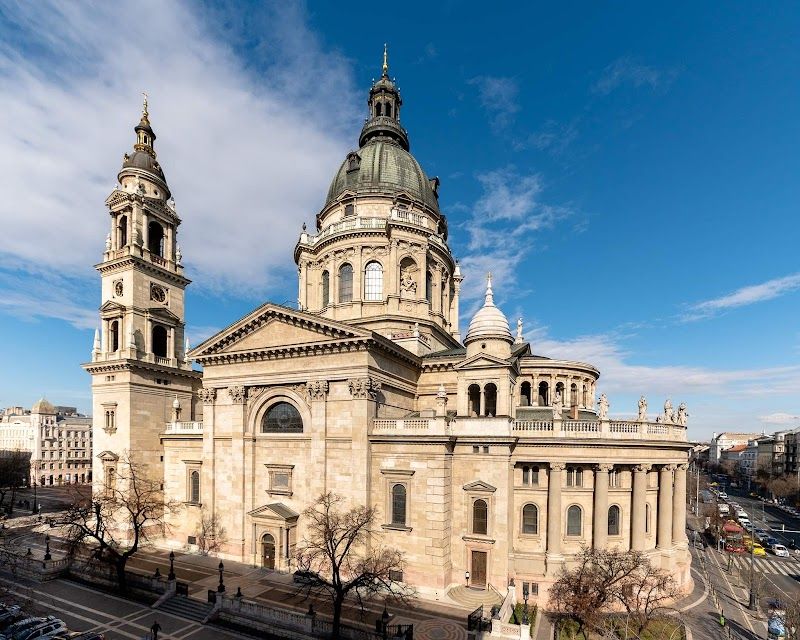
St Stephen's Basilica is Budapest's largest church and Hungary's most important Catholic building, housing the mummified right hand of King Stephen I in a golden reliquary. The real draw is the 96-meter dome climb that delivers the best central panorama in Budapest, with Parliament to the north and Buda Castle across the Danube. You'll climb 137 steps from the upper landing (after taking the lift) for views that stretch across the entire city. Inside, the basilica feels surprisingly intimate despite its massive scale, with detailed mosaics and marble columns creating an almost theatrical atmosphere. The Holy Right chapel draws steady crowds of locals lighting candles, while tourists crane their necks at the ornate ceiling frescoes. The dome ascent involves a cramped spiral staircase that opens onto a narrow walkway circling the exterior, where wind whips through as you photograph the city sprawling below. Most guides oversell the interior artwork, which is impressive but not extraordinary by European cathedral standards. Skip the audio guide (overpriced at HUF 1,500) and invest that money in the dome climb instead (HUF 1,200, about EUR 3). The basilica itself is free, but they appreciate donations. Sunday morning services close tourist access until 1pm, so plan accordingly. The forecourt Christmas market from late November runs decent mulled wine at HUF 1,500 per cup.

4.7Belváros (District V - Inner City)45-60 min
Szimpla Kert
Market

Szimpla Kert

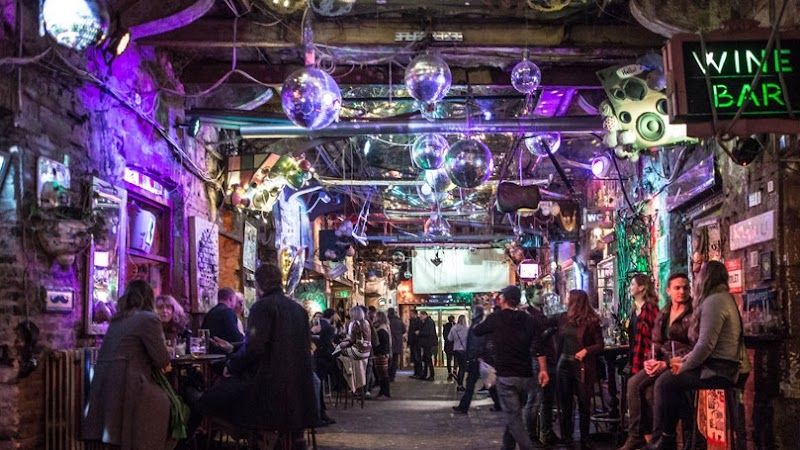
Szimpla Kert pulls double duty as Budapest's original ruin pub and a genuine Sunday farmers market. From 9 AM to 2 PM every Sunday, local vendors take over the famous bar's courtyard and rooms, selling everything from fresh produce and artisanal cheeses to homemade bread and Hungarian honey. The rest of the week it's a legendary drinking spot with mismatched furniture and plants growing through bathtubs, but Sunday mornings transform it into something completely different. The market spreads through multiple rooms and the central courtyard, with maybe 20 vendors setting up between the bar's signature eclectic decor. You'll find elderly Hungarian women selling pickles from massive jars, cheese makers offering tastings of sheep's milk varieties, and bread bakers whose loaves are still warm. The atmosphere feels authentically local rather than touristy, with Hungarian families doing their weekly shopping alongside curious visitors. The bar's quirky interior design stays intact, so you're literally shopping for tomatoes next to a bathtub planter. Most travel guides oversell this as some magical experience, but it's really just a small neighborhood market that happens to be in a famous bar. The selection is decent but limited, and prices run about 20% higher than regular markets. Come if you're already exploring the Jewish Quarter on Sunday morning, but don't plan your whole weekend around it. The honey vendor near the entrance does sell exceptional acacia honey for around 2000 HUF, which genuinely tastes better than anything you'll find in regular shops.

4.6Jewish Quarter (District VII - Erzsébetváros)1-2 hours
Buda Castle
Cultural Site

Buda Castle

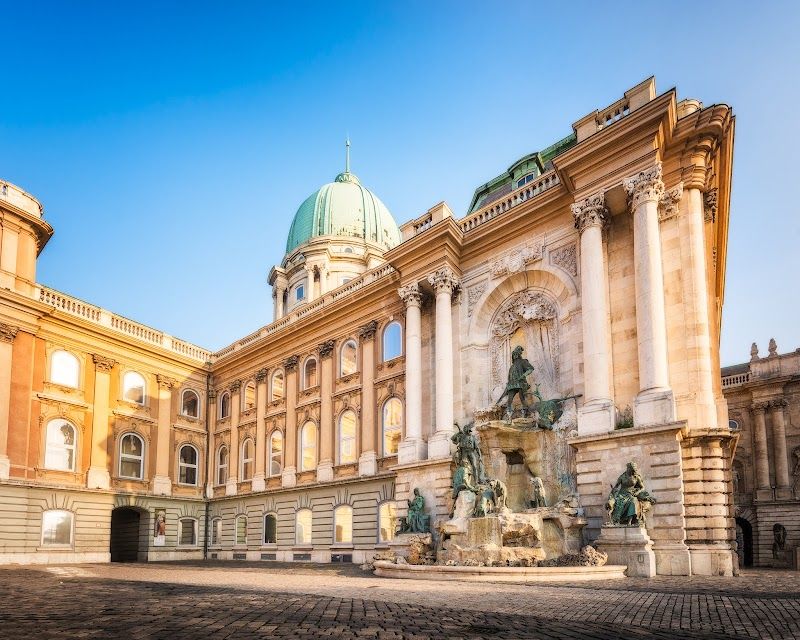
Buda Castle sits on Castle Hill like a massive Baroque wedding cake, but don't be fooled by the pretty exterior: this is a 1960s reconstruction after WWII bombing flattened the original. What makes it worthwhile are the two museums inside and the spectacular Danube views from the terraces. The Hungarian National Gallery fills the main wings with centuries of local art, while the Budapest History Museum hides genuine medieval royal chambers deep underground, complete with Gothic stone carvings and original frescoes. You'll spend most of your time wandering between museum wings and courtyards, with the castle's sheer size becoming apparent as you navigate multiple levels and staircases. The outdoor terraces offer sweeping views across the Danube to Parliament, especially gorgeous at sunset when the river turns golden. Inside, the medieval ruins feel authentically ancient compared to the rebuilt palace above, like discovering a secret basement in a modern hotel. Most visitors rush through both museums in an hour, but the underground medieval sections deserve 90 minutes alone. Skip the National Gallery unless Hungarian art genuinely interests you (HUF 3,400 feels steep for regional pieces). The courtyards and terraces are free 24/7 and honestly provide 80% of the castle experience. Take bus 16 instead of the overpriced funicular (HUF 1,400 one way) unless you're feeling romantic.

4.7Castle District (District I - Várnegyed)2-3 hours
Széchenyi Thermal Baths
Experience

Széchenyi Thermal Baths

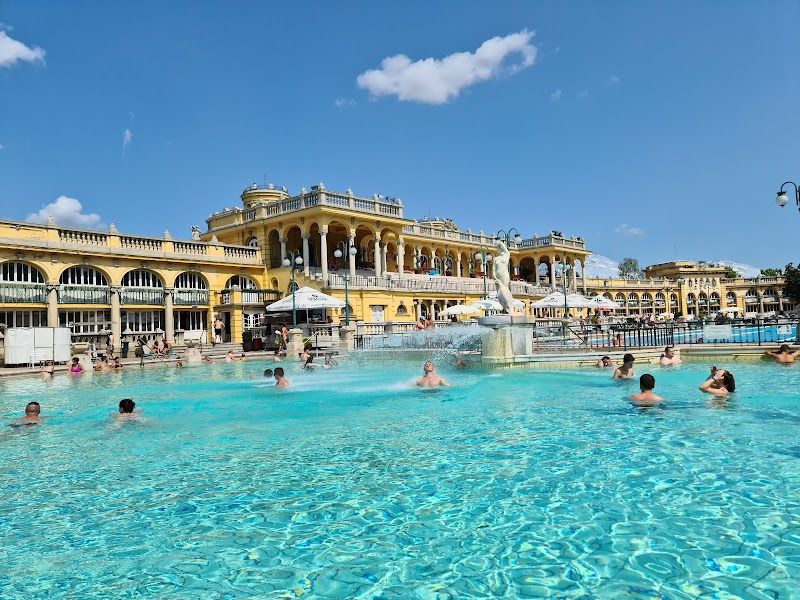
Széchenyi is Europe's largest medicinal bath complex, housed in a stunning Neo-Baroque palace that looks like a thermal spa built for royalty. You'll find 18 pools fed by two natural thermal springs, split between elegant indoor halls with ornate columns and spacious outdoor pools where steam rises year-round. The famous chess players in the outdoor thermal pool aren't a tourist show, they're locals who've been coming here for decades, playing serious matches while soaking in 38°C water. The experience flows between different worlds: ornate indoor pools where you feel like you're bathing in a museum, then stepping outside where the contrast of hot water and cool air creates an almost magical atmosphere. The outdoor pools stay busy but never feel cramped, and you'll hear a mix of Hungarian chatter and international languages. The chess players occupy one corner of the main outdoor pool, completely absorbed in their games while bathers float around them. Most guides don't mention that weekday mornings (7-9 AM) offer the most authentic local experience, while afternoons get tourist-heavy. Skip the expensive massages at the entrance, they're overpriced at 15,000-20,000 HUF when local massage places nearby charge half that. Day tickets cost 8,900-10,900 HUF depending on the day, and the 1,800 HUF cabin upgrade is worth it for the private changing space. Plan 4-5 hours minimum, you'll want to cycle between different temperature pools.

4.2City Park (District XIV - Városliget)4-6 hours
Chain Bridge
Landmark

Chain Bridge

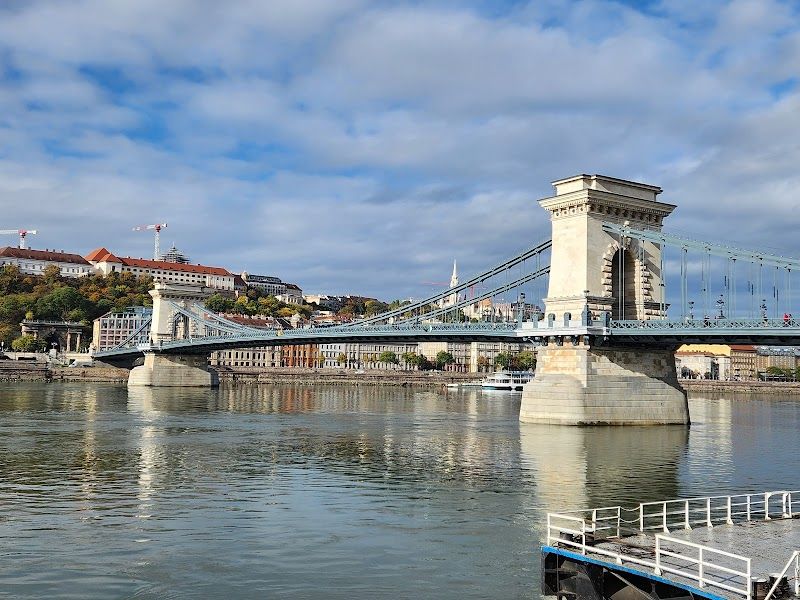
Chain Bridge spans the Danube as Budapest's first permanent connection between Buda and Pest, stretching 375 meters with nine elegant stone arches. You'll cross on dedicated pedestrian walkways alongside traffic, getting unobstructed views of Buda Castle rising dramatically to your left and Parliament's Gothic spires across the water. The four lion sculptures at each end (added in 1852) watch over the bridge, and yes, the sculptor really did forget to carve their tongues, making locals debate this oversight for over 170 years. Walking across takes about 8 minutes at a steady pace, though you'll stop constantly for photos. The bridge feels substantial under your feet, with thick stone balustrades and ornate ironwork that survived complete reconstruction after WWII bombing. Traffic flows steadily beside you, but the wide pedestrian areas keep you safely separated. The views change dramatically as you cross: Buda Castle dominates from the Pest side, while Parliament's symmetrical facade looks best from the Buda approach. Most visitors rush across during midday when harsh sunlight washes out photos and crowds clog the narrow spots near the lions. The bridge looks spectacular after dark with full illumination, but morning light (8-10am) gives you the clearest castle views without tour groups. Don't bother with the overpriced bridge merchandise sold by vendors, it's identical to what you'll find in any souvenir shop for half the price.

4.7Belváros (District V - Inner City)15-30 min
New York Café
Cafe

New York Café

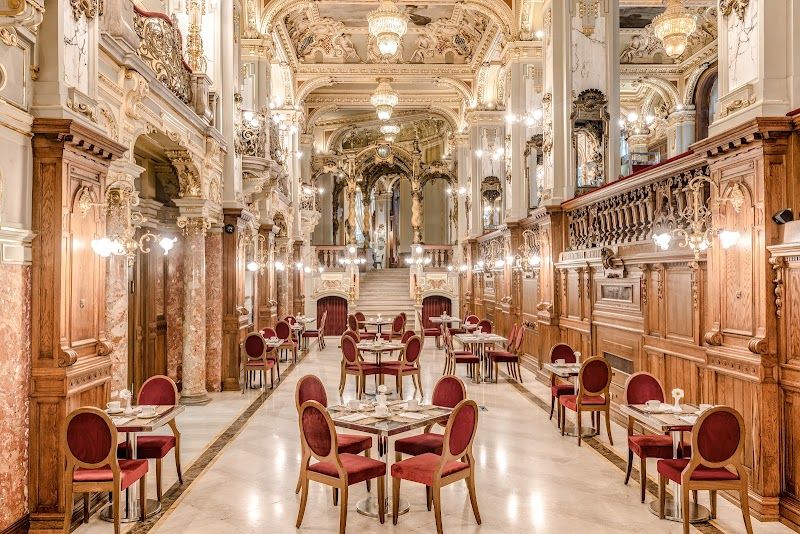
New York Café sits inside the Boscolo Budapest Hotel and delivers the most ridiculously ornate café experience in Europe. Every surface explodes with gilded Renaissance frescoes, crystal chandeliers hang from impossibly detailed ceilings, and marble columns frame the dining room like a Venetian palace. You're paying tourist prices for decent coffee and cake, but honestly, you're here for the visual overload that makes Versailles look understated. The experience feels like drinking coffee inside a jewelry box designed by someone with unlimited funds and questionable restraint. Tourists snap photos constantly while servers in formal attire navigate between packed tables, and the acoustics turn every conversation into background chatter. The gilded ceiling details are genuinely stunning when you crane your neck up, and the afternoon light streaming through tall windows makes the whole space glow impossibly golden. Most guides won't tell you this: the coffee is forgettable and a cappuccino costs around 2,500 HUF when it should be 800 HUF elsewhere. The cakes look better than they taste, running 3,000 to 4,500 HUF for standard portions. Come for photos and the spectacle, order the minimum, and don't expect a relaxing café experience. The literary history is real, but today it's pure tourist theater, and that's fine if you know what you're getting.

4.0Jewish Quarter (District VII - Erzsébetváros)1-2 hours
Mazel Tov
Restaurant

Mazel Tov

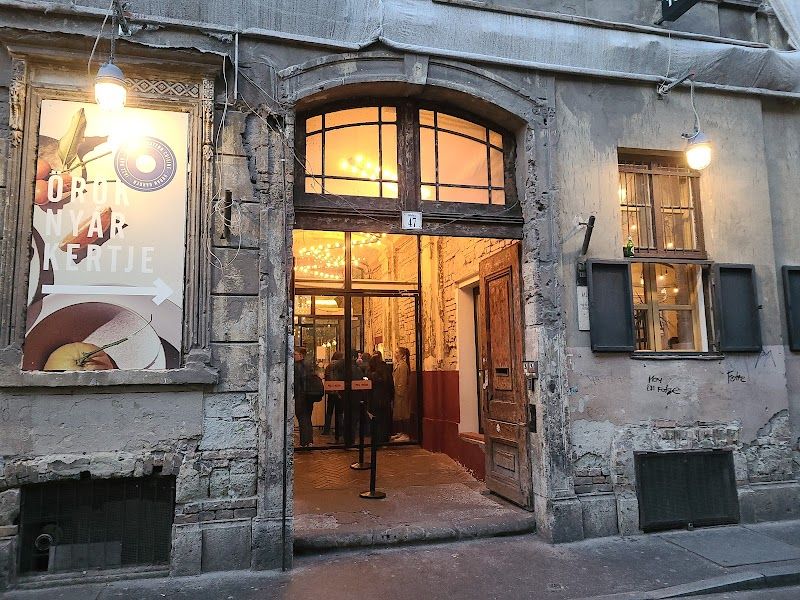
Mazel Tov transforms a crumbling courtyard into Budapest's most photogenic Middle Eastern restaurant, complete with hanging gardens, Edison bulb canopies, and a retractable glass roof. The food isn't groundbreaking, but the hummus (2,890 HUF), shakshuka (3,490 HUF), and mixed grill platters (5,890 HUF) are solid and Instagram-ready. You're really paying for the atmosphere and the space, which has become the Jewish Quarter's unofficial living room for twenty and thirty-somethings. The moment you walk through the narrow entrance, you're hit with warm lighting, trailing ivy, and the buzz of conversation echoing off brick walls. Servers weave between communal tables packed with locals and tourists sharing mezze platters and craft cocktails. The space feels alive but never chaotic, like dining inside a trendy greenhouse. By 9 PM, it shifts from restaurant to bar, with groups lingering over wine and the energy ramping up considerably. Here's what nobody tells you: the portions are generous enough to share, so order less than you think. A mezze platter (4,590 HUF) plus bread easily feeds two people as a light dinner. Skip the overpriced cocktails (3,200+ HUF each) and stick to wine or beer. The weekend wait can stretch past an hour, but weeknight dinners around 7 PM usually get you seated within 15 minutes.

4.6Jewish Quarter (District VII - Erzsébetváros)1.5-2 hours
Gellért Thermal Baths
Experience

Gellért Thermal Baths

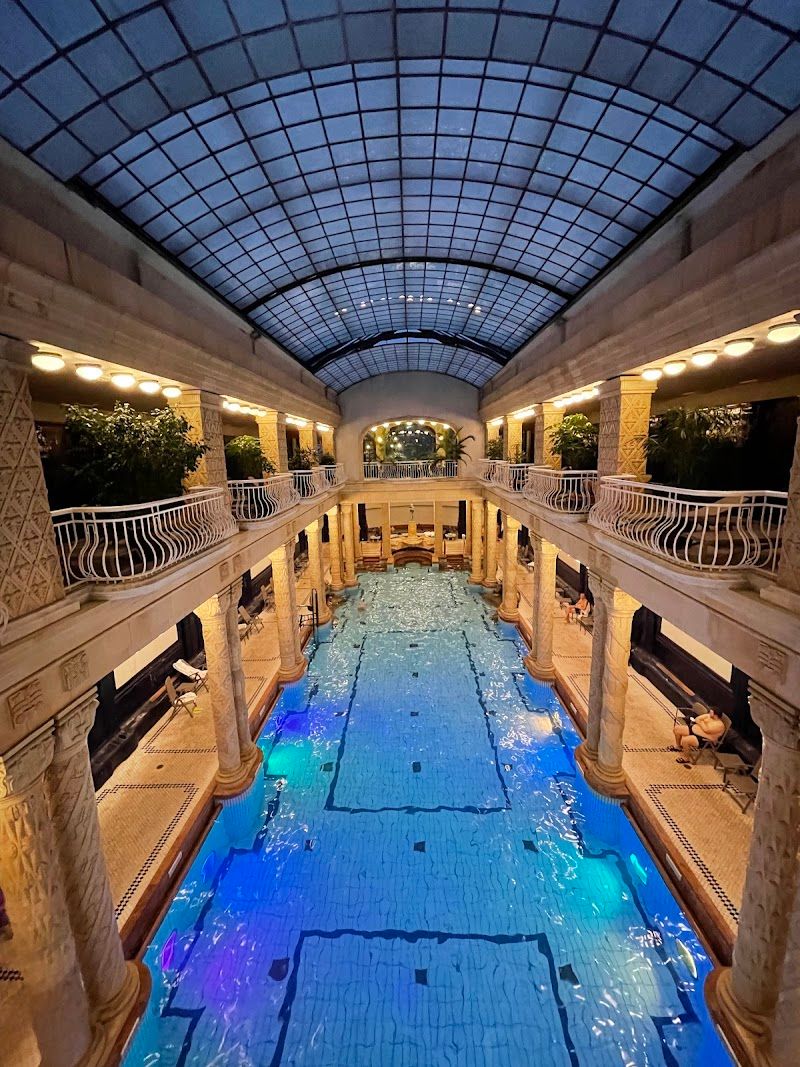
Gellért Baths delivers the most architecturally stunning thermal bath experience in Budapest, housed inside the 1918 Hotel Gellért. You're soaking in Art Nouveau perfection: intricate Zsolnay ceramic mosaics cover the walls, stained glass windows filter golden light across the main pool, and ornate columns frame every angle. Eight indoor pools range from a gentle 28°C to a serious 40°C soak, plus there's an outdoor pool with artificial waves during summer months. The experience feels more refined than Széchenyi's party atmosphere. You'll move between pools in a space that genuinely looks like a Roman emperor's private retreat, photographing architectural details between soaks. The main hall stops conversations mid sentence when you first walk in. Unlike other baths, this one attracts fewer families and more adults who appreciate the visual drama. The sauna and steam rooms extend the experience beyond just thermal pools. Day tickets cost 8,500 HUF on weekdays, 9,000 HUF weekends. Skip the overpriced cabin upgrade unless you're carrying valuables, lockers work fine. The outdoor wave pool only operates May through September, so winter visits are purely about the indoor architectural spectacle. Check their website before going, they close periodically for renovations without much warning. Most guides won't mention that the changing rooms are dated and cramped, but you're not here for those anyway.

4.2Belváros (District V - Inner City)3-5 hours
Great Synagogue (Dohány Street)
Cultural Site

Great Synagogue (Dohány Street)

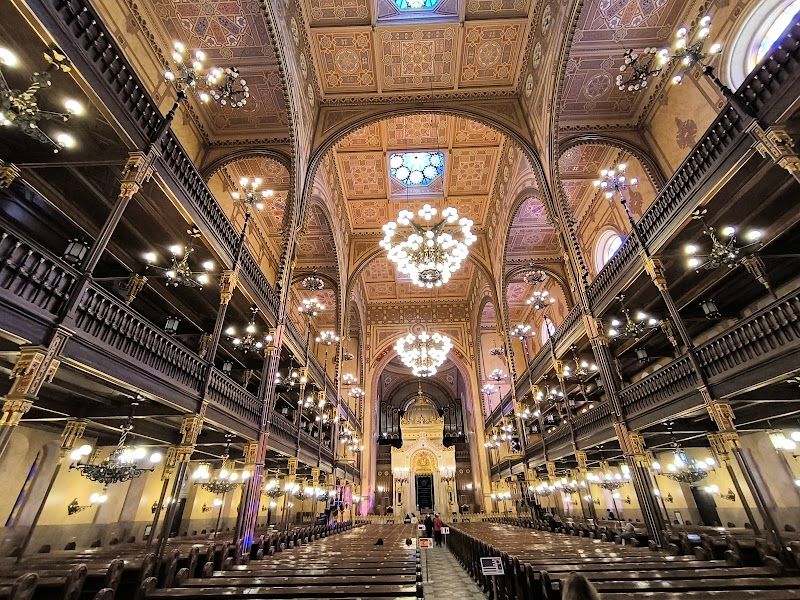
Europe's largest synagogue holds 3,000 people under twin onion domes that dominate the Pest skyline. Built in 1859, the Moorish Revival interior feels more like a concert hall than a traditional synagogue, with organ music and mixed seating that scandalized Orthodox Jews at the time. You'll see the Hungarian Jewish Museum's ceremonial objects, the haunting cemetery where 2,000 ghetto victims lie buried in the courtyard, and Imre Varga's metal Tree of Life memorial with 30,000 names etched on silver leaves. The guided tour moves through five distinct areas: the main sanctuary with its massive organ and gilded ceiling, the small Heroes' Temple built for WWI victims, the museum's Torah scrolls and ritual items, the cemetery (Europe's only synagogue burial ground), and finally the memorial garden. The contrast hits hard when you move from the ornate interior to the somber outdoor spaces. Audio guides work in 12 languages, though the live guides offer better stories about the building's survival through two world wars. Most visitors rush through in 60 minutes, but you need 90 to absorb the cemetery and memorial properly. At 5,500 HUF for adults and 4,400 HUF for students, it's pricey but justified. Skip the crowded afternoon tours and book the 9am slot when light streams through the sanctuary windows beautifully. The gift shop is overpriced tourist tat, but the small cafe serves decent coffee if you need a break.

4.3Jewish Quarter (District VII - Erzsébetváros)90-120 min

Travel Guides

Expert guides for every travel style

From the Journal

Practical Tips

Buy the 24-hour travel pass for EUR 5.9 if you're planning more than 5 trips per day, otherwise stick to single tickets at EUR 1.2 each (valid for 80 minutes with one transfer). The 10-ride block ticket at EUR 10.5 works well for longer stays and can be shared between travelers. Always validate your ticket in the orange machines - inspectors are frequent and fines are steep. Metro line M1 (yellow) is a UNESCO site but slow, while M3 (blue) connects most tourist areas efficiently.

Lunch is the main meal - grab the daily menu (napi menü) at traditional restaurants between 11:30am-2pm for EUR 6-12, which includes soup, main course, and sometimes dessert. Dinner starts late around 7-8pm and costs EUR 20-35 for three courses at mid-range places. Always tip 10-15% in cash, even if paying by card. Try goulash soup for EUR 4-8, but know that real Hungarian goulash is a soup, not a stew. Avoid tourist trap restaurants on Váci Street.

Hungary uses the forint (HUF), not the euro. Most places accept cards, but carry cash for markets, tips, and small vendors. Daily budgets range from EUR 35-50 for budget travelers to EUR 80-120 for mid-range comfort. ATMs offer better exchange rates than exchange offices. Museum entry varies widely - Hungarian National Museum costs EUR 8 (free for EU citizens under 26), while the Parliament tour is EUR 22. The Budapest Card at EUR 28 for 24 hours only pays off if you visit multiple museums and use public transport extensively.

Budapest is generally safe, but watch for pickpockets on metro M3, tourist areas around Váci Street, and crowded thermal baths. Tap water is safe to drink and free in restaurants. Shops close early on Sundays, and many restaurants close between lunch and dinner service (3pm-6pm). Hungarian drivers are aggressive - use crosswalks and wait for walk signals. Tourist police patrol main areas and speak English. Avoid unlicensed taxi drivers at the airport - use the official taxi service with fixed rates of EUR 25-35 to the city center.

English is widely spoken in tourist areas, hotels, and restaurants, but learn basic Hungarian phrases for local interactions. 'Köszönöm' (KUH-suh-nuhm) means thank you, 'Beszél angolul?' asks if someone speaks English. German is often understood by older locals. Download Google Translate with offline Hungarian for menus and signs. Restaurant menus in tourist areas have English translations, but prices may be inflated. Point to items or show pictures when language fails - Hungarians are generally patient with tourists making an effort.

Frequently Asked Questions

3 full days is the minimum to see the city without rushing: one for Buda (Castle District + Gellért Hill + Gellért Baths), one for Pest (Parliament, St Stephen's Basilica, Great Market Hall, Chain Bridge), one for City Park and the Széchenyi Baths. 4-5 days lets you add the Jewish Quarter at depth, Margaret Island, a Tokaj wine tasting, and a slower second bath visit. Budapest rewards a slower pace - the cafés are part of the experience, not a pit stop.

Pest is flat and entirely walkable. The historic core (Parliament to St Stephen's Basilica to the Jewish Quarter to the Market Hall) is a 25-minute walk end-to-end. Buda is hillier - the Castle District requires a climb, but the funicular (HUF 1,400 one-way) and bus 16 from Deák Ferenc tér both solve it. Bridges between Buda and Pest are pedestrian-friendly; the Chain Bridge walk takes 5 minutes. Cobblestones in the Castle District are uneven; flat shoes recommended.

Use forint (HUF). Tourist-zone restaurants and shops accept EUR but at terrible rates (typically 10-15% worse than the bank rate). ATMs are everywhere; withdraw HUF and pay in cash for markets, baths, and small restaurants. Cards work fine at any sit-down restaurant, hotel, or larger shop. Tip 10-12% in cash; tipping with a card requires telling the server the total including tip before they enter the amount (not adding it after).

They are the defining Budapest experience. Pick one of three: Széchenyi (the largest, in City Park, neo-Baroque palace, 18 indoor + outdoor pools, the famous chess players in the warm outdoor pool), Gellért (the most ornate, art nouveau interior, attached to the Gellért Hotel on the Buda side), or Rudas (the most authentic, original 16th-century Turkish dome over the central pool, traditional gender-segregated days plus mixed days). Széchenyi day ticket EUR 25 with locker; cabin upgrade adds approximately EUR 5-8. Bring flip-flops, towel (or rent), and swimsuit. Plan 4-6 hours, including a meal break.

April to June and September to October are the prime windows: 18-25°C, dry, the outdoor pools at Széchenyi are in full operation, and the city is not yet packed with summer cruise crowds. July and August are hot (28-33°C) and busy. November to March is cold (0-8°C) but the Christmas markets (mid-November to 31 December) at Vörösmarty Square and St Stephen's Basilica are among Europe's best, and the indoor thermal pools are sublime in winter. Avoid mid-July to mid-August for the heat and the cruise crowds.

Cheaper than Western European capitals but no longer the bargain it was a decade ago. Mid-range dinner with wine EUR 20-35 per person; coffee + cake at a grand café EUR 4.5-11.5 (espresso EUR 1.5-3.5, pastry EUR 3-8); thermal bath day ticket EUR 25; hotel mid-range EUR 60-120/night; metro single ride EUR 1.2. Expect to spend EUR 80-120 per person per day excluding accommodation. Tokaj wine and Eger reds are still excellent value.

Where to Stay in Budapest

Ready to plan your Budapest trip?

Create a personalized itinerary in minutes

Start Planning