Budapest
Things to Do
52 attractions, museums, and experiences
Great Market Hall
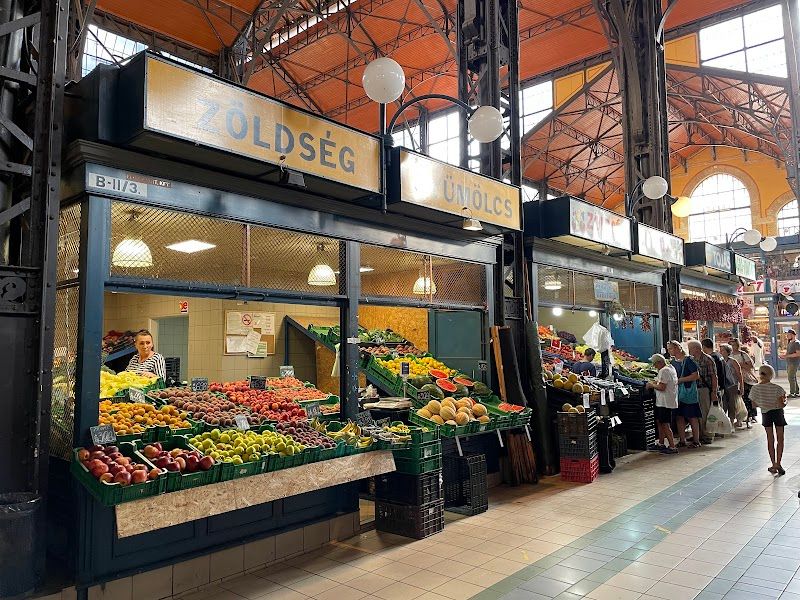
The Great Market Hall is Budapest's largest covered market, a magnificent iron and glass cathedral from 1897 that actually functions as a real market, not a tourist attraction pretending to be one. You'll find three floors of genuine Hungarian specialties: ground floor butchers selling Mangalica pork and kolbász, paprika vendors with authentic Kalocsa varieties, and pickle stalls that locals actually shop at. The upper floor serves proper lángos and houses souvenir stalls that beat the overpriced tourist traps on Váci utca. Walking through feels like entering a Victorian railway station filled with food instead of trains. The vaulted ceiling soars overhead while vendors call out prices in Hungarian, and the aroma shifts from fresh bread to smoked meats to paprika as you move between stalls. Upstairs, steam rises from the lángos griddles while tourists and locals queue together, and you can hear the sizzle of fresh dough hitting hot oil. The atmosphere stays authentically Hungarian despite the tour groups. Most guides don't mention that mornings are infinitely better than afternoons when tour buses arrive. The lángos stall on the right side upstairs (not the flashy ones with English signs) serves the real deal for 1,800 HUF with sour cream and cheese. Skip the lower level unless you need fish, and avoid any paprika vendor whose display screams at you in five languages. Genuine sweet rose paprika costs 1,200 to 2,400 HUF per 100g, and cash moves you faster through the meat lines.
Fisherman's Bastion
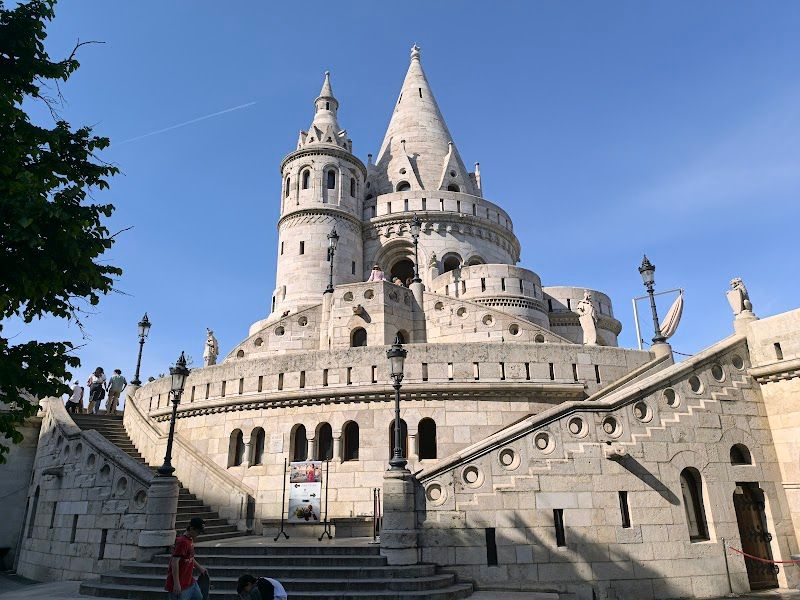
Fisherman's Bastion is a neo-Romanesque viewing terrace that looks like a fairytale castle but was actually built in 1902 as decorative window dressing for Castle Hill. Seven white stone turrets represent the seven Magyar tribes who founded Hungary, and the whole thing frames Matthias Church perfectly. You're here for one reason: the postcard perfect view across the Danube to Parliament, which you can get from both the free lower terraces and the paid upper section. The experience feels surprisingly theatrical, with tourists posing against the ornate stone balustrades while the Danube glitters below. Morning light hits Parliament beautifully from this angle, making the building's Gothic Revival spires glow golden. The upper terraces add maybe 10 meters of height but the view is essentially identical to what you get for free. Tour groups cluster around the central turrets, but the side sections offer the same panorama with breathing room. Here's what most guides won't tell you: the upper terraces cost HUF 1,500 but only from 9 AM to 7 PM in season, so you can access everything for free early morning or evening. The coffee at Walzer cafe costs double what you'd pay downtown, but you're paying for the turret views. Skip the souvenir stalls completely, they're overpriced tourist traps.
Heroes' Square
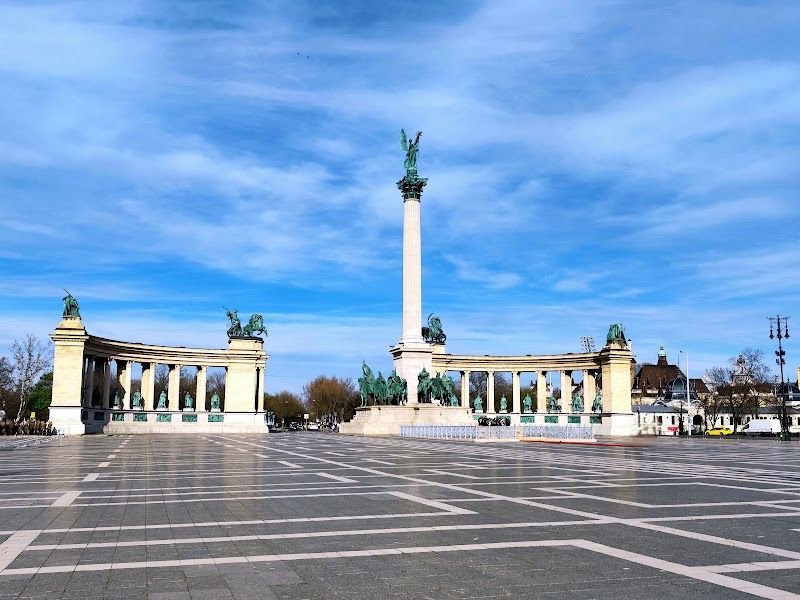
Heroes' Square is Budapest's grand ceremonial plaza, built for Hungary's 1000th anniversary in 1896. You'll see the towering Millennium Monument with Archangel Gabriel at the top and seven bronze Magyar chieftains on horseback at the base, including Árpád who led the conquest of Hungary in 895. The curved colonnades behind hold statues of 14 Hungarian kings and leaders, while the Museum of Fine Arts (3,200 HUF) and contemporary Műcsarnok (1,800 HUF) flank the square. The space feels genuinely monumental when you emerge from the M1 metro directly underneath. Tour groups cluster around the central monument for photos while locals cut straight through toward City Park. The bronze figures are impressively detailed up close, and the colonnades create dramatic shadows in morning light. State ceremonies happen here regularly, so you might catch wreath laying at the Tomb of the Unknown Soldier in front. Most people snap photos and leave, but the Museum of Fine Arts is genuinely world class with exceptional French Impressionists and Spanish masters. Skip the contemporary hall unless there's a blockbuster exhibition. The square itself is free and always open, perfect for early morning visits before the tour buses arrive around 10am. Pair it with Széchenyi Baths or Vajdahunyad Castle since you're already in City Park.
St Stephen's Basilica
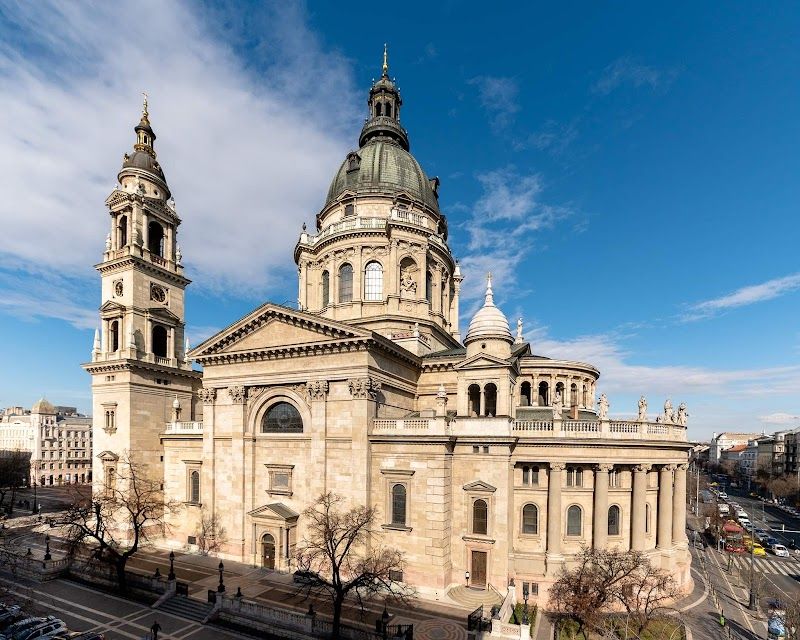
St Stephen's Basilica is Budapest's largest church and Hungary's most important Catholic building, housing the mummified right hand of King Stephen I in a golden reliquary. The real draw is the 96-meter dome climb that delivers the best central panorama in Budapest, with Parliament to the north and Buda Castle across the Danube. You'll climb 137 steps from the upper landing (after taking the lift) for views that stretch across the entire city. Inside, the basilica feels surprisingly intimate despite its massive scale, with detailed mosaics and marble columns creating an almost theatrical atmosphere. The Holy Right chapel draws steady crowds of locals lighting candles, while tourists crane their necks at the ornate ceiling frescoes. The dome ascent involves a cramped spiral staircase that opens onto a narrow walkway circling the exterior, where wind whips through as you photograph the city sprawling below. Most guides oversell the interior artwork, which is impressive but not extraordinary by European cathedral standards. Skip the audio guide (overpriced at HUF 1,500) and invest that money in the dome climb instead (HUF 1,200, about EUR 3). The basilica itself is free, but they appreciate donations. Sunday morning services close tourist access until 1pm, so plan accordingly. The forecourt Christmas market from late November runs decent mulled wine at HUF 1,500 per cup.
Buda Castle
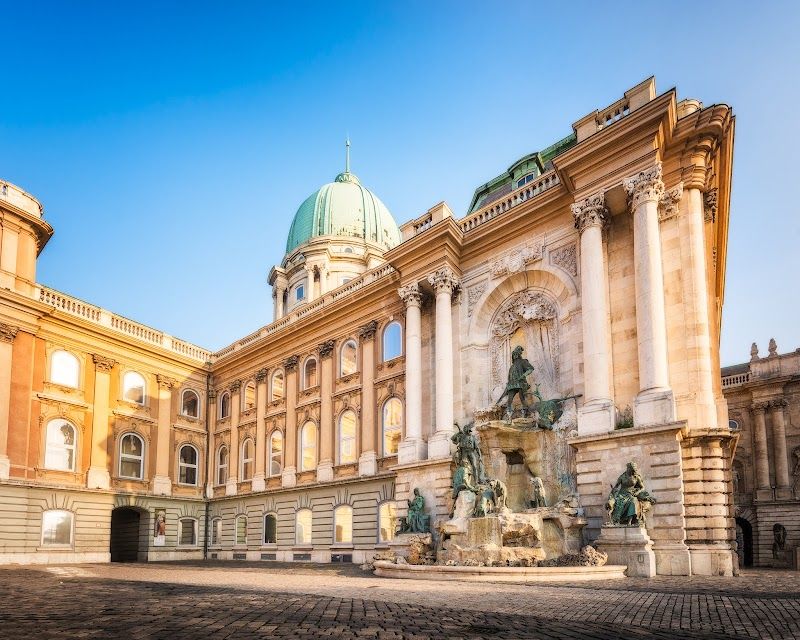
Buda Castle sits on Castle Hill like a massive Baroque wedding cake, but don't be fooled by the pretty exterior: this is a 1960s reconstruction after WWII bombing flattened the original. What makes it worthwhile are the two museums inside and the spectacular Danube views from the terraces. The Hungarian National Gallery fills the main wings with centuries of local art, while the Budapest History Museum hides genuine medieval royal chambers deep underground, complete with Gothic stone carvings and original frescoes. You'll spend most of your time wandering between museum wings and courtyards, with the castle's sheer size becoming apparent as you navigate multiple levels and staircases. The outdoor terraces offer sweeping views across the Danube to Parliament, especially gorgeous at sunset when the river turns golden. Inside, the medieval ruins feel authentically ancient compared to the rebuilt palace above, like discovering a secret basement in a modern hotel. Most visitors rush through both museums in an hour, but the underground medieval sections deserve 90 minutes alone. Skip the National Gallery unless Hungarian art genuinely interests you (HUF 3,400 feels steep for regional pieces). The courtyards and terraces are free 24/7 and honestly provide 80% of the castle experience. Take bus 16 instead of the overpriced funicular (HUF 1,400 one way) unless you're feeling romantic.
Széchenyi Thermal Baths
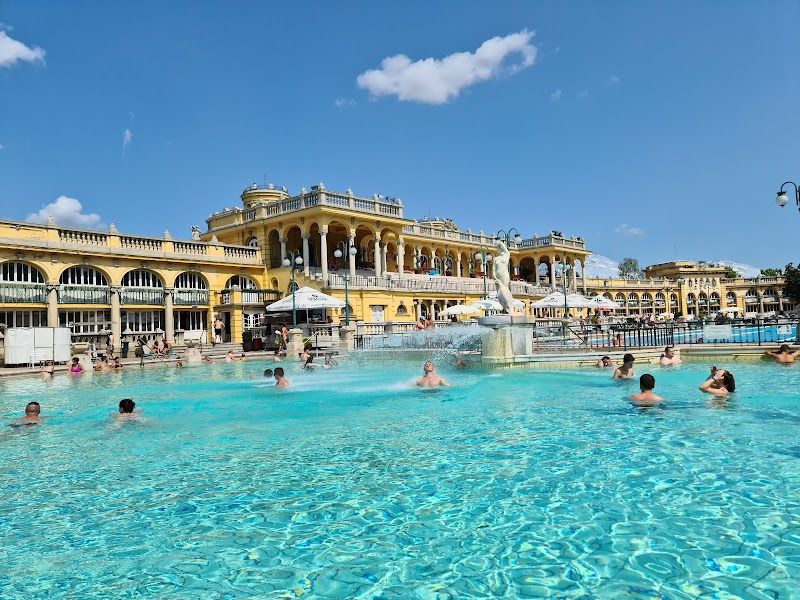
Széchenyi is Europe's largest medicinal bath complex, housed in a stunning Neo-Baroque palace that looks like a thermal spa built for royalty. You'll find 18 pools fed by two natural thermal springs, split between elegant indoor halls with ornate columns and spacious outdoor pools where steam rises year-round. The famous chess players in the outdoor thermal pool aren't a tourist show, they're locals who've been coming here for decades, playing serious matches while soaking in 38°C water. The experience flows between different worlds: ornate indoor pools where you feel like you're bathing in a museum, then stepping outside where the contrast of hot water and cool air creates an almost magical atmosphere. The outdoor pools stay busy but never feel cramped, and you'll hear a mix of Hungarian chatter and international languages. The chess players occupy one corner of the main outdoor pool, completely absorbed in their games while bathers float around them. Most guides don't mention that weekday mornings (7-9 AM) offer the most authentic local experience, while afternoons get tourist-heavy. Skip the expensive massages at the entrance, they're overpriced at 15,000-20,000 HUF when local massage places nearby charge half that. Day tickets cost 8,900-10,900 HUF depending on the day, and the 1,800 HUF cabin upgrade is worth it for the private changing space. Plan 4-5 hours minimum, you'll want to cycle between different temperature pools.
Chain Bridge
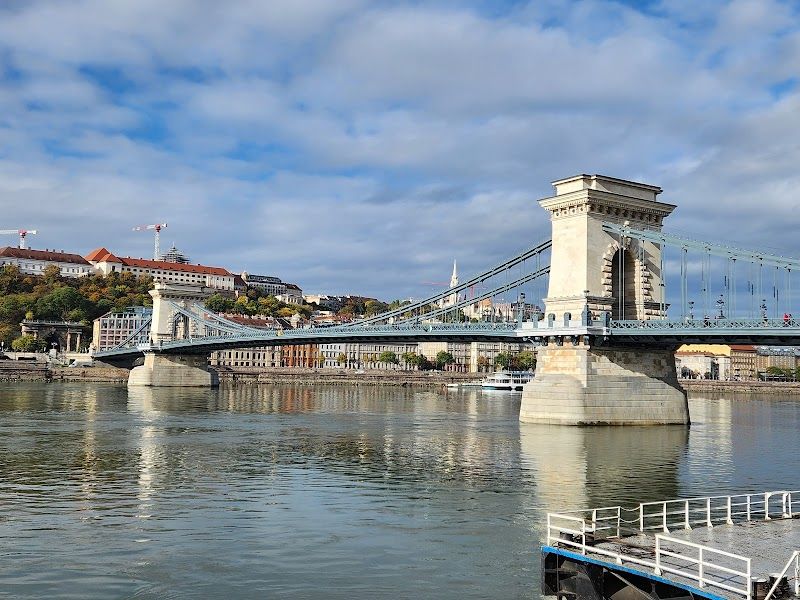
Chain Bridge spans the Danube as Budapest's first permanent connection between Buda and Pest, stretching 375 meters with nine elegant stone arches. You'll cross on dedicated pedestrian walkways alongside traffic, getting unobstructed views of Buda Castle rising dramatically to your left and Parliament's Gothic spires across the water. The four lion sculptures at each end (added in 1852) watch over the bridge, and yes, the sculptor really did forget to carve their tongues, making locals debate this oversight for over 170 years. Walking across takes about 8 minutes at a steady pace, though you'll stop constantly for photos. The bridge feels substantial under your feet, with thick stone balustrades and ornate ironwork that survived complete reconstruction after WWII bombing. Traffic flows steadily beside you, but the wide pedestrian areas keep you safely separated. The views change dramatically as you cross: Buda Castle dominates from the Pest side, while Parliament's symmetrical facade looks best from the Buda approach. Most visitors rush across during midday when harsh sunlight washes out photos and crowds clog the narrow spots near the lions. The bridge looks spectacular after dark with full illumination, but morning light (8-10am) gives you the clearest castle views without tour groups. Don't bother with the overpriced bridge merchandise sold by vendors, it's identical to what you'll find in any souvenir shop for half the price.
New York Café
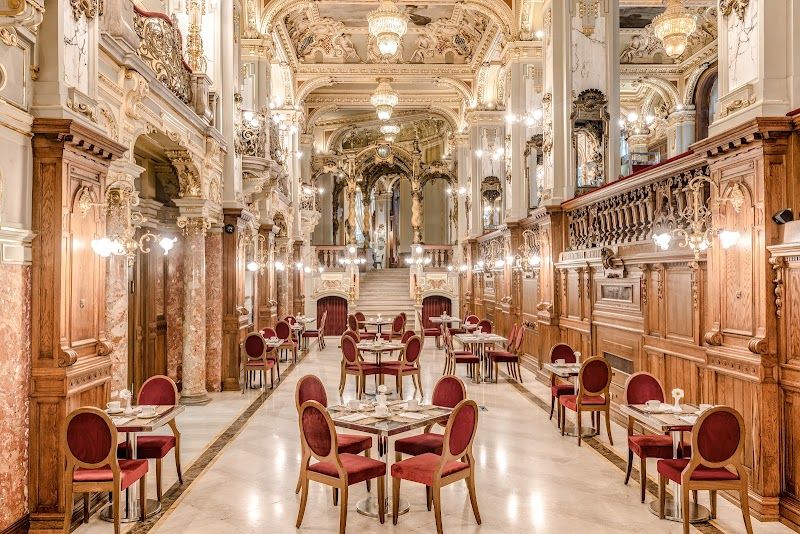
New York Café sits inside the Boscolo Budapest Hotel and delivers the most ridiculously ornate café experience in Europe. Every surface explodes with gilded Renaissance frescoes, crystal chandeliers hang from impossibly detailed ceilings, and marble columns frame the dining room like a Venetian palace. You're paying tourist prices for decent coffee and cake, but honestly, you're here for the visual overload that makes Versailles look understated. The experience feels like drinking coffee inside a jewelry box designed by someone with unlimited funds and questionable restraint. Tourists snap photos constantly while servers in formal attire navigate between packed tables, and the acoustics turn every conversation into background chatter. The gilded ceiling details are genuinely stunning when you crane your neck up, and the afternoon light streaming through tall windows makes the whole space glow impossibly golden. Most guides won't tell you this: the coffee is forgettable and a cappuccino costs around 2,500 HUF when it should be 800 HUF elsewhere. The cakes look better than they taste, running 3,000 to 4,500 HUF for standard portions. Come for photos and the spectacle, order the minimum, and don't expect a relaxing café experience. The literary history is real, but today it's pure tourist theater, and that's fine if you know what you're getting.
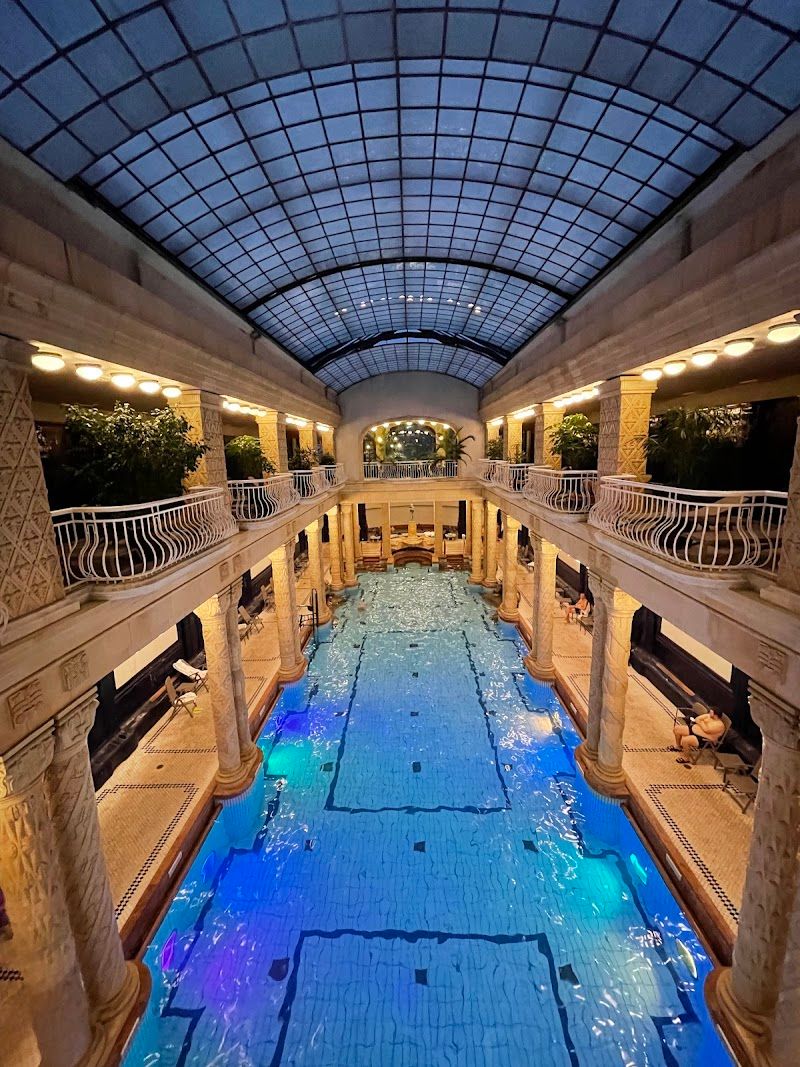
Gellért Thermal Baths
Gellért Baths delivers the most architecturally stunning thermal bath experience in Budapest, housed inside the 1918 Hotel Gellért. You're soaking in Art Nouveau perfection: intricate Zsolnay ceramic mosaics cover the walls, stained glass windows filter golden light across the main pool, and ornate columns frame every angle. Eight indoor pools range from a gentle 28°C to a serious 40°C soak, plus there's an outdoor pool with artificial waves during summer months. The experience feels more refined than Széchenyi's party atmosphere. You'll move between pools in a space that genuinely looks like a Roman emperor's private retreat, photographing architectural details between soaks. The main hall stops conversations mid sentence when you first walk in. Unlike other baths, this one attracts fewer families and more adults who appreciate the visual drama. The sauna and steam rooms extend the experience beyond just thermal pools. Day tickets cost 8,500 HUF on weekdays, 9,000 HUF weekends. Skip the overpriced cabin upgrade unless you're carrying valuables, lockers work fine. The outdoor wave pool only operates May through September, so winter visits are purely about the indoor architectural spectacle. Check their website before going, they close periodically for renovations without much warning. Most guides won't mention that the changing rooms are dated and cramped, but you're not here for those anyway.
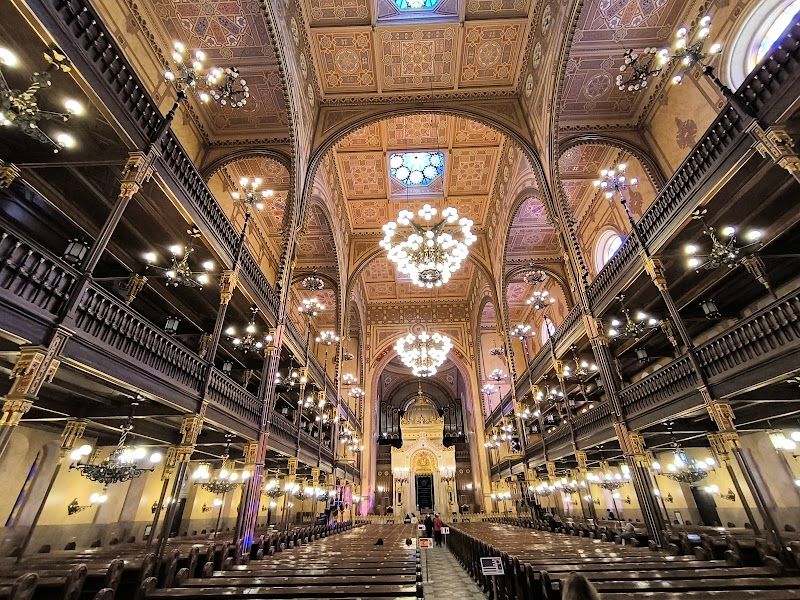
Great Synagogue (Dohány Street)
Europe's largest synagogue holds 3,000 people under twin onion domes that dominate the Pest skyline. Built in 1859, the Moorish Revival interior feels more like a concert hall than a traditional synagogue, with organ music and mixed seating that scandalized Orthodox Jews at the time. You'll see the Hungarian Jewish Museum's ceremonial objects, the haunting cemetery where 2,000 ghetto victims lie buried in the courtyard, and Imre Varga's metal Tree of Life memorial with 30,000 names etched on silver leaves. The guided tour moves through five distinct areas: the main sanctuary with its massive organ and gilded ceiling, the small Heroes' Temple built for WWI victims, the museum's Torah scrolls and ritual items, the cemetery (Europe's only synagogue burial ground), and finally the memorial garden. The contrast hits hard when you move from the ornate interior to the somber outdoor spaces. Audio guides work in 12 languages, though the live guides offer better stories about the building's survival through two world wars. Most visitors rush through in 60 minutes, but you need 90 to absorb the cemetery and memorial properly. At 5,500 HUF for adults and 4,400 HUF for students, it's pricey but justified. Skip the crowded afternoon tours and book the 9am slot when light streams through the sanctuary windows beautifully. The gift shop is overpriced tourist tat, but the small cafe serves decent coffee if you need a break.
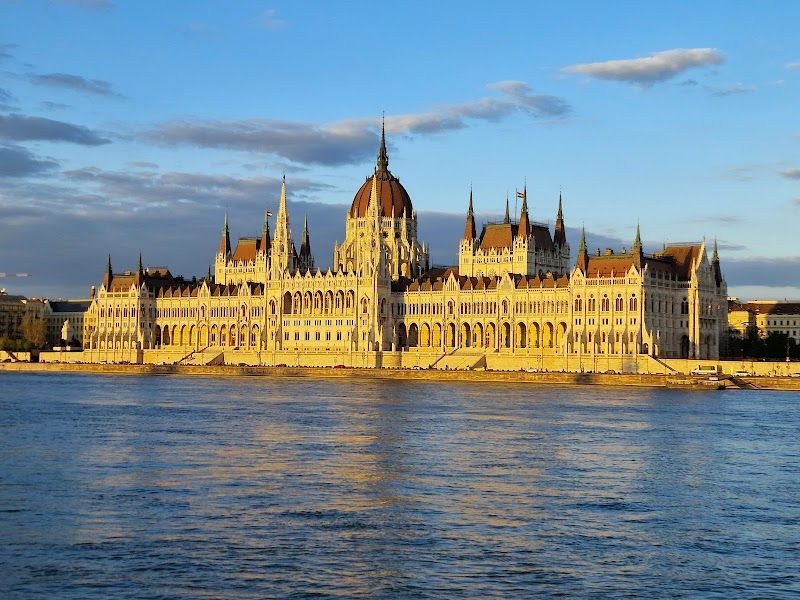
Hungarian Parliament Building
The Hungarian Parliament Building is Europe's third-largest legislative building, a Neo-Gothic masterpiece that took 17 years to complete in 1904. Your 45-minute tour covers the grand central staircase under Zsolnay ceramic decorations, the Holy Crown of St. Stephen in the dome hall (Hungary's actual crown jewels), and the ornate upper house chamber with its red leather seats and gilded ceiling. The building stretches 268 meters along the Danube, and its 96-meter dome matches St. Stephen's Basilica by deliberate design. Inside feels like walking through a palace rather than a government building. The main staircase with its red carpet and gold railings sets an imperial tone, while stained glass windows cast colorful light across marble columns. Your guide explains Hungarian history while you crane your neck at the intricate ceiling work. The crown jewels room is surprisingly intimate, and the upper chamber feels frozen in time with its original 1904 furnishings. Honestly, it's worth the 6,900 HUF for non-EU citizens (3,500 HUF for EU citizens). The exterior night photos everyone takes are better than the interior tour, but you can't see those crown jewels anywhere else. Book at jegymester.hu exactly three weeks ahead for summer visits, slots disappear fast. Skip the gift shop, it's overpriced postcards and magnets.
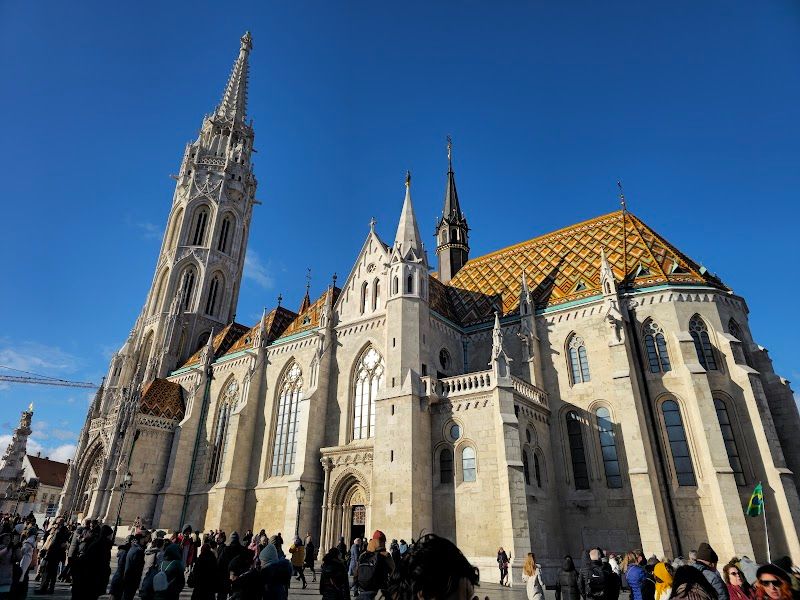
Matthias Church
Matthias Church is where Hungarian kings got crowned for centuries, and the current Neo-Gothic building from the 1890s is genuinely spectacular. You'll see late-medieval frescoes restored in saturated reds and golds (locals call it the "Hungarian Sistine"), soaring Gothic stone arches, and a replica of the actual coronation throne. The Zsolnay-tile roof with its diamond patterns catches light beautifully from inside, and the small upstairs museum covers the church's royal history. Walking in feels like stepping into a jewel box. The colors hit you immediately: deep crimsons, rich golds, and intricate geometric patterns covering every surface. The acoustics are incredible, which you'll notice if you catch the Sunday morning Mass with full choir. Most visitors spend time photographing the ornate interior (flash photography isn't allowed), then climb to the museum level for better views of the nave and historical artifacts. Entry costs HUF 2,500 and includes the museum upstairs, which most people skip but shouldn't. The church closes for weddings, usually Saturday afternoons, so check before you go. Skip the overpriced audio guide and instead time your visit for the 10 AM Sunday Mass when the choir performs, it's free and genuinely moving. The location next to Fisherman's Bastion means you can easily combine both in one morning.
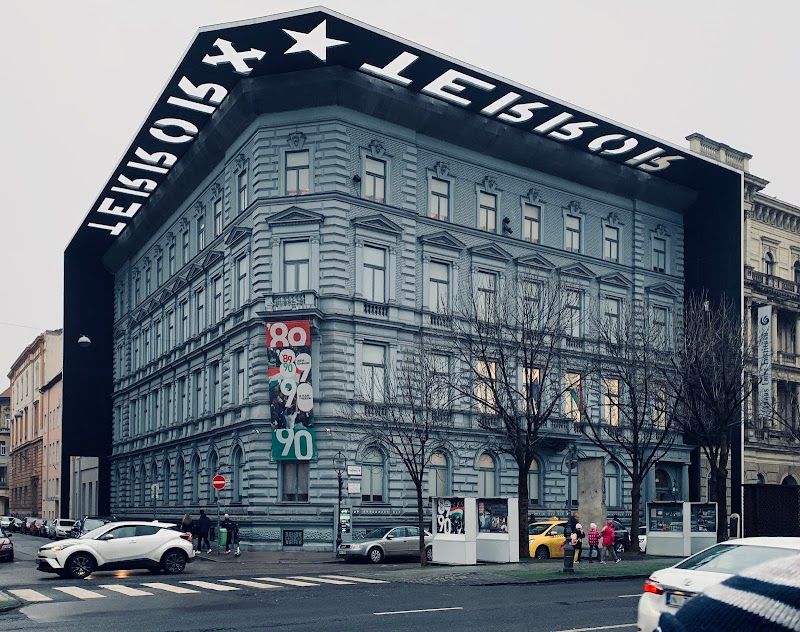
House of Terror
Andrássy út 60 served as headquarters for both Hungary's fascist Arrow Cross Party and later the communist secret police, making it the perfect location for this unflinching examination of 20th-century authoritarianism. You'll walk through reconstructed offices where deportation lists were compiled, see surveillance equipment used to monitor citizens, and examine propaganda materials from both regimes. The museum doesn't sanitize history: original torture devices, personal belongings of victims, and testimonial videos create a genuinely confronting experience that goes far beyond typical historical displays. The exhibition flows chronologically from the 1930s through 1989, with each floor focusing on different aspects of oppression. You'll start with the Arrow Cross period, seeing how fascists used this building to coordinate deportations of Jews and political opponents. The communist section reveals how the same spaces later housed the ÁVH secret police, complete with original furnishings and filing systems. The basement cells remain exactly as they were, with cramped spaces where political prisoners were held and interrogated. Most visitors underestimate how emotionally draining this place is: budget three hours minimum and don't plan anything heavy afterward. Entry costs 4,500 HUF, but the audio guide (additional 1,500 HUF) provides crucial context that wall texts miss. Skip the gift shop completely, it's inappropriate given the subject matter. The elevator descent to the basement deliberately moves slowly to build dread, but you can take the stairs if you're claustrophobic.
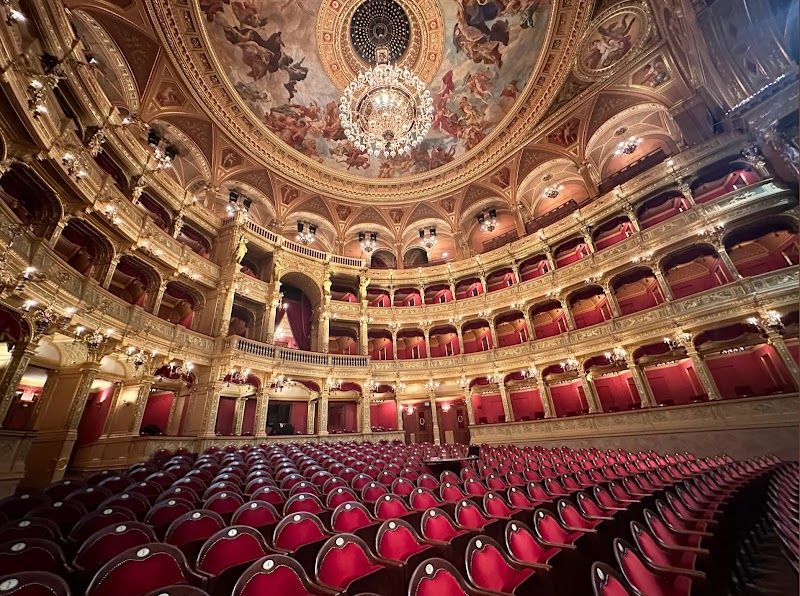
Hungarian State Opera House
Miklós Ybl's 1884 opera house ranks among Europe's most acoustically perfect venues, seating just 1,261 people in an intimate horseshoe design. The auditorium ceiling showcases Károly Lotz's fresco depicting Greek gods, while a massive bronze chandelier weighs three tons above red velvet seats. Gold leaf covers nearly every surface, from the royal box's intricate moldings to the grand staircase's ornate railings. The 45-minute guided tour takes you through spaces most audience members never see: behind the royal box where Franz Joseph once sat, up the marble staircase where society gatherings happened, and into the auditorium from multiple angles. Your guide explains how the horseshoe shape creates perfect sound distribution and points out details like the ceiling's hidden ventilation system. The acoustics demonstration always impresses, with guides singing or clapping to show how sound carries to every seat. Most guides oversell the building's history but undersell the technical brilliance. Skip the gift shop (overpriced trinkets) and focus on the auditorium and staircase. Tours cost HUF 2,900 for adults, but evening performances start at just HUF 1,500 for upper balcony seats. If you're choosing between tour and performance, pick the performance: you'll experience the space as intended plus world-class music.
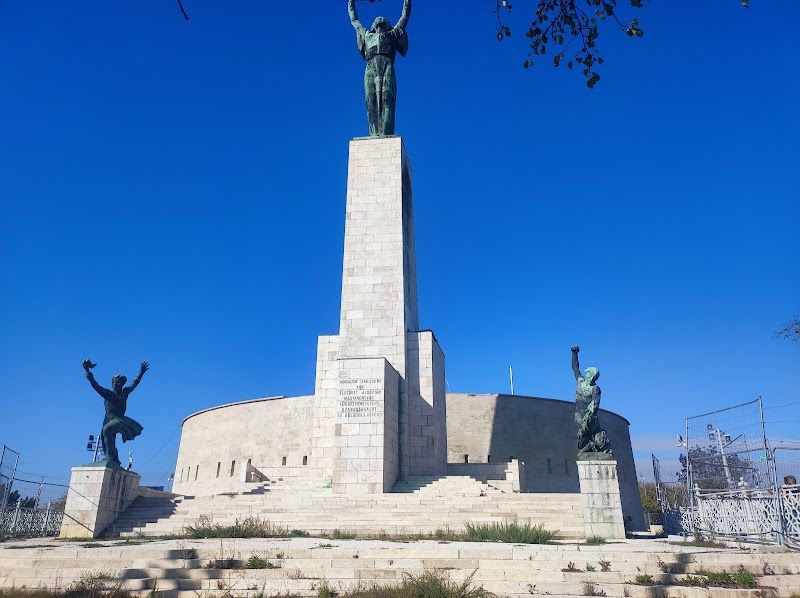
Citadella
The Citadella is a Habsburg fortress perched on Gellért Hill that the Austrians built specifically to intimidate Budapest after the failed 1848 revolution. You're climbing 235 meters above the Danube for sweeping views over both Buda and Pest, with the entire city sprawling below you. The fortress itself houses exhibition spaces (currently closed for renovation), but the real draw is walking the ramparts and soaking in those panoramic views that stretch to the Parliament building and beyond. The climb up is steep but manageable, taking about 15 minutes if you're reasonably fit. Once you reach the top, you can walk freely around the fortress walls, with the Liberty Statue towering nearby. The views change dramatically as you move around the perimeter: Parliament and the Chain Bridge from the north side, the sprawling Pest districts to the east, and Buda Castle complex to the northwest. Wind can be fierce up here, especially in winter, so dress accordingly. Most guidebooks oversell this as a historical attraction, but honestly, you're coming for the views, not the Habsburg history lesson. The interior exhibitions aren't worth waiting for when they reopen, and the fortress itself is fairly unremarkable architecture. Visit at sunset for the best light, but expect crowds then. Early morning around 8am gives you the clearest air and virtually no tourists, making it the smart choice if you want decent photos.
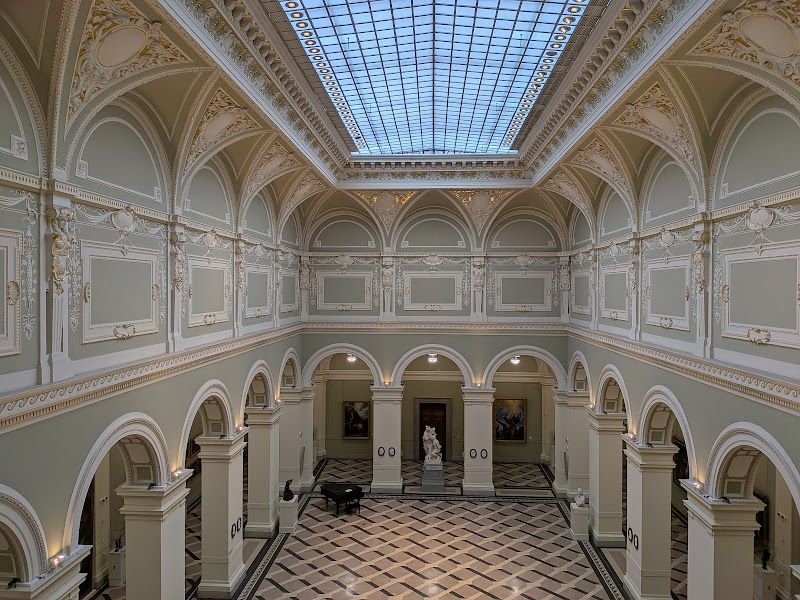
Museum of Fine Arts
The Museum of Fine Arts holds Hungary's most impressive art collection, housed in a neo-classical palace facing Heroes' Square. You'll find genuine masterpieces here: El Greco's religious works, Goya's haunting portraits, Monet's water lilies, and Cézanne's landscapes that influenced a generation. The Spanish collection rivals Madrid's offerings, while the French Impressionist rooms contain works you've seen in art history books. The Egyptian collection downstairs surprises with authentic mummies and carved reliefs. The recently renovated galleries feel spacious and unrushed, unlike Europe's more crowded art museums. You'll move through chronologically arranged rooms that flow naturally from medieval religious art to 19th-century modernism. The Spanish masters on the second floor create genuine wow moments, especially when you turn the corner to find Goya's royal portraits staring back. The French rooms buzz with more visitors, but the lighting and spacing let you actually study brushwork up close. Entry costs 3,200 HUF for adults, with student discounts at 1,600 HUF. Most visitors rush to the French paintings and miss the exceptional Dutch Golden Age collection entirely. Skip the temporary exhibitions unless they're specifically interesting to you, they eat time better spent with the permanent masters. Start with the Spanish collection when crowds are lighter, then work down to the Impressionists. The audio guide costs extra but adds valuable context to lesser-known pieces.
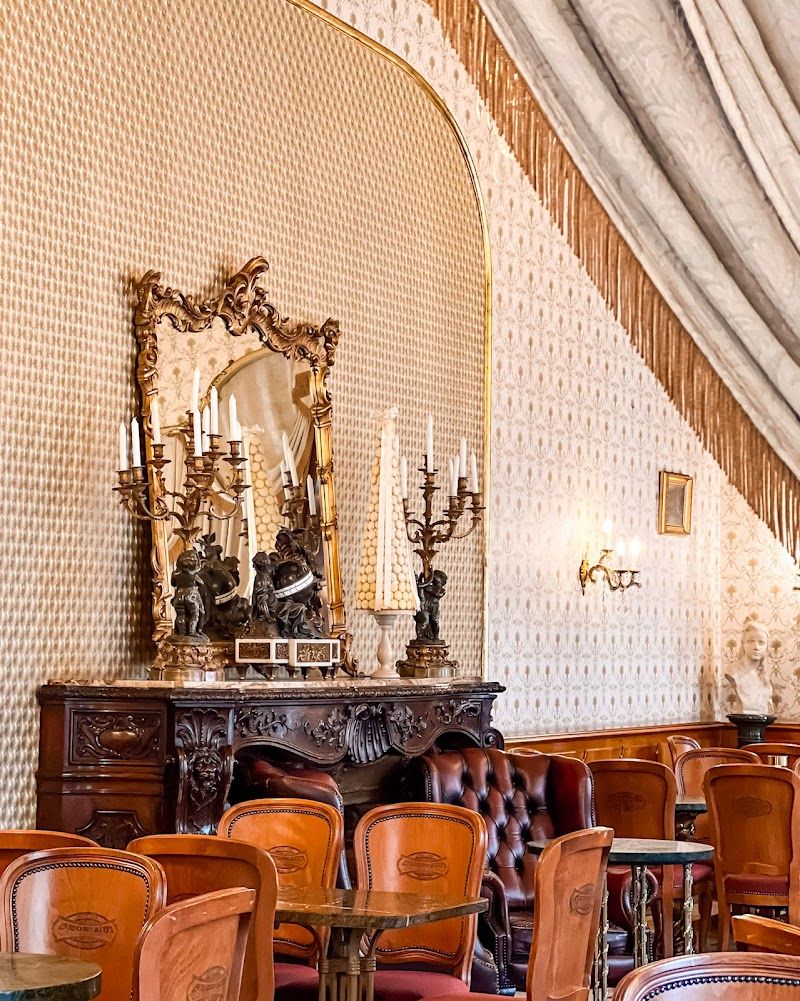
Café Gerbeaud
Gerbeaud is Budapest's grand dame of coffee houses, operating continuously since 1858 in a Habsburg-era palace on Vörösmarty Square. You'll sit beneath crystal chandeliers at marble-topped tables while waiters in traditional attire serve coffee from silver trays. The original Gerbeaud slice (layered walnut sponge with apricot jam and chocolate) was invented here and remains the signature dessert. This isn't just a café, it's a living museum of Austro-Hungarian coffee culture. The moment you step inside, the marble columns and gilt mirrors transport you to imperial Vienna. Service moves at 19th-century pace, which is entirely intentional. You're expected to linger over your melange coffee and sachertorte while reading newspapers or people-watching through tall windows. The atmosphere shifts dramatically between the bustling front rooms facing the square and the quieter back salons where locals prefer to sit. Most tourists order the famous Gerbeaud slice (2,800 HUF), but honestly, it's overly sweet and dense. The Dobos torte (2,200 HUF) is much better, and their simple apple strudel (1,900 HUF) beats the flashier options. Coffee runs 1,500-2,200 HUF. Skip the front terrace seating, it's purely for Instagram. The real experience happens in those back rooms where you can actually hear yourself think.
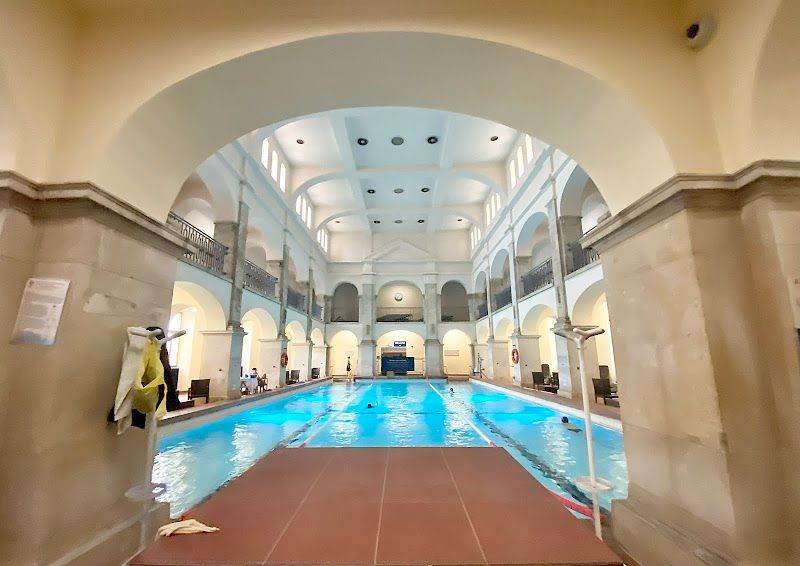
Rudas Thermal Bath
Rudas is the real deal: a 16th-century Ottoman bath where locals still soak in mineral-rich thermal pools under an original octagonal dome. You'll find yourself in dimly lit stone chambers with water temperatures ranging from 29°C to 42°C, plus a modern rooftop pool overlooking the Danube. The main thermal hall feels genuinely atmospheric with its Turkish arches and filtered sunlight, not like a tourist recreation. This is where Budapestis come to cure hangovers and joint pain in waters that bubble up from 1,500 meters underground. The experience splits between old and new: downstairs you're in medieval-feeling thermal pools where conversations echo off stone walls, while upstairs the rooftop pool feels like a trendy hotel. Weekdays follow traditional gender segregation (men Monday, Wednesday, Friday; women Tuesday, Thursday), so you'll get the authentic communal bathing experience. The weekend mixed sessions draw more tourists but give you access to everything. Water smells faintly sulfuric and tastes metallic, which means it's working. Most guides don't mention that weekday prices are cheaper at HUF 4,500 versus HUF 6,900 weekends, and the traditional single-gender sessions are far more authentic than the tourist-heavy mixed days. Skip the expensive massage packages (overpriced at HUF 15,000+) and just enjoy the waters. The night bathing until 10pm on weekends is worth the premium for smaller crowds and dramatic lighting.
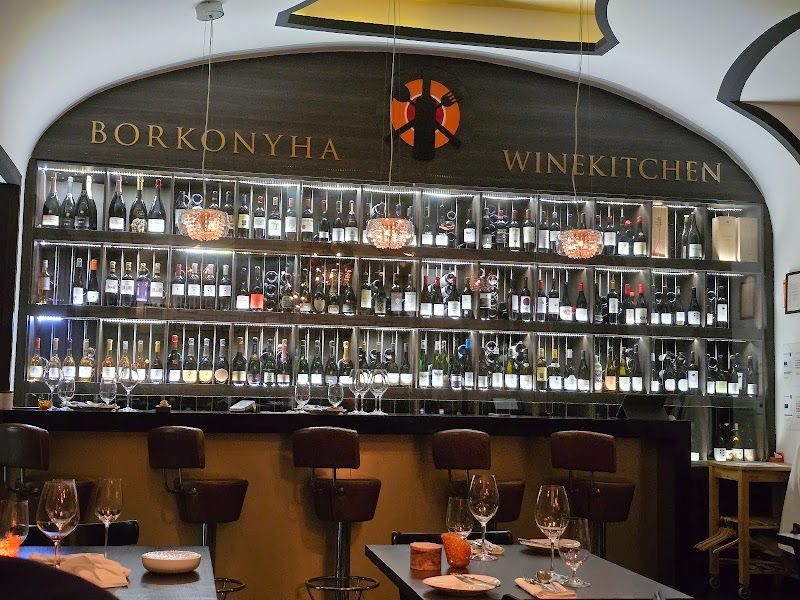
Borkonyha Winekitchen
Chef Ákos Sarkozi's Michelin-starred kitchen transforms Hungarian comfort food into something you've never tasted before. He takes dishes your Hungarian grandmother might recognize, like duck leg with cabbage or Lake Balaton pike-perch, and rebuilds them with French techniques and obsessive attention to seasonal ingredients. The wine program focuses exclusively on Hungarian producers, including natural wines from volcanic Somló and aged Tokaji that costs more per glass than most restaurant meals. You're paying for innovation that actually respects tradition rather than ignoring it. The dining room feels intimate with just 12 tables, housed in a restored townhouse with exposed brick and understated lighting. Service moves at a measured pace over 2.5 hours, with servers explaining each dish's Hungarian roots before you taste Sarkozi's interpretation. The kitchen operates like theater, visible through glass, where every plate gets assembled with tweezers and paintbrush precision. You'll watch other diners photograph every course, but the flavors demand your full attention. Most reviews overhype the creativity and undershoot the price reality. The 5-course tasting menu costs HUF 32,000 without wine pairings, which add another HUF 18,000. Skip the à la carte unless you're sharing, portions are tiny and prices climb fast. Book exactly three weeks ahead online, they release tables in monthly batches. The lunch menu offers similar quality for HUF 24,000, though you lose some evening atmosphere.
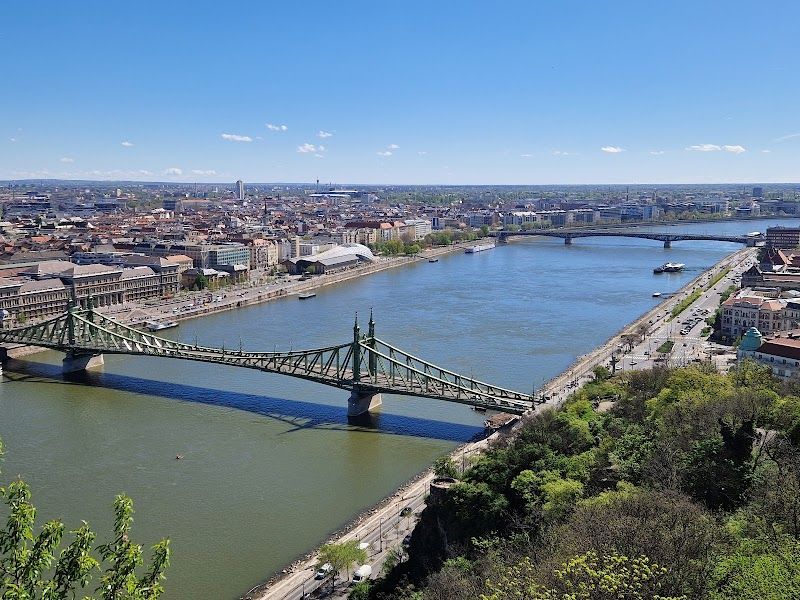
Gellért Hill
Gellért Hill rises 235 meters above the Buda side, offering Budapest's best panoramic views without paying castle prices. You'll climb through quiet forest paths to reach the Citadella fortress and Liberty Statue at the summit, where the entire city spreads below you. The view captures Parliament's Gothic spires, the Chain Bridge's graceful spans, and the geometric grid of Pest stretching to the horizon. The 30 minute climb starts gently on paved paths before switching to gravel switchbacks through oak and beech forest. You'll pass the Cave Church carved into the hillside, then emerge at the fortress walls where the city suddenly unfolds in all directions. The terrace stays busy but never feels cramped, and there's something mesmerizing about watching the Danube curve through the urban landscape below. Most guides push the Citadella museum inside the fortress, but it's genuinely terrible: dusty displays and overpriced souvenirs for 1,500 HUF. The free terrace delivers everything you came for. Skip the restaurant too, it's tourist trap pricing with mediocre food. Come for sunset when Parliament's dome glows golden and the bridges light up, that's when you'll understand why locals still climb this hill after living here for decades.
Stand25 Bisztró
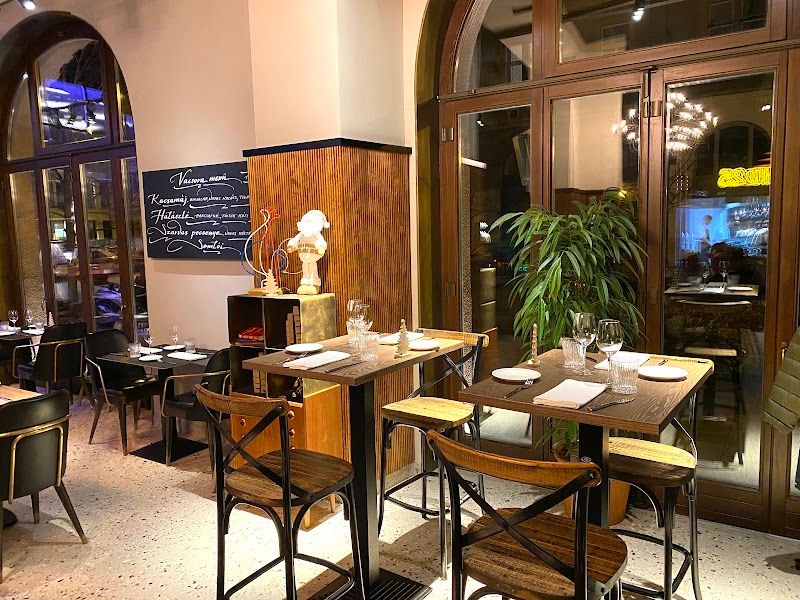
Stand25 Bisztró occupies a converted space inside a historic market hall building, where chef Tamás Széll serves Hungarian classics reimagined with serious technique and global influences. You'll watch precision cooking through the open kitchen while eating dishes like mangalica pork shoulder with Jerusalem artichoke purée or perfectly cooked pike-perch with kohlrabi. The menu changes seasonally, but expect refined versions of comfort food that justify the reputation as one of Budapest's most consistent fine dining spots. The dining room feels intimate despite the market hall setting, with maybe 30 seats and constant activity from the open kitchen. Service runs smoothly with knowledgeable servers who can explain each dish's components without being pretentious. The atmosphere strikes a balance between serious cooking and approachable dining, you're here for exceptional food but won't feel intimidated. Watching the kitchen team plate each dish becomes part of the entertainment, especially during the lunch rush when they're moving at full speed. Most reviews focus on dinner, but lunch offers identical quality at half the price. The HUF 3,900 lunch set menu is Budapest's best fine dining bargain, three courses that would cost HUF 8,000+ if ordered separately at dinner. Skip the wine pairings unless you're serious about Hungarian varietals, they're good but overpriced. Book ahead for dinner but lunch usually has walk-in availability if you arrive right at 11:45 AM when they open.
Andrássy Avenue
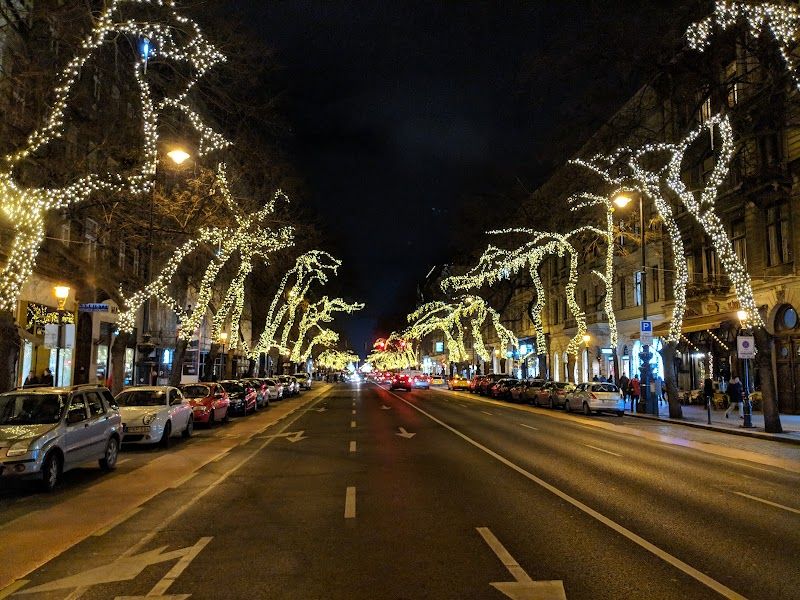
Andrássy Avenue is Budapest's grand 2.4-kilometer boulevard, a UNESCO World Heritage site that runs from downtown Erzsébet Square straight to Heroes' Square. You'll walk past stunning neo-Renaissance mansions, the State Opera House, high-end boutiques, and the Terror House Museum while Europe's first underground metro rumbles beneath your feet. The tree-lined avenue was built in the 1870s as Hungary's answer to Paris's Champs-Élysées, and it genuinely delivers that imperial grandeur. The experience changes dramatically as you walk its length. Near the Opera House, you're surrounded by elegant townhouses converted into luxury shops and cafes, with well-dressed locals sipping coffee at sidewalk tables. Past Oktogon square, the buildings spread out into magnificent detached villas with front gardens, and the crowds thin considerably. The plane trees create a natural canopy, and you'll hear the occasional rumble of the M1 yellow line metro below. Most tourists only see the Opera House section and miss the avenue's best architecture further up. The real gems are between Bajza utca and Heroes' Square, where you'll find the most impressive mansions without the crowds. Terror House Museum charges 3,000 HUF and gets very busy after 11am. Skip the overpriced cafes near the Opera, they're tourist traps with mediocre food at premium prices.
Liberty Square
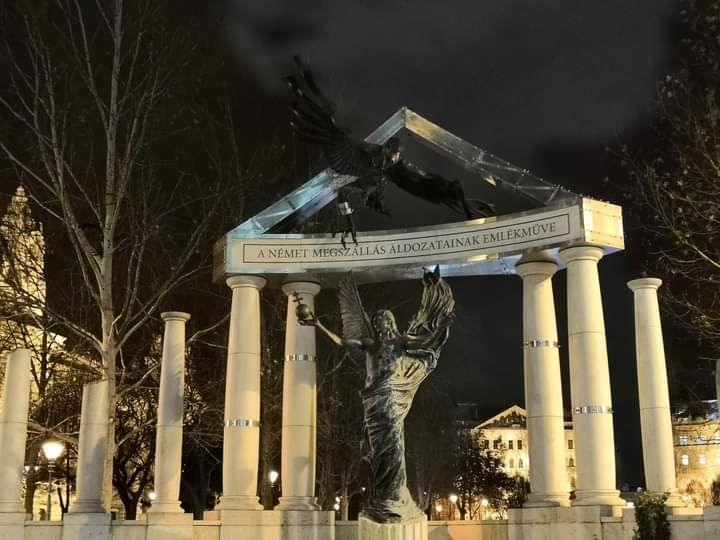
Liberty Square sits at the heart of Budapest's political center, surrounded by the Hungarian National Bank's imposing facade, the US Embassy, and Hungarian Television headquarters. You'll find two starkly different monuments here: the Soviet War Memorial from 1945 (now behind protective glass after repeated vandalism) and the 2014 Memorial to Victims of German Occupation. The square's wide, tree-lined space makes it feel more like a formal government plaza than a typical European square, but that's exactly what gives it character. Walking through feels like navigating Hungary's complex 20th century history in real time. The Soviet monument dominates the southern end with its towering obelisk and relief sculptures, while protesters often leave flowers and signs nearby. The newer German occupation memorial at the north end draws its own controversies, with counter-memorials placed by locals who dispute its historical interpretation. Office workers from surrounding buildings cut through constantly, giving the space an oddly normal feeling despite the heavy historical weight. Most guides make this sound more dramatic than it actually is. The monuments are interesting for about 10 minutes each, but the real appeal is understanding how Hungarians still grapple with their past. Skip this if you're short on time and prioritizing traditional sightseeing. The area works best as a quick stop while walking between Parliament and the Danube, not as a destination itself.
Margaret Bridge
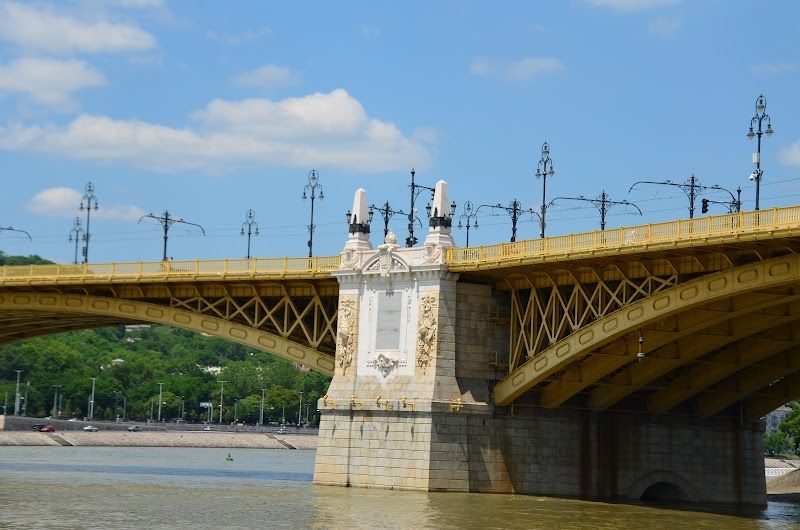
Margaret Bridge is Budapest's only Y-shaped bridge, splitting in the middle to connect both sides of the Danube with Margaret Island. Built in 1876 by French engineer Ernest Goüin, it got its distinctive third arm in 1900 when they added the island branch. You'll ride trams 4 and 6 across it, making this the only bridge in Budapest with regular public transport rumbling overhead. The views stretch from Parliament to Buda Castle, and the island access makes it a natural gateway to Budapest's best park. Walking across feels different from other Budapest bridges because of the constant tram traffic above and the unusual split structure. The iron framework creaks slightly as trams pass, and you'll hear the distinctive ding of the old Soviet-era vehicles. Halfway across, you can branch off to Margaret Island or continue straight to the other side. The pedestrian walkways run alongside the tram tracks, so you're always aware of the bridge's working nature rather than just its tourist appeal. Most people just rush across without stopping, but the middle section offers the best Parliament photos without the crowds at Chain Bridge. The tram ride costs 350 HUF and gives you the views without the walk, though you'll miss the perspective changes as you approach the island split. Skip coming here specifically for sunset, the western orientation means you're shooting into harsh light. The bridge works best as transport rather than destination.
Liberty Bridge
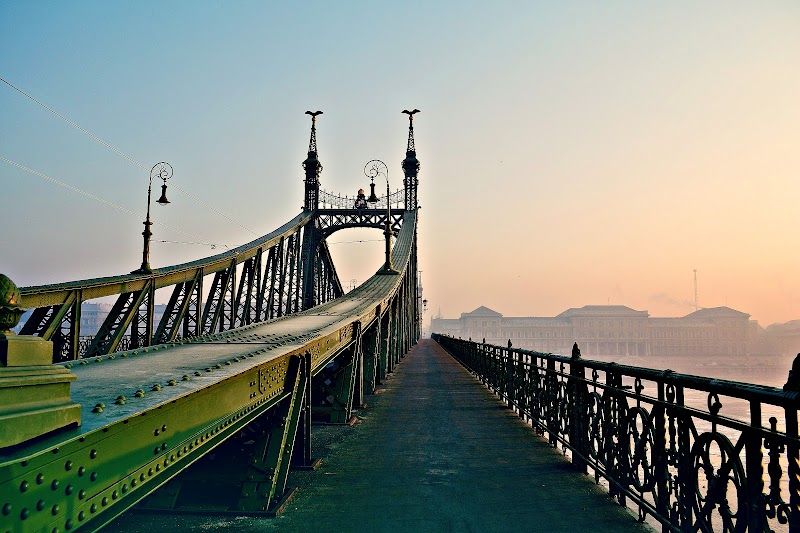
Liberty Bridge spans the Danube in elegant Art Nouveau style, its green ironwork and bronze Turul birds making it Budapest's most photogenic river crossing. You'll walk across 333 meters of restored 1896 engineering while those four mythical Hungarian birds on golden spheres watch from their perches at each end. The bridge connects Gellért Hill's thermal baths with the Great Market Hall, so you're perfectly positioned to hit Budapest's best experiences on both sides. Walking across feels like stepping through a green metal cathedral, with the ironwork creating geometric patterns overhead and the Danube flowing 20 meters below. Trams rumble past regularly on the center tracks, their yellow cars adding movement to your photos. The pedestrian walkways offer unobstructed views up and down the river, with Parliament's dome visible upstream and the Gellért Hotel's grand facade dominating the Buda side. Most people rush across without noticing the intricate metalwork details or the small plaques explaining the bridge's reconstruction after WWII bombing. The morning light hits the green paint beautifully, while sunset creates dramatic shadows through the ironwork. Skip the crowded Chain Bridge viewpoints and use this as your Danube photo spot instead, it's far less touristy and the architecture is more interesting.
Szimpla Kert
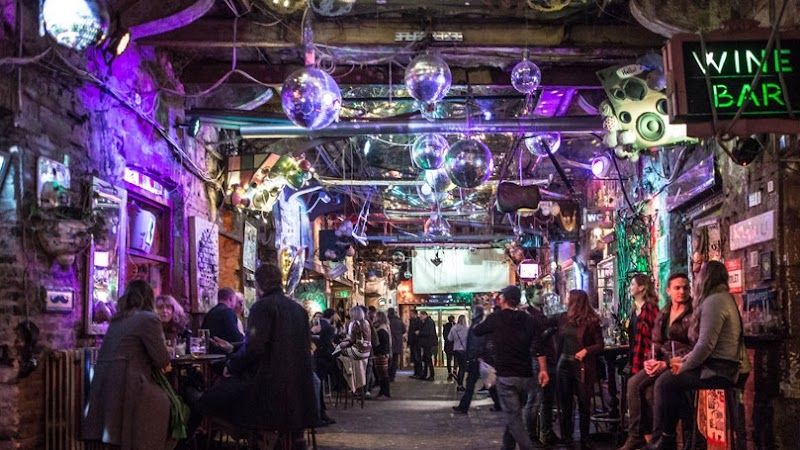
Szimpla Kert pulls double duty as Budapest's original ruin pub and a genuine Sunday farmers market. From 9 AM to 2 PM every Sunday, local vendors take over the famous bar's courtyard and rooms, selling everything from fresh produce and artisanal cheeses to homemade bread and Hungarian honey. The rest of the week it's a legendary drinking spot with mismatched furniture and plants growing through bathtubs, but Sunday mornings transform it into something completely different. The market spreads through multiple rooms and the central courtyard, with maybe 20 vendors setting up between the bar's signature eclectic decor. You'll find elderly Hungarian women selling pickles from massive jars, cheese makers offering tastings of sheep's milk varieties, and bread bakers whose loaves are still warm. The atmosphere feels authentically local rather than touristy, with Hungarian families doing their weekly shopping alongside curious visitors. The bar's quirky interior design stays intact, so you're literally shopping for tomatoes next to a bathtub planter. Most travel guides oversell this as some magical experience, but it's really just a small neighborhood market that happens to be in a famous bar. The selection is decent but limited, and prices run about 20% higher than regular markets. Come if you're already exploring the Jewish Quarter on Sunday morning, but don't plan your whole weekend around it. The honey vendor near the entrance does sell exceptional acacia honey for around 2000 HUF, which genuinely tastes better than anything you'll find in regular shops.
Mazel Tov
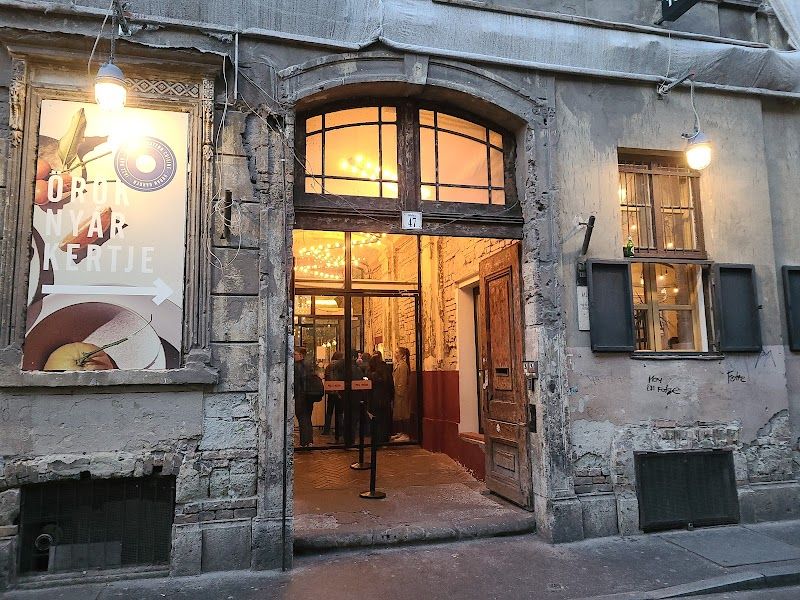
Mazel Tov transforms a crumbling courtyard into Budapest's most photogenic Middle Eastern restaurant, complete with hanging gardens, Edison bulb canopies, and a retractable glass roof. The food isn't groundbreaking, but the hummus (2,890 HUF), shakshuka (3,490 HUF), and mixed grill platters (5,890 HUF) are solid and Instagram-ready. You're really paying for the atmosphere and the space, which has become the Jewish Quarter's unofficial living room for twenty and thirty-somethings. The moment you walk through the narrow entrance, you're hit with warm lighting, trailing ivy, and the buzz of conversation echoing off brick walls. Servers weave between communal tables packed with locals and tourists sharing mezze platters and craft cocktails. The space feels alive but never chaotic, like dining inside a trendy greenhouse. By 9 PM, it shifts from restaurant to bar, with groups lingering over wine and the energy ramping up considerably. Here's what nobody tells you: the portions are generous enough to share, so order less than you think. A mezze platter (4,590 HUF) plus bread easily feeds two people as a light dinner. Skip the overpriced cocktails (3,200+ HUF each) and stick to wine or beer. The weekend wait can stretch past an hour, but weeknight dinners around 7 PM usually get you seated within 15 minutes.
Vajdahunyad Castle
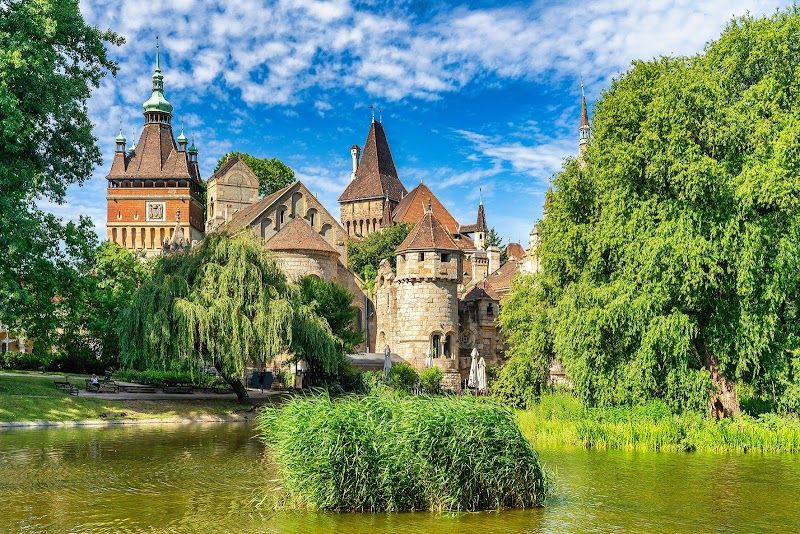
Vajdahunyad Castle is the architectural fantasy at the heart of City Park, built in 1896 for the millennium exhibition out of cardboard and wood, then rebuilt in stone in 1908 because the people of Budapest refused to let it be demolished. Designer Ignác Alpár combined elements of 21 different historic Hungarian buildings into one composite castle: Romanesque chapel, Gothic tower of Vajdahunyad (Transylvania), Renaissance courtyard, Baroque palace wings. Sits on its own island in the City Park lake (winter rink, summer pedal-boats). Courtyards free to enter. The Museum of Hungarian Agriculture inside has a separate ticket (EUR 5, Europe's largest agricultural museum, surprisingly well-curated). The Anonymous statue in the courtyard (a hooded medieval scribe) is rubbed for luck by writers and students.
Instant-Fogas
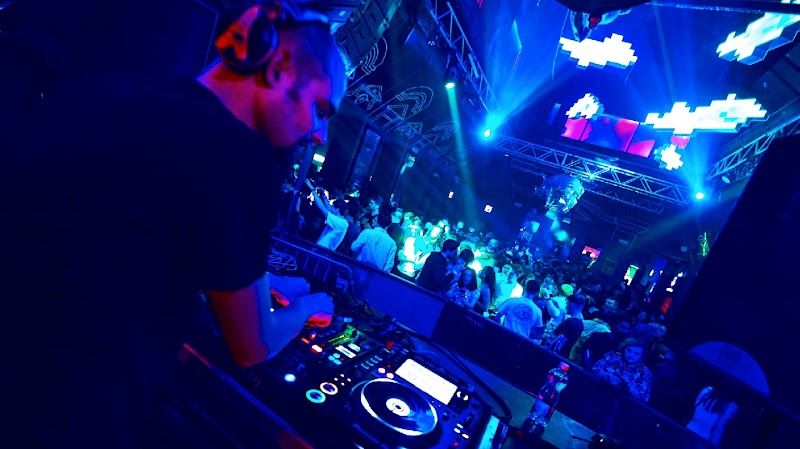
Instant-Fogas sprawls across two buildings connected by an overhead bridge, creating Budapest's most ambitious ruin bar complex. You'll find seven different dance floors spread between the Instant and Fogas sides, each pumping out distinct genres from underground techno to mainstream pop. The space feels like exploring an abandoned warehouse that someone turned into a multi-level party maze, complete with graffitied walls, mismatched furniture, and bars tucked into unexpected corners. The night unfolds as a choose-your-own-adventure of music and crowds. Start on the Fogas side where DJs spin deeper electronic sets for a slightly more mature audience, then cross the bridge to Instant's pop-heavy floors packed with university students. The main floors get suffocatingly crowded after 1am, but smaller rooms stay navigable. You'll spend most of your time wandering between spaces, drink in hand, following whatever beat draws you in. Most guides oversell this as a ruin bar experience, but it's really just a massive club disguised as one. The Thursday through Saturday crowds are intense, bordering on claustrophobic if you're not into that energy. Skip the overpriced cocktails (HUF 2,500+) and stick to beer (HUF 1,200-1,500). Sunday through Wednesday it's practically dead, so don't bother unless you want to dance alone in empty rooms.
Centrál Kávéház
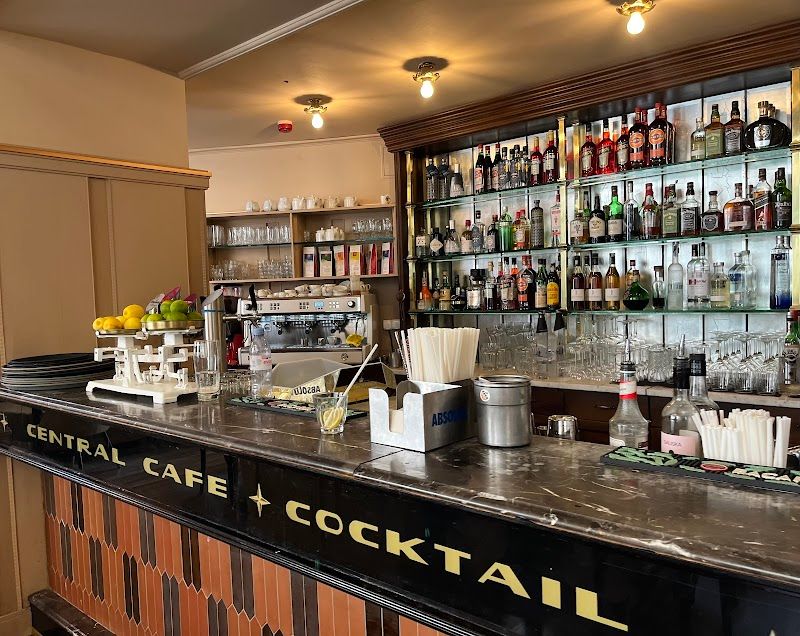
Centrál Kávéház has been Budapest's intellectual headquarters since 1887, where writers like Endre Ady and journalists from Népszava newspaper actually worked daily. The original wooden furniture, marble-topped tables, and crystal chandeliers remain untouched, creating an authentic period atmosphere that feels lived-in rather than staged. You'll find locals typing on laptops alongside tourists snapping photos, making this one of the few historic cafés that still functions as a genuine workspace. The moment you step inside, you're surrounded by the gentle clatter of coffee cups, whispered conversations in Hungarian, and the rustle of newspapers. Unlike the tourist-focused Gerbeaud, this feels like a working café where intellectuals still gather. The waiters move efficiently between closely-spaced tables, delivering expertly pulled espressos and flaky kürtőskalács pastries. The afternoon light streams through tall windows, illuminating dust motes and creating that perfect Central European café ambiance. Most guides underestimate the food quality here, but the lunch menu (HUF 2,500-4,500) rivals many restaurants. Skip the overpriced breakfast pastries and come for their excellent goulash or schnitzel instead. Coffee runs HUF 800-1,200, reasonable for the location and quality. The Wi-Fi actually works, so don't feel guilty about settling in for hours like the regulars do.
Hungarian National Museum
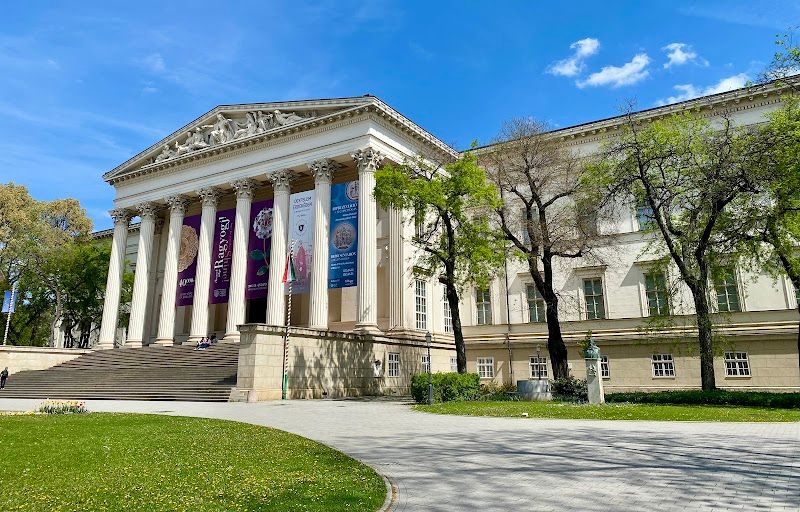
Hungary's largest historical museum tells the nation's complete story from Stone Age settlements through communist collapse in 1989. The star attraction is the coronation mantle of St. Stephen, a 1,000-year-old silk masterpiece with gold embroidery that's genuinely breathtaking up close. You'll also see reproductions of the Holy Crown jewels, Roman artifacts from Pannonia, and an entire floor dedicated to the Ottoman occupation period. The experience flows chronologically through grand neoclassical halls with marble columns and painted ceilings. Most visitors rush through the prehistoric sections, but the medieval galleries slow everyone down with their intricate religious artifacts and illuminated manuscripts. The communist-era exhibit on the top floor feels surprisingly raw and unfiltered, displaying propaganda posters alongside personal stories of life under Soviet rule. The building itself survived WWII bombing and still bears scars you can spot if you look carefully. At HUF 1,600, this is Budapest's best museum bargain, though most guidebooks don't mention how exhausting it becomes after 90 minutes. Skip the natural history wing entirely unless you're obsessed with stuffed animals in dusty cases. The medieval and revolution periods deliver the most impact, while the ancient Roman section feels repetitive if you've visited other European museums. Audio guides cost extra HUF 800 but they're worth it for the coronation mantle alone.
House of Music Hungary
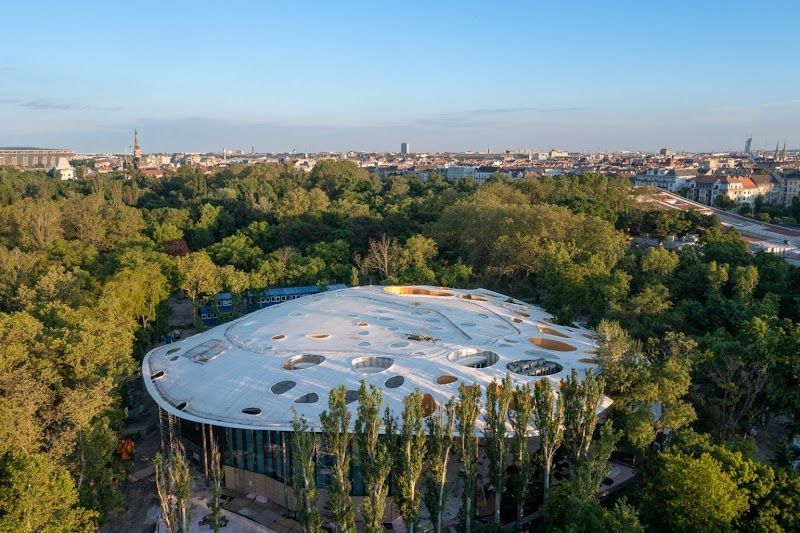
Sou Fujimoto's 2022 House of Music sits like a transparent cloud in City Park, its perforated roof creating an ever-changing light show through the preserved oak canopy above. The building itself is the main attraction: glass walls dissolve the boundary between inside and outside while the undulating roof follows the tree line perfectly. You'll find three floors of Hungarian music history exhibits, an interactive sound dome, and a rooftop deck with panoramic city views. Walking through feels like being inside a living tree house where architecture and nature genuinely merge. The ground floor flows seamlessly from park to interior, with coffee drinkers sitting beneath dappled sunlight that shifts throughout the day. The sound dome on the third floor immerses you in 360-degree audio experiences, while the permanent exhibition traces Hungarian musical heritage from folk traditions to contemporary composers. The rooftop observation deck offers some of the best views over City Park and the castle district beyond. Most visitors don't realize the building entry is completely free, so you can experience Fujimoto's architecture without paying the HUF 4,000 exhibition fee. The exhibitions are well-done but skippable if you're not deeply interested in Hungarian music history. Come in the morning when the light patterns are sharpest and the rooftop less crowded. The cafe serves decent coffee with those tree-filtered views, making it worth the trip even if you skip the paid sections entirely.
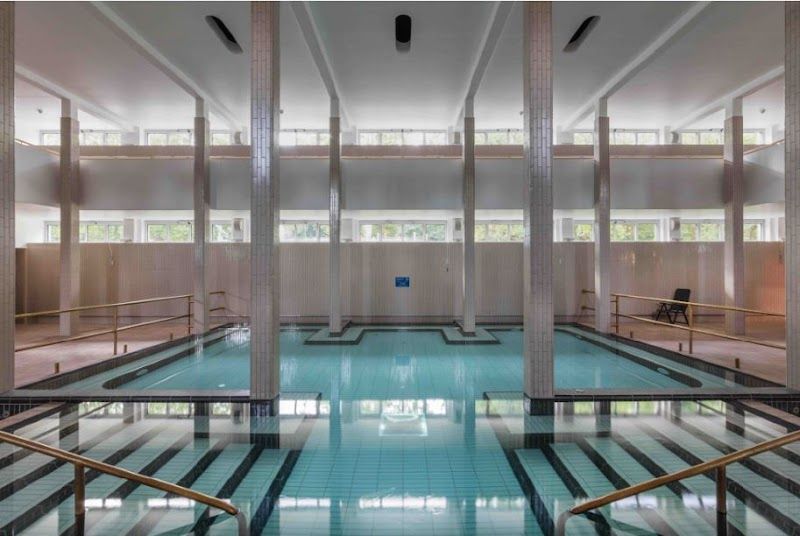
Palatinus Strand
Palatinus Strand transforms a corner of Margaret Island into Budapest's largest open-air swimming complex, sprawling across parkland with eleven pools that range from serious lap swimming to pure fun. The wave pool generates proper surf-style waves every 30 minutes, while three thermal pools maintain temperatures between 26-38°C using the island's natural hot springs. Adventure seekers head straight for the climbing wall and water slides, but the real draw is those massive sunbathing lawns dotted with century-old plane trees. The place operates like a small aquatic city from May through September, with families claiming spots under trees by 9am and staying until sunset. You'll hear a mix of Hungarian families, international tourists, and local students who treat this as their summer living room. The thermal section stays relatively calm while the main pools buzz with activity, especially when the wave machine kicks in and hundreds of people surge toward the artificial surf. Food stalls serve Hungarian classics like lángos, though prices reflect the captive audience. Most visitors waste time at the crowded main entrance pools when the thermal area offers the same tree shade with half the noise. Entry costs HUF 4,200 on weekends (HUF 3,600 weekdays), and locker rental adds another HUF 500. The adventure pool gets overhyped, it's really just for kids under 12. Your money goes furthest arriving after 3pm when day tickets drop to HUF 2,800, giving you five solid hours before the 8pm closing.
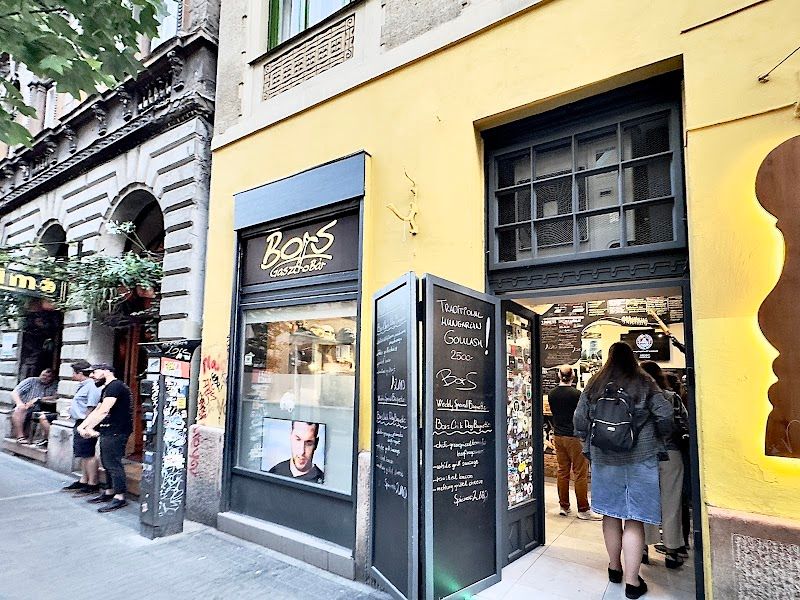
Bors GasztroBar
Bors GasztroBar operates from a space barely wider than a hallway on Kazinczy Street, serving what might be Budapest's most innovative soup program. Owner chef creates 5-6 different soups daily, written in Hungarian and English on a black chalkboard above the tiny counter. You'll find everything from traditional beef goulash (proper soup consistency, not the tourist stew version) to Vietnamese pho that tastes like it came from District 1's best Asian kitchens. The sandwiches, made with house-baked bread, pair perfectly with the soups for 2,800-3,500 HUF total. The experience revolves around that chalkboard menu and the theater of watching your soup assembled in the compact kitchen behind the counter. Six bar stools face the preparation area, but most customers grab their containers to-go and eat in nearby Kazinczy Park. The smell hits you immediately when you walk in, usually a mix of simmering bone broth and whatever Hungarian special is bubbling that day. Service moves quickly, with the staff explaining each soup in detail if you ask. Most travel guides completely miss this place because it looks unremarkable from outside, but locals queue here religiously. The Hungarian soups sell out fastest, especially the seasonal specials like fisherman's soup or chicken paprikash. Skip the basic tomato or mushroom options, they're fine but not why you came. Arrive hungry, the portions are substantial and most soups come with fresh bread for dipping.
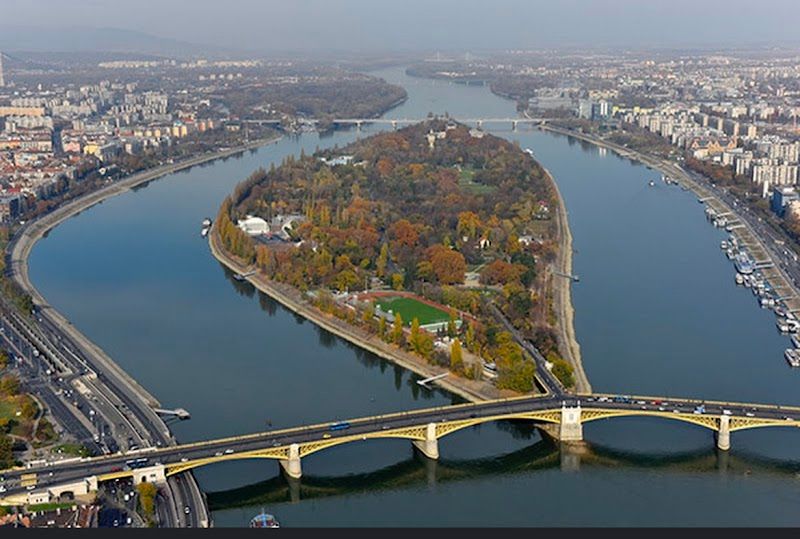
Margaret Island
Margaret Island is Budapest's 2.5km green oasis in the Danube, completely car-free and circled by a 5.3km running track that locals use religiously. You'll find genuine thermal baths at Palatinus (not tourist-trap pools), ruins of a 13th-century Dominican convent, a musical fountain that performs hourly in summer, and surprisingly well-maintained gardens at the south end. The island works as both active recreation and lazy afternoon wandering, with pedal carts available for HUF 1,500/hour. The atmosphere shifts dramatically as you move around: the north end feels like a neighborhood park where families picnic and kids feed ducks, while the middle section around the fountain gets crowded with tour groups. The thermal baths area has that authentic Hungarian spa vibe, locals reading newspapers between soaks. Walking the full perimeter takes 90 minutes and gives you everything from medieval ruins to modern playgrounds, plus constant Danube views. Most guides oversell the Japanese Garden, it's pleasant but small and not worth a special trip. The real value is using this as your Budapest exercise spot or afternoon escape from city noise. Skip the overpriced island restaurants and bring snacks. The musical fountain shows are fun but predictable after the first one, so don't plan your whole visit around them.
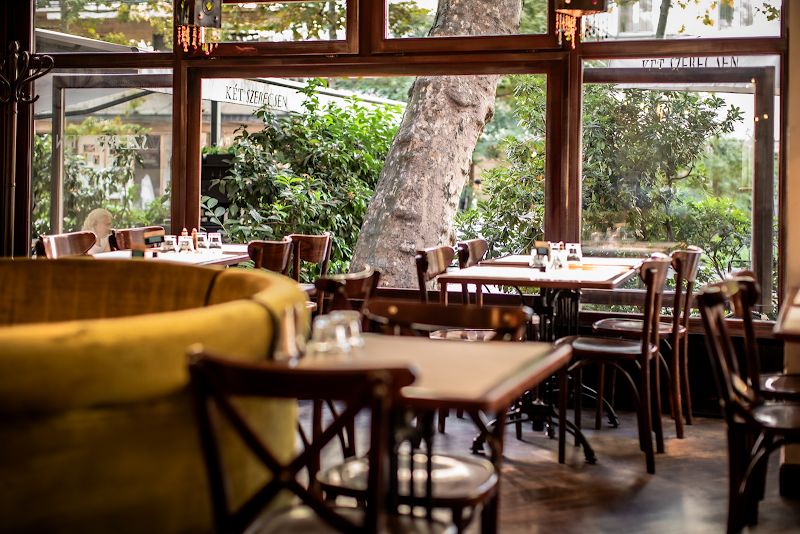
Két Szerecsen
Két Szerecsen occupies a narrow corner space on Nagymező utca where mismatched vintage chairs meet scratched wooden tables and the kitchen turns out surprisingly refined comfort food. The menu bounces between hearty Hungarian classics like their famous káposztás tészta (cabbage noodles with buttery paprika) and lighter Mediterranean small plates that actually taste fresh. You'll find proper vegetarian options here, a rarity in Budapest's meat-heavy restaurant scene, plus an excellent sourdough bread program that locals come specifically for. The space feels like eating in someone's eclectic living room, with warm lighting, books scattered on shelves, and servers who genuinely seem to enjoy working here. Tables are crammed close together, so you'll hear conversations in three languages while picking at their addictive hummus or waiting for the slow-cooked goulash. The weekend brunch transforms the place into a leisurely social hub where friends linger over prosecco and eggs Benedict until mid-afternoon. Most reviews oversell the dinner service, which can feel rushed when busy. Come for weekend brunch instead: unlimited prosecco for HUF 2,900 makes it Budapest's best brunch deal, and the kitchen has more time to get dishes right. Skip the overpriced evening wines (HUF 1,200+ per glass) and stick to their excellent coffee program. Book ahead for weekend brunch or you'll wait 45 minutes minimum.
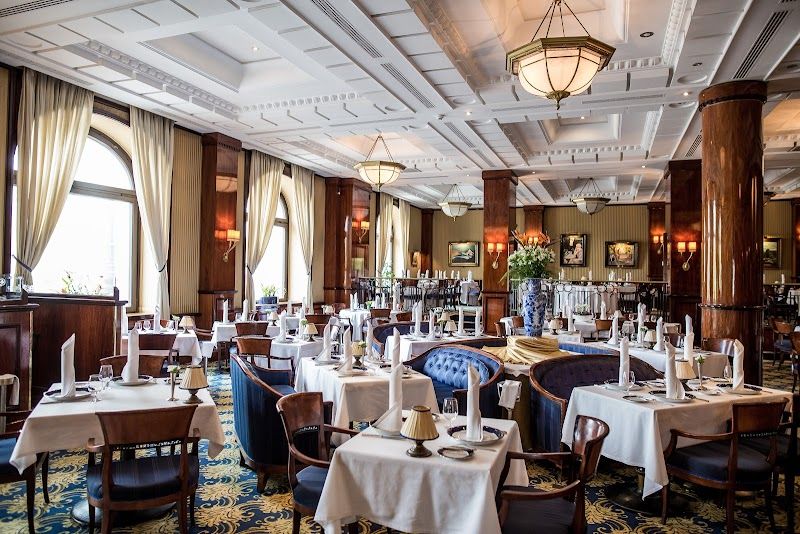
Gundel Étterem
Gundel has been serving Budapest's elite since 1894, and it's genuinely earned its reputation as Hungary's most celebrated restaurant. You'll dine in stunning Art Nouveau rooms where the Hapsburg aristocracy once ate, surrounded by original stained glass and ornate woodwork. The kitchen specializes in elevated Hungarian classics: their famous Gundel palacsinta (crepes with walnut, raisin, and rum filling topped with chocolate sauce) was invented here, and dishes like venison goulash with juniper and duck liver with tokaj wine sauce represent centuries of refined Magyar cooking. Stepping inside feels like entering a Belle Époque time capsule where white-gloved waiters glide between tables set with crisp linens and crystal stemware. The main dining room maintains an almost ceremonial formality (jackets required at dinner), while the garden terrace offers the same exceptional food in a more relaxed setting. Service moves at an unhurried, old-world pace that matches the surroundings. You'll hear multiple languages at neighboring tables as diplomats and visiting dignitaries work through multi-course meals. Most guides won't mention that dinner here costs HUF 25,000-35,000 per person, making it Budapest's priciest restaurant by far. Skip the wine pairings unless money's no object: individual glasses start at HUF 3,500. The Sunday brunch buffet (HUF 14,900) offers much better value, giving you access to the gorgeous dining room and many signature dishes at half the price, plus unlimited sparkling wine.
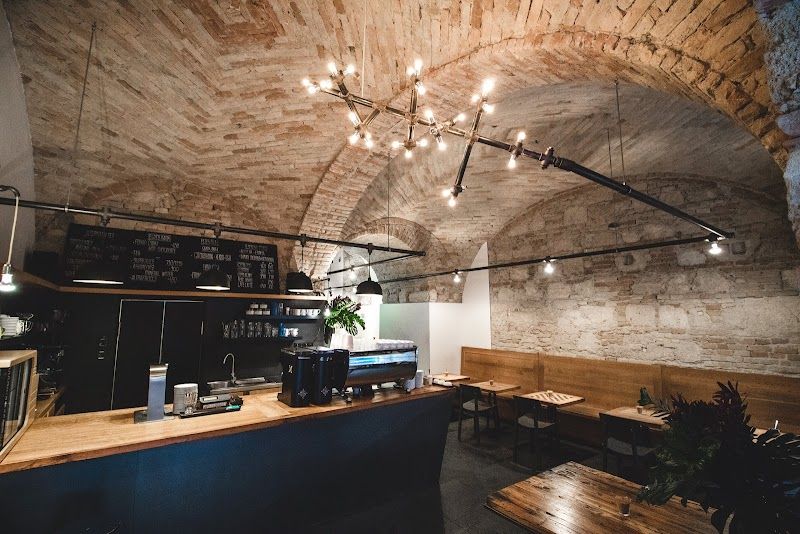
Espresso Embassy
Espresso Embassy occupies a sleek corner space on Arany János Street, where Budapest's most serious coffee professionals gather for their daily ritual. You'll find meticulously sourced single-origin beans from rotating farms, prepared by baristas who can explain terroir like sommeliers discuss wine. The space feels deliberately minimal: concrete floors, exposed brick, industrial lighting, and zero distractions from the coffee itself. No elaborate breakfast menu or Instagram-bait desserts, just exceptional flat whites (HUF 1,200) and pour-overs that justify the reputation. The counter dominates the narrow interior, where you'll watch baristas work with precision scales and temperature-controlled kettles. Morning regulars include local roasters, cafe owners, and developers from nearby offices, creating an atmosphere that's focused but friendly. The espresso machine hisses constantly, filling orders for cortados and cappuccinos while filter coffee drips slowly into glass vessels. You can sit at the few window seats or take your drink to the small outdoor tables when weather permits. Most coffee guides miss that this isn't a lingering spot, it's a pilgrimage site for serious caffeine devotees. Skip the weekend crowds when casual visitors slow down service, instead visit weekday mornings between 8-10am when the pros come through. The single-origin espressos change weekly and cost HUF 800-900, but they're worth trying over standard blends. Don't expect wifi or laptop-friendly vibes, this place prioritizes turnover and coffee quality above coworking convenience.
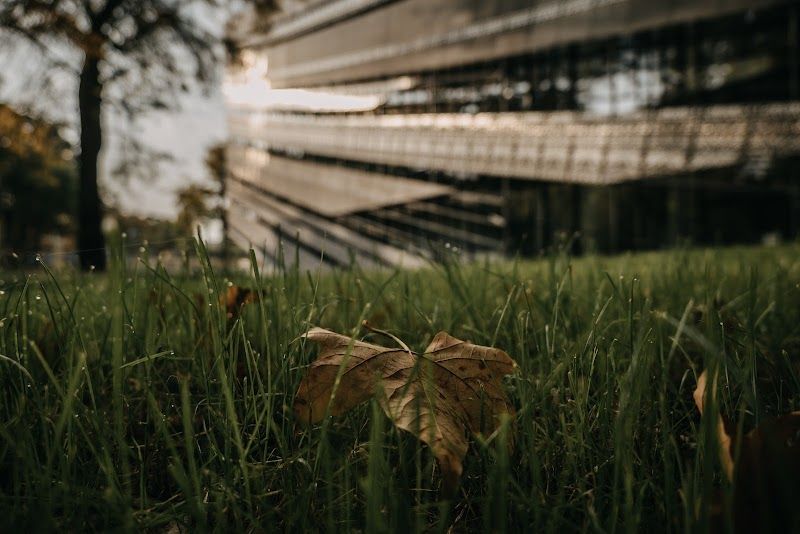
Museum of Ethnography
Budapest's newest major museum occupies a stunning 2022 building that looks like a spaceship landed in City Park. The curved glass facade and grass-covered roof house Hungary's extensive ethnographic collections, including traditional folk costumes, rural household items, and craftwork from every corner of the country. You'll also find rotating exhibitions comparing Hungarian culture with other European traditions, plus contemporary pieces that bridge old and new. The experience starts with the architecture itself: the central atrium spirals upward through multiple levels, creating natural viewing points as you move between galleries. The permanent collection flows logically from ancient Magyar traditions through regional variations, with excellent English signage throughout. The building's environmental design keeps everything naturally lit and surprisingly quiet, even when busy. The rooftop terrace offers panoramic views over Heroes' Square and the park below. At HUF 3,200 for adults, it's reasonably priced for what you get, but honestly, half the exhibitions feel academic rather than engaging. The contemporary ethnography section often disappoints with sparse displays. Focus your time on the traditional costume galleries and the temporary exhibitions, which are usually stronger. The building tour (free with admission) is actually more interesting than some of the permanent displays.
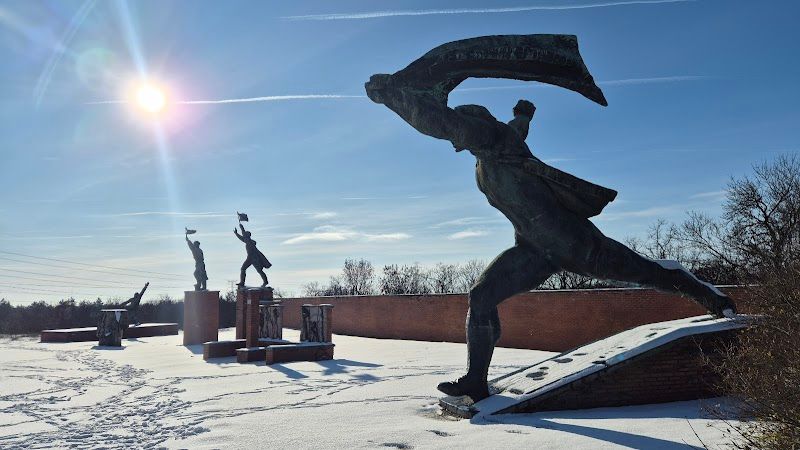
Memento Park
Memento Park houses 42 Communist statues that once dominated Budapest's streets and squares, removed after 1989 and relocated to this open-air graveyard of ideology. You'll walk among towering Lenin and Marx monuments, heroic Red Army soldiers frozen mid-stride, and a replica of the Stalin Grandstand where the dictator once reviewed parades. The collection reads like a greatest hits of Socialist Realist art, complete with original pedestals and plaques that take themselves very seriously. The park feels deliberately awkward, designed by architect Ákos Eleőd to showcase these monuments without glorifying them. You'll meander along curved paths past oversized bronze workers raising hammers and mothers cradling socialist children, while classical music plays from hidden speakers. The visitor center's 20-minute documentary about secret police surveillance techniques is genuinely chilling, featuring actual footage of agents training to tail suspects. There's also a bright yellow Trabant car for photos that everyone seems to love. Most guides oversell this as essential Budapest viewing, but honestly, 90 minutes is plenty unless you're deeply into Cold War history. The statues start looking repetitive after the first few giants, and the HUF 1,500 entry fee feels steep for what amounts to a sculpture garden with political context. Skip the overpriced cafe and bring water. The gift shop's Communist kitsch (HUF 500-3,000) is either hilarious or deeply tasteless, depending on your perspective.
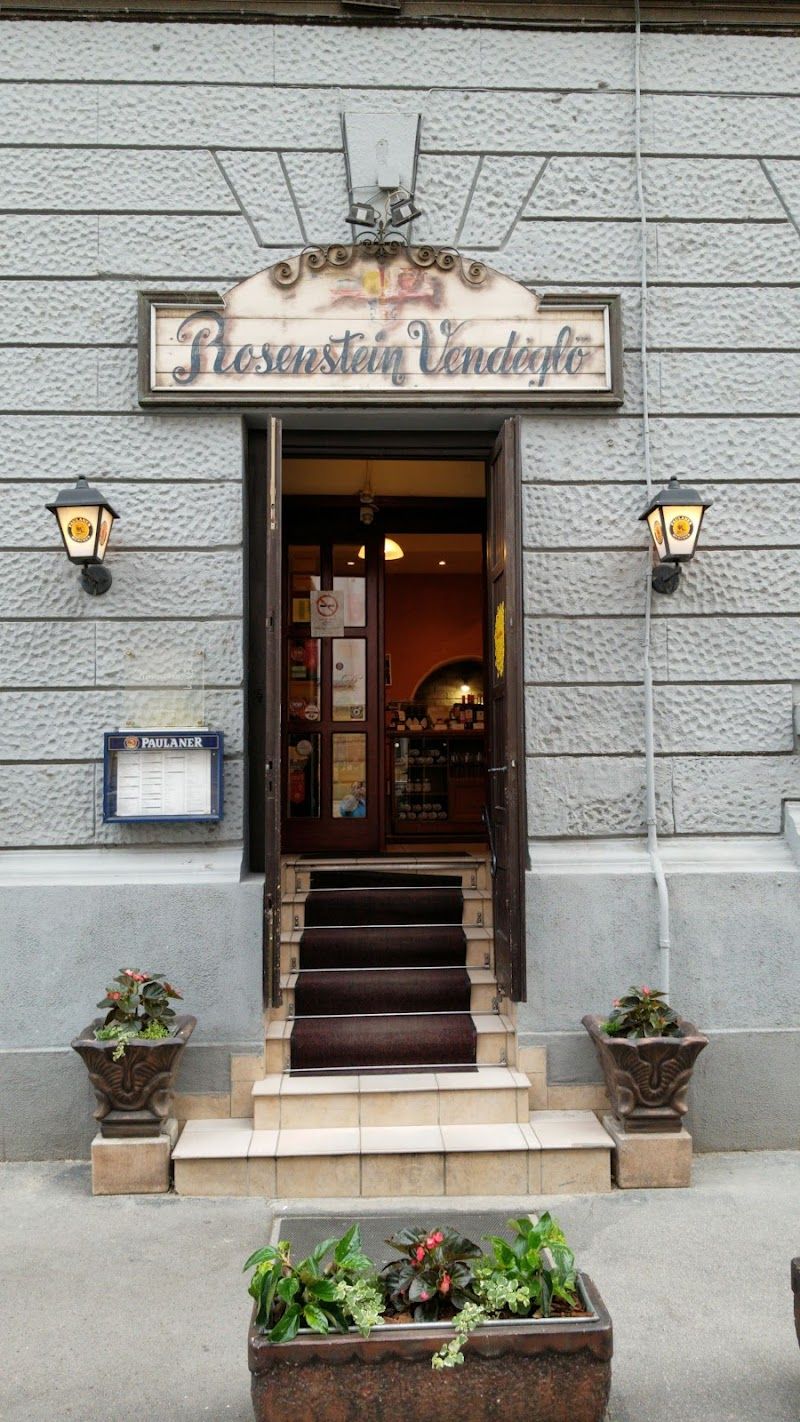
Rosenstein Vendéglő
Rosenstein Vendéglő is where three generations of the same Jewish-Hungarian family have been serving authentic dishes from grandmother Margit's recipes since 1994. You'll find traditional goose liver, cholent (Saturday Sabbath stew), and the city's best flódni layered cake in a dining room lined with decades of family photos. The restaurant sits near Keleti station, away from the tourist crowds but close enough to reach easily. Walking in feels like entering someone's home rather than a commercial restaurant. The family members cook, serve, and chat with regulars who've been coming for years. The atmosphere stays warm and unhurried, with conversations flowing between tables and the kitchen. You'll hear Hungarian, German, and English mixing naturally as three generations of Rosensteins move between preparing plates and greeting guests. Most guides focus on the cholent, but the goose dishes are what locals really come for. The flódni costs around HUF 1,200 and easily serves two people, though portions here are generous across the board. Skip the touristy Jewish Quarter restaurants for this genuine family operation. The menu changes based on what's seasonal and what grandmother's recipe collection offers that day.
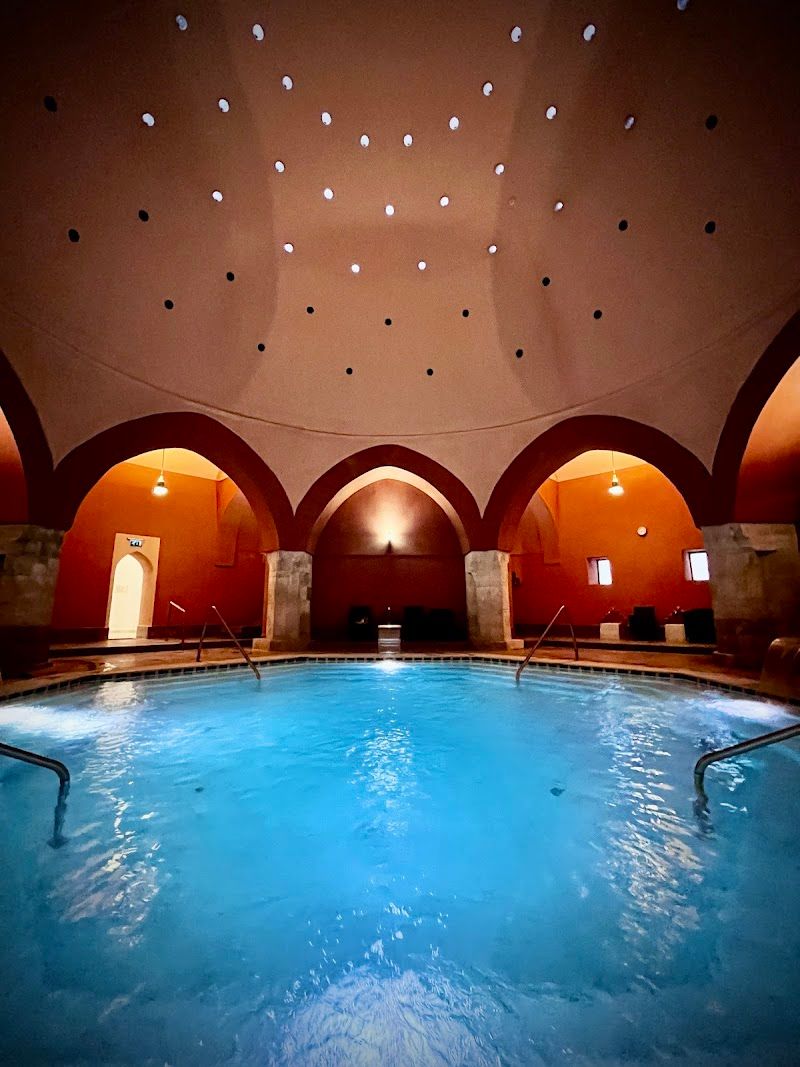
Veli Bej Fürdő
Veli Bej sits in a 450-year-old Ottoman building that feels like stepping into a time capsule, complete with original stone arches and thermal springs that have bubbled up since the 16th century. You'll find six pools ranging from a shocking 16°C plunge pool to a muscle-melting 42°C hot bath, plus traditional Turkish steam rooms and a Finnish sauna. The architecture alone justifies the visit: vaulted ceilings, weathered stone, and that unmistakable sense you're soaking where Ottoman soldiers once relaxed. The experience flows naturally from hot to cold and back again, following centuries-old bathing traditions. Locals move methodically between pools like they're following a sacred ritual, spending 10 minutes in the hottest bath before shocking their system in the ice-cold plunge. The steam room gets properly foggy (you can't see two feet ahead), while the sauna runs authentically hot. Unlike the tourist-packed Széchenyi, conversations here happen in hushed Hungarian. Most guides don't mention the steep entry stairs or that towel rental costs extra HUF 1,000. The 5,500 HUF admission (about EUR 14) includes locker access, but private cabins cost an additional 500 HUF. Skip the overpriced massage services and focus on the pools themselves. The real magic happens in those temperature transitions that leave you feeling like you've reset your entire nervous system.
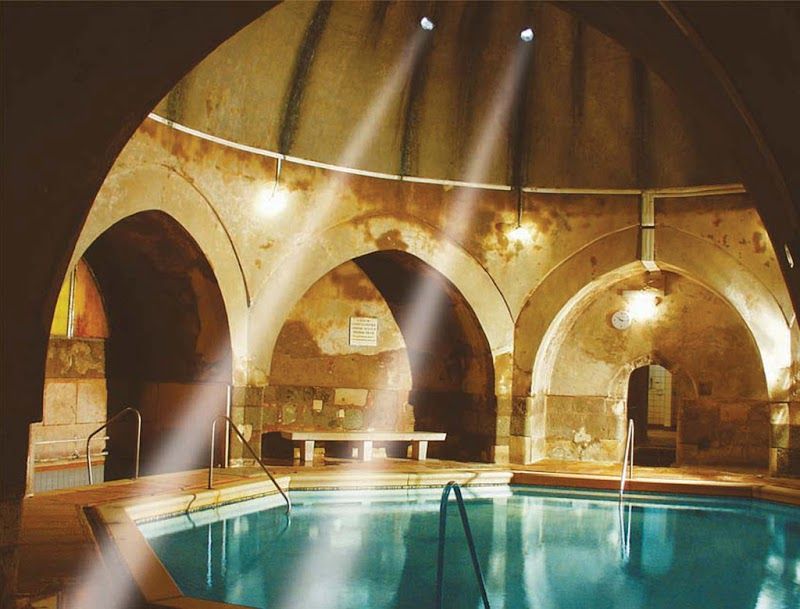
Király Fürdő
Király Fürdő is Budapest's most authentic slice of Ottoman history, a working Turkish bath that's operated continuously since 1565. You'll soak in the same octagonal pool under the original four-pillared dome where Hungarians have been bathing for centuries. The thermal water reaches 40°C and feels genuinely therapeutic, not touristy. This isn't Széchenyi's Instagram crowds: it's old Hungarian men playing chess between soaks and locals who've had the same spot for decades. The experience feels like stepping into medieval Budapest. You enter through a modest door on Fő utca, pay your 5,000 HUF, and descend into dimly lit chambers where steam rises from ancient stone pools. The main octagonal bath sits under that famous dome with four marble columns, while smaller pools at different temperatures line the walls. It operates on alternating gender days, so you'll share the space with maybe 20 people maximum. The atmosphere is meditative, almost sacred. Most guides romanticize this place, but here's the reality: it's genuinely local but also genuinely basic. No fancy amenities, no English-speaking staff, and the facilities are clean but spartan. The water quality is excellent, but don't expect Gellért's grandeur. Come for authenticity, not luxury. Weekday mornings are perfect for the real experience when regulars claim their usual spots and you can actually hear the water echoing off 450-year-old stones.
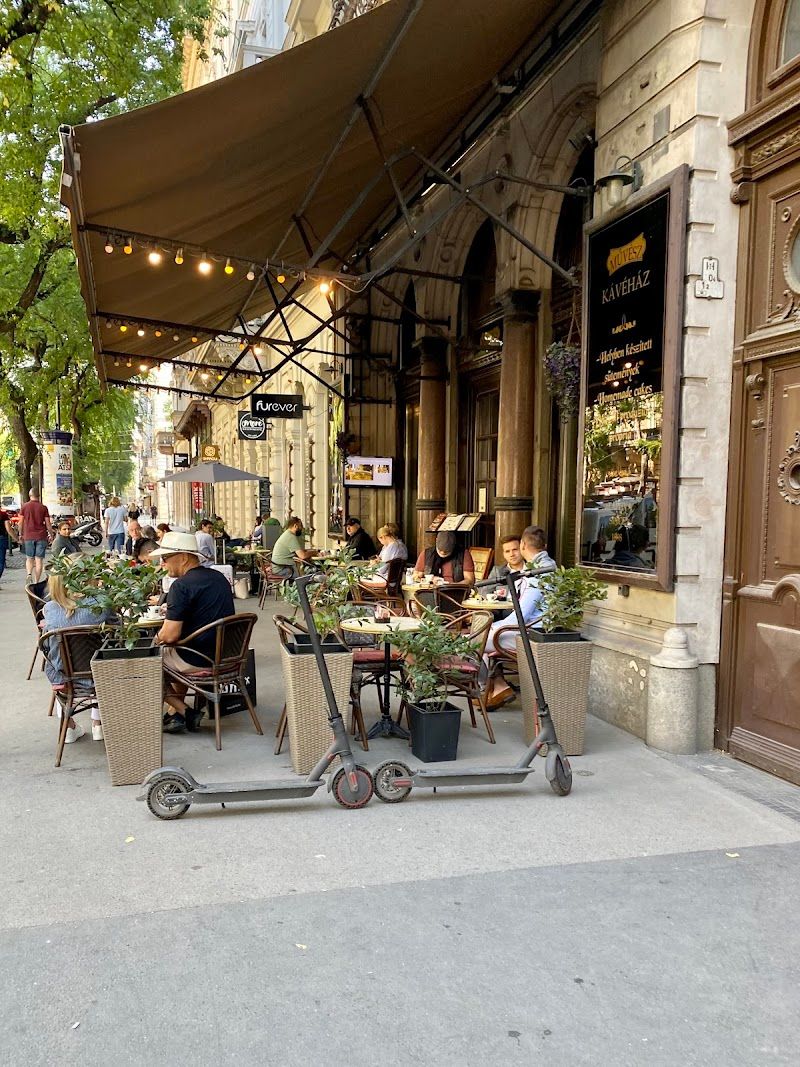
Művész Kávéház
Művész Kávéház sits directly across from the Hungarian State Opera House, serving the same Belle Époque café culture it has since 1898. You'll find authentic Central European pastries like dobostorta (7-layer sponge cake, 1,200 HUF) and kürtőskalács (chimney cake, 800 HUF) alongside proper Viennese coffee in a space that feels genuinely local rather than touristy. The original dark wood paneling and curved booth seating create an atmosphere where pre-opera rituals still happen daily. When you walk in, the smell of fresh strudel hits immediately, and you'll notice locals reading newspapers in corner booths while opera singers occasionally warm up at back tables. The service moves at old-world pace, waiters wear proper vests, and conversations happen in hushed tones that respect the space's artistic heritage. Window seats offer perfect people-watching along Andrássy Avenue, especially when opera-goers emerge in evening dress. Most guides push you toward New York Café, but Művész gives you the same Belle Époque experience without tour groups and inflated prices. Skip the lunch menu (it's mediocre Hungarian standards) and stick to coffee and pastries. A cappuccino costs 650 HUF, reasonable for this location. The best tables are the curved booths near windows, but they're not reservable, so timing matters more than planning.
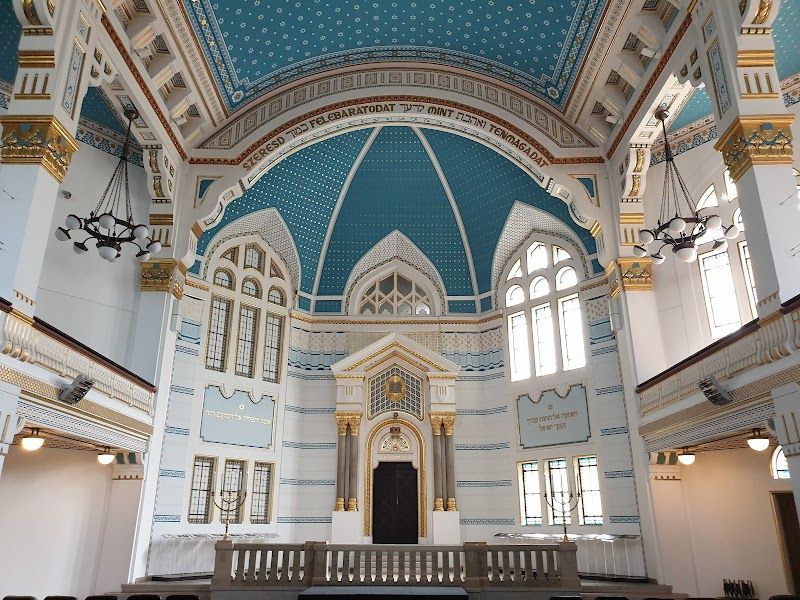
Holocaust Memorial Center
The Holocaust Memorial Center occupies a beautifully restored 1920s synagogue on Páva Street, combining the original sacred space with a striking modern glass wing. You'll walk through chronological exhibitions that trace Hungary's Jewish community from pre-war life through deportation and survival, with personal testimonies playing through headphones and original artifacts displayed throughout. The centerpiece is the preserved synagogue sanctuary itself, where 600,000 names of Hungarian Holocaust victims cover the walls in an overwhelming display of loss. The visit flows from the modern entrance through temporary exhibitions before entering the main permanent display in the synagogue. The atmosphere is appropriately somber but never exploitative, letting survivors' recorded voices tell their stories while you examine letters, photographs, and personal belongings. The central courtyard features a memorial wall etched with deportation details from Hungarian towns, and the contrast between the sleek modern wing and the restored 1920s architecture creates a powerful visual timeline. Most guides don't mention that this place gets emotionally heavy fast, so don't rush through if you're genuinely engaging with the material. The audio guide is included and worth using, especially for the survivor testimonies that play in specific rooms. Skip the gift shop unless you're buying books, the selection is limited and overpriced. Entry is completely free, which makes the high production value even more impressive.
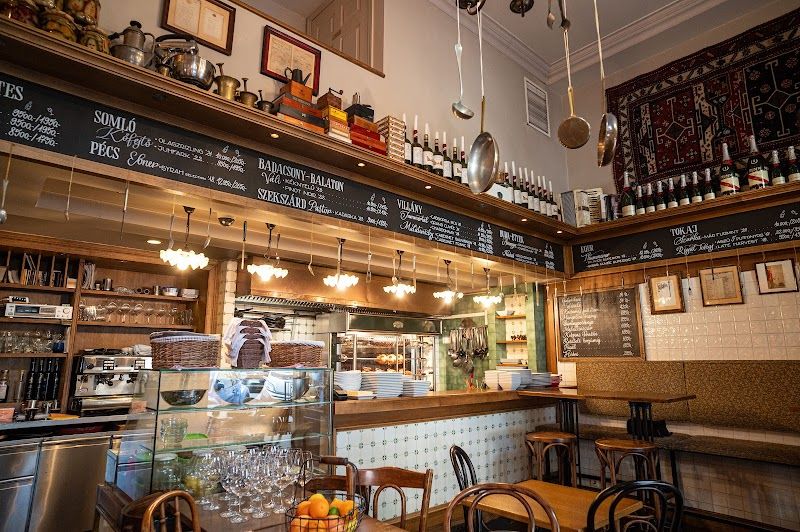
Kispiac Bisztró
Kispiac Bisztró operates exactly like a proper neighborhood restaurant should: no English menu hanging outside, no photos of goulash in the window, just locals queuing for lunch specials under HUF 3,000. The kitchen builds its weekly menu around whatever looks best at Hold utca market that morning, so you'll find seasonal Hungarian dishes that most tourist restaurants wouldn't bother with. Chef Zoltán treats vegetables like they matter, which is refreshingly rare in Budapest's meat-heavy dining scene. The dining room feels like eating in someone's slightly cramped living room, with mismatched chairs and tables packed close enough that you'll overhear conversations in three languages. Service moves at Hungarian pace: slow, deliberate, and utterly unbothered by your schedule. The daily specials get scrawled on a small chalkboard in Hungarian only, and the server will patiently explain each dish if you ask. You'll sit elbow to elbow with office workers, university professors, and the occasional food-savvy tourist who stumbled in by accident. Most food guides miss this place entirely, which keeps prices honest and the atmosphere authentic. Skip dinner unless you speak Hungarian; lunch is when they shine with the napi menü at HUF 2,400 for soup and main. The weekend crowd shifts more international, so weekday lunch gives you the real experience.
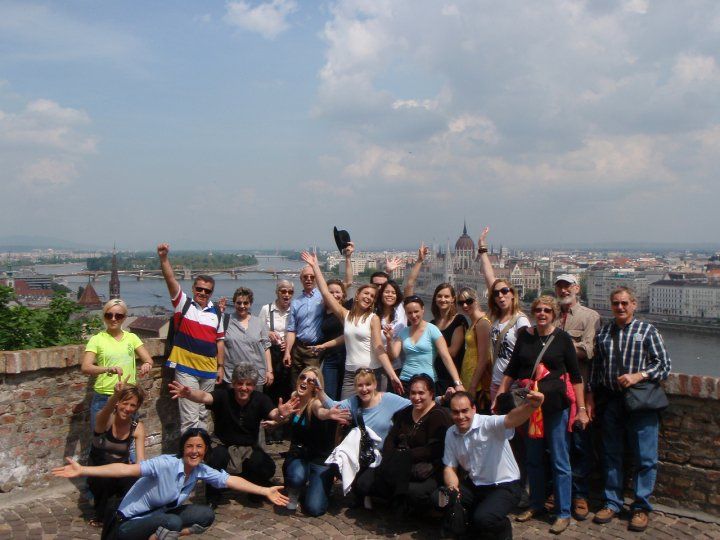
Budapest Walking Tour: Pest Highlights
A 2-3 hour guided walking tour of central Pest covering the major landmarks: Parliament, St Stephen's Basilica, Chain Bridge, the Danube Promenade, the Hungarian State Opera, Andrássy Avenue, and Heroes' Square (or stops short for shorter formats). Most operators run free walking tours (tip-based, EUR 10-15 expected per person at the end) and paid tours (EUR 18-30 per person, smaller groups, more in-depth historical commentary). The free tours leave from the Vörösmarty Square statue at 10 AM and 2:30 PM daily; you do not need to book - just show up. Paid options (Strawberry Tours, Generation Tours, Free Budapest Tours) leave from various central points. 90 minutes is the minimum to make sense of central Pest geography for a first-time visitor.
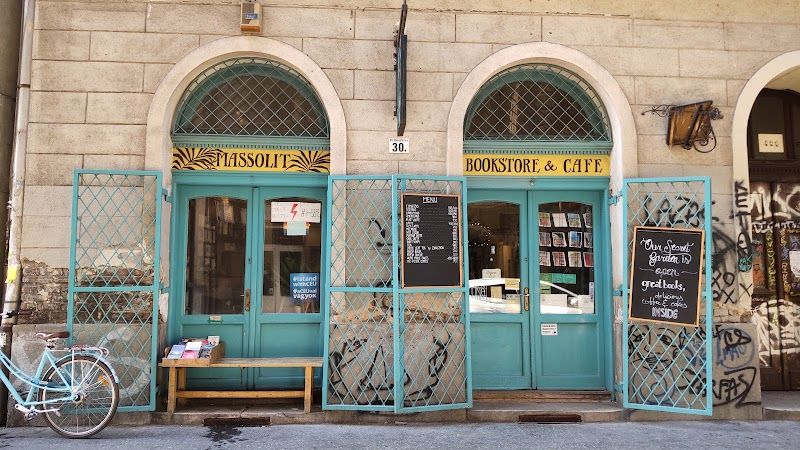
Massolit Books & Café
Massolit Books & Café occupies a cozy corner space in the Jewish Quarter, combining a serious English-language bookstore with a relaxed café that actually gets both parts right. You'll find floor-to-ceiling shelves packed with new releases, quality used books, and excellent Hungarian literature in translation, plus comfortable reading nooks scattered throughout. The café serves proper coffee, fresh bagels, quiche, and all-day breakfast at prices that won't shock you: coffee and cake run 800-1,500 HUF, making it one of the neighborhood's genuine bargains. The atmosphere strikes that perfect balance between literary coffeehouse and neighborhood hangout. Locals camp out with laptops, travelers browse the shelves with cappuccinos in hand, and the mix of languages creates an authentically international vibe without feeling touristy. The space flows naturally between café tables and reading areas, so you can easily shift from breakfast to book browsing. Staff know their inventory well and offer solid recommendations if you ask. Most guidebooks oversell the "bohemian café" angle, but Massolit delivers substance over style. The book selection genuinely impresses, especially their Hungarian authors in English translation section, which beats what you'll find at tourist shops. Skip the peak afternoon hours (2-4 PM) when it gets cramped with digital nomads. Morning visits offer the best table selection and freshest pastries, plus you can actually hear yourself think.
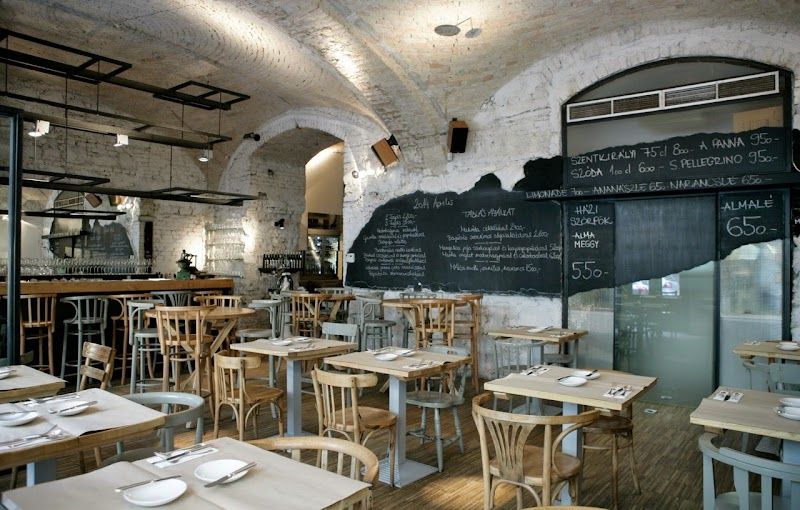
Mák Bistro
Mák Bistro occupies a sleek corner space just steps from St. Stephen's Basilica, where chef Tamás Széll applies precise French techniques to Hungary's best seasonal ingredients. You'll taste foraged mushrooms from the Bükk Mountains, heritage tomatoes from small Danube farms, and game that arrives daily from local hunters. The seven course tasting menu changes monthly, but expect dishes like wild boar with fermented elderberry or pike perch with grape must foam. Each course comes with Hungarian wine pairings that'll make you forget about international bottles. The dining room feels intimate with just 28 seats, warm lighting bouncing off exposed brick walls and copper accents. Service moves at a civilized pace over 2.5 hours, with servers explaining each ingredient's origin story. You'll watch the open kitchen team plate with tweezers while classical music plays softly. The wine pairings arrive in proper Riedel glasses, and the sommelier genuinely loves talking about obscure Hungarian producers from Somló and Tokaj regions. The tasting menu costs 32,000 HUF with wine pairings adding 18,000 HUF, making this Budapest's priciest dinner but worth every forint. Skip the à la carte options, they're underwhelming compared to the tasting menu's creativity. Book three weeks ahead for weekend slots. The lunch menu offers similar quality at 24,000 HUF if you want the experience without the full commitment.
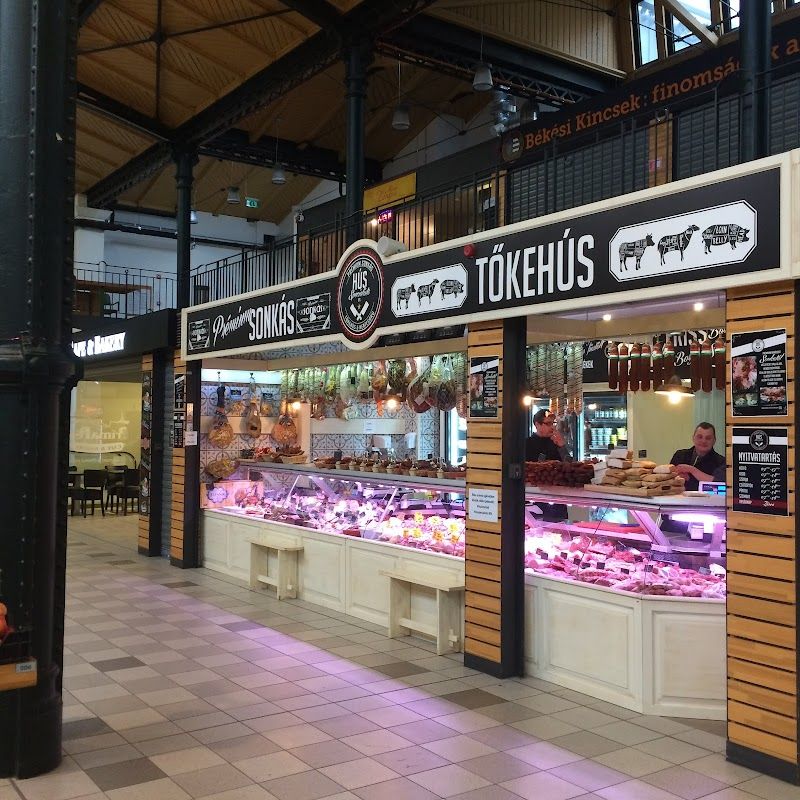
Klauzál téri Vásárcsarnok
Klauzál téri Vásárcsarnok is where locals in the Jewish Quarter actually shop for groceries, not where they pose for Instagram. You'll find proper Hungarian butchers slicing kolbász and hurka, vegetable stalls piled with seasonal produce, and a few lunch counters serving the kind of home cooking your Hungarian grandmother would make. The prices here are roughly half what you'd pay at Great Market Hall, and the vendors barely speak English. The market occupies a covered courtyard space that feels more like a neighborhood meeting point than a tourist attraction. Steam rises from the lunch counters where workers grab quick meals, elderly locals debate vegetable prices in rapid Hungarian, and butchers wrap purchases in brown paper. The atmosphere is purely functional: people come here to eat and shop, not to browse. You'll hear more Hungarian in five minutes than you would in most of Pest. Most travel guides completely ignore this place, which keeps it authentic but means you'll navigate without English signage or patient explanations. The lunch counters serve massive portions for 1,500-2,500 HUF, while the kolbász at the back right stall costs about 1,200 HUF per kilogram compared to 2,400 HUF at tourist markets. Skip this if you want polished market halls with English menus.
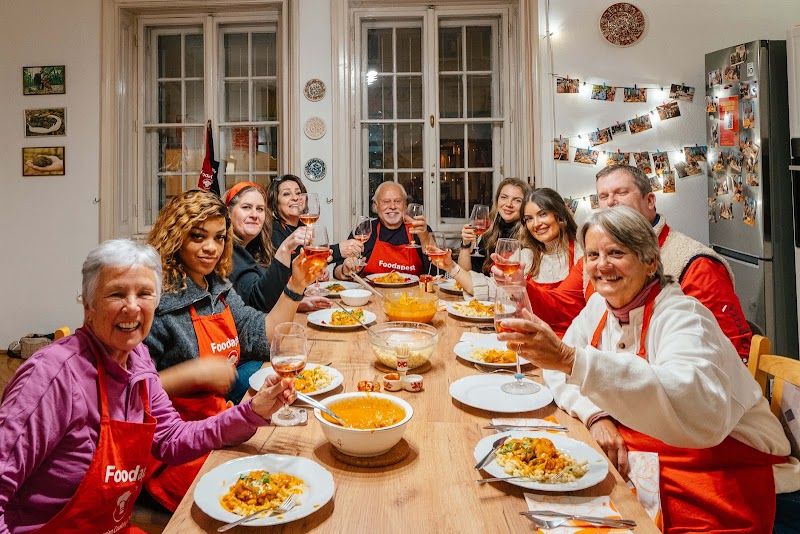
Budapest Food Tour: Market to Tavern
Three hours and 14 or more tastings from the Central Market Hall to a tavern lunch: a skip-the-line market stop of about 30 minutes, a local bakery, two restaurant stops for goulash and other classics, a wine and spirits tasting, and a chimney cake to close. Groups stay under 12, with departures at 11:30 and 17:00 and vegetarian versions on request. Look for the guide's red Foodapest bag.
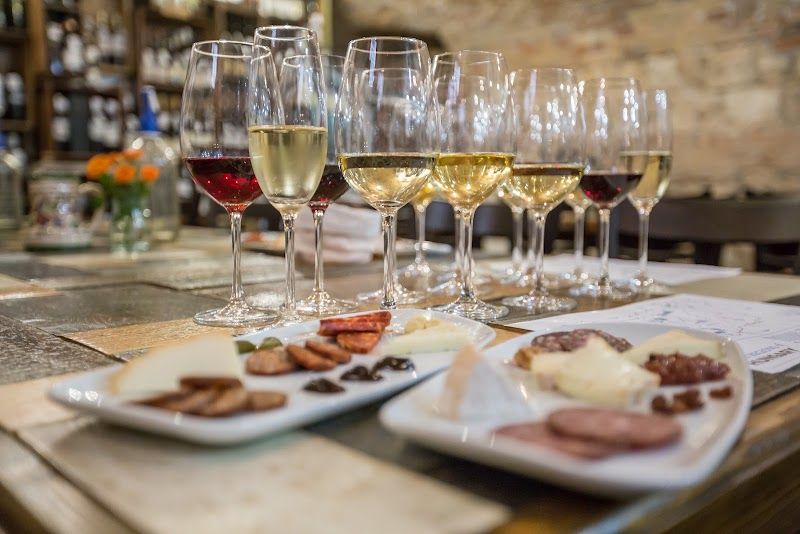
Budapest Culinary & Wine Walk
Budapest's oldest food tour, running since 2008: four hours and 8 stops from Central Market Hall tastings through lunch at a traditional butcher, cakes at a classic coffeehouse, and an award-winning chocolatier, ending with a sommelier-led tasting of three Hungarian wines, Tokaji aszú included, paired with artisan cheese at The Tasting Room. Groups cap at 8. Starts at 9:30, Monday to Saturday, with no Sunday or holiday departures.