Topography of Terror
Museum
About Topography of Terror
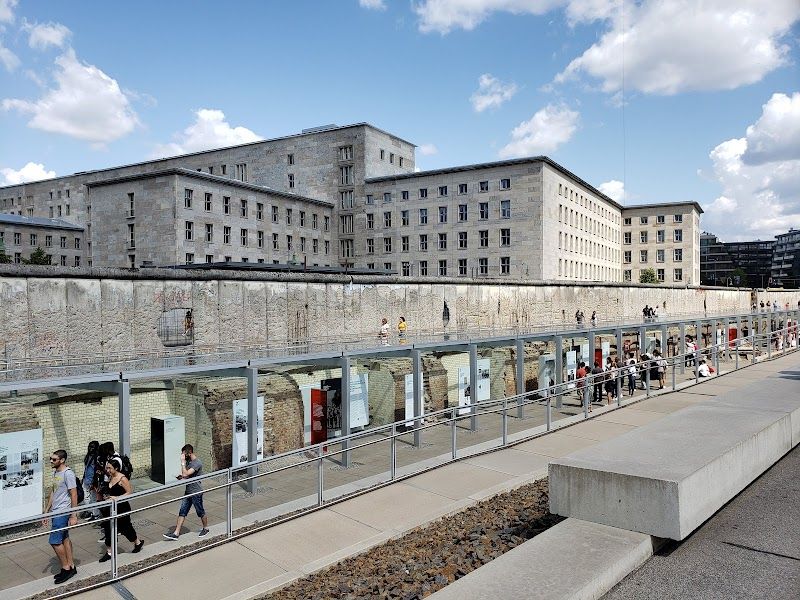
Built on the exact site of the former Gestapo and SS headquarters at Prinz-Albrecht-Strasse (now Niederkirchnerstrasse), this free museum documents how the Nazi terror apparatus functioned with photographs, documents, orders, and eyewitness accounts. A preserved section of the Berlin Wall runs along one side of the property, adding a second layer of German history to the site.
The exhibition is methodical, chronological, and devastating in its detail. It traces the rise of the SS and Gestapo from 1933, the systematic persecution of Jews, Roma, political opponents, and other targeted groups, the administration of the concentration camp system, and the organization of the Holocaust. It does not editorialize. It lets the documents speak: typed orders, photographed faces, bureaucratic memos that reduce human lives to logistics problems.
The building itself is a deliberate architectural statement. The simple, transparent structure by architect Peter Zumthor (replaced by Ursula Wilms after Zumthor withdrew) sits partially above the excavated cellars where prisoners were held and interrogated. You walk above the ruins. The outdoor exhibition along the preserved Wall section is separate from the indoor museum and covers the history of the site itself.
This is arguably the most important free museum in Germany. It receives over a million visitors a year and does not charge admission, a deliberate choice. Plan 90 minutes minimum. The documentation is text-heavy and emotionally demanding, so pace yourself. The audio guide (EUR3) is worthwhile for context, especially for the outdoor exhibition where the ruins require interpretation.
Skip the Queue
Live availability and skip-the-line options from our booking partners.
Booking powered by our partners. DAIZ may earn a commission.