Royal Palace Amsterdam
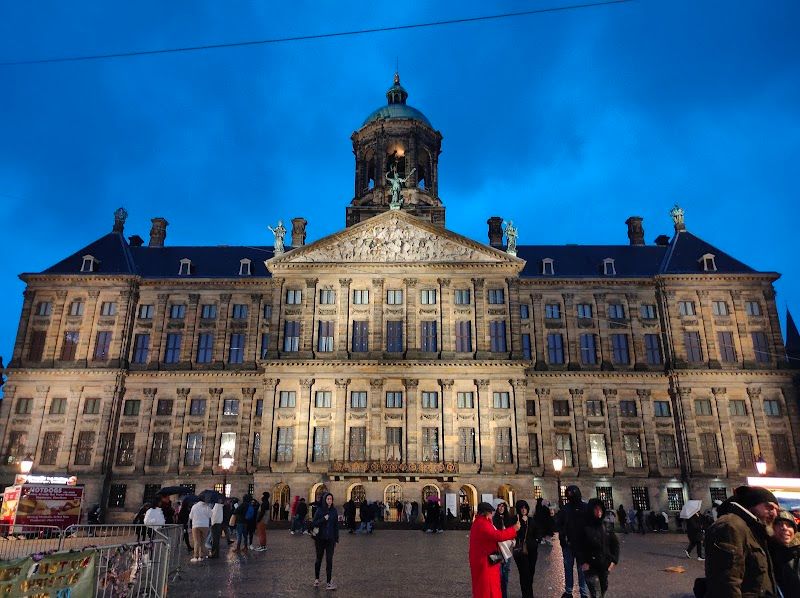
Built as the city hall during the Dutch Golden Age, converted to a royal palace by Napoleon's brother Louis in 1808, and still used for state receptions today.
About Royal Palace Amsterdam
Built as the city hall during the Dutch Golden Age, converted to a royal palace by Napoleon's brother Louis in 1808, and still used for state receptions today. The Citizens' Hall on the ground floor has a marble floor inlaid with maps of the world as the Dutch saw it: Amsterdam at the center, with the Eastern and Western hemispheres spread beneath your feet. The chandeliers, the Atlas carrying the globe, and the sheer scale of the interior are genuinely impressive.
The building was designed by Jacob van Campen in 1648 and required 13,659 wooden piles driven into the sandy soil to support its weight (every Dutch schoolchild knows this number). The architect intended it to rival the great buildings of Rome, and he pulled it off. The magistrates' chambers, the tribunal, and the bankruptcy room (yes, they had one) are all preserved. The paintings on the walls and ceilings by Ferdinand Bol and Govert Flinck tell the story of Amsterdam's rise as a trading power, with a healthy dose of civic pride and mythological allegory.
Entry is €12.50, the audio guide is included and worth using, and the palace is rarely crowded. The contrast between this and other European palaces is striking. There is no Versailles-level gilt and spectacle here. The decoration is restrained, Protestant, and focused on civic duty rather than royal ego. It tells you everything you need to know about Dutch values in the Golden Age. Check opening hours before visiting, as the palace closes without notice for state events.
Skip the Queue
Live availability and skip-the-line options from our booking partners.
Booking powered by our partners. DAIZ may earn a commission.