Turin gets overlooked by tourists rushing between Milan and the Alps, but locals know this former Italian capital holds some of the country's finest attractions. After living here for years and watching visitors waste time on mediocre sites while missing the genuinely exceptional ones, I've ranked Turin's top 10 attractions based on what actually delivers. This isn't about ticking boxes - it's about understanding why Turin deserves more than a drive-by.
1. Museo Egizio (Egyptian Museum) - The Global Runner-Up That Outshines Rome
The Egyptian Museum is Turin's crown jewel and the second most important collection of Egyptian antiquities in the world after Cairo. Located at Via Accademia delle Scienze 6, this isn't some dusty provincial museum - it's a institution that puts Rome's Egyptian collections to shame.
Entry costs EUR 15 and the museum opens Tuesday-Sunday 9:00-18:30 (closed Mondays). Book online during peak season because this place gets busy, and rightfully so. The collection includes the intact tomb of Kha and Merit, the papyrus collection that scholars consider among the finest globally, and the reconstructed Rock Temple of Ellesiya.
What sets this apart from other Egyptian museums is the modern presentation. The renovation completed in 2015 transformed dusty display cases into immersive experiences. The chronological layout actually makes sense, unlike many museums where you wander confused between dynasties.
Metro: Porta Nuova station, then 5-minute walk. The museum sits in Centro district, making it easy to combine with other central attractions.
2. Mole Antonelliana and National Cinema Museum - Turin's Defining Spire
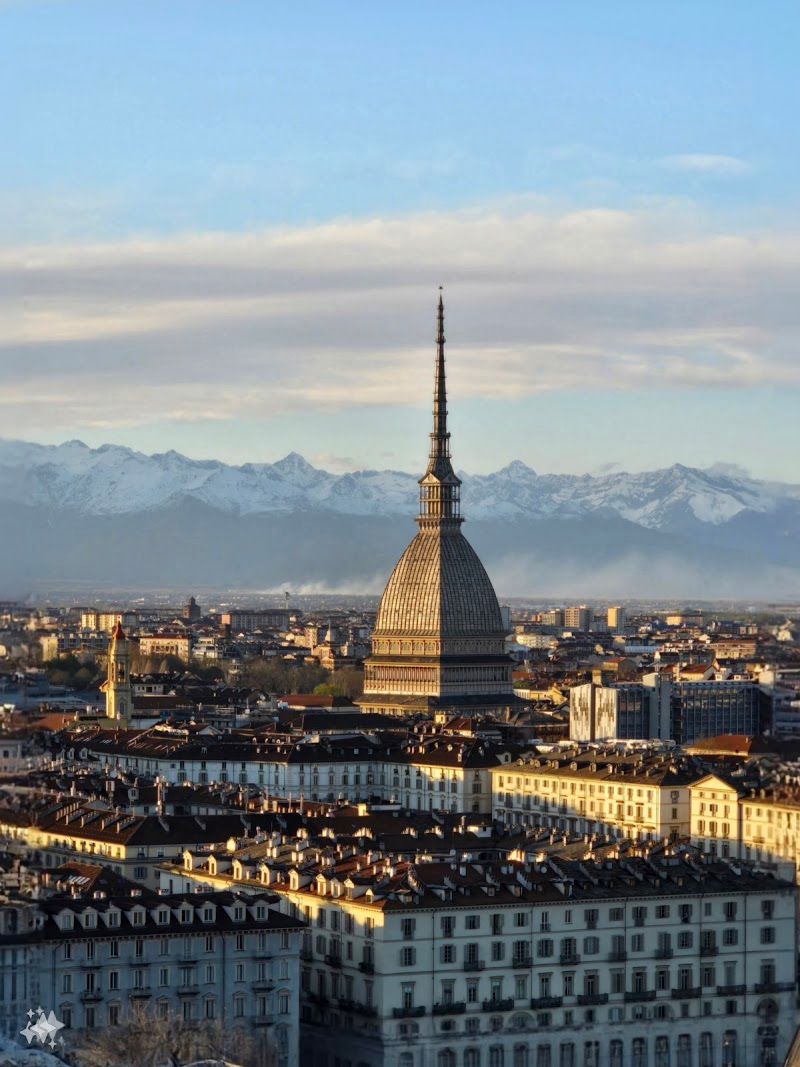
The Mole Antonelliana towers 167 meters above Turin and houses the National Cinema Museum. Originally designed as a synagogue in 1863, it became the city's visual anchor and now offers the best views in Turin.
Cinema Museum entry costs EUR 11, which includes the panoramic elevator to the dome. The museum itself is genuinely interesting - interactive displays trace film history from magic lanterns to modern cinema. But most visitors come for the elevator ride to the observation deck at 85 meters.
The views justify the climb: the Alps frame the city to the west, while the Po River curves through Turin below. On clear days, you can spot Monte Bianco. Visit late afternoon when the light hits the Alps, avoiding midday when heat haze obscures the mountains.
Address: Via Montebello 20, in the Mole & Vanchiglia neighborhood. Open Tuesday-Friday 9:00-20:00, weekends until 23:00.
3. Royal Palace of Turin and Piazza Castello - Savoy Power on Display
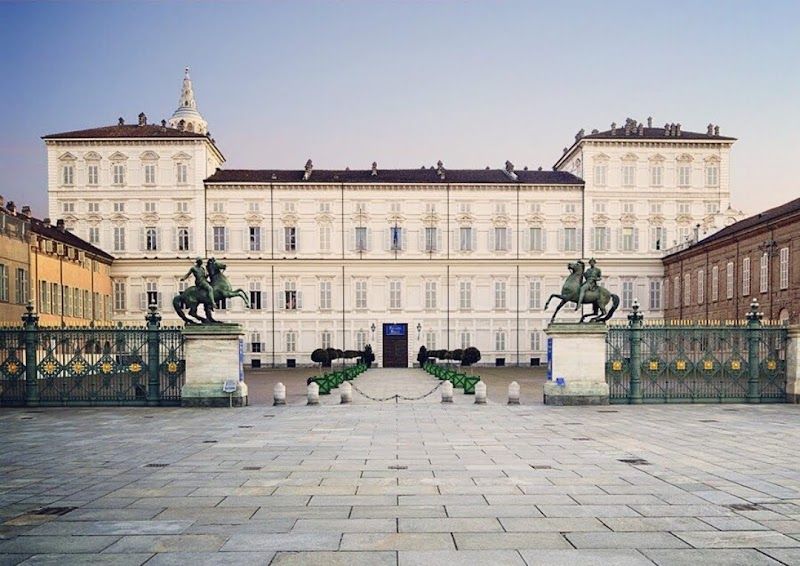
The Royal Palace served as the primary residence of the House of Savoy when Turin was Italy's first capital. Entry costs EUR 15 for the state apartments, royal armory, and gardens.
What makes this palace exceptional is the intact Savoy decoration - frescoed ceilings, period furniture, and the largest armory collection in Europe. The Throne Room and Ballroom showcase the wealth that funded Italian unification. The palace also houses original works by Van Dyck and Caravaggio.
The palace anchors Piazza Castello, Turin's central square surrounded by arcades. This isn't just a pretty space - it's the geometric center of Turin's Baroque grid, with major streets radiating in perfect alignment.
Open Tuesday-Sunday 8:30-19:30. Combined tickets with other royal residences offer better value if you're visiting multiple sites.
4. Palazzo Madama - Medieval Fortress Meets Baroque Palace
Palazzo Madama tells Turin's architectural evolution in one building. The medieval towers date to the 1200s, while Juvarra's baroque facade was added in the 1700s. Entry costs EUR 10.
The highlight is the decorative arts collection - furniture, ceramics, and textiles that showcase Piedmontese craftsmanship. The medieval chambers in the basement reveal the original Roman gate foundations. Juvarra's grand staircase ranks among Italy's finest baroque interiors.
Located on Piazza Castello, it's walkable from the Royal Palace. Open Monday, Wednesday-Saturday 10:00-18:00, Sunday until 19:00. The building itself tells Turin's story better than any history book.
5. Venaria Reale - The Versailles of Piedmont
La Reggia di Venaria Reale is a UNESCO World Heritage Site located 10km north of Turin. Entry costs EUR 25 but includes the palace, gardens, and temporary exhibitions.
This palace complex was the Savoys' hunting lodge and summer residence. The restored baroque rooms showcase 17th-century court life, while the gardens span 60 hectares with fountains and period landscaping. The Great Gallery stretches 80 meters and ranks among Europe's most impressive palace interiors.
Take the SADEM bus from Porta Nuova station (EUR 6.5) or drive via A55 highway. Open Tuesday-Friday 9:00-17:00, weekends until 18:30. Plan a full day here - the palace and gardens deserve at least 4 hours.
Most tourists skip Venaria because it requires travel, but it surpasses Turin's city center palaces in scale and preservation quality.
6. Basilica di Superga - Hilltop Views and Tragic History
The Basilica di Superga crowns a hill 10km east of Turin. Built by Juvarra in 1731, it commemorates the Savoys' victory over French forces. The cog railway costs EUR 6 and climbs through forests to reach the basilica.
The baroque church itself is architecturally significant, but most visitors come for the views. Turin spreads below with the Alps forming a dramatic backdrop. On clear days, the panorama extends 200km.
Superga gained tragic fame in 1949 when a plane carrying the Torino football team crashed here, killing all aboard. A memorial marks the crash site.
The railway operates daily 9:00-20:00 from Stazione Sassi (reached by tram 15 from city center). Time your visit for late afternoon when the light illuminates the Alps.
7. GAM - Gallery of Modern Art - Italy's Overlooked Modern Collection
The GAM houses one of Italy's finest modern art collections. Entry costs EUR 10 for permanent and temporary exhibitions.
The collection spans 1800s to contemporary works, with strong holdings in Italian futurism and arte povera. International artists include Picasso, Klee, and Calder. The 1800s Italian collection reveals influences that shaped modern European art.
Located at Via Magenta 31, the museum occupies a renovated 1900s building. Open Tuesday-Sunday 10:00-18:00. Most tourists miss GAM because it's not in the historic center, but it rewards the short tram ride with genuinely important art.
The temporary exhibitions often showcase major international artists, making return visits worthwhile. Check their program before visiting Turin.
8. Porta Palazzo Market - Europe's Largest Open-Air Market
Porta Palazzo Market operates Monday-Friday 8:00-14:00 and Saturday until 19:30 in the Quadrilatero Romano neighborhood. This isn't a tourist market - it's where Turin shops for food.
The market spreads across multiple squares with sections for produce, meat, fish, cheese, and prepared foods. The quality rivals specialty shops at fraction of the cost. Try local specialties like toma cheese, bagna cauda ingredients, and Piedmontese wines.
The covered halls (Palazzo della Moda) house clothing and household goods. The architecture dates to the 1400s, making this one of Europe's oldest continuously operating markets.
Metro: Porta Palazzo station puts you directly at the market entrance. Bring cash and arrive hungry - the prepared food stalls serve excellent lunch for EUR 6-10.
9. Piazza San Carlo - Turin's Living Room
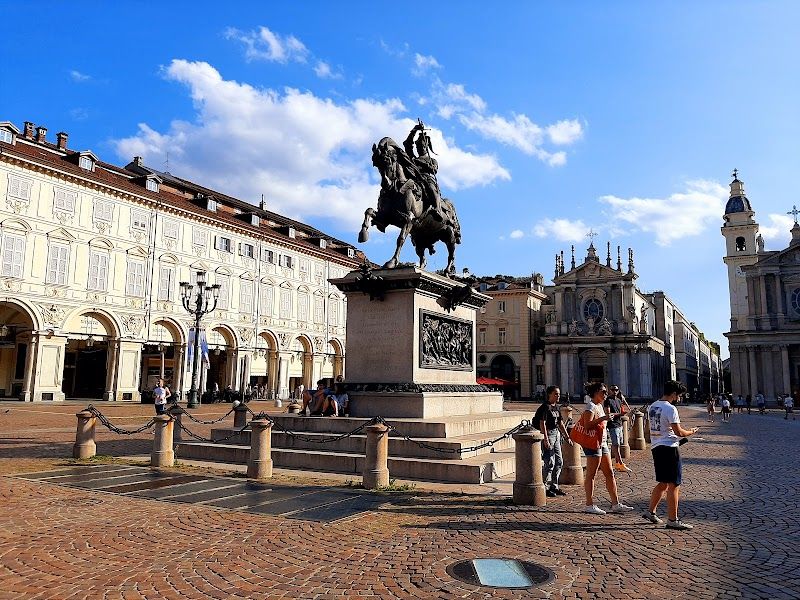
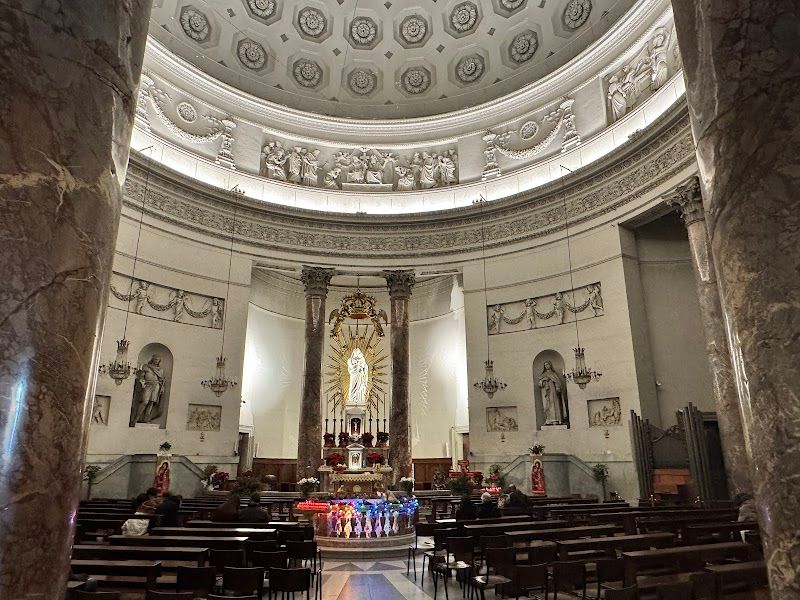
Piazza San Carlo exemplifies Turin's baroque urban planning. Twin churches anchor the southern end while uniform arcades line the rectangle. Locals call it Turin's living room, and the nickname fits.
The square's geometric perfection showcases Savoy city planning - every building height, arcade span, and sight line was calculated. The central statue honors Duke Emanuele Filiberto.
Historic cafes line the arcades, including Baratti & Milano, where gianduja chocolate was invented. The piazza is free to visit and perfectly positioned for combining with other central attractions.
Evening visits reveal the square's social function - locals gather for aperitivo while street musicians perform under the arcades. This is where you understand Turin's elegant character.
10. Parco del Valentino - River Views and Medieval Fantasy
Parco del Valentino stretches along the Po River in the San Salvario neighborhood. This 500-hectare park combines natural landscapes with architectural curiosities.
The Borgo Medievale is a detailed 1884 reconstruction of a 15th-century Piedmontese village, complete with castle, church, and workshops. While entirely fake, the craftsmanship impresses and kids love exploring the ramparts.
The park also houses Palazzo Valentino, now the Architecture Faculty, and the Fountain of the Twelve Months. Entry to the park is free, though the castle interior charges approximately EUR 5.
Metro: Marconi station provides easy access. The riverside paths are jogging or cycling, with bike rentals available near the park entrances.
Understanding Turin's Top Attractions: What Locals Know
Ranking Turin's best attractions means understanding what makes this city unique. Unlike Rome or Florence, Turin doesn't rely on ancient monuments or Renaissance masterpieces. Instead, it showcases baroque urban planning, Savoy royal culture, and industrial innovation.
The Egyptian Museum succeeds because it presents artifacts in a modern setting. The Mole Antonelliana works because it offers genuine spectacle - those Alpine views are unmatched in northern Italy. The royal palaces matter because they tell the story of Italian unification from Turin's perspective.
Smart Combination Strategies
Group attractions by location to minimize travel time. Centro district combines the Egyptian Museum, Royal Palace, and Piazza San Carlo in walkable distances. The Mole area pairs the Cinema Museum with riverside walks in Valentino Park.
The Torino+Piemonte Card costs EUR 25 for one day or EUR 35 for three days and includes public transport plus entry to 200+ museums. It pays for itself after visiting three major attractions.
When These Attractions Work Best
Turin's museums close Mondays (except GAM), so plan accordingly. Summer months offer longer opening hours but also crowds at major sites like the Egyptian Museum and Mole Antonelliana.
Spring and fall provide ideal visiting conditions - comfortable temperatures for walking between sites and clear Alpine views from elevated attractions. Winter visits work well for indoor attractions but limit outdoor sightseeing.
For a deeper dive into planning your Turin visit, check our complete first-time guide to Turin and 2-3 day itinerary. If food interests you as much as sightseeing, our Turin food and chocolate guide covers the culinary attractions that complement these cultural sites.
The Honest Truth About Turin Tourist Attractions
Turin rewards visitors who appreciate subtlety over spectacle. The city's attractions don't compete with Rome's Colosseum or Venice's Grand Canal for instant impact. Instead, they offer deeper satisfaction - the kind that comes from understanding a place rather than just photographing it.
The Egyptian Museum ranks globally but sits in a medium-sized Italian city. The Mole Antonelliana defines Turin's skyline but started as a failed synagogue project. The royal palaces showcase European baroque but in a city that lost political importance 150 years ago.
This contradiction - attractions in an understated setting - defines Turin's appeal. You get major cultural experiences without major tourist crowds, at least compared to Italy's primary destinations.
The real question isn't whether Turin's attractions are worth visiting, but whether you appreciate the kind of cultural depth Turin offers. If you prefer your history with chocolate, your views with Alpine backdrops, and your museums without tour groups, Turin's top attractions deliver exactly what you didn't know you were looking for.