Paris gets the headlines, but Lyon gets the food right. While tourists line up for overpriced bistros in the 1st arrondissement, the French take the TGV south to Lyon, where EUR 18 buys you tablier de sapeur and a bottle of Côtes du Rhône at a proper bouchon, and nobody cares if you can pronounce quenelles correctly.
Lyon food capital status didn't happen by accident. This city sits at the confluence of the Rhône and Saône rivers, making it a natural trading hub since Roman times. More importantly, it sits between Burgundy's wines, Bresse's chickens, and the Alps' cheeses. Geography made Lyon rich. Tradition made it France's gastronomic capital.
Lyon's Culinary Capital Foundation: Geography and History
Lyon became France's food capital because of where it sits on the map. The Rhône Valley connects Mediterranean olive oil and herbs with northern European butter and cream. The Saône brings Burgundy wines downstream. The Alps provide Beaufort and Reblochon cheeses, while Bresse, just an hour east, raises France's best chickens under strict AOC regulations.
This wasn't just convenient for trade routes. It created a unique cuisine that borrowed from everywhere but belonged distinctly to Lyon. Lyonnaise cooking uses butter like the north, olive oil like the south, and combines them in ways that make sense only here. The result is food that tastes French but feels distinctly Lyonnaise.
The silk trade made Lyon wealthy enough to eat well. From the 16th to 19th centuries, silk merchants and weavers in Croix-Rousse had money to spend on good food. They created a culture where lunch was serious business and dinner was an event. This wasn't peasant cooking or aristocratic excess. It was bourgeois cooking, which means it had to be both sophisticated and practical.
The Bouchon System: Lyon's Answer to Parisian Pretense
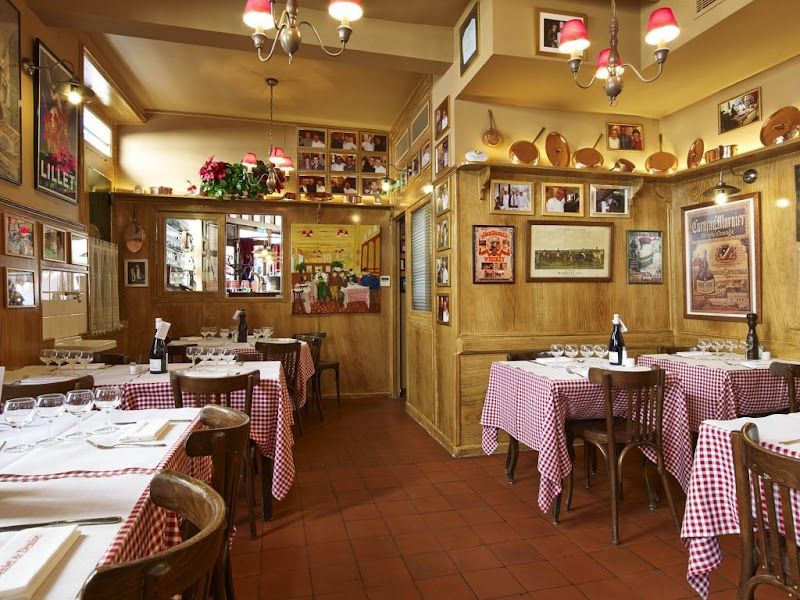
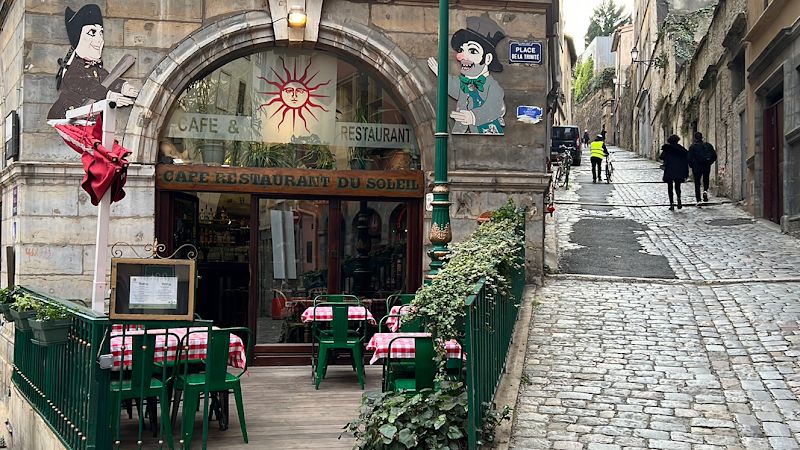
Bouchons are Lyon's traditional bistros, and they're the reason Lyon food reputation outlasts trends. These aren't cute restaurants with checkered tablecloths for tourists. They're working-class establishments that serve EUR 18-28 lunches to locals who know the difference between proper andouillette and tourist garbage.
A real bouchon serves tablier de sapeur (breaded and fried tripe), cervelle de canut (herb cheese spread), and quenelles de brochet (pike dumplings in cream sauce). The wine comes from the Rhône or Beaujolais, served in traditional pot glasses. The atmosphere is loud, the service is efficient, and the food is exactly what it was fifty years ago.
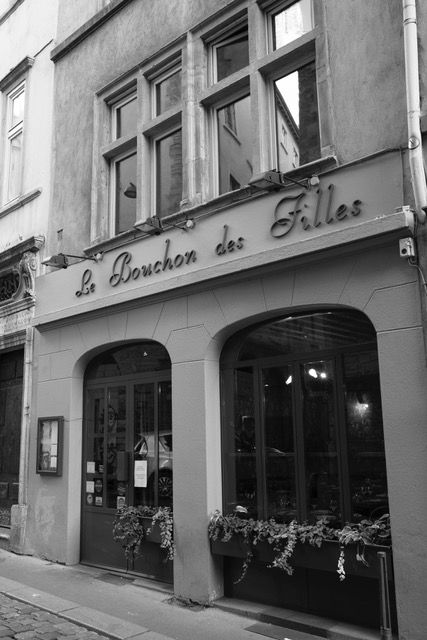
Café Comptoir Abel in Presqu'île has been serving the same menu since 1928. Le Bouchon des Filles in Vieux Lyon proves women can run bouchons just as well as men, despite centuries of male tradition.
The bouchon system works because it's honest. No molecular gastronomy, no fusion experiments, no Instagram-friendly presentations. Just proper French cooking done the way it should be done. This is why Lyon remained France's gastronomic capital even as Paris restaurants chased Michelin stars and celebrity chefs.
Paul Bocuse and the Michelin Revolution in Lyon
Paul Bocuse didn't just cook in Lyon. He turned Lyon into the modern culinary capital of France. His restaurant in Collonges-au-Mont-d'Or, just north of the city, held three Michelin stars for 55 years until his death in 2018. But more importantly, he trained a generation of chefs who spread Lyon's reputation worldwide.
Bocuse understood that Lyon's food capital status came from tradition, not innovation. He refined classical French techniques without abandoning them. His truffle soup VGE (created for French President Valéry Giscard d'Estaing) became legendary not because it was revolutionary, but because it was perfect.
The Halles de Lyon Paul Bocuse food market, named in his honor, shows what made Lyon special. This isn't a tourist attraction. It's where Lyon's best restaurants buy ingredients. Chefs shop here at 6 AM for Saint-Marcellin cheese so ripe it runs off the plate, Bresse chicken with the blue feet that prove authenticity, and saucisson from Reynon, the city's most respected charcuterie.
Lyon Michelin Restaurants: Quality Over Quantity
Lyon doesn't have as many Michelin stars as Paris, but its starred restaurants make more sense. They're rooted in local tradition rather than chasing international trends. Daniel et Denise Créqui serves elevated bouchon cuisine that respects tradition while improving execution.
The city's Michelin restaurants understand that Lyon's gastronomic capital status comes from doing familiar things exceptionally well. They use local ingredients, traditional techniques, and serve food that tastes distinctly Lyonnaise. This is different from Paris, where Michelin-starred restaurants often serve international cuisine that could be from anywhere.
Lyon's food scene works at every price point. A EUR 28 lunch at a traditional bouchon uses the same quality ingredients as a EUR 85 dinner at a starred restaurant. The difference is technique and presentation, not fundamental quality. This consistency across price points is what makes Lyon France's true food capital.
The Markets That Define Lyon's Food Identity
Lyon's markets separate it from other French cities. The Halles de Lyon Paul Bocuse is the obvious choice, but it's not the only one. The outdoor markets in Croix-Rousse on Tuesday, Friday, and Saturday mornings sell produce that restaurants can't get elsewhere.
Market vendors in Lyon know their customers are serious cooks. They sell vegetables with dirt still attached, fish that was swimming yesterday, and cheese that needs to be eaten within days. This isn't grocery shopping. It's ingredient sourcing for people who care about what they eat.
The quai Saint-Antoine market along the Saône sells produce Tuesday through Saturday mornings. Vendors here have been supplying Lyon restaurants for generations. They know which tomatoes will be perfect in three days, which mushrooms are worth the premium price, and which cheese maker is having a good season.
For travelers who want to understand Lyon's culinary capital status, shopping these markets explains everything. The quality is exceptional, the variety is overwhelming, and the standards are uncompromising. This is the foundation that supports everything from neighborhood bouchons to Michelin-starred restaurants.
Comparing Lyon's Food Scene to Paris
Paris has more restaurants, more Michelin stars, and more international recognition. Lyon has better food. The difference comes down to purpose. Paris restaurants serve tourists who want to say they ate in Paris. Lyon restaurants serve locals who want to eat well.
A typical Paris bistro charges EUR 35-45 for dinner that would cost EUR 25-35 in Lyon and taste better. Paris restaurants optimize for location and ambiance. Lyon restaurants optimize for food quality and value. When French people want to eat the best food in France, they come to Lyon.
The service culture differs too. Paris waiters perform for tourists who tip based on entertainment value. Lyon servers are professionals who know food and wine. They'll recommend the best dish for your taste rather than the most expensive item on the menu.
Paris food scenes change constantly. Neighborhoods become fashionable, then touristy, then decline. Lyon's food culture is stable. The same bouchons have served the same families for generations. The same markets supply the same restaurants. This stability creates consistency that Paris can't match.
Where Lyon's Culinary Capital Status Shows Best
To understand why Lyon is France's gastronomic capital, eat where locals eat. Start with coffee and a croissant at Slake Coffee House for EUR 1.5-2.8, then explore the markets.
Chez Paul serves authentic bouchon food without tourist markup. Order the tablier de sapeur and a pot of Beaujolais. The total bill will be around EUR 25, and you'll understand why Lyon earned its food capital reputation.
For higher-end dining, restaurants in Presqu'île offer refined versions of Lyonnaise classics. Mid-range dinners cost EUR 25-40 and showcase local ingredients prepared with classical French techniques.
The key to Lyon's culinary success is consistency across price points and neighborhoods. Whether you spend EUR 18 at a neighborhood bouchon or EUR 85 at a starred restaurant, the food quality remains exceptional. This consistency, built on centuries of tradition and supported by exceptional local ingredients, is what makes Lyon France's true food capital.
Seasonal Specialties That Define Lyon's Food Calendar
Lyon's gastronomic capital status shows best during specific seasons when local specialties are at their peak. Winter brings cardoon gratins and pot-au-feu, hearty dishes that showcase the city's ability to make humble ingredients extraordinary. Spring means fresh pike for quenelles and the first asparagus from nearby farms.
Summer is truffle season in nearby Périgord, and Lyon restaurants serve them with the reverence they deserve. Fall brings new wine from Beaujolais and game from the Alps. Each season has its specialties, and Lyon restaurants adjust their menus accordingly.
This seasonal approach differentiates Lyon from Paris, where restaurants serve the same menu year-round using ingredients flown in from everywhere. Lyon's connection to its agricultural hinterland keeps the food honest and seasonal.
The Economics of Lyon's Food Excellence
Lyon maintains its culinary capital status through economic factors that favor quality over profit margins. Restaurant rents in Lyon cost 30-40% less than equivalent Paris locations, allowing chefs to spend more on ingredients and less on overhead.
The city's compact size means short supply chains. Restaurants buy directly from producers rather than through distributors. This reduces costs while improving quality. It also creates relationships between chefs and farmers that last decades.
Labor costs are lower than Paris, but the talent pool is exceptional. Lyon's cooking schools produce chefs who understand classical French techniques. The city's food culture attracts talent that might otherwise move to Paris for higher wages but stay in Lyon for better working conditions.
These economic advantages allow Lyon restaurants to maintain quality at prices that would be impossible in Paris. A EUR 28 lunch in Lyon includes ingredients and preparation that would cost EUR 45-55 in Paris. This value proposition supports the entire ecosystem from neighborhood bouchons to starred restaurants.
Why Lyon's Food Capital Status Endures
Lyon remains France's culinary capital because it never stopped being serious about food. While other cities chased trends, Lyon perfected traditions. While other cities optimized for tourists, Lyon continued serving locals who demand quality.
The city's food culture is built on foundations that don't change: exceptional local ingredients, classical French techniques, and a population that considers good food a necessity rather than a luxury. These foundations support innovation without abandoning tradition.
Lyon's food reputation survives because it's earned daily in neighborhood bouchons, weekly markets, and family restaurants that have served the same customers for generations. This isn't marketing or image management. It's a culture that produces consistently exceptional food at every price point.
For travelers who want to understand French cuisine, Lyon offers authenticity that Paris cannot match. The food tastes better, costs less, and connects directly to centuries of culinary tradition. This is why Lyon earned its status as France's true food capital, and why that status remains undisputed among people who care more about eating well than eating fashionably.
To plan your own Lyon food adventure, check our comprehensive guide on where to eat in Lyon by neighborhood and our detailed first-time visitor's guide for the complete picture of what makes this city special.