The most common question people type before visiting the Black Forest's most famous small town is also the most telling one: is Triberg worth visiting? That question carries doubt, and the doubt is justified. Triberg is a place that can look, from a distance, like a tourist trap with a waterfall attached. After spending three days there in spring, walking every trail, eating too much cake, and making my peace with the cuckoo clock shops, here is the honest answer.
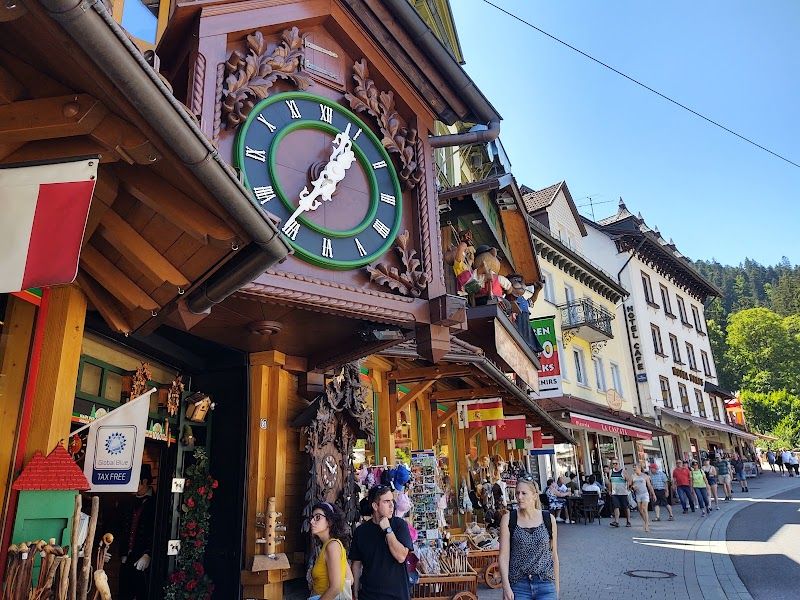
Triberg is worth visiting for the right reasons, and actively not worth it if you have the wrong expectations. The waterfalls are genuinely impressive. The surrounding forest and villages are under-explored by most visitors. But the town centre itself, a 600-metre strip of souvenir shops on Hauptstrasse, is exactly as commercial as you fear.
What Is Triberg Actually Famous For?
Triberg has three claims that travel writing repeats endlessly: Germany's highest waterfall at 163 metres, the birthplace of the cuckoo clock industry, and the supposed invention of Black Forest gateau. Each one deserves scrutiny.
The Waterfalls: The One Thing That Genuinely Delivers
The Triberg Waterfalls drop over seven stages through a narrow granite gorge dense with fir and spruce. The cumulative height of 163 metres sounds modest if you're picturing a single sheer drop. It isn't. The cascade moves through forest with real force, especially in spring when snowmelt from the upper Black Forest is still running. The mist, the sound, and the scale of the trees framing the water are legitimately worth the trip.
Entry costs EUR 8 for adults and EUR 5 for ages 6-17. If you're staying in registered accommodation in the Black Forest, ask your hotel for a KONUS guest card, which gets you in free and also covers regional public transport. Three marked trails serve different fitness levels: the Kulturweg is paved and accessible for the lower stages, while the Kaskadenweg climbs higher and earns its name. Allow at least 90 minutes if you want to walk above the main cascade where the crowds thin out.
Cuckoo Clocks: Industry, Not Magic
Triberg's connection to the cuckoo clock is real but often misrepresented. The clocks originated in the broader Schwarzwald region in the 18th century; Triberg is a hub of the retail trade rather than the singular birthplace. That said, the House of 1000 Clocks near the waterfall entrance is a genuine spectacle at the quarter hour, and Uhren-Park Rombach in the town centre carries serious mechanical pieces alongside the tourist-grade stuff.
If you want a deeper look at the clock-making tradition, the better stop is actually Schonach, 5 km west on the B500, where the Eble Uhren-Park walk-in cuckoo clock charges just EUR 2-3 for a 20-minute visit and demonstrates cuckoo performances at 15 and 45 minutes past the hour. For a full breakdown of what's worth buying and what's just decorative, our Triberg cuckoo clock guide covers it properly.
Black Forest Cake: Eat It, But Know the Story
The claim that Triberg invented Schwarzwalder Kirschtorte is disputed, with several other Black Forest towns making the same argument. What isn't disputed is that Cafe Schaefer on Hauptstrasse 33 serves a serious version: EUR 5-6 per slice, served with a small glass of kirsch, paired traditionally with filter coffee rather than espresso (EUR 3-4). Arrive before 11 AM or after 2 PM to avoid the tour bus rush. For a wider survey of where to eat the real thing across the region, the Black Forest cake trail guide is worth reading before you go.
Triberg Pros and Cons: An Honest Breakdown
Rather than softening this into something vague, here is a direct assessment.
| Factor | Verdict |
|---|---|
| Triberg Waterfalls | Worth the EUR 8 entry, one of Germany's best waterfall walks |
| Town centre atmosphere | Commercial, repetitive after 30 minutes, not a destination in itself |
| Food and drink | Solid traditional Badisch cooking, EUR 12-18 for a lunch plate |
| Day-trip options | Strong, especially Gutach valley and Vogtsbauernhof |
| Crowds in summer | Heavy between 10 AM and 3 PM on weekends |
| Value for money overall | Good if you use surrounding villages; poor if you stay on Hauptstrasse |
| Family appeal | High, especially with the waterfall trails and Gutach slide |
The honest summary: Triberg the town is a vehicle for visiting the waterfall and the surrounding Black Forest. It is not, by itself, a destination worth more than a half-day. The reason to base yourself here for two or three nights is the access it gives you to things outside the town.
Triberg vs Other Black Forest Towns
This question comes up constantly, and it matters for trip planning. Freiburg im Breisgau is the obvious comparison: a proper city with a university, a functioning Altstadt, excellent restaurants, and the Cathedral as a genuine architectural centrepiece. If you want urban texture alongside the forest, Freiburg wins easily.
Within the small-town Black Forest category, Gengenbach and Schiltach are quieter and more architecturally coherent than Triberg, with better-preserved medieval streetscapes and fewer souvenir shops. Wolfach, just down the valley, has the Dorotheenhütte glassblowing museum which is one of the most genuinely interesting craft demonstrations in the region.
But Triberg has the waterfalls, and no other small Black Forest town does. That single fact is the deciding factor. If seeing Germany's highest waterfall is on your list, Triberg is your base. If it isn't, go to Schiltach or Gengenbach instead.
What to Do Beyond the Main Street
The visitors who leave Triberg underwhelmed are almost always the ones who stayed on Hauptstrasse. The waterfalls and forest trails neighborhood extends well beyond the ticketed cascade area, and the surrounding villages repay a half-day each.
Schonach: Five Kilometres West, Far Fewer Tourists
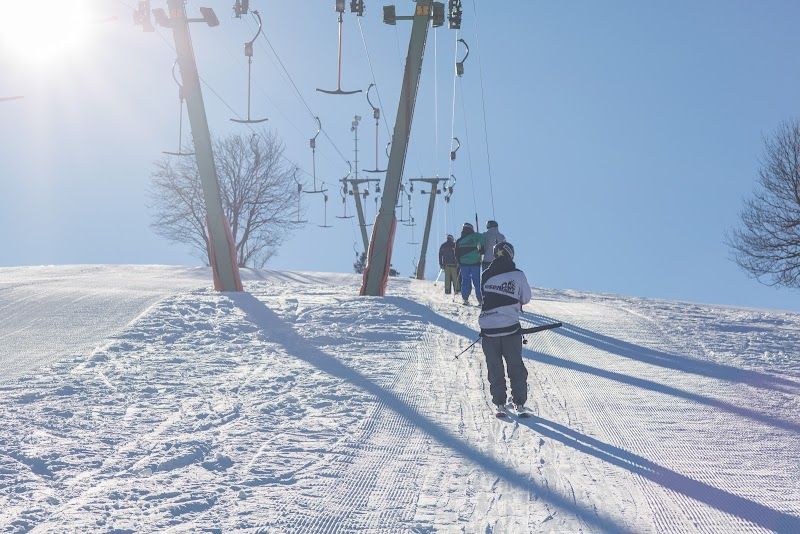
Schonach sits at higher elevation than Triberg with views across the central Black Forest from the Schonacher Rohrhardsberg viewpoint. In winter it has a working ski lift; in summer the walking trails from the village are quieter than anything near Triberg's waterfalls. For lunch, Gasthaus Rößle and Gasthaus Hirsch Schonach both serve traditional Schwarzwald cooking at honest prices, without the tourist markup that creeps into Triberg's waterfall-adjacent restaurants.
Gutach Valley: The Best Day Trip From Triberg
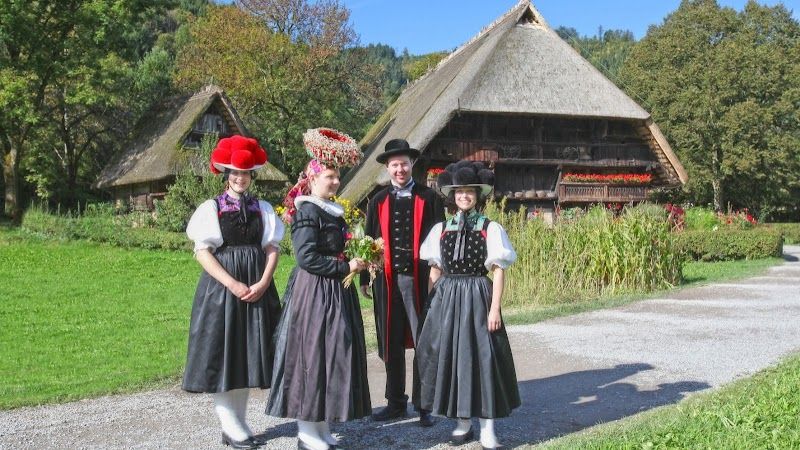
The Gutach valley runs 8 km northwest of Triberg along the B33 and contains two things worth your time. The Vogtsbauernhof open-air museum is the best single museum in the Black Forest: 20 original farm buildings relocated to a single valley site, with bread-baking demonstrations and genuine craft workshops. Entry is EUR 12 for adults, EUR 6 for ages 6-17, with a family ticket at EUR 28. It is closed from November through late March, so check dates before planning around it.
The Sommerrodelbahn Gutach summer alpine slide nearby is EUR 3.50 per ride or EUR 20 for a six-pack, and is one of the better versions of this format in Baden-Württemberg. Kids aged 8 and up can ride alone; younger children ride with an adult. Closed on wet days and from November through March. If you're visiting with children, the Triberg with Kids guide covers the logistics of combining both Gutach stops in a single day.
Eating Well in Triberg Without Getting Ripped Off
The waterfall-area restaurants vary sharply. Restaurant Pfaff is the most reliable sit-down option near the falls, with traditional Maultaschen at the lower end of the EUR 12-18 lunch range. Imbiss zur Linde is the practical choice if you want something fast without sitting down. For a longer meal worth the drive, Bergsee Forellenhof near the Bergsee reservoir serves local trout (Schwarzwaldforelle) in the EUR 18-24 range, which is the dish to order in this part of the forest.
The Schwarzwaldmuseum Triberg is also worth an hour of your time, at EUR 6 for adults and EUR 3 for ages 6-16. Its 3,000-piece mechanical music collection is specific enough to be interesting, and guided tours most afternoons include live demonstrations. It is closed on Mondays in winter.
Who Should Go to Triberg (and Who Shouldn't)
Triberg works well for: families with children who want a mix of nature, history, and activity; travelers doing a broader Black Forest circuit who want a central base; anyone with a specific interest in the waterfall, the clock-making tradition, or regional food culture.
Triberg does not work well for: travelers expecting a picturesque medieval town centre (this is not Rothenburg); people who want nightlife or a significant restaurant scene; anyone who needs more than two to three days of content in a single location.
The town of 4,700 people at 700 metres elevation in a narrow forest valley is exactly what it looks like on a map: a small, functional, tourist-oriented place with one exceptional natural feature and a well-developed service industry around it. Manage that expectation correctly and it delivers. Arrive hoping for something it has never claimed to be and it will disappoint.
Practical Numbers Before You Go
A realistic budget for one full day in Triberg and its surroundings, per adult:
| Item | Cost |
|---|---|
| Triberg Waterfalls entry | EUR 8 |
| Schwarzwaldmuseum | EUR 6 |
| Lunch at a Gasthaus | EUR 12-18 |
| Black Forest cake + coffee | EUR 8-10 |
| Vogtsbauernhof (if doing Gutach) | EUR 12 |
| Total (without Gutach) | EUR 34-42 |
| Total (with Gutach) | EUR 46-54 |
KONUS card holders get the waterfall entry free, which changes the calculation meaningfully. Most hotels and guesthouses in the registered Black Forest zone issue them automatically on check-in.
For the full picture of what to do across the area, the Triberg destination page has practical logistics including parking, train access from Offenburg and Konstanz, and accommodation options across the price range.
The Verdict
Is Triberg worth visiting in 2026? Yes, if the waterfall is your anchor and the surrounding forest and villages are your plan. No, if the town centre is your destination. Spend your first morning at the falls before the tour buses arrive, eat lunch in Schonach, spend an afternoon at Vogtsbauernhof, and have your cake at Cafe Schaefer. That is a genuinely good day in the Black Forest. Two more days of the same approach, exploring the town center on your own terms rather than following the souvenir trail, and Triberg justifies the trip comfortably.