The Route des Vins d'Alsace stretches 170 kilometers from Marlenheim north of Strasbourg to Thann south of Colmar, threading through a landscape that looks designed by committee to sell French tourism. It wasn't. These villages were built to make wine, and they've been perfecting the craft since Roman legionnaires planted the first vines between the Vosges mountains and the Rhine plain.
This alsatian wine route map covers the practical navigation between the route's most essential villages, with exact distances, parking locations, and cellar door recommendations. The route isn't a single road but a network of departmental roads (D-routes) that connect 67 villages. You'll need a car - public transport reaches Colmar and Sélestat, but the jewel villages like Riquewihr and Eguisheim remain car-dependent.
Northern Route: Marlenheim to Sélestat
Obernai: Your Northern Starting Point
The largest town on the northern wine route, Obernai anchors the section between Strasbourg and Sélestat. The Obernai Market Square and Ramparts form the route's most expansive medieval centre, anchored by the 13th-century Kappellturm bell tower and surrounded by half-timbered guild houses.
Navigation: From Strasbourg A35 motorway, take Exit 12 (Obernai) and follow signs to "Centre Ville." The D422 runs directly into Place du Marché. Parking costs EUR 4-8 per day at the marked lots outside the old walls - free in winter, charged May through October.
Distance markers from Obernai:
- Marlenheim (route start): 25km north via D422
- Sélestat: 32km south via D422/D159
- Mont Sainte-Odile: 12km west via D426
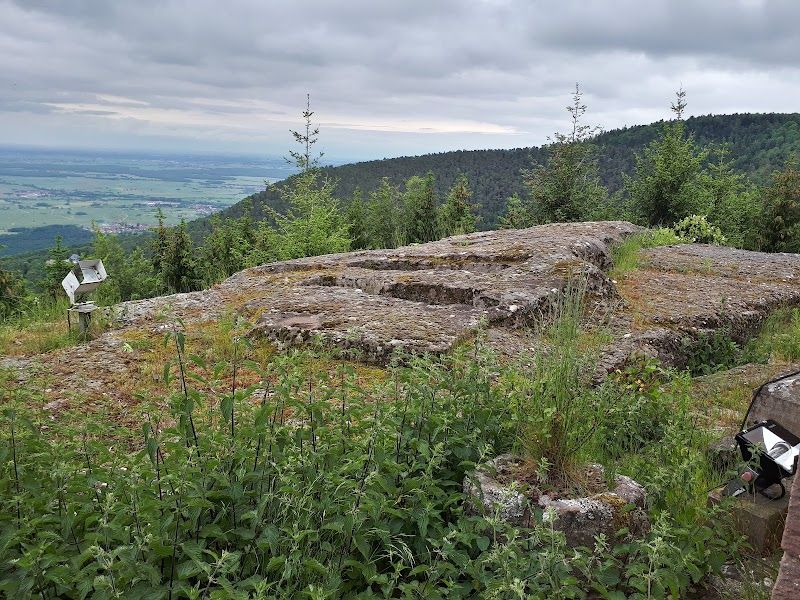
The Mont Sainte-Odile Monastery provides the route's best panorama across the Rhine plain to the Black Forest. The pilgrimage site itself is free, though parking runs EUR 3-5. More compelling is the Mur Païen - a 7km loop hike along the remains of a pre-Roman wall that predates most European fortifications.
Wine Stop: Cave d'Obernai Cooperative
Location: 7 Rue de Sélestat, 67210 Obernai
Tasting price: EUR 8-15 for 5-7 wines
Speciality: Sylvaner and Pinot Blanc (the cooperative's volume wines)
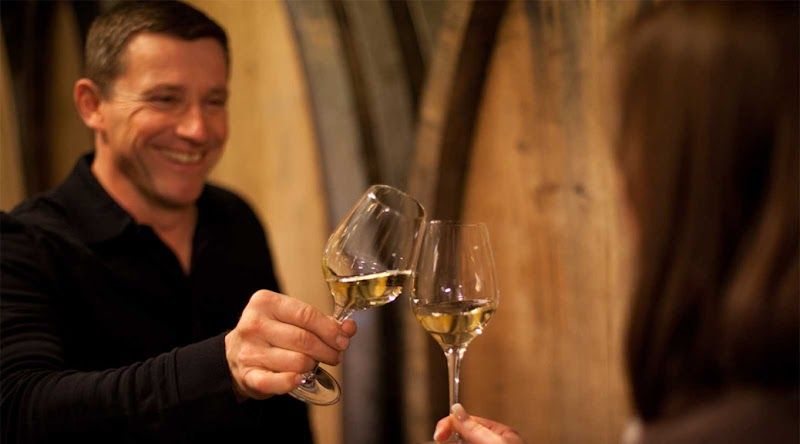
Obernai's cooperative represents 180 local growers and offers the route's most accessible introduction to Alsace varietals. The entry-level wine tasting costs EUR 8-18, covering the seven classic grapes: Riesling, Gewürztraminer, Pinot Gris, Pinot Blanc, Sylvaner, Pinot Noir, and Muscat.
Central Route: Sélestat to Colmar
Ribeauvillé: Three Castles and Serious Riesling
Distance from Sélestat: 16km via D159
Parking: Place de la République (free in winter, EUR 4-6 in summer)
Ribeauvillé sits directly under Les Trois Châteaux de Ribeauvillé - three ruined castles that crown the Vosges foothills above the village. The 2.5-hour castle hike rewards with views across the entire alsace wine trail map, but most visitors come for the cellars below.
Wine Stop: Domaine Trimbach
Location: 15 Route de Bergheim, 68150 Ribeauvillé
Tasting price: EUR 18-35 for cellar tour and Grand Cru pours
Booking: Essential (trimbach.fr)
Trimbach represents Alsace's most internationally recognized family domain, now in its 13th generation. Their Riesling Clos Sainte Hune commands EUR 80-120 per bottle at the cellar door and ranks among France's top white wines.
Riquewihr: The Postcard Village
Distance from Ribeauvillé: 5km via D3/D1b
Parking: Parking des Remparts (EUR 6-8 per day, mandatory - the village center is car-free)
Riquewihr survived World War II untouched and now functions as the wine route's primary tourist magnet. Every building on the Riquewihr Main Street houses either a wine shop, restaurant, or boutique inside 16th-century half-timbered walls.
The Riquewihr ramparts walk is free and circles the village's medieval fortifications in 45 minutes. The Dolder watchtower provides the classic elevated village photograph that appears on every Alsace tourism poster.
Wine Stop: Domaine Famille Hugel
Location: 3 Rue de la Première Armée, 68340 Riquewihr
Tasting price: EUR 18-35 for 60-90 minute experience
Booking: Essential (hugel.fr)
Hugel operates from the same cellars for 13 generations and produces the wine route's most educational tastings. The EUR 18-35 cellar tour includes Grand Cru pours and detailed explanations of Alsace's unique terroir classifications.
Kaysersberg: Substance Over Style
Distance from Riquewihr: 8km via D28
Parking: Place Gouraud (EUR 4-6 per day)
Kaysersberg earned Albert Schweitzer as its most famous son and maintains more authentic village life than its tourist-heavy neighbors. The Kaysersberg Castle Ruins overlook the village from a rocky outcrop, while the fortified bridge across the Weiss River provides the classic village entry.
Food Focus: Kaysersberg hosts the route's best bakeries. Boulangerie-Patisserie Gilg produces the region's finest kougelhopf - the distinctive ribbed cake costs EUR 12-18 for a whole loaf and pairs classically with Munster cheese.
Southern Route: Colmar to Thann
Eguisheim: France's Favorite Village
Distance from Kaysersberg: 15km via D28/D83
Parking: Place Charles de Gaulle (EUR 4-8 per day, free November-March)
Eguisheim won the title "Village Préféré des Français" in 2013 and deserves it. The village coils around a central square in two concentric circles of medieval houses - a street plan unique in France that's walkable in one hour.
The Eguisheim Circular Village tour is free and self-guided. Start at the octagonal chapel of Saint-Léon IX (the only Alsatian pope) and follow the inner ring clockwise, then the outer ring counterclockwise.
Wine Stop: Domaine Emile Beyer
Location: 7 Place du Château Saint-Léon, 68420 Eguisheim
Tasting price: EUR 8-15 for cooperative-style tasting
Specialty: Gewürztraminer and Pinot Gris
Domaine Emile Beyer operates from 16th-century cellars beneath the village center. Their Gewürztraminer costs EUR 11-25 per bottle at the cellar door, covering both dry and off-dry styles.
Turckheim: The Nightwatchman's Village
Distance from Eguisheim: 6km via D83
Parking: Place Turenne (free)
Turckheim maintains the tradition of a nightwatchman who walks the village streets at 22h00 every evening from May through October, announcing the time and weather in French, German, and English. The ritual dates to the 14th century and provides an excuse to linger over dinner.
Wine Stop: Cave de Turckheim
Location: 16 Rue des Tuileries, 68230 Turckheim
Tasting price: EUR 12 for post-lunch tasting
Volume: 1,100 hectares (the route's largest cooperative)
Turckheim's cooperative represents 230 growers and offers the most comprehensive introduction to Alsace's Grand Cru vineyards. The EUR 12 tasting includes pours from four Grand Cru sites: Eichberg, Hengst, Goldert, and Brand.
Essential Navigation Details
Driving the Route
Car rental costs EUR 45-75 per day for an economy vehicle picked up in Strasbourg, Colmar, or Mulhouse. The wine route connects via departmental roads rather than a single thoroughfare - you'll follow D422 in the north, D159 through the central section, and D83 in the south.
Key route segments:
- Marlenheim to Obernai: 25km via D422
- Obernai to Sélestat: 32km via D422/D159
- Sélestat to Riquewihr: 21km via D159/D1b
- Riquewihr to Colmar: 13km via D28/D83
- Colmar to Thann: 28km via D83
Public Transport Limitations
TER Alsace trains connect Strasbourg to Colmar (EUR 7-13 advance booking, 30 minutes direct) and Strasbourg to Sélestat (EUR 7.50-12, 20 minutes). The Alsa Plus 24h Solo pass costs EUR 19-23 and covers unlimited regional trains and coaches.
However, trains don't reach the essential villages. Riquewihr, Eguisheim, and Kaysersberg require either a car or organized tour transport.
Cycling Considerations
Bike rental costs EUR 18-30 per day for e-bikes in Colmar or the wine villages. The flat sections between villages work well for cycling, but the climbs to Haut-Koenigsbourg or Mont Sainte-Odile require electric assistance.
The EuroVelo 5 cycling route parallels the wine route but stays in the Rhine plain rather than climbing into the vineyard slopes.
Wine Tasting Strategy
Understanding Alsace Wine Classifications
Alsace operates under different rules than the rest of France. Wines are labeled by grape variety rather than geographic appellation, with four quality levels:
- Alsace AOC: Standard regional wines (EUR 9-18 per bottle)
- Alsace Grand Cru: 51 designated vineyard sites (EUR 18-30)
- Vendanges Tardives: Late-harvest wines (EUR 25-50)
- Sélection de Grains Nobles: Botrytis-affected dessert wines (EUR 40-80)
Tasting Costs and Booking
Small family domains charge EUR 8-18 for entry-level tastings without booking. Cooperative cellars like Eguisheim and Turckheim operate walk-in tastings for EUR 10-15.
Premium domains (Hugel, Trimbach, Marcel Deiss) require advance booking and charge EUR 18-35 for cellar tours with Grand Cru pours.
Full-day wine tours with transport cost EUR 75-130 per person and solve the driving/drinking conflict while visiting 3-4 wineries.
Seasonal Navigation Notes
Peak Season (May-October)
Village parking charges EUR 4-8 per day and fills by 11h00 on weekends. Riquewihr becomes genuinely crowded - visit before 09h30 or after 17h00 for photography.
Harvest Season (September-October)
The vendange creates the most authentic wine route atmosphere but also the highest accommodation prices. Many domains suspend tastings during active harvest periods.
Winter Season (November-March)
Parking becomes free in most villages, and domains offer more relaxed tasting experiences. The Christmas Market circuit operates from late November through December 24, with free entry to markets but premium accommodation rates in Strasbourg and Colmar.
Essential Stops Beyond Wine
Haut-Koenigsbourg Castle
Distance from Sélestat: 12km via D159/D48
Entry price: EUR 12 online, EUR 16 on-site
Transport: Seasonal shuttle from Sélestat station
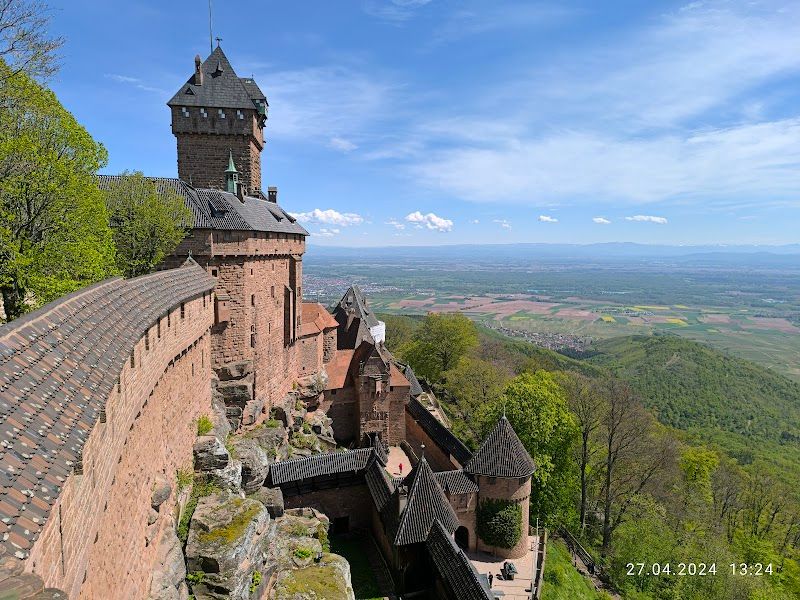
The Château du Haut-Koenigsbourg provides the wine route's most dramatic viewpoint, with sightlines across the entire Route des Vins to the Black Forest. The restored medieval fortress requires 2-3 hours and offers multilingual audioguides for EUR 5 extra.
Colmar Detour
Distance from Eguisheim: 7km via D83
Key sight: Unterlinden Museum (EUR 13-15)
Colmar anchors the southern wine route with the Unterlinden Museum, housing Grünewald's Issenheim Altarpiece - one of Renaissance art's masterpieces. The museum merits half a day and provides cultural balance to village-hopping and wine tasting.
This alsatian wine route map covers the practical framework for navigating between villages, but the experience depends on slowing down rather than checking boxes. The route rewards travelers who spend entire afternoons in single villages, learning the differences between Riesling from granite versus limestone soils, rather than racing between Instagram locations.
For detailed planning of specific village itineraries, consult our First Time on the Alsace Wine Route: What You Need to Know guide, or review restaurant recommendations in our Where to Eat on the Alsace Wine Route coverage.