The Alsace Wine Route stretches 170 kilometers from Marlenheim to Thann, but cycling the entire route requires understanding which sections have dedicated bike paths and which force you onto busy roads. The complete alsace wine route cycle map reveals that only 60% of the route follows protected cycling infrastructure, making selective planning essential for a safe and enjoyable ride.
Understanding the Alsace Bike Path Network
The official Route des Vins follows the D422 and D83 departmental roads, which carry significant car traffic during peak tourism months. However, parallel cycling infrastructure exists along key sections, particularly the Véloroute du Vignoble that connects major villages with dedicated bike paths separated from vehicle traffic.
Bike rental in Colmar costs EUR 18-30 per day, with e-bikes recommended for the gentle but persistent elevation changes throughout the route. The terrain appears flat from a distance, but subtle gradients of 3-5% over several kilometers will test your legs, especially when carrying panniers for overnight stops.
Key Cycling Sections and Elevation Profiles
The northern section from Obernai to Barr follows a dedicated bike path with minimal elevation gain. This 12-kilometer stretch runs parallel to the D422 through vineyards with clear bike trail markers every 500 meters. The surface is well-maintained asphalt suitable for road bikes.
From Barr to Ribeauvillé, the route climbs gradually through Bergheim and Hunawihr. This 18-kilometer section gains 180 meters of elevation over rolling terrain. The bike path disappears between Bergheim and Hunawihr, forcing cyclists onto the shoulder of the D1b for 4 kilometers. Traffic is moderate but manageable.
The central section connecting Riquewihr to Kaysersberg presents the route's most challenging elevation. The 8-kilometer climb from Riquewihr to Kaysersberg gains 120 meters, including a sustained 6% gradient for 2 kilometers approaching the village. No dedicated bike path exists here, requiring cyclists to share the narrow D28 with tour buses and delivery trucks.
Where the Route Actually Has Cycle Paths
The Véloroute du Vignoble covers roughly 100 of the wine route's 170 km with purpose-built, traffic-separated path. The gaps are what matter: the D35 between Turckheim and Wintzenheim has no cycling space, and the Riquewihr approach clogs with tour-bus traffic May through October.
Bike-Friendly Villages Worth Stopping
Eguisheim: The Circular Village Challenge
Eguisheim presents a unique cycling challenge due to its circular street layout. Bikes are permitted on the Grand Rue, the village's main ring road, but dismounting is required in the central square area during peak hours (11:00-16:00 from May through October).
Secure bike parking is available at three locations: the main tourist office on Place du Château Saint-Léon, behind the Caves d'Eguisheim cooperative, and near the public toilets on Rue du Rempart Sud. The village provides basic bike repair tools at the tourist office, though no full-service bike shop operates within Eguisheim.
For refreshments, Auberge du Rempart offers outdoor seating facing the ramparts where you can watch your bike while enjoying tarte flambée for EUR 8-13. The Eguisheim circular village walk takes 60 minutes on foot but only 15 minutes by bike during permitted hours.
Riquewihr: Historic Streets and Bike Limitations
Riquewihr's main street prohibits cycling between 10:00-18:00 during tourist season (April-October). Cyclists must use the service road that runs parallel to the Rue du Général de Gaulle, accessing it via the Porte Haute entrance.
Bike parking is concentrated near the Dolder Tower, with space for approximately 40 bikes in designated racks. During peak season, arrive before 11:00 to secure parking. The village provides a basic bike wash station near the public restrooms, useful after muddy vineyard paths.
Au Trotthus restaurant accommodates cyclists with early opening hours and hearty portions. Their coq au Riesling costs EUR 18-26 and provides the calories needed for the climb to Kaysersberg.
Kaysersberg: Services for Cyclists
Kaysersberg offers the route's best cycling infrastructure. A dedicated bike path enters the village from both north and south approaches, connecting to a comprehensive network of bike parking near major attractions.
The village maintains a bicycle repair station with tools and air pump near the Albert Schweitzer Museum. For major repairs, Cycles Sport Kaysersberg on Rue du Général de Gaulle stocks replacement parts and offers same-day service.
Winstub du Château provides covered bike parking and offers a "cyclist's menu" featuring lighter portions ideal for continued riding. Their choucroute garnie costs EUR 16-25 but ask for the half portion if you're continuing to Colmar the same day.
Elevation Planning and Route Selection
Northern Route: Obernai to Barr (Easy)
Distance: 12 km
Elevation gain: 45 meters
Dedicated bike path: 100%
Surface: Paved asphalt
Difficulty: Beginner-friendly
This section follows the Véloroute du Vignoble with consistent bike trail markers. The path runs through vineyards with minimal road crossings. Two rest areas with benches and water fountains are located at kilometers 4 and 8.
Central Challenge: Ribeauvillé to Kaysersberg (Moderate)
Distance: 15 km
Elevation gain: 165 meters
Dedicated bike path: 40%
Surface: Mixed (paved path + road shoulder)
Difficulty: Intermediate
This route includes the steepest sustained climb on the Wine Route. The gradient averages 4% but reaches 7% for 800 meters approaching Kaysersberg. E-bike recommended for loaded touring. Traffic is heaviest between 14:00-17:00 when tour buses return from Haut-Koenigsbourg.
Two Circuits Worth Riding First
The Riquewihr to Hunawihr loop (15 km) has the best infrastructure on the route: park at Parking de l'Europe (EUR 4 to 8 a day), follow the Circuit des Vins à Vélo signs, and ride dedicated lanes through Grand Cru vines to Hunawihr's stork sanctuary (NaturOparc, EUR 11 to 13), which draws a fraction of Riquewihr's crowds. Budget 3 to 4 hours with tastings. The Kaysersberg valley loop (22 km) is the varied one: down the Weiss valley, then 4 to 6 percent climbs toward Kientzheim and Sigolsheim, manageable on an e-bike, honest work on anything else.
Southern Approach: Turckheim to Eguisheim (Moderate)
Distance: 8 km
Elevation gain: 95 meters
Dedicated bike path: 75%
Surface: Paved with gravel sections
Difficulty: Moderate (due to surface conditions)
The path between these villages includes 2 kilometers of hard-packed gravel through vineyard service roads. Passable on road bikes but more comfortable on touring or gravel bikes. The gravel section can become muddy after rain, particularly from November through March.
Cycle Route Planning Strategies
Single-Day Village Hopping
For a day trip starting from Colmar, the optimal route covers Turckheim → Eguisheim → Husseren-les-Châteaux → return via vineyard paths. This 25-kilometer loop includes EUR 4-8 parking in Colmar and avoids the busiest tourist corridors.
Start early (8:00 departure) to secure bike parking in Eguisheim before tour buses arrive. The complete Alsace Wine Route guide provides detailed timing for coordinating village visits with restaurant opening hours.
Multi-Day Touring with Overnight Stops
A three-day cycling tour allows proper exploration while managing daily distances. Day 1: Strasbourg to Obernai (32 km, mostly flat). Day 2: Obernai to Riquewihr via Bergheim (35 km, moderate climbs). Day 3: Riquewihr to Colmar via Kaysersberg and Eguisheim (28 km, varied terrain).
Wine village B&Bs cost EUR 90-150 per night and typically provide secure bike storage. Book accommodations in advance, particularly during harvest season (late September-early October) when cycling conditions are ideal but rooms fill quickly.
Rentals and Bike-Friendly Beds
Le Chambard in Kaysersberg includes e-bikes on stays over two nights, a EUR 50 to 60 value, and Hotel l'Oriel in Riquewihr gets guests 30 percent off daily rentals. For the full route over 3 to 5 days, Alsace à Vélo runs touring packages from about EUR 40 to 50 a day plus EUR 25 per luggage transfer. Book beds with secure bike storage in season; EUR 5 to 10 a night for a garage beats explaining a stolen rental bike.
Weather and Seasonal Considerations
The bike paths along the Wine Route are maintained year-round, but autumn weather can create challenging conditions. October offers ideal temperatures (15-20°C) and spectacular vineyard colors, but morning fog reduces visibility until 10:00-11:00.
Winter cycling is possible but not recommended between December 15-January 15 when many villages close tourism services. The Christmas Markets circuit operates during this period, but bike paths receive minimal snow clearing.
Essential Cycling Resources and Maps
Official Mapping Resources
The Conseil Départemental du Haut-Rhin publishes the most accurate cycle route map, available free at tourist offices in Colmar, Ribeauvillé, and Riquewihr. This map indicates exact locations where bike paths diverge from vehicle routes, crucial information missing from general tourism maps.
For GPS navigation, download the "Alsace à Vélo" mobile app, which provides turn-by-turn directions optimized for cycling infrastructure. The app works offline and includes real-time updates about path closures during harvest or maintenance periods.
Bike Trail Markers and Signage
The Véloroute du Vignoble uses a consistent marking system: green rectangles with white bicycle symbols for dedicated bike paths, yellow diamonds for shared road sections, and red circles indicating mandatory dismount zones in village centers.
Markers appear every 300-500 meters along dedicated paths but become sparse on shared road sections. Pay particular attention to markers approaching village centers, where cycling rules change frequently based on local traffic patterns and seasonal tourism pressure.
Emergency Services and Bike Repairs
Mobile phone coverage is excellent throughout the Wine Route, but keep emergency numbers accessible: 15 for medical emergencies, 17 for police, 18 for fire department. The regional tourist assistance line (03 89 20 10 68) operates in English and German during business hours.
For mechanical issues, basic repair stations exist in Eguisheim, Riquewihr, Kaysersberg, and Obernai. Full-service bike shops operate in Colmar (Cycles Gérard, Avenue de la République) and Sélestat (Vélo Sport, Rue du Président Poincaré). Both shops stock standard replacement parts and offer same-day repairs for common issues.
Integration with Wine Route Attractions
Combining Cycling with Wine Tasting
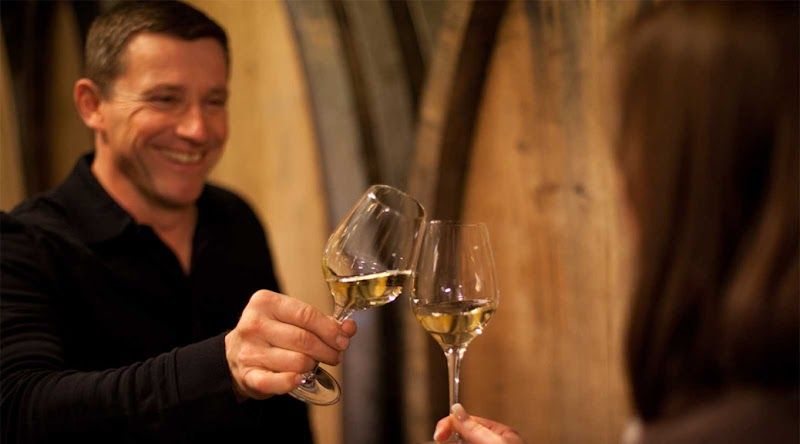
The logistics of cycling and wine tasting require careful planning. Most domains welcome cyclists but expect advance notice for groups larger than four people. Wine tasting experiences cost EUR 8-18 at cooperative cellars and EUR 18-35 at premium domains.
Consider the "designated cyclist" approach: one person tastes while others purchase bottles for evening consumption. Alternatively, many domains offer "tasting notes" cards allowing you to purchase wines based on professional descriptions without full tastings.
Castle and Monument Access
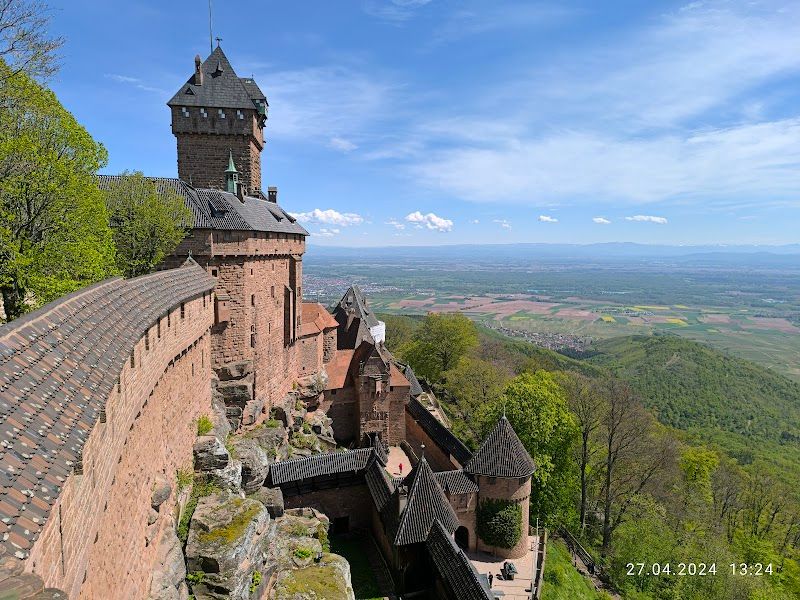
Haut-Koenigsbourg castle requires a 4-kilometer climb from Sélestat with 15% gradients in sections. The castle parking area accommodates bikes, and admission costs EUR 12 online or EUR 16 on-site. The climb takes 45-60 minutes and should be attempted only by experienced cyclists.
Mont Sainte-Odile Monastery is accessible via a dedicated bike path from Ottrott, though the 8-kilometer climb gains 320 meters. The monastery provides free entry and spectacular views over the Rhine valley, making the effort worthwhile for strong cyclists.
Food Planning Along Cycling Routes
Restaurant hours in wine villages often conflict with cycling schedules. Most establishments close 14:30-18:30, creating a gap during typical afternoon cycling hours. Stock up on provisions at village boulangeries during morning hours: kougelhopf slices cost EUR 3.50-5 and provide sustained energy for climbs.
For proper meals, dining recommendations include cyclist-friendly options with flexible service hours and secure bike parking. Winstub dinners cost EUR 28-45 per person and provide the hearty meals cyclists need after full days in the saddle.
The Alsace Wine Route offers rewarding cycling for those who plan routes carefully around elevation changes, bike infrastructure availability, and village-specific cycling regulations. Success requires selecting appropriate sections based on fitness level, securing proper equipment, and coordinating timing with attraction opening hours and restaurant service times.