Getting from Triberg to Munich means choosing between a straightforward but long train journey through Stuttgart or a faster drive that lets you explore the Black Forest and southern Germany at your own pace. The train takes 4.5 hours minimum with at least one connection, while driving covers the 340 km distance in under 3 hours on the A8 autobahn.
The choice depends on what you value more: the convenience of not driving (train) or the flexibility to stop wherever catches your eye (car). Both options cost roughly the same when you factor in fuel, parking, and train tickets, but they offer completely different experiences of southern Germany.
Train Route: Triberg to Munich via Stuttgart
The train journey from Triberg to Munich requires at least one connection, typically in Stuttgart, and takes 4.5-5.5 hours depending on connection times. Deutsche Bahn runs this route multiple times daily, but the scheduling requires careful planning.
The Standard Route:
- Triberg to Villingen-Schwenningen (regional train): 45 minutes
- Villingen-Schwenningen to Stuttgart Hbf (regional): 1 hour 40 minutes
- Stuttgart Hbf to Munich Hbf (ICE high-speed): 2 hours 15 minutes
- Total journey time: 4 hours 40 minutes plus connection time
Connection times in Stuttgart range from 15 minutes (tight) to 90 minutes (comfortable). The 15-minute connections work if trains run on schedule, but German regional trains from the Black Forest run late often enough that booking a longer connection makes sense.
Alternative via Offenburg: Some departures route through Offenburg instead of Stuttgart, adding 30-45 minutes to the total journey but sometimes offering better connection timing. This route goes:
- Triberg to Offenburg: 1 hour 15 minutes
- Offenburg to Mannheim: 1 hour 30 minutes
- Mannheim to Munich: 3 hours 15 minutes
The Offenburg routing takes longer but can be more reliable during peak travel periods when Stuttgart connections get crowded.
Train Costs and Booking Strategy
Ticket Prices:
- Standard 2nd class ticket: EUR 65-85 (advance booking)
- Flexible 2nd class: EUR 95-120 (day of travel)
- 1st class: EUR 110-140 (advance booking)
- Bayern-Ticket: EUR 27 (regional trains only, much slower)
The cheapest option is the Bayern-Ticket combined with a Baden-Württemberg ticket, but this routing takes 7-8 hours using only regional trains. Only worth it if you're on an extremely tight budget and have time to spare.
Book advance tickets (Sparpreis) 3-4 weeks ahead for the EUR 65-75 range. Same-day flexible tickets cost EUR 95-120 but let you take any train. The ICE portion from Stuttgart to Munich accounts for most of the ticket cost.
Regional Transport Integration: If you're staying in the Black Forest with a KONUS guest card (provided by most hotels), you can use regional trains for free within the Black Forest region. This covers the Triberg to Villingen-Schwenningen or Triberg to Offenburg segments, reducing your ticket cost by EUR 12-15.
Driving Route: A8 Autobahn and Scenic Alternatives
The drive from Triberg to Munich covers 340 km and takes 2 hours 50 minutes via the A8 autobahn, assuming normal traffic and no construction delays. This route heads northeast from Triberg through Stuttgart, then southeast across Bavaria.
Direct A8 Route:
- Triberg to Stuttgart via B27: 1 hour 15 minutes (120 km)
- Stuttgart to Munich via A8: 1 hour 35 minutes (220 km)
- Total distance: 340 km
- Total time: 2 hours 50 minutes
The A8 between Stuttgart and Munich is one of Germany's busiest autobahn sections. Expect traffic slowdowns around Stuttgart (especially 7-9 AM and 4-7 PM), construction zones near Augsburg, and weekend congestion during ski season (December through March).
Fuel and Tolls:
- Fuel cost: EUR 35-40 (assuming 7L/100km, EUR 1.45/liter)
- Tolls: None (German autobahns are free)
- Parking in Munich city center: EUR 3-5/hour
- Total driving cost: EUR 40-50
Gas stations on the A8 charge premium prices (EUR 1.50-1.55/liter). Fill up in smaller towns like Geislingen or Günzburg for EUR 1.42-1.45/liter.
Scenic Driving Alternative: Through the Danube Valley
Instead of the direct A8 route, you can add 45 minutes and significant scenery by routing through the upper Danube valley via Tuttlingen and Sigmaringen. This adds 80 km but rewards you with castle views, river valleys, and traditional Swabian towns.
Scenic Route Details:
- Triberg to Tuttlingen: 1 hour (B27 north, then B311 east)
- Tuttlingen to Sigmaringen: 45 minutes (B32 through Danube valley)
- Sigmaringen to Munich: 1 hour 45 minutes (A81/A8)
- Total: 3 hours 45 minutes (420 km)
This routing passes Sigmaringen Castle, one of southern Germany's most photogenic fortress complexes, perched above the young Danube river. The detour works best if you're already planning to explore beyond just transportation.
Cost Comparison: Train vs Car
The total cost difference between train and car depends heavily on how many people travel and where you park in Munich.
| Method | 1 Person | 2 People | 4 People |
|---|---|---|---|
| Train (advance booking) | EUR 70 | EUR 140 | EUR 280 |
| Train (day of travel) | EUR 100 | EUR 200 | EUR 400 |
| Car (fuel + parking) | EUR 55 | EUR 55 | EUR 55 |
| Car (including rental) | EUR 85 | EUR 85 | EUR 85 |
For solo travelers, the train costs slightly more but eliminates driving stress. For groups of 3-4 people, the car becomes significantly cheaper. Factor in Munich parking costs if you're staying in the city center - budget EUR 15-25/day for hotel parking or EUR 8-12/day for P+R lots on the S-Bahn lines.
What to See Along the Way: Triberg to Munich Stops
Driving gives you flexibility to explore attractions between the Black Forest and Bavaria that train passengers miss entirely. Here are the stops worth planning around.
Stuttgart: Industrial Heritage and Modern Culture
If you're taking the train, you'll change stations in Stuttgart anyway. If driving, Stuttgart sits exactly halfway and offers Germany's best automotive museums.
Mercedes-Benz Museum (Mercedesstrasse 100) showcases 130 years of automotive history in a striking spiral building. Entry costs EUR 10 adults, EUR 5 students. The Porsche Museum (Porscheplatz 1) covers the sports car maker's history for EUR 8 adults. Both museums offer English audio guides and take 1.5-2 hours to see properly.
For a quicker Stuttgart stop, the Markthalle food market (Dorotheenstrasse 4) sells local Swabian specialties like Maultaschen and Spätzle. The market operates Monday-Saturday 7 AM to 6:30 PM and offers better lunch options than autobahn rest stops.
Ulm: Europe's Tallest Church Spire
Ulm sits 30 minutes off the direct A8 route but rewards the detour with Europe's tallest church spire and a well-preserved medieval center. The Ulm Minster spire reaches 161.5 meters - you can climb 768 steps to the top for EUR 5. The climb takes 45 minutes up and 30 minutes down, with increasingly narrow spiral staircases.
Ulm's old town survived World War II better than most German cities. The Fischerviertel (fishermen's quarter) along the Danube tributary shows traditional half-timbered houses and small restaurants serving fresh river fish.
Augsburg: Roman History and Banking Heritage
Augsburg lies directly on the A8 route 60 km before Munich and makes an excellent 1-2 hour stop. Founded by the Romans in 15 BC, Augsburg became medieval Europe's banking center under the Fugger merchant family.
The Fuggerei social housing complex, built in 1521, still houses 150 residents who pay EUR 0.88 annual rent plus daily prayers for the Fugger family. Entry costs EUR 7 adults, EUR 4 students. The attached museum explains how 16th-century social housing worked.
Augsburg's Town Hall (Rathausplatz 2) contains the Golden Hall, a Renaissance masterpiece with elaborate ceiling frescoes. Entry costs EUR 2.50 adults and takes 30-45 minutes including the audio guide.
Landsberg am Lech: Medieval Town Walls
Landsberg am Lech sits 15 minutes off the A96 (if you take the slightly longer Munich approach) and offers one of Bavaria's best-preserved medieval town centers. The 14th-century town walls remain nearly complete, surrounding colorful merchant houses and small cafes.
The Hauptplatz (main square) features the Gothic Stadtpfarrkirche and traditional Bavarian restaurants serving Schweinshaxe (pork knuckle) and Weisswurst (white sausage). Lunch at Gasthof Goggl runs EUR 12-18 for traditional plates.
Landsberg works best as a lunch stop - park outside the medieval walls (free) and walk 5 minutes to the center.
Practical Tips for Each Route
Train Travel Essentials
Booking Strategy: Reserve seats on the ICE portion (Stuttgart to Munich) during peak times (Friday afternoons, Sunday evenings, holiday periods). Seat reservations cost EUR 4.50 and guarantee space in crowded trains.
Connection Management: Download the DB Navigator app for real-time updates. German regional trains run late frequently enough that you should avoid connections shorter than 30 minutes in Stuttgart.
Luggage Considerations: Large suitcases work fine on ICE trains but become cumbersome on regional trains from Triberg. Pack light or use a wheeled duffel instead of a hard-shell case.
Driving Route Planning
Traffic Timing: Leave Triberg before 7 AM or after 10 AM to avoid Stuttgart rush hour. Friday afternoons (2-6 PM) and Sunday evenings (4-8 PM) create significant A8 slowdowns.
Construction Updates: Check ADAC traffic reports before departure. The A8 between Stuttgart and Augsburg undergoes constant maintenance that can add 30-45 minutes to journey time.
Fuel Strategy: Fill up in Triberg before departure - Black Forest gas stations charge EUR 0.05-0.08 less per liter than autobahn stations. Don't refuel at autobahn rest stops unless necessary.
Best Route for Different Travel Styles
Choose the train if you:
- Want to work or read during travel
- Plan to stay in central Munich without a car
- Travel alone or as a couple
- Prefer not dealing with German autobahn driving
- Have a KONUS guest card (saves EUR 12-15 on regional segments)
Choose driving if you:
- Travel with 3+ people (significant cost savings)
- Want to explore stops between Triberg and Munich
- Plan to continue traveling around Bavaria
- Carry heavy luggage or equipment
- Value schedule flexibility over relaxation
The train works better for business travelers and couples prioritizing convenience. Driving makes more sense for families, groups, and anyone planning to explore southern Germany beyond just the Triberg-Munich corridor.
Both options get you from the heart of the Black Forest to Bavaria's capital efficiently. The choice comes down to whether you value the journey itself (car) or just want to arrive refreshed and ready to explore Munich (train). Factor in your group size, budget, and onward travel plans to make the decision that matches your trip priorities.
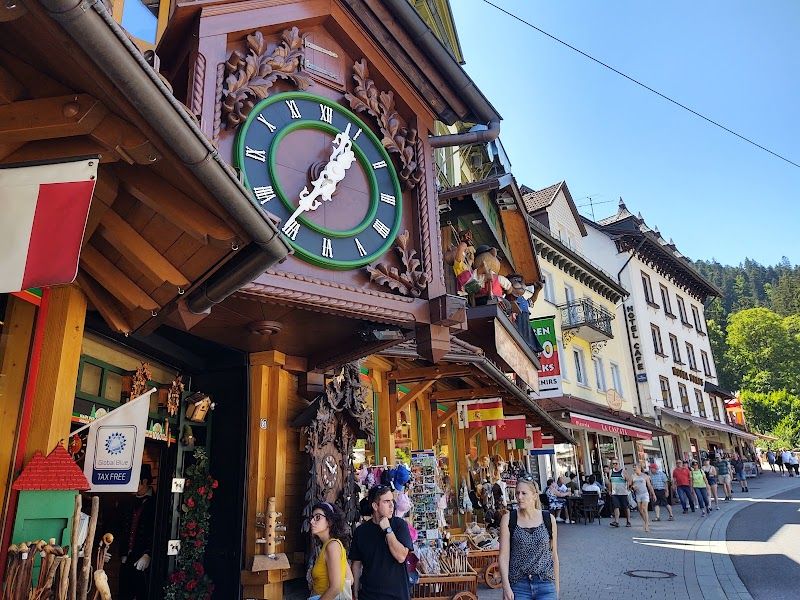
For those wanting to maximize their Black Forest experience before heading to Munich, consider visiting the Triberg Waterfalls early morning before departure, or exploring the traditional cuckoo clock shops along Hauptstrasse for last-minute souvenirs.