Planning a Triberg itinerary requires understanding this small Black Forest town's unique rhythm. Most visitors rush through in half a day, missing the forest trails, local workshops, and the best cake spots. This 2-3 day Triberg itinerary gives you time to properly explore Germany's highest waterfalls, understand the cuckoo clock tradition, and venture beyond the main tourist strip.
Triberg sits at 700 meters elevation in a narrow valley, with just 4,700 residents and one main street lined with clock shops. The key is balancing the must-see attractions with the quieter discoveries that make this place special. Here's how to spend your time wisely.
Day 1: Waterfalls and Town Center Foundations
Morning: Triberg Waterfalls Deep Dive
Start early at the Triberg Waterfalls before tour buses arrive. Entry costs EUR 8 for adults and EUR 5 for kids 6-17. The 163-meter cascade drops through seven stages, and you have three trail options.
The Kulturweg (cultural path) is paved and stroller-accessible for the lower stages, taking 45 minutes round trip to the main viewing platforms. The Naturweg (nature path) is more demanding but gets you closer to the water, requiring 1.5 hours for the full circuit. The Kaskadenweg (cascade path) is the most challenging, climbing alongside all seven falls over 2 hours.
Take the Naturweg for your first visit. The wooden boardwalks and stone steps bring you within spray distance of the falls, and the forest setting is properly immersive. The granite walls and mixed beech-spruce woodland create the classic Black Forest atmosphere you came for.
Practical tip: if you're staying locally with a KONUS guest card, waterfall entry is free. The ticket booth opens at 8:30 AM in summer, 9 AM in winter.
Late Morning: Schwarzwaldmuseum Context
The Schwarzwaldmuseum Triberg sits right by the waterfall entrance, making it a logical next stop. Entry is EUR 6 for adults, EUR 3 for kids. This isn't just another regional museum - it houses one of Europe's largest mechanical music collections with 3,000 pieces.
The ground floor covers Black Forest farming, forestry, and traditional crafts. The upper floors focus on clockmaking and mechanical instruments. The highlight is the afternoon demonstrations (usually 2 PM and 4 PM) where they play the orchestrions and barrel organs. Plan your visit around these demos - the museum is worth 30 minutes without them, 90 minutes with them.
Closed Mondays in winter, so check the schedule if visiting November through March.
Afternoon: Hauptstrasse Reality Check
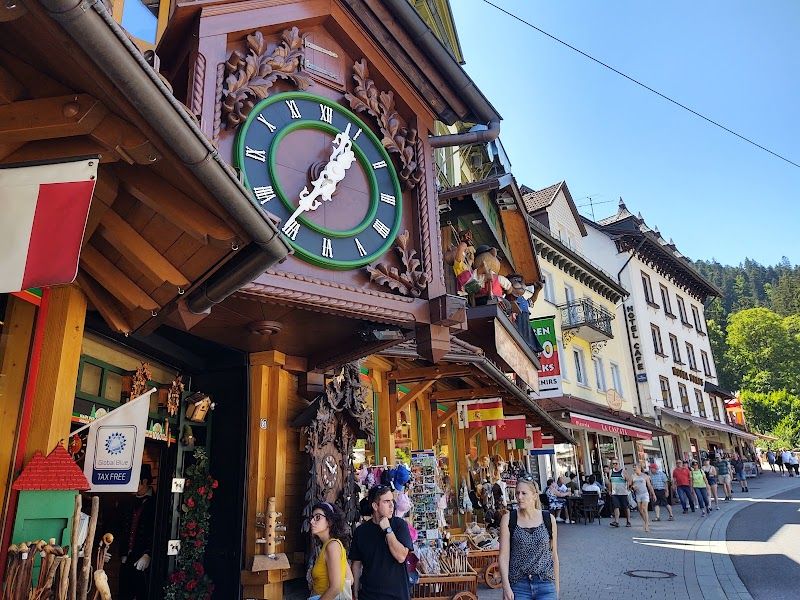
Triberg's main street runs 600 meters between the upper and lower village, and it's where most visitors spend their time. The town center is essentially one long strip of cuckoo clock shops, but not all are worth your time.
Skip the generic souvenir shops and focus on three serious clockmakers: Uhren-Park Rombach has the widest selection of authentic clocks, from EUR 150 simple mechanisms to EUR 2,000 hand-carved masterpieces. The House of 1000 Clocks near the waterfall entrance specializes in antique timepieces and repairs. For the full cuckoo clock story, read our dedicated guide to Triberg's clock shops.
Don't buy on impulse. Genuine Black Forest cuckoo clocks carry certification marks and come with detailed provenance. Mass-produced imports dominate the market, so ask about local manufacture and warranty terms.
Evening: Black Forest Cake Reality
End day one with the real Schwarzwalder Kirschtorte experience. Cafe Schaefer on Hauptstrasse 33 claims to serve the original recipe - expect to pay EUR 5-6 per slice with the traditional kirsch accompaniment. The afternoon tour bus crowd (11 AM-2 PM) makes this spot chaotic, but evenings are calmer.
Filter coffee, not espresso, is the traditional pairing (EUR 3-4). The combination of chocolate sponge, cherries, kirsch, and whipped cream needs the mild bitterness of German filter coffee to balance the sweetness.
For the complete Black Forest cake story across multiple venues, check our Black Forest cake trail guide.
Day 2: Schonach and Extended Exploration
Morning: World's Largest Cuckoo Clock
Drive or take the bus 5 km west on the B500 to Schonach, population 4,000. The main attraction is the walk-in cuckoo clock at Eble Uhren-Park - entry costs EUR 2-3 for a 20-minute visit. Cuckoo performances happen at 15 and 45 minutes past each hour.
This isn't just a tourist gimmick. The 60-square-meter clock actually works, with a 4.5-meter pendulum and cuckoo calls that carry across the village. The mechanism tour explains traditional Black Forest clockmaking techniques using oversized working parts.
The surrounding village showcases traditional Black Forest architecture better than Triberg's commercialized center. Schonacher Strasse has well-preserved farmhouses with the characteristic deep-eaved roofs designed for heavy snow loads.
Late Morning: Rohrhardsberg Viewpoint
The Schonacher Rohrhardsberg viewpoint requires a 3 km drive up winding forest roads, but the panorama justifies the effort. At 1,152 meters elevation, you get 360-degree views across the central Black Forest ridges.
On clear days, the vista extends to the Rhine Valley and Vosges Mountains in France. This is the money shot for Black Forest landscape photography - endless forested ridges rolling to the horizon. The observation tower adds another 20 meters of elevation and costs nothing to climb.
Practical note: the access road can be challenging in winter conditions. Check local weather and road status before attempting the drive between December and March.
Afternoon: Gutach Valley Museums
The Gutach Valley runs 8 km northwest from Triberg along the B33, containing two major attractions that deserve half a day.
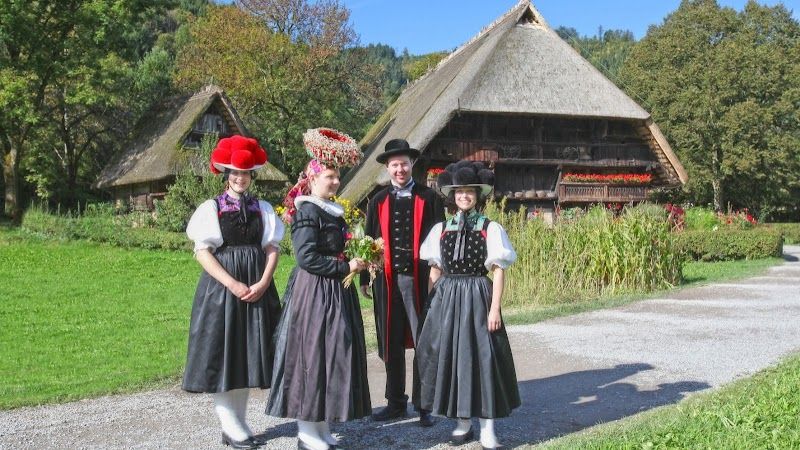
Vogtsbauernhof Open Air Museum is the Black Forest's flagship heritage site. Adult entry costs EUR 12, kids 6-17 pay EUR 6. The 20 original farm buildings span 400 years of regional architecture and rural life.
The bread-baking demonstrations (usually Tuesday and Friday afternoons) show traditional wood-fired techniques. The sawmill, grain mill, and smithy operate on weekends. Budget 2-3 hours minimum - this is a serious museum, not a quick photo stop.
Closed November through late March, so this is summer-season only.
Late Afternoon: Summer Toboggan Adventure
The Schwarzwald-Sommerrodelbahn Gutach offers the Black Forest's best summer alpine slide. Individual rides cost EUR 3.50, or EUR 20 for a 6-pack. Kids 3-7 ride with adults; 8+ can ride solo.
The 1,200-meter track drops 120 meters through forest curves and banked turns. It's genuinely thrilling, not just a children's attraction. Weather dependent - closed during rain and from November through March.
Combine this with the open-air museum for a full Gutach Valley afternoon, though both attractions could easily fill separate days.
Evening: Traditional Gasthaus Dining
For authentic Badisch-Schwarzwald cuisine, try Restaurant Pfaff in the waterfalls neighborhood. Lunch plates run EUR 12-18: Maultaschen (Swabian ravioli) EUR 12-16, Schwarzwaldforelle (Black Forest trout) EUR 18-24.
Flammkuchen (Alsatian flatbread) costs EUR 10-14 and pairs well with local Rothaus beer. The portions are substantial - German Gasthaus cooking assumes you've been hiking all day.
Day 3: Extended Black Forest Exploration
Morning: Dorotheenhütte Glassworks
If you have a third day, expand your radius to include Dorotheenhütte Wolfach, about 15 km northeast. This working glassworks demonstrates mouth-blown glass production techniques dating to 1843.
The 45-minute guided tours show master craftsmen creating everything from Christmas ornaments to scientific instruments. Tours run every hour from 9 AM to 4 PM, with English commentary available on request.
This adds historical context to the cuckoo clock story - the same artisan traditions that created the clockmaking industry also sustained glass production, woodcarving, and precision metalwork throughout the Black Forest.
Late Morning: Wallfahrtskirche Maria in der Tanne
The pilgrimage church sits 2 km uphill from central Triberg, accessible by forest trail or road. This baroque chapel from 1705 represents the Catholic pilgrimage tradition that shaped Black Forest culture.
The interior features elaborate woodcarving and painted ceiling panels depicting regional religious stories. Free entry, usually open 8 AM-6 PM. The surrounding forest clearing provides peaceful contrast to the commercial tourism below.
The walk up takes 30 minutes through mixed woodland, following stations of the cross. It's a proper forest hike, not a casual stroll.
Afternoon: Advanced Waterfall Trails
If you completed the Naturweg on day one, return to attempt the Kaskadenweg - the most challenging of the three waterfall trails. This 2-hour circuit climbs alongside all seven cascade stages, requiring sure footing on steep, sometimes slippery paths.
The upper reaches, beyond where most visitors turn back, offer the most dramatic granite gorge scenery. Proper hiking boots are essential - the tourist-friendly boardwalks end after the third cascade.
Alternatively, explore the forest trail network beyond the official waterfall paths. Trail markers lead to viewpoints and smaller cascades that see almost no visitors.
Planning Your Triberg Weekend Itinerary
Two days covers the essentials - waterfalls, main clockmaking sites, Schonach's giant cuckoo clock, and either the Gutach Valley museums or extended forest hiking. Three days allows for both museum visits and serious trail exploration.
Weather considerations: Summer (June-August) brings crowds but all attractions operate. Spring (April-May) and fall (September-October) offer better hiking conditions and autumn colors. Winter transforms the waterfalls into ice sculptures, though some trails become inaccessible.
Transportation: A car provides maximum flexibility for Schonach, Gutach Valley, and forest viewpoints. Public transport connects major sites but limits scheduling freedom. The regional KONUS guest card (included with most hotel stays) covers local buses and waterfall entry.
Practical Triberg Itinerary Tips
Budget Planning
A two-day Triberg itinerary costs approximately:
- Waterfall entry: EUR 8 per adult
- Museum entries: EUR 6-12 per attraction
- Meals: EUR 25-35 per person per day
- Cuckoo clock (if buying): EUR 150-500 for authentic pieces
- Total daily budget: EUR 50-70 per person excluding accommodation
Accommodation Strategy
Stay in central Triberg for walking access to waterfalls and shops, or choose Schonach for quieter surroundings and easy access to hiking trails. Both locations include KONUS cards with hotel bookings.
Family Considerations
Triberg works well for families - see our complete guide to visiting Triberg with kids for playground locations, stroller-friendly trails, and child-oriented attractions.
Best Time to Visit
Late spring through early fall (May-October) offers the best combination of weather, attraction availability, and trail conditions. July-August brings peak crowds but also extended opening hours and full event schedules.
Winter visits require different expectations - some attractions close, trails become challenging, but the snow-covered waterfalls and Christmas markets create their own appeal.
This Triberg itinerary balances the major attractions with authentic local experiences. Most visitors see only the commercial surface - the real Black Forest culture lies in the forest trails, traditional workshops, and family-run Gasthäuser that have served travelers for generations.
Skip the rushed day trip approach. Triberg rewards slow exploration, whether you're watching master clockmakers at work, following forest streams to hidden waterfalls, or simply understanding why this particular valley became the heart of an entire regional industry. Two to three days gives you time to move beyond the souvenir shops and connect with the landscape and traditions that created this unique corner of Germany.