The Titisee-Neustadt food scene splits neatly between two distinct dining experiences: tourist-focused lakefront restaurants with mountain views and prices to match, and authentic village gasthauses where locals actually eat. Understanding this divide is crucial for finding the right meal at the right price.
The lakefront promenade restaurants charge EUR 13-22 for lunch plates and offer predictable German fare with lake views. Meanwhile, village restaurants in Neustadt and nearby Hinterzarten serve the same dishes for 20-30% less while maintaining better quality and authentic preparation. The key is knowing which spots deliver genuine Black Forest cuisine versus tourist-trap versions.
Titisee Neustadt Restaurants by Neighborhood
Lakefront Dining with Views
The Titisee lakefront promenade stretches for 1 km along the north shore, packed with restaurants capitalizing on the lake views. You'll pay premium prices here - expect EUR 20-35 for dinner - but the setting delivers.
Bootsvermietung am Titisee Kiosk sits at the western end of the promenade near the boat rental pier. This isn't just a kiosk - it serves proper meals with direct lake access. The Schwarzwaldforelle (Black Forest trout) costs EUR 18-24 and comes from local streams. The outdoor seating puts you 10 meters from the water, making it worth the tourist premium during summer.
For a more substantial lakefront meal, the restaurants along Seestraße offer covered terraces and full menus. Mid-range dinners run EUR 20-35, with Jägerschnitzel (hunter's schnitzel) at EUR 16-22 and Zwiebelrostbraten (roast beef with onions) at EUR 22-28. The food quality varies wildly between establishments, but the consistent factor is the 50% markup for the view.
Bäckerei Café Armbruster provides the best value on the lakefront strip. This traditional German bakery serves breakfast pastries from EUR 2-4 and light lunches under EUR 10. The Schwarzwälder Kirschtorte (Black Forest cake) here is legitimate - made with proper Kirschwasser and local cherries - unlike the mass-produced versions at tourist restaurants.
Authentic Village Gasthauses in Neustadt
The real Titisee neustadt food experience happens 6 km east in Neustadt village, where restaurants serve locals year-round instead of seasonal tourists. Prices drop significantly, and quality improves.
Gasthaus Löwen represents everything a Black Forest gasthof should be. The dining room features dark wood paneling, ceramic tile ovens, and tables that have hosted families for decades. Their Sauerbraten (marinated roast beef) at EUR 18-22 slow-cooks for 3 days in wine vinegar and spices. The potato dumplings come made fresh daily, not from a package.
The wine list focuses on Baden region bottles - this is one of Germany's southernmost wine regions, producing excellent Pinot Noir (called Spätburgunder) and Grauburgunder (Pinot Grigio). Local wines start at EUR 4-6 per glass, significantly less than lakefront restaurant markups.
Restaurant Hirschen occupies a 200-year-old half-timbered building on Neustadt's main square. The kitchen specializes in game dishes during autumn and winter months. Wild boar with spätzle costs EUR 19-25, while venison medallions run EUR 24-28. The meat comes from local forests, processed by the restaurant's own butcher.
During spring and summer, Restaurant Hirschen switches to lighter fare featuring local vegetables and stream fish. The asparagus season special (May-June) at EUR 16-20 includes white asparagus from the Rhine valley, served with new potatoes and hollandaise sauce.
The village end of Titisee-Neustadt feeds locals year-round, and it shows in the prices: Jägerschnitzel that runs EUR 22 to 26 at the lakefront sells for EUR 16 to 18 in the village Gasthäuser, with larger portions. Gasthaus Löwen works as the village social room, with a daily menu that follows the season and the hunt, and regional beer from Rothaus and Alpirsbacher. Two caveats: village kitchens mostly stop at 8 PM, and hours turn irregular off-season.
What the lakefront markup looks like in practice:
| Item | Lakefront | Neustadt village |
|---|---|---|
| Jägerschnitzel | EUR 22-26 | EUR 16-18 |
| Half-liter beer | EUR 4.50-5.50 | EUR 3.20-3.80 |
| Black Forest cake slice | EUR 6.50-8.50 | EUR 4.20-5.20 |
| Daily lunch special | EUR 15-22 | EUR 11-14 |
Black Forest Cuisine Specialties
Understanding authentic Black Forest cuisine helps separate genuine restaurants from tourist traps. Traditional Schwarzwald cooking developed around preserving food through harsh mountain winters, creating distinctive techniques still used today.
Speck (smoked bacon) appears in nearly every dish. Local restaurants smoke their own using Black Forest fir wood, creating a distinctive resinous flavor impossible to replicate elsewhere. Tourist restaurants use mass-produced commercial speck that tastes nothing like the original.
Sauerbraten requires 3-4 days of marinating in wine vinegar, bay leaves, juniper berries, and spices. Authentic versions use local game or beef, marinated and slow-roasted until fork-tender. The gravy incorporates the marinade, creating complex flavors that develop over days. Quick tourist versions marinate for hours, not days.
Maultaschen originated in neighboring Swabia but became popular throughout southwestern Germany. These large pasta parcels contain minced meat, spinach, and herbs. Quality versions use fresh pasta dough rolled thin, with filling made from scratch. Tourist restaurants buy frozen maultaschen and serve them in cheap broth.
Schäufele (pork shoulder) represents peak Black Forest technique. The shoulder slow-roasts for 3-4 hours until the skin crisps while meat stays tender. Traditional preparation includes sauerkraut fermented with juniper berries and caraway seeds. Good schäufele takes all day to prepare properly.
Regional Specialties and Where to Find Them
Hinterzarten's Upscale Dining Scene
The village of Hinterzarten, 10 minutes west toward Freiburg, offers the region's most sophisticated restaurants. This upscale resort town attracts wealthy German families, supporting restaurants that would struggle elsewhere.
Hofgut Sternen sits in a converted 17th-century farmhouse beside the Ravenna Gorge. The restaurant earned recognition for elevating traditional Black Forest ingredients using modern techniques. Venison with juniper berry reduction costs EUR 32-38, while Black Forest trout with wild mushrooms runs EUR 26-32. The wine cellar stocks over 200 German and Alsatian bottles.
The dining room features vaulted ceilings, exposed beams, and windows overlooking the Ravenna stream. Dinner reservations are essential during peak summer months and winter ski season. The restaurant closes Mondays and takes a 3-week break in November.
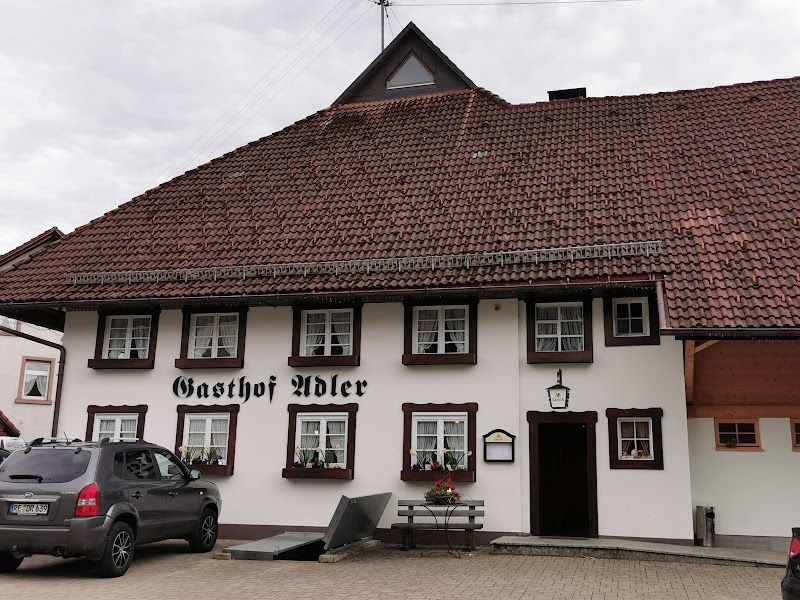
Gasthaus Adler Neustadt (confusingly named, but located in Hinterzarten) offers excellent food at more reasonable prices. The Black Forest ham platter at EUR 14-18 includes three types of locally-smoked ham, fresh bread, and pickled vegetables. Their spätzle with wild mushrooms costs EUR 12-16 and comes topped with aged mountain cheese.
Gasthaus Sternen Post provides the village's most traditional atmosphere. The building dates to 1697, when it served travelers crossing the Black Forest. Today's menu reflects that heritage: hearty stews at EUR 15-22, roasted pork knuckle at EUR 18-24, and seasonal game dishes from EUR 22-28. The beer garden operates May through September, weather permitting.
Local Beer and Spirits
Bräustüble Rothaus represents the Black Forest's most famous brewery, though the restaurant sits 45 minutes south in Grafenhausen-Rothaus. The brewery tour and tasting costs EUR 12-15 and includes transportation from Titisee during summer months. Rothaus Pils appears on every restaurant menu in the region - it's the local beer equivalent of Coca-Cola.
For spirits, every restaurant stocks Kirschwasser (cherry brandy), the essential ingredient in authentic Schwarzwälder Kirschtorte. Quality Kirschwasser costs EUR 6-8 per shot and burns cleanly with intense cherry flavor. Tourist versions use artificial flavoring and taste like cough medicine.
Himbeergeist (raspberry brandy) and Williams-Christ Birne (pear brandy) also come from local distilleries. These fruit brandies appear as digestifs after heavy meals. Prices range from EUR 5-12 per shot, depending on distillery quality and restaurant markup.
Seasonal Dining Patterns
Restaurant operations follow strict seasonal patterns that affect both availability and pricing. Understanding these cycles helps plan better meals.
Summer (June-August): All restaurants operate full schedules. Lakefront restaurants extend hours until 10 PM and add outdoor seating. Prices peak during July-August weekends when German families flood the region. Reservations become essential at quality restaurants.
Spring/Fall (April-May, September-October): Shoulder seasons offer the best dining experiences. Restaurants focus on local customers instead of tourists, improving food quality and service. Prices drop 15-20% compared to peak summer. Wild mushroom and game seasons (September-November) showcase regional specialties.
Winter (November-March): Many lakefront restaurants close entirely or operate weekend-only schedules. Village gasthauses in Neustadt and Hinterzarten remain open, focusing on hearty winter dishes. This is peak season for authentic Black Forest cuisine - sauerbraten, wild boar, venison, and warming stews.
Practical Dining Information
Price Breakdown by Restaurant Type
| Restaurant Type | Lunch | Dinner | Wine/Beer |
|---|---|---|---|
| Lakefront Tourist | EUR 13-22 | EUR 20-35 | EUR 5-8 |
| Village Gasthof | EUR 10-16 | EUR 15-25 | EUR 3-6 |
| Hinterzarten Upscale | EUR 18-28 | EUR 25-40 | EUR 6-12 |
| Café/Bakery | EUR 3-8 | N/A | EUR 2-4 |
Making Reservations
German restaurants operate differently than American establishments. Most accept walk-ins for lunch but require dinner reservations, especially on weekends and during peak season. Call by 2 PM the same day for evening tables.
Many traditional gasthauses close one day per week (usually Monday or Tuesday) and take annual breaks in November or February. Check restaurant websites or call ahead before making plans around specific establishments.
Dietary Restrictions
Traditional Black Forest cuisine relies heavily on meat, but most restaurants accommodate dietary restrictions with advance notice. Vegetarian options typically include spätzle dishes, salads, and seasonal vegetables. Vegan options remain limited outside upscale Hinterzarten restaurants.
Gluten-free diners face challenges since spätzle, maultaschen, and traditional gravies all contain wheat. Some restaurants offer gluten-free bread and modified dishes, but selection stays limited. The best strategy involves calling restaurants directly to discuss options.
Getting Around Between Restaurants
The Hollentalbahn train connects Freiburg to Titisee for EUR 8-10 each way. The KONUS guest card (included with most hotel stays) provides free regional train and bus transportation. Buses connect Titisee lakefront to Neustadt village every 30 minutes during peak season.
Parking costs EUR 2-4 per hour along the lakefront during summer months. Free parking exists in Neustadt village and Hinterzarten, making village restaurants more accessible for drivers.
Beyond Traditional Restaurants
For visitors seeking variety beyond traditional German fare, options remain limited but improving. The lakefront area includes pizza restaurants and Asian takeout, though quality varies significantly. Schwarzwald Spezialitäten Hansemann offers gourmet food products and local specialties for self-catering.
Families planning extended stays should consider the indoor attractions during poor weather and remember that restaurant quality improves dramatically when you venture beyond the immediate lakefront tourist zone.
The Titisee-Neustadt food scene rewards travelers who research beyond obvious lakefront options. Village gasthauses serve authentic cuisine at fair prices, while upscale Hinterzarten restaurants elevate traditional ingredients using modern techniques. Understanding seasonal patterns, making appropriate reservations, and exploring beyond the tourist zone leads to memorable meals that capture the true spirit of Black Forest cuisine.