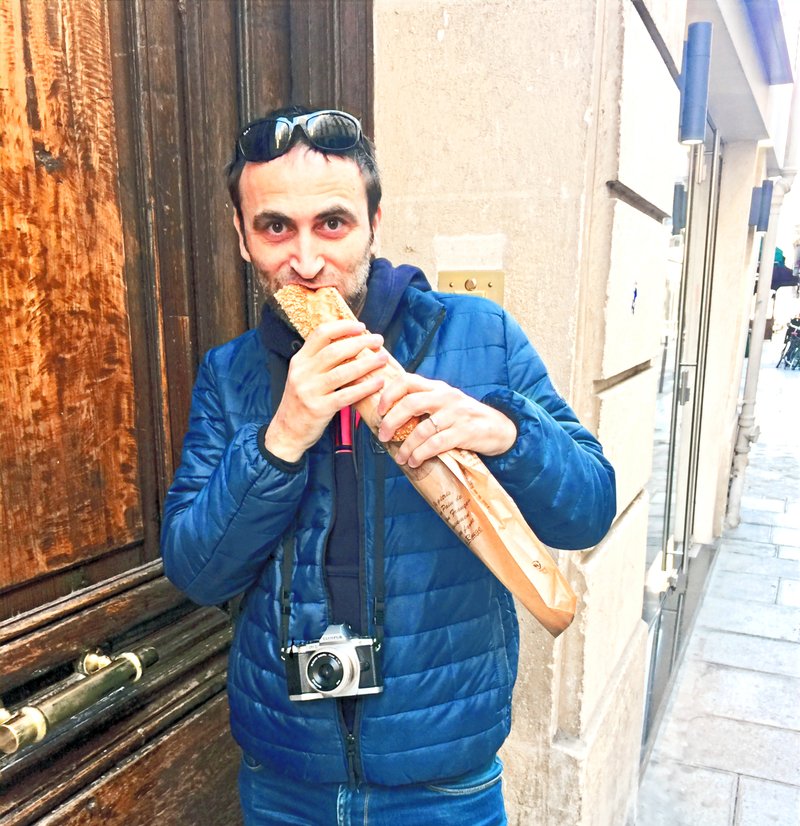
Prague's food tour scene has exploded in the past five years, and that's both a good and a bad thing. The good: you now have real options, from market tours in Holešovice to four-hour Old Town tasting crawls. The bad: a lot of what gets marketed as the best food tours in Prague is tourist-trap packaging around food you could find yourself for half the price. This guide separates the two.
The honest starting point is this: Czech cuisine is not complex food tourism territory. You are not navigating a 50-dish regional tradition that requires an expert guide to decode. What a good Prague food tour actually gives you is context, access to spots you would walk past, and the kind of local knowledge that changes how you eat for the rest of your trip. When a tour delivers that, it earns its fee. When it doesn't, you're paying EUR 40-70 to eat trdelník near the Old Town Square with twenty strangers.
Here is how to make the right call.
What Types of Prague Food Tours Actually Exist
The market breaks down into four main formats. Understanding which one matches how you travel saves you from booking the wrong thing.
Old Town Tasting Walks
This is the dominant format. A guide leads a group of 6-20 people through Staré Město, stopping at six to eight spots over two to three hours. You eat small portions: a slice of svíčková, a shot of Becherovka, some charcuterie, maybe a craft beer. Total food quantity is rarely a full meal.
What you pay: approximately EUR 40-65 per person, depending on group size and operator. Private versions run approximately EUR 120-180 for two.
The verdict: Worth it if you're on your first day in Prague and want orientation alongside food. Not worth it if you've already wandered the Old Town or if you'd rather eat full portions at real restaurants. The stopping points in this format are almost always tourist-adjacent, meaning the restaurants themselves aren't places you'd return to on your own.
For a better sense of where to actually eat after the tour ends, our neighbourhood food guide covers the city district by district.
Prague Market Tours
A smaller category but genuinely the more interesting one. Market tours centre on working food markets rather than restaurant stops. The main venue is the Holešovice Market Hall in Holešovice, which operates as a proper food and goods market on weekends. Some operators also run tours through Havelské tržiště (Havelska Market), the covered market near the Old Town that sells produce, cheese, and smoked meats.
These tours tend to be smaller, around 4-8 people, and involve more cooking or buying than passive tasting. You might pick ingredients, watch a butcher work, or sit down to a meal assembled from market produce.
What you pay: approximately EUR 55-80 per person for guided market tours with tastings.
The verdict: Better than the walking tasting format for people who actually cook at home and want to understand the food supply chain. The Holešovice Market Hall is worth visiting on your own too, on a Saturday morning, before the tour crowds arrive.
Prague Cooking Classes
A prague cooking class is a different commitment: typically three to four hours, a group of 4-12 people, and a proper sit-down meal at the end. You learn to make svíčková (beef sirloin in cream sauce), knedlíky (bread dumplings), or Czech potato soup. Some classes include a market visit to buy ingredients first.
What you pay: approximately EUR 65-95 per person, with private classes running approximately EUR 180-250 for two.
The verdict: The right choice if you care about replicating Czech food at home, or if you want a social activity rather than a walking tour. The quality varies significantly by operator. Look for classes with a maximum of eight people and a native Czech instructor. Classes run by expats who learned Czech cooking as a hobby are common and generally not worth the premium.
Beer and Food Pairing Tours
Prague's beer culture is good enough to justify its own tour format, and the best operators combine brewery visits with food stops. This usually means a craft beer bar in Vinohrady, a traditional pub in Žižkov, and some education on Czech lager styles. Food is secondary, typically charcuterie boards or pub snacks.
For the full beer-focused picture, we covered the specifics in the Prague beer guide. If beer is your primary motivation, start there before booking any tour.
What you pay: approximately EUR 45-70 per person.
The verdict: Good value for beer tourists specifically. Not a substitute for a food tour if you actually want to understand Czech cuisine.
The Rankings: Three Prague Food Tours Worth Booking
Prague's tour market is crowded, and most of it is interchangeable. These three are the ones we list on our activity pages, ranked.
1. Prague Food Tour: Karlín and Holešovice
Prague Food Tour: Karlín and Holešovice is the full picture: four hours and six stops, from svíčková na knedlíku at a traditional restaurant through an artisan deli with house-cured meats, a neighborhood bakery making the authentic trdelník rather than the tourist version, a Czech-fusion bistro, a craft brewery, and a classic lokál where the tapster shows you the pouring technique. It runs about 3 km on cobblestones and costs 1,200 CZK, and the portions replace lunch and dinner, so book the 2pm departure and come hungry but not starving. The verdict: the one to pick if you want Czech food explained end to end, in the two neighborhoods where Prague actually eats. Skip it if four hours on foot sounds like a chore; the wine tasting below fits in 90 minutes.
2. Prague Beer Tour
Prague Beer Tour covers beer halls and brewpubs over three to four hours, with four to six Czech beers, brewing history, tasting technique, and neighborhood pubs visitors would never find on their own. It costs 1,200 to 1,800 CZK including all tastings and snacks, and the pub food along the way, utopenec and nakládaný hermelín among it, is part of the experience rather than a garnish. Evening departures have the better atmosphere, and routes that include Žižkov beat the Old-Town-only versions. The verdict: the pick when beer is the point and food is the supporting act. Skip it if you want to understand Czech cuisine; that is the Karlín tour's job.
3. Vinohrady Wine Tasting Experience
Vinohrady Wine Tasting Experience is 90 minutes with a certified sommelier in a living-room-style wine bar in residential Vinohrady: six Moravian wines from the Mikulov and Znojmo regions, poured into Burgundy glasses alongside aged Czech cheeses and charcuterie. It runs around 1,200 CZK, bottles are there to buy at 300 to 800 CZK with no sales pressure, and the Moravian whites, the Riesling and Grüner Veltliner especially, outshine the reds. Ask about the Thursday 4pm slot; it sometimes opens special bottles. The verdict: the shortest commitment and the best fit for a first evening or a rainy afternoon. Skip it if you came for beer country's greatest hits; Moravian wine is its own quieter story.
Everything below is how to judge the rest of the market.
How to Compare Prague Food Tours: The Key Questions
Before you book anything, run through this checklist.
| Question | Why It Matters |
|---|---|
| What is the maximum group size? | Under 10 is meaningful. Over 15 is a queue with commentary. |
| Are food portions meal-sized or tasting-sized? | This affects whether you need to eat before or after. |
| Which neighbourhoods does the tour cover? | Old Town only = tourist circuit. Vinohrady or Žižkov = local. |
| Is the guide Czech or expat? | Both can be excellent; ask about their background specifically. |
| What happens if a stop is closed? | Good operators have backups. Bad ones don't. |
| Are drinks included? | Many tours charge extra for alcohol, which adds EUR 10-20 per person. |
The Neighbourhood Question: Where the Tour Takes You Matters
This is the most important factor that most booking platforms don't emphasise. A prague old town food tour is a different experience from one that crosses into Vinohrady or Žižkov, and the food quality at the stops reflects that gap.
Old Town Food Tours: Honest Assessment
The Old Town is where most tours operate because it's where most tourists are. That's a circular logic that benefits operators more than participants. The restaurants in Staré Město that accept tour groups are generally not the restaurants that locals use. You will eat serviceable svíčková and drink decent beer, but you are not eating where Prague actually eats.
That said, there are exceptions. Lokál Dlouhááá on Dlouhá Street is a legitimate Czech pub that some tour operators include, and it's the real thing: tank-fresh Pilsner Urquell, proper food, and a crowd that is maybe 60% local depending on the time of day. If your tour stops here, that's a good sign about the operator's standards.
Café Imperial occasionally features in higher-end food tours, and it earns its place. The Art Deco tiled interior is genuinely worth seeing, and the food is better than the tourist-area average.
Beyond the Old Town: Where Better Tours Go
The prague food tours worth paying for are the ones that leave the first district. Here's what each neighbourhood brings:
Vinohrady is where Prague's food scene has shifted over the past decade. The area around náměstí Míru and Mánesova Street has wine bars, natural wine shops, and Czech restaurants that cater to residents rather than visitors. A tour that brings you here for dinner is making a real argument about where Prague eats now.
Žižkov is rawer, cheaper, and less polished, which is precisely the point. The pubs here charge CZK 55-70 for a half-litre of beer versus CZK 90-120 in the Old Town. The food is straightforward: goulash, fried cheese, roast pork. No tour packaging required, but a guide who knows the right pub on the right street is useful.
Karlín has the newest restaurant scene in Prague, built after the 2002 floods forced a complete rebuild of the neighbourhood. Bistros and wine bars around Náměstí Jiřího z Poděbrad serve food that reflects current Prague rather than historical Czech. A tour that includes Karlín is telling you something honest about the city.
Prague Street Food: What's Real and What Isn't
A prague street food tour sounds appealing, but Prague is not a strong street food city by any reasonable global standard. The trdelník (chimney cake) sold in the Old Town for CZK 80-150 is not a traditional Czech food, despite what every vendor claims. It was popularised by tourism within the last 15 years and has almost no relationship to Czech culinary history.
Actual street food worth seeking out includes: párek v rohlíku (a Czech hot dog in a hollowed roll, CZK 40-60 from street stands near metro stations), smažený sýr (fried cheese, technically a pub dish but available as fast food, around CZK 60-90), and langos (Hungarian fried flatbread with toppings, available at markets, around CZK 80-130).
If a street food tour includes trdelník as a cultural highlight, that's a credibility problem for everything else on the itinerary.
Pricing Reality: What You Actually Pay vs. What You Get
Prague is one of Central Europe's best-value capitals, which creates a specific problem with food tours: the markup is proportionally large relative to what the individual stops would cost you independently.
A traditional goulash with bread runs CZK 180-320 at a proper restaurant. A half-litre of Pilsner Urquell costs CZK 55-120 depending on the venue. A mid-range dinner with a drink is CZK 400-800. Do that math against a EUR 55 tour fee (approximately CZK 1,375 at current rates) and ask what you're actually paying for.
The answer, when a tour is good, is: curation, conversation, and the prevention of the wrong choices. Prague has enough mediocre tourist restaurants that a guide who steers you past them genuinely saves you money over a trip. When a tour is bad, you're paying CZK 1,375 to eat CZK 400 worth of food in less interesting venues than you'd have found on your own.
For travellers watching their budget carefully, the Prague on a budget guide breaks down exactly where your money goes in this city.
How to Book: Practical Notes
Most Prague food tours book through platforms like GetYourGuide and Viator, and the three ranked above are bookable from their activity pages. Whichever route you take, read the cancellation terms before paying: policies differ more between operators than between platforms.
Book at least 48-72 hours ahead for weekend tours in summer (June-August). The best small-group tours, specifically anything capped at 8 people, fill up by Wednesday for the weekend.
Morning versus evening: Morning tours (starting 9-11 AM) hit markets at their peak and tend to include breakfast-style foods. Evening tours (starting 5-7 PM) are better for the full meal experience and work well if you're arriving in Prague midday. Evening tours in summer also give you good light for the walk between stops.
Solo travellers: Prague food tours are genuinely good solo activities. The small-group format means you will talk to people. If you're travelling alone and want a first-night social activity, a 6-person food tour beats eating solo at a restaurant you found by default.
If you're still building your full Prague plan, the DAIZ Prague hub covers everything from accommodation zones to day trips.
The Bottom Line on Prague Food Tours
Book a food tour if: you're in Prague for three or more days and want to understand the food culture beyond tourist-adjacent restaurants, you're travelling with someone who eats adventurously, or you specifically want a cooking class with a meal at the end.
Skip a food tour if: you're only in Prague for two days and have a full sightseeing agenda, you're comfortable navigating a city by instinct and already read neighbourhood food guides before you travel, or you're on a tight budget where EUR 55-80 per person is a significant spend.
The best food tours in Prague are the ones that take you somewhere you wouldn't have gone on your own. If the itinerary looks like your own walking route through the Old Town with snacks attached, it isn't worth the fee. If it crosses into Vinohrady, stops at a market you didn't know about, or puts you in a proper pub in Žižkov with a Czech pouring your beer, it probably is.
For what to eat after the tour, or if you're skipping the tour entirely, the Prague restaurants by neighbourhood guide gives you the specifics street by street.