Paris · Latin Quarter

Café de la Nouvelle Mairie

A beloved neighborhood wine bar and café on a quiet square near the Panthéon, known for its natural wine selection and daily-changing menu of French small plates.
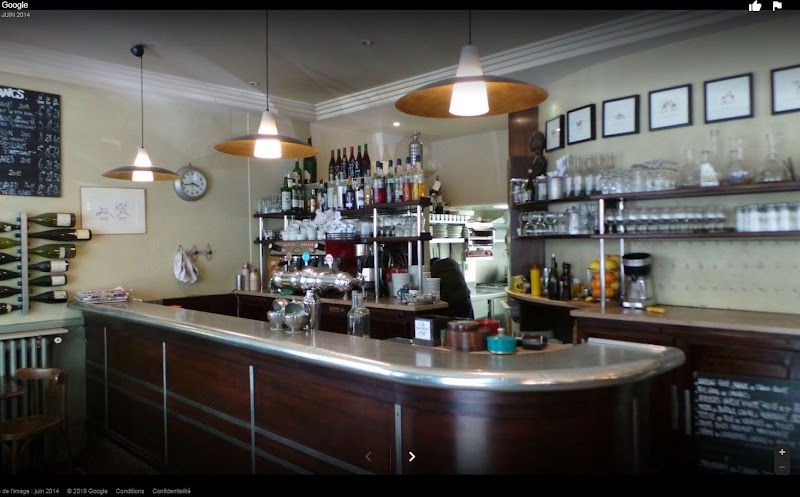
Café de la Nouvelle Mairie, Paris · Latin Quarter
Category
Cafe
Duration
1h 30m
Best Time
Morning
Entry
€€
Rating
3.7 (555)
The place

About Café de la Nouvelle Mairie

A beloved neighborhood wine bar and café on a quiet square near the Panthéon, known for its natural wine selection and daily-changing menu of French small plates. The unpretentious atmosphere attracts a local crowd of students, professors, and residents who appreciate quality over flash.

Book ahead

Book Tickets

Live availability and skip-the-line options from our booking partners.

Search on Viator →Search on GetYourGuide →

Booking powered by our partners. DAIZ may earn a commission.

The place

Getting there

Address
19 Rue des Fossés Saint-Jacques, 75005 Paris, France
Neighborhood
Latin Quarter
Nearest Metro
Cluny-La Sorbonne (Line 10)Maubert-Mutualite (Line 10)Jussieu (Lines 7, 10)
View on Google Maps →
Good to know

Tips, answered

Arrive before 7:30 PM to snag a table on the outdoor terrace-they don't take reservations and it fills up quickly with locals who know it's one of the best wine spots in the Quarter.

Plan for about 1h 30m. Morning visits are typically less crowded.

Café de la Nouvelle Mairie is in the Latin Quarter neighborhood of Paris. The address is 19 Rue des Fossés Saint-Jacques, 75005 Paris, France. The area is well-served by metro.

Morning visits, especially early, mean fewer crowds and better light for photos. Weekdays are significantly quieter than weekends.

Comfortable shoes are recommended. Parts are outdoors, so bring a light layer.

Closed on Sunday, Saturday. Check the official website for holiday closures and special hours.

Around the corner

Nearby in Latin Quarter

Explore all →
Arènes de Lutèce
Landmark

Arènes de Lutèce

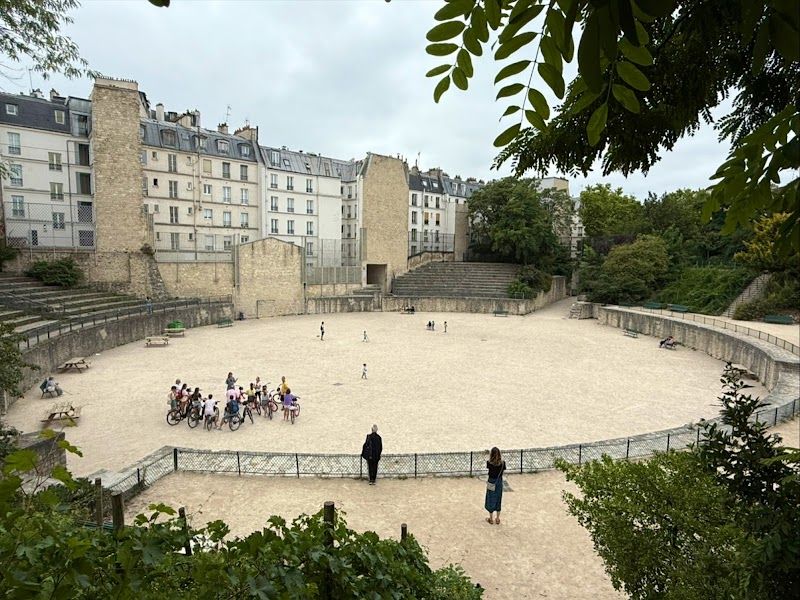
The Arènes de Lutèce are Paris's best-preserved Roman ruins, a 1st-century amphitheater where half the original structure still stands. You'll walk down into an actual arena where gladiators fought 2,000 years ago, with intact stone seating tiers climbing up grassy slopes and the original stage area clearly visible. The acoustics still work perfectly: whisper from the stage and someone in the upper seats will hear every word. The experience feels like discovering a neighborhood secret. You enter through small gates and suddenly you're standing on ancient Roman stones while Parisians play pétanque on the sandy arena floor. The contrast is striking: Haussmann apartments tower overhead while you sit on limestone blocks that once held 15,000 spectators when Paris was called Lutetia. Local kids use the seats as playground equipment, and elderly men gather daily for their boules games. Most people snap photos and leave in 10 minutes, which is their loss. The real magic happens when you claim a spot on the upper seats and watch daily Parisian life unfold in this ancient space. Skip the adjacent Square Capitan (it's just a regular park) and focus entirely on the amphitheater itself. Entry is completely free, and unlike most Roman sites, you can actually sit on the original stones.

30-45 minutesExplore
Panthéon
Landmark

Panthéon

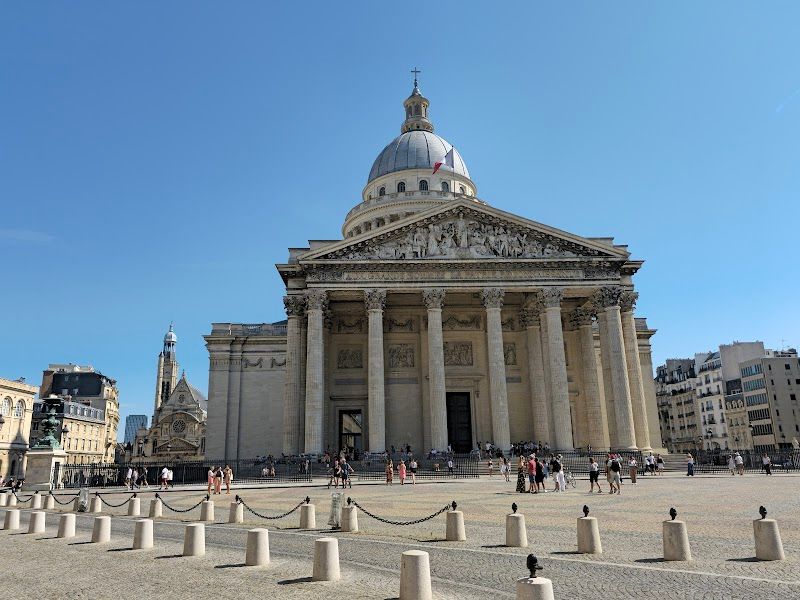
The Panthéon functions as France's Westminster Abbey, housing the tombs of 81 luminaries in its crypt including Marie Curie (the only woman based on her own achievements), Voltaire, and Rousseau. The neoclassical dome interior surprises with massive scale and José María Sert's dark frescoes depicting Saint Geneviève, while Foucault's 67-meter pendulum swings hypnotically in the center, knocking over metal pins as Earth rotates beneath it. Your visit starts in the soaring nave where the pendulum dominates-plan to watch it for several minutes as the physics become mesmerizing. The crypt below feels like wandering through French intellectual history, with simple stone tombs in candlelit chambers. The dome climb involves 206 steps but rewards with unobstructed views toward Notre-Dame and across the 5th arrondissement's Haussmann rooftops. Most visitors rush through in 30 minutes and miss the building's story. The bronze doors depicting scenes from French history deserve attention, and the model of the pendulum explains the elegant physics better than the signage. Skip the overpriced audio guide-the plaques provide sufficient context. The dome climb costs extra but offers Paris's best lesser-known panorama, especially dramatic in late afternoon light.

1-2 hoursExplore
Jardin des Plantes
Park & Garden

Jardin des Plantes

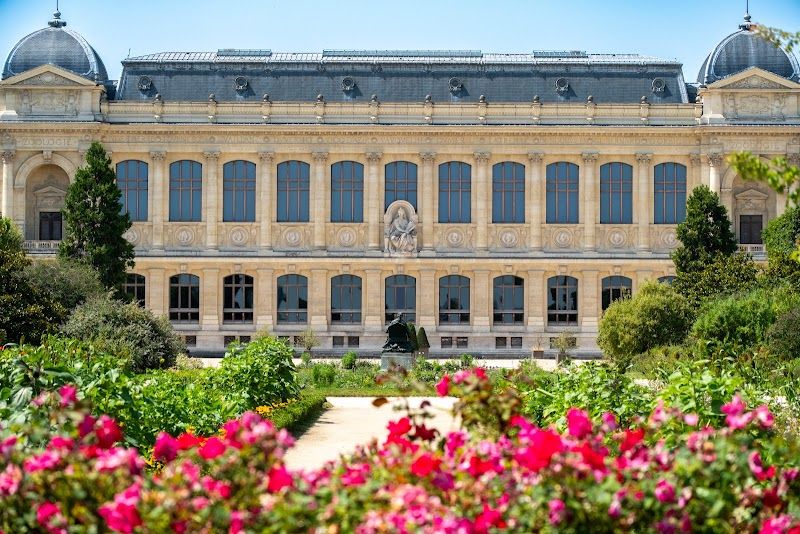
This sprawling 70-acre complex combines France's oldest botanical garden with a natural history museum and small zoo in one sprawling site. The gardens showcase everything from systematic plant collections to themed areas like the rose garden and iris beds, while the Grande Galerie de l'Évolution houses spectacular taxidermy displays including a procession of African animals and extinct species like the quagga. The tropical greenhouse feels like stepping into a rainforest, complete with humid air and towering palms. The sheer size can be overwhelming - you'll spend most of your time walking between different sections on gravel paths. The botanical gardens feel more educational than decorative, with plenty of scientific labeling but fewer Instagram-worthy flower displays than other Paris gardens. The natural history galleries are genuinely impressive, especially the main evolution hall with its dramatic lighting and Victorian-era cases filled with specimens. Most visitors underestimate how much time they need - 2.5 hours barely scratches the surface if you want to see both gardens and museums. The zoo section is frankly dated and small compared to Vincennes, so skip it unless you're with kids. Focus your energy on the evolution gallery and the tropical greenhouses, then wander whichever garden sections match your interests. The geology gallery gets overlooked but has stunning mineral displays.

2-3 hoursExplore
Family

Muséum National d'Histoire Naturelle

This natural history museum sprawls across multiple buildings in the Jardin des Plantes, with the Grande Galerie de l'Évolution as its crown jewel. Inside that soaring glass-roofed hall, you'll find life-sized elephants, giraffes, and zebras frozen mid-migration, while overhead galleries showcase evolution through interactive displays. The separate Paleontology Gallery houses France's most impressive dinosaur collection, including a massive Diplodocus skeleton. The visit feels like exploring several museums connected by garden paths. The Grande Galerie's ground floor procession is genuinely spectacular - kids press against the barriers to get closer to the towering elephants. The lighting shifts dramatically throughout the day, casting different moods across the animal displays. The upper levels focus more on extinction and biodiversity, which can feel heavy after the wonder downstairs. Most visitors underestimate how much walking is involved between buildings. The mineral gallery is skippable unless you're genuinely into geology. The Children's Gallery gets packed on weekends and isn't worth the wait if you're already doing the main halls. Budget 3-4 hours if you want to see everything properly, or just hit the Grande Galerie and Paleontology Gallery for the highlights.

2-3 hoursExplore
Gallery of Evolution
Museum

Gallery of Evolution

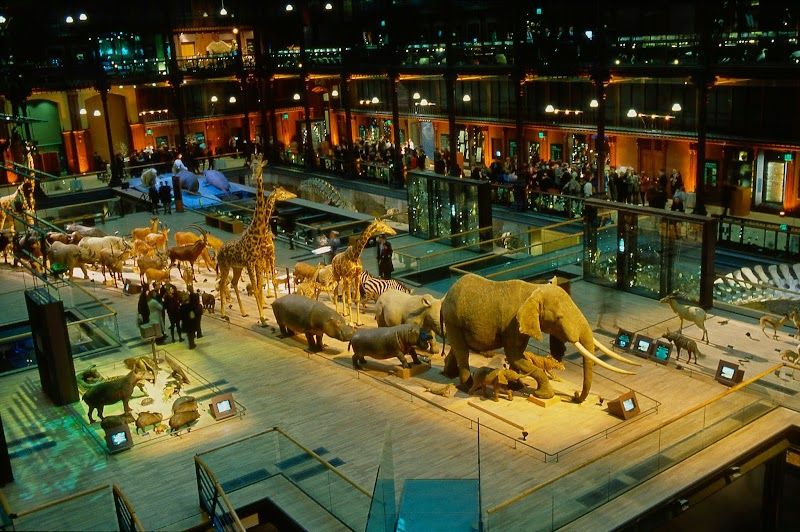
The Gallery of Evolution houses the National Museum of Natural History's most impressive collection in an 1889 iron and glass hall. The central nave features a massive parade of taxidermied animals arranged as if migrating across the African savanna. Elephants, giraffes, zebras, and rhinos are frozen mid-stride under soaring windows that flood the space with natural light. The upper galleries display extinct species, including dodo birds and Tasmanian tigers, alongside specimens showing evolutionary adaptation. You enter on the ground floor facing the animal procession, then spiral upward through three levels via the perimeter walkways. The second floor focuses on marine life with whale skeletons suspended overhead, while the third level houses the endangered species room. This is a sobering but beautifully presented space. The Galerie des Enfants occupies the entire first floor with hands-on exhibits about ecosystems, though it feels somewhat disconnected from the main attraction. Most visitors spend too much time photographing the ground floor spectacle and rush through the upper levels, but the third floor's climate change exhibits are actually more thought-provoking than the animal parade below. The audio guide is decent but unnecessary - the displays are well-labeled in French and English. Skip the basement temporary exhibitions unless they specifically interest you; the permanent collection is the real draw here.

2 hoursExplore
La Ménagerie, le zoo du Jardin des Plantes
Attraction

La Ménagerie, le zoo du Jardin des Plantes

This intimate zoo feels more like wandering through a Victorian naturalist's private collection than a modern zoo. The historic rotunda houses massive Galápagos tortoises in glass-domed chambers, while the art deco reptile house displays vipers and pythons in original 1920s terrariums. The real stars are the red pandas lounging in century-old enclosures and the surprisingly large collection of endangered birds, including flamingos that have nested here since the 1950s. The layout follows winding 19th-century pathways between ornate pavilions, each dedicated to different animal groups. You'll spend most time in the elaborate indoor habitats - the monkey house with its soaring glass ceiling, the vivarium's maze of climate-controlled rooms, and the big cat area where snow leopards pace behind original iron bars. The outdoor enclosures feel cramped by today's standards, but the historical architecture makes every building fascinating. Honestly, this isn't about seeing animals in spacious, natural habitats - it's about experiencing zoo history. The enclosures are small and some feel dated, but that's exactly the point. Skip the playground area entirely and focus on the reptile house and rotunda, which showcase the best of both the animal collection and architectural heritage. Allow extra time for the monkey house, where the 1930s tilework alone is worth the visit.

1.5-2 hoursExplore
More on Paris

From the blog

View all →
Ready for Paris?

Let DAIZ plan your Paris days

Tell us how long you've got and what you're into. We'll build a day-by-day plan, with the bookable bits ready to lock in.

Plan my Paris tripFree · no signup to start
Plan your Paris trip