Madrid · Sol & Centro

Café Central

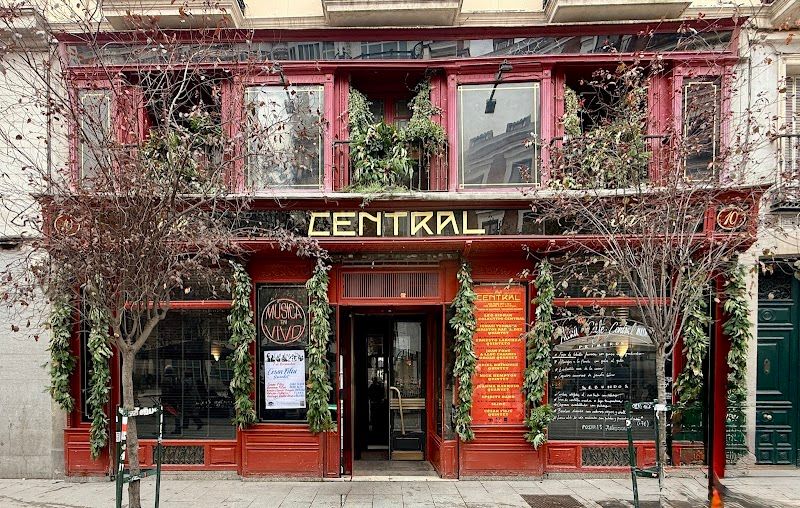
This Art Deco jazz club has been hosting world-class live jazz performances every night since 1982.
Café Central, Madrid · Sol & Centro
Category
Nightlife
Duration
2h 30m
Best Time
Evening
Entry
€€
Rating
4.1 (6,410)
The place

About Café Central

This Art Deco jazz club has been hosting world-class live jazz performances every night since 1982. The intimate 150-seat venue features two sets nightly starting around 9pm and 10:30pm, with performances ranging from bebop to contemporary jazz. It's consistently ranked among Europe's best jazz clubs and maintains an authentic atmosphere without tourist gimmicks.

Book ahead

Book Tickets

Live availability and skip-the-line options from our booking partners.

Search on Viator →Search on GetYourGuide →

Booking powered by our partners. DAIZ may earn a commission.

The details

Practical bits

WalkingMinimal walking
The place

Getting there

Address
Pl. del Ángel, 10, Centro, 28012 Madrid, Spain
Neighborhood
Sol & Centro
Nearest Metro
Lines 1, 2, 3 to SolLines 1, 5 to Gran ViaLine 2, R to Opera
View on Google Maps →
Good to know

Tips, answered

Reserve a table in advance through their website if you want to sit, as standing room fills up quickly on weekends.

Plan for about 2h 30m. Evening visits offer a different atmosphere with softer light.

Café Central is in the Sol & Centro neighborhood of Madrid. The address is Pl. del Ángel, 10, Centro, 28012 Madrid, Spain. The area is well-served by metro.

Evening visits offer a unique atmosphere. The light is softer, crowds thin out, and the experience feels more intimate.

Around the corner

Nearby in Sol & Centro

Explore all →
Puerta del Sol
Landmark

Puerta del Sol

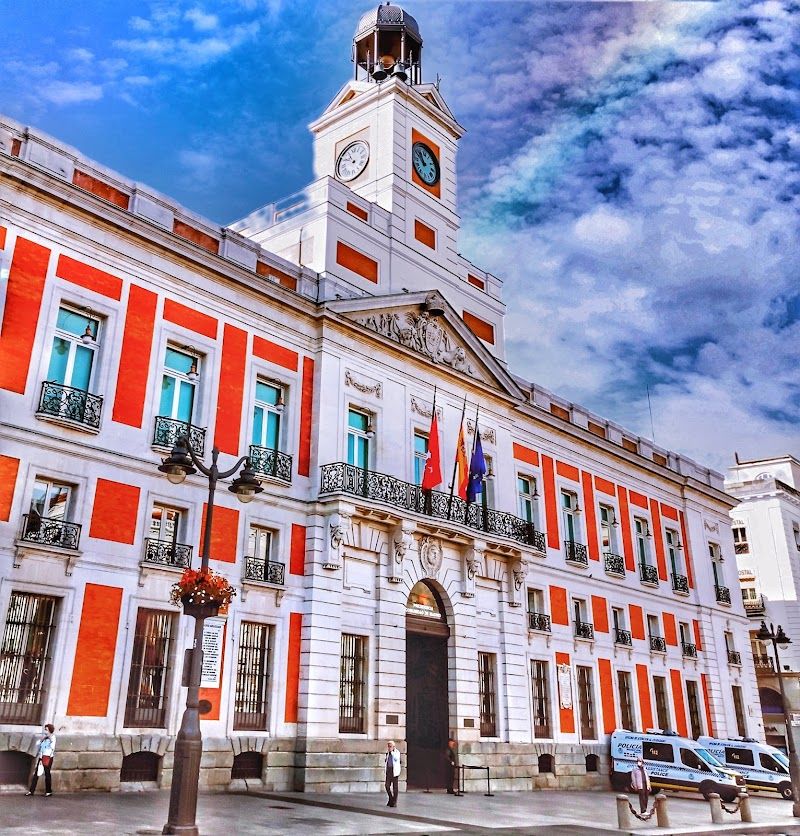
The symbolic centre of Spain, where the Kilometre Zero plaque on the pavement marks the point from which all Spanish road distances are measured. The plaque is in front of the Real Casa de Correos (now the regional government headquarters), the building whose clock rings in the New Year for all of Spain. The tradition involves eating twelve grapes in twelve seconds as the clock strikes midnight, one grape per chime, and the square fills with thousands of people attempting this on December 31st. The Bear and the Strawberry Tree statue (El Oso y el Madrono) on the east side of the square is Madrid's coat of arms and the city's most photographed non-museum object. The statue is smaller than expected but there's always a queue of people waiting to take a selfie with it. Sol is not a destination in itself but a crossroads. Every metro line seems to converge here (lines 1, 2, and 3 actually do). You will end up here whether you planned to or not. The square is surrounded by shops, chain restaurants, and a permanent crowd of people heading somewhere else. The side streets leading south to Cava Baja and north to Malasana are more interesting than Sol itself. Despite its tourist-heavy surface, Sol has one genuine treasure: Casa Labra, hidden on Calle de Tetuan two minutes from the square, has been serving cod croquetas for EUR1.50 each since 1860. The bar is standing room only at lunch and proves that even Sol has secrets if you know where to look.

15-20 minutesExplore
Plaza Mayor
Landmark

Plaza Mayor

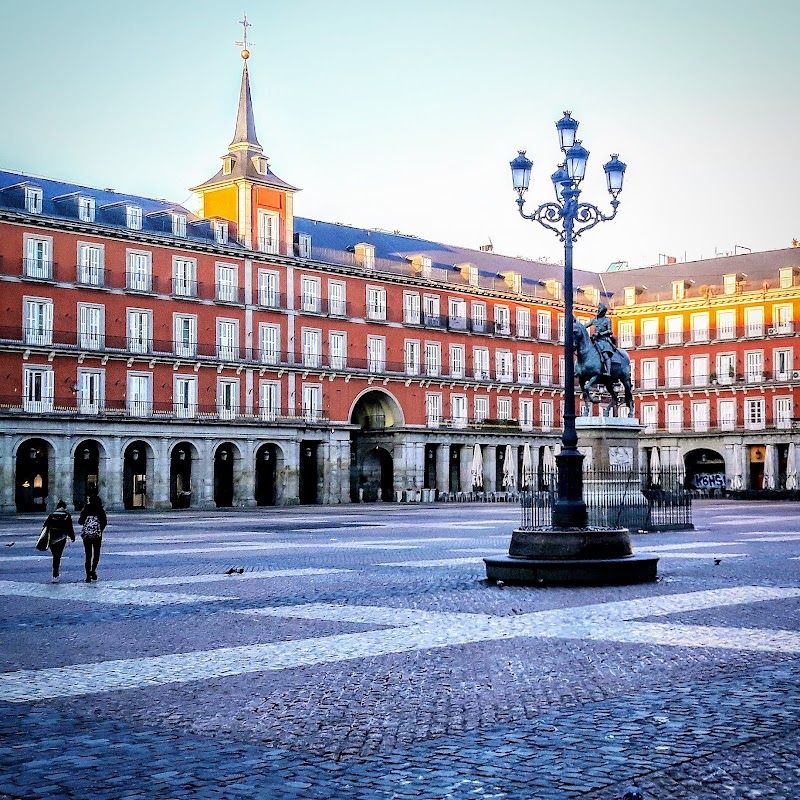
A rectangular baroque plaza with painted facades, iron balconies, and a bronze equestrian statue of Philip III in the centre. Built between 1617 and 1619 under Philip III's reign, it has hosted bullfights, Inquisition executions, public markets, royal coronations, and, for a brief period in the 19th century, a covered market. The architecture is genuinely beautiful: the frescoed Casa de la Panaderia on the north side (originally the royal bakery, now housing the Madrid tourism office), nine arched entrances, and the uniformity of the four-storey red-brick buildings surrounding the square. The proportions are satisfying in a way that photos don't capture. The plaza is a near-perfect rectangle (129 by 94 metres) with covered arcades on all four sides. The arched entrances frame views of the surrounding streets and create the feeling of entering a separate world, especially when approaching from the narrow side streets to the south. Walk through, admire the frescoes and the proportions, take the obligatory photo under the arches, and leave immediately for Cava Baja or Mercado de San Miguel next door. Do not eat at any restaurant on Plaza Mayor. Every single one charges double for half the quality of a tapas bar five minutes away. This is not an exaggeration. The stamp and coin market under the arcades on Sundays is worth browsing. The Christmas market in December is touristy but atmospheric, with stalls selling nativity figures, decorations, and roasted chestnuts.

20-30 minutesExplore
Royal Palace of Madrid (Palacio Real)
Landmark

Royal Palace of Madrid (Palacio Real)

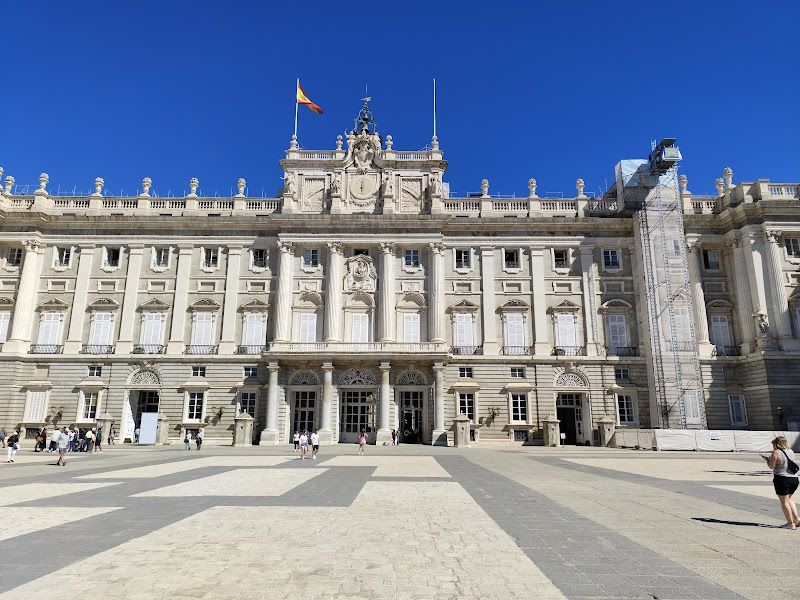
The biggest palace in Western Europe by room count: 3,418 rooms, though only about 50 are open to visitors. The Bourbons built it after the old Alcazar burned down on Christmas Eve 1734, and they went spectacularly over budget. The result is a palace that took 26 years to complete, with interiors that range from Rococo excess to neoclassical restraint depending on which monarch was decorating at the time. The Throne Room is the showpiece: a Tiepolo ceiling fresco depicting the glory of the Spanish monarchy, walls lined with crimson velvet, and the thrones themselves (still used for formal occasions, though the royal family lives at the Zarzuela Palace outside the city). The Gasparini Room is a Rococo fantasy of stucco, silk, and gilded everything. The Royal Chapel has a dome painted by Corrado Giaquinto. The Royal Armoury is housed in a separate building in the courtyard and is the highlight for most visitors, especially families. Full suits of jousting armour that belonged to Charles V, swords from the Reconquista, a tiny armour set made for a child prince, and weapons from centuries of Spanish military history. The armoury alone justifies the visit price. The Royal Pharmacy, overlooked by most visitors, has original 18th-century ceramic medicine jars in wooden cabinets and distillation equipment used to make remedies for the royal household. Entry EUR13, free for EU citizens in the last two hours before closing. The changing of the guard on the first Wednesday of each month (noon, October through June) is a full ceremony worth timing your visit around.

1.5-2.5 hoursExplore
Jardín del Príncipe de Anglona
Park & Garden

Jardín del Príncipe de Anglona

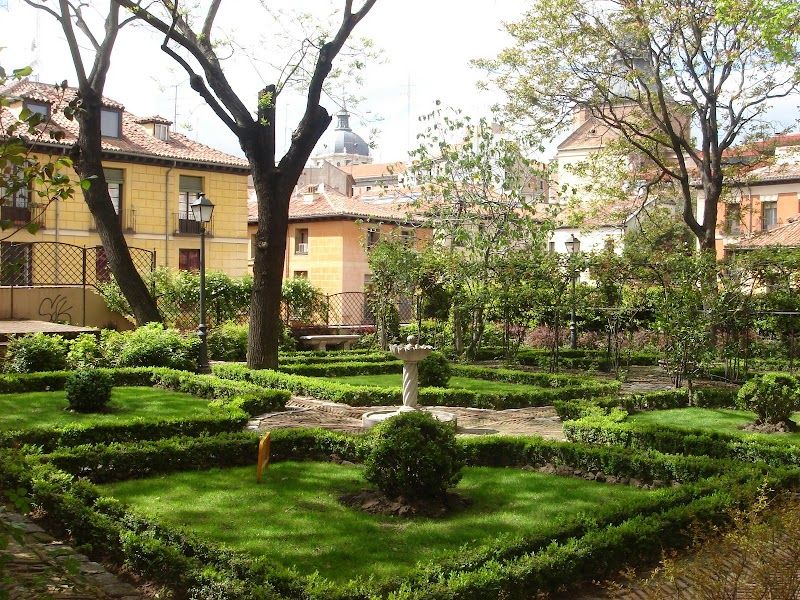
This tiny 18th century palace garden sits behind an unmarked door on Plaza de la Paja, preserved exactly as it was when built for the Prince of Anglona in 1750. You'll find formal French parterre gardens with perfectly trimmed boxwood hedges forming geometric patterns, a central fountain, and climbing roses that explode with color in May and June. The space is no bigger than a large backyard, but every corner follows strict neoclassical principles with stone benches positioned for contemplating the symmetrical plantings. Walking through feels like discovering a private courtyard that time forgot. The high walls block out all street noise from the surrounding tapas district, creating an almost monastery-like quiet that's rare in central Madrid. You can circle the entire garden in five minutes, but most people end up sitting on one of the stone benches just absorbing the peaceful atmosphere. The contrast with the medieval streets outside is striking, you're literally stepping from cobblestones into 18th century aristocratic refinement. Most guidebooks oversell this as a major attraction when it's really a five minute detour that's lovely if you're already exploring La Latina. The garden is free but closes at sunset, and honestly there's not much to see outside of spring when the roses bloom. Skip it if you're pressed for time, but it's perfect for a quick breather between the Mercado de la Cebada and dinner in the neighborhood.

30 minutesExplore
Mercado de San Miguel Food Tour
Tour

Mercado de San Miguel Food Tour

The Mercado de San Miguel food tour takes you through Madrid's oldest gourmet market. Located in a 1916 iron and glass structure, this historic site houses more than 30 specialty food stalls. You'll sample a selection of products from 8-10 carefully chosen vendors, including jamón ibérico carved fresh from the leg, aged Manchego cheese, Spanish vermouth on tap, and Galician oysters shucked to order. Your guide explains the origins of each regional specialty and helps you understand the different ham grades and cheese aging processes. The tour flows naturally from stall to stall as your guide navigates the market's compact layout. You'll stop at family-run businesses that have operated here for decades. At marble counters, you'll sip wine while locals grab quick tapas lunches around you, creating an authentic neighborhood feel despite the tourist presence. The market's Belle Époque architecture serves as a beautiful backdrop as natural light filters through the glass ceiling, and the constant hum of Spanish conversation creates an immersive atmosphere. Price points for food tours here are generally high at 65-75 EUR, but the education about Spanish food culture makes it a worthwhile experience for first-time visitors. We recommend avoiding weekend tours when the market becomes overcrowded with selfie-taking crowds. The morning slots around 11am offer the best balance of fresh products and manageable crowds, plus vendors are more likely to be available for chats before the lunch rush hits.

1.5 hoursExplore
More on Madrid

From the blog

View all →
Ready for Madrid?

Let DAIZ plan your Madrid days

Tell us how long you've got and what you're into. We'll build a day-by-day plan, with the bookable bits ready to lock in.

Plan my Madrid tripFree · no signup to start
Plan your Madrid trip