San Gimignano · Piazza della Cisterna

La Cisterna

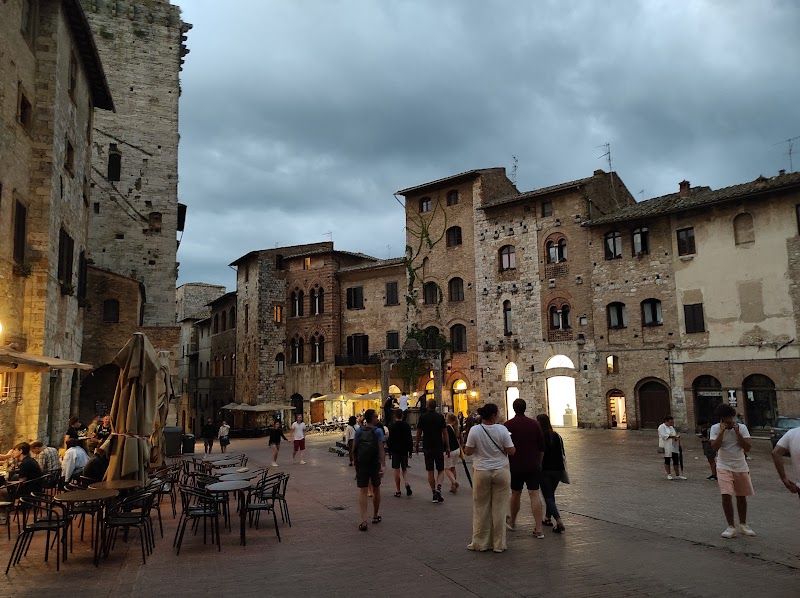
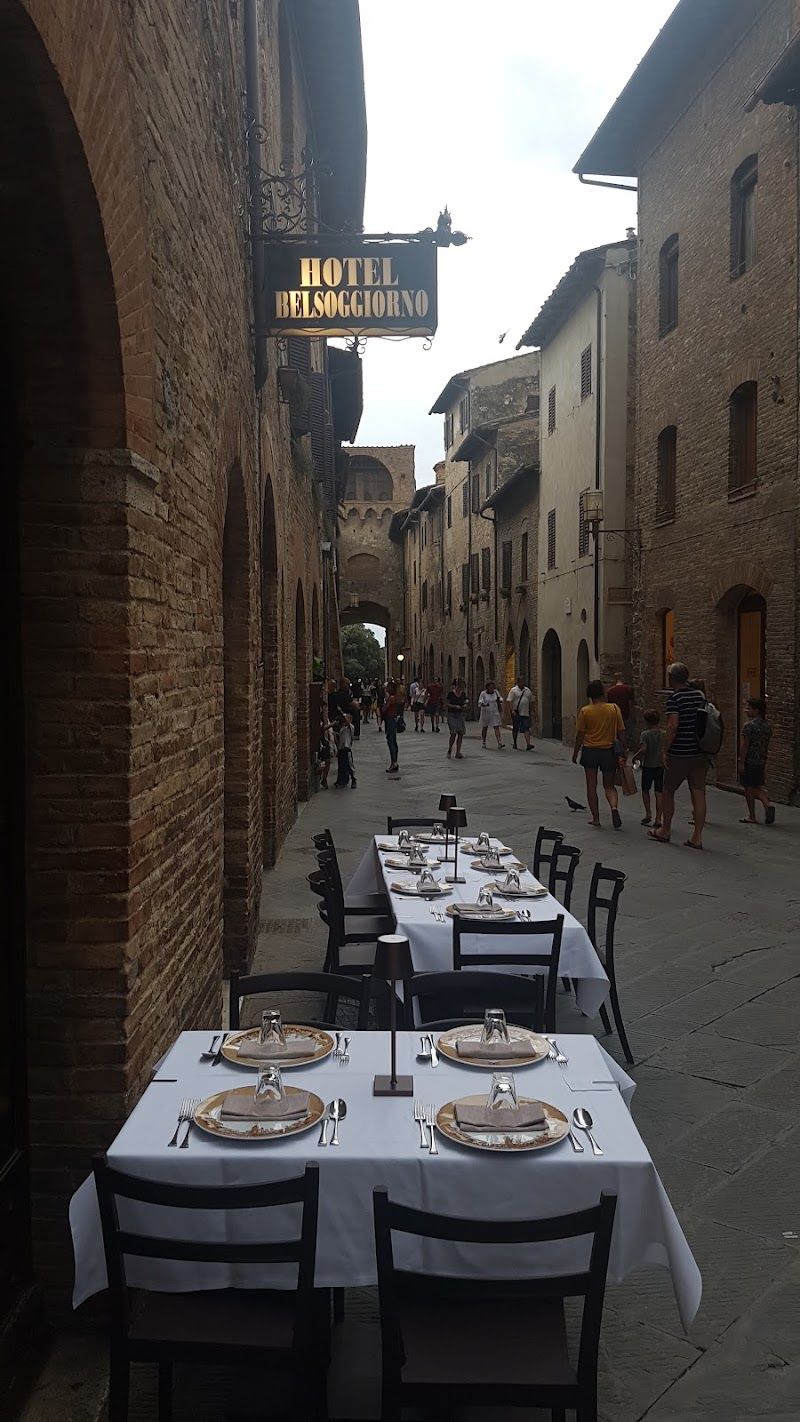
Historic restaurant with terrace seating directly on Piazza della Cisterna, offering prime tower views.
La Cisterna, San Gimignano · Piazza della Cisterna
Category
Restaurant
Duration
2 hours
Best Time
Any time
Entry
€€€
Rating
4.5 (1,573)
The place

About La Cisterna

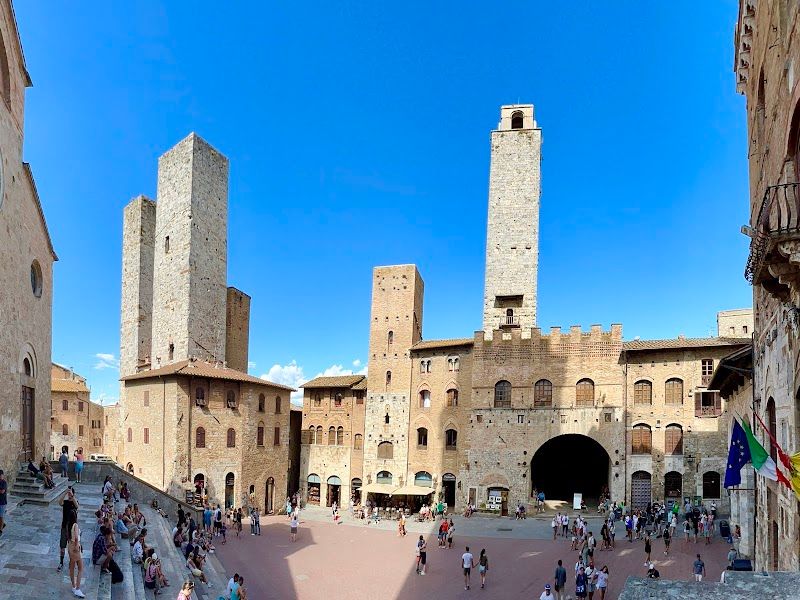
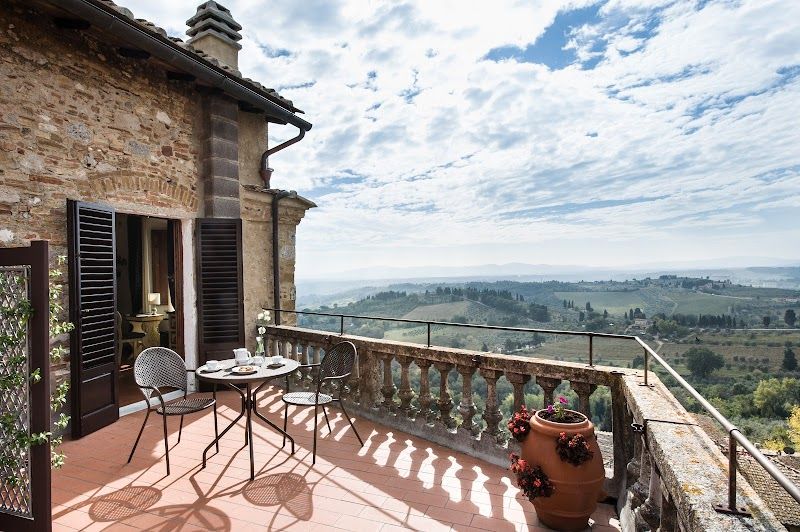
Historic restaurant with terrace seating directly on Piazza della Cisterna, offering prime tower views. The menu leans traditional with elevated presentations, featuring saffron risotto and pappardelle with hare. Service is formal and the setting particularly romantic at sunset when the piazza glows amber.

Book ahead

Book Tickets

Live availability and skip-the-line options from our booking partners.

Search on Viator →Search on GetYourGuide →

Booking powered by our partners. DAIZ may earn a commission.

The details

Practical bits

WalkingMinimal walking
The place

Getting there

Address
Piazza Della Cisterna, 23, 53037 San Gimignano SI, Italy
Neighborhood
Piazza della Cisterna
View on Google Maps →
Good to know

Tips, answered

Book table 12 or 14 on the terrace for unobstructed tower views, and come for an early dinner around 7pm when the light is best and before the terrace fills completely.

Plan for about 2 hours.

La Cisterna is in the Piazza della Cisterna neighborhood of San Gimignano. The address is Piazza Della Cisterna, 23, 53037 San Gimignano SI, Italy. The area is well-served by metro.

This works well at any time of day, though mornings tend to be quieter. Weekdays are less crowded than weekends.

Closed on Monday, Tuesday, Wednesday, Thursday, Friday, Saturday. Check the official website for holiday closures and special hours.

Around the corner

Nearby in Piazza della Cisterna

Explore all →
Piazza della Cisterna
Landmark

Piazza della Cisterna

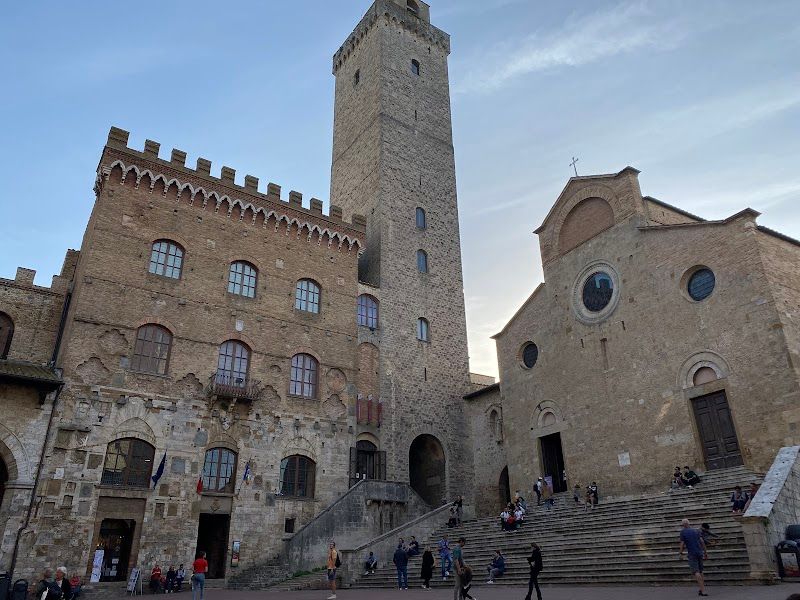
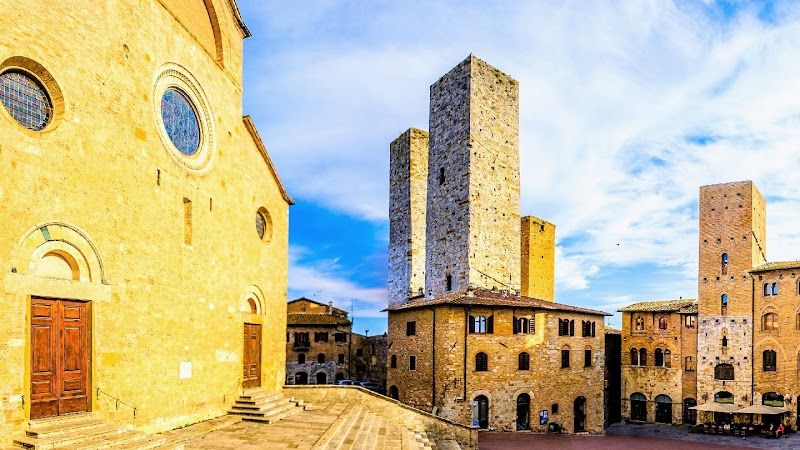
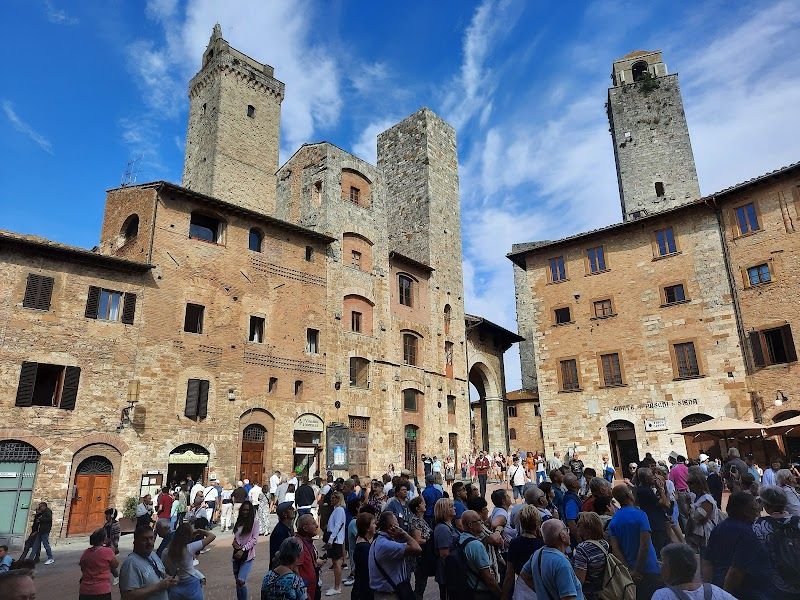
Piazza della Cisterna is San Gimignano's triangular heart, a perfectly preserved medieval square where 13th-century tower houses lean inward like protective guardians. You'll see the famous twin Torri dei Salvucci dominating the north side, while Torre del Diavolo looms to the east, all connected by herringbone brick paving that's remained unchanged for 700 years. The central wellhead that gives the piazza its name still sits exactly where medieval residents drew their water. Walking into this space feels like stepping onto a movie set, except the worn brick beneath your feet and the weathered stone facades are completely authentic. Morning light creates dramatic shadows between the towers while locals emerge for their morning coffee at the corner cafes. You'll hear the echo of footsteps bouncing off ancient walls and catch glimpses of laundry hanging from upper windows where people still actually live. Most visitors rush through for photos, but this square rewards lingering. Skip the overpriced tourist restaurants on the main corners and grab a coffee at Bar dalle Volte for EUR 1.50 instead of EUR 3 elsewhere. Gelateria Dondoli lives up to its world champion reputation, though EUR 4 for two scoops stings. The real magic happens early morning or late afternoon when tour groups clear out and you can actually hear the medieval silence.

20-30 minutesExplore
Torre Grossa
Museum

Torre Grossa

Torre Grossa is San Gimignano's tallest surviving medieval tower at 54 meters, and the only one you can actually climb. Built in 1311, it's accessed through the Palazzo Comunale museum with a EUR 9 combined ticket that includes both attractions. The narrow stone spiral staircase winds up 218 steps with no elevator, leading to a platform that holds maximum 20 people at once. From the top you get sweeping 360-degree views across the Val d'Elsa valley, rolling Tuscan hills, and all 13 remaining towers at eye level. The climb feels genuinely medieval: your legs burn on the tight stone steps, and the platform feels thrillingly exposed when you emerge into daylight. Wind whips around the top constantly, making it feel wild and authentic rather than sanitized. The views are spectacular but the real magic is seeing San Gimignano's famous skyline from within, with the other towers jutting up around you like stone skyscrapers. The Palazzo Comunale museum downstairs houses a beautiful Lippo Memmi Maesta fresco and the Sala di Dante, where Dante actually spoke as a Florentine ambassador in 1300. Most visitors treat this as a quick photo stop, but you're paying EUR 9 for both tower and museum, so use them. The museum is genuinely interesting and usually empty while everyone queues for the tower. Go at 10am opening to avoid crowds on the narrow stairs. Skip this entirely if you have mobility issues: those 218 steps are relentless and there's nowhere to rest halfway up.

45-60 minutesExplore
Collegiata di Santa Maria Assunta
Cultural Site

Collegiata di Santa Maria Assunta

The Collegiata houses the most intensely frescoed interior in Tuscany, with three separate fresco cycles that span 200 years of Italian art. You'll find Old Testament scenes by Bartolo di Fredi covering the left wall, New Testament episodes from Simone Martini's workshop on the right, and Taddeo di Bartolo's apocalyptic Last Judgment consuming the back wall. The Chapel of Santa Fina contains Ghirlandaio's Renaissance masterpiece depicting the local saint's miracles. Walking inside feels like entering a medieval comic book where every surface tells a story through vivid colors and intricate details. The left wall's Creation scenes flow into Noah's flood with remarkable narrative clarity, while demons on the back wall torture sinners in graphic detail that makes modern horror films look tame. The atmosphere shifts completely in Santa Fina's chapel, where Ghirlandaio's refined Renaissance style creates an oasis of serenity. At EUR 5, this beats any museum in Florence for value, but most visitors rush through without reading the story sequences properly. Skip the audio guide and use the free printed sheets instead. The Santa Fina chapel sits to the right of the altar and gets missed by 80% of visitors who focus only on the main nave.

30-45 minutesExplore
Torri dei Salvucci
Landmark

Torri dei Salvucci

The Torri dei Salvucci are twin stone towers that perfectly capture medieval San Gimignano's cutthroat family politics. Built by the wealthy Salvucci clan in the 13th century, these towers were constructed specifically to outdo their rivals, the Ardinghelli family, whose towers stand directly across Piazza del Duomo. The taller tower reaches about 50 meters while its companion stands slightly shorter, creating an asymmetrical silhouette that's become one of the town's most recognizable sights. You can't enter the towers, so your visit is really about appreciating their imposing presence from street level. Standing in the small piazza, you'll feel dwarfed by these stone giants that have watched over San Gimignano for 800 years. The morning light hits the weathered stone beautifully, casting sharp shadows that emphasize every crack and crevice. The contrast between these militant structures and the elegant Collegiata church nearby perfectly illustrates medieval priorities: God and warfare in equal measure. Most visitors snap a quick photo and move on, which is honestly about right for a 15 minute stop. The towers look impressive but there's no signage explaining their history, so you'll want to read up beforehand. Skip the crowded midday visits when tour groups cluster here. The real value is understanding how these towers represent the medieval arms race that created San Gimignano's extraordinary skyline.

15 minutesExplore
Porta San Giovanni
Landmark

Porta San Giovanni

Porta San Giovanni serves as your grand entrance into medieval San Gimignano, a 13th-century gateway that's survived seven centuries practically unchanged. You'll walk through massive stone walls topped by a defensive tower, passing under the original wooden doors that still swing on their iron hinges. The archway frames your first glimpse of Via San Giovanni stretching uphill toward the famous towers, making it one of Italy's most photogenic medieval entrances. Walking through feels like crossing a threshold into the past. The thick walls create a cool, shadowy tunnel where your footsteps echo off ancient stones. Most visitors rush through without looking up, missing the medieval vaulting overhead and the sinister murder holes that defenders once used to rain death on attackers. The contrast is striking: you emerge from the dim passageway into bright Tuscan sunlight with the medieval town spread before you. Honestly, it's more atmospheric than spectacular, and 15 minutes is generous unless you're really into architectural details. The gate works best as a dramatic starting point for exploring the town rather than a destination itself. Skip it if you're entering from other directions, but if you're coming from the main parking areas below, take 30 seconds to appreciate the medieval engineering before joining the crowds heading uphill.

15 minutesExplore
Galleria Continua
Museum

Galleria Continua

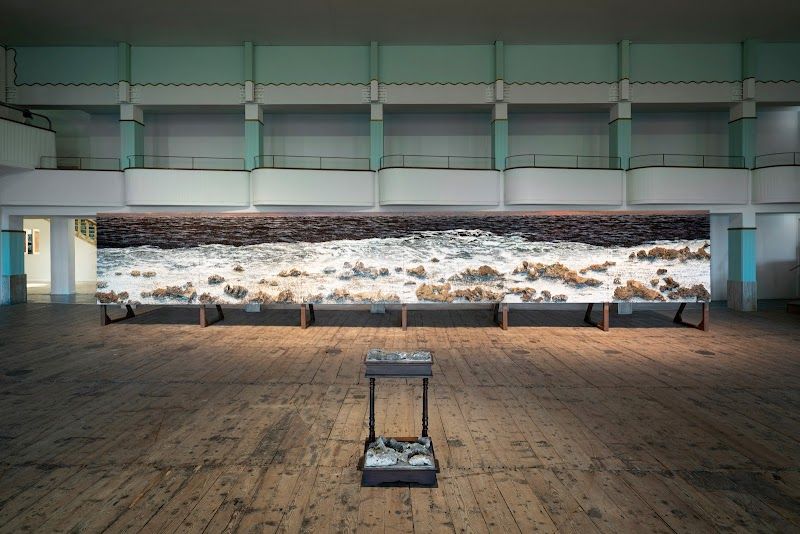
Galleria Continua transforms a 1920s Art Deco cinema into one of Europe's most compelling contemporary art spaces, right in medieval San Gimignano's heart. You'll find major international artists like Anish Kapoor, Ai Weiwei, and Antony Gormley showing work in rooms where locals once watched films. The original cinema details remain: ornate ceiling moldings, vintage lighting fixtures, and that unmistakable theater atmosphere now serving massive installations and cutting edge sculptures. Walking through feels surreal because you're experiencing world class contemporary art surrounded by 13th century stone walls. The main gallery occupies the former screening room, while smaller exhibitions fill what were once the lobby and projection areas. The contrast works brilliantly: ancient Tuscan architecture provides an unexpected backdrop for video installations, conceptual pieces, and large scale sculptures that would look predictable in a sterile white cube gallery. Most travel guides treat this as a quick cultural checkbox, but serious art lovers should budget 90 minutes minimum. The gallery's free, which is remarkable given the caliber of artists they show. Skip it if you're only interested in Renaissance art or feel overwhelmed by conceptual work. The exhibitions change every few months, so what you see depends entirely on timing, but the quality stays consistently high.

45 minutes-1 hourExplore
More on San Gimignano

From the blog

View all →
Ready for San Gimignano?

Let DAIZ plan your San Gimignano days

Tell us how long you've got and what you're into. We'll build a day-by-day plan, with the bookable bits ready to lock in.

Plan my San Gimignano tripFree · no signup to start
Plan your San Gimignano trip